




Nuestro enfoque para el cuidado de la retina y el vítreo



El Servicio de Retina y Vítreo del Departamento de Oftalmología y Ciencias Visuales de Montefiore Einstein es un líder reconocido mundialmente que brinda atención integral y de vanguardia a adultos y niños con todo el espectro de afecciones de la retina y el vítreo, desde la degeneración macular asociada a la edad (DMAE), la retinopatía diabética y el edema macular hasta trastornos retinianos hereditarios, oclusión de la vena retiniana, retinopatía del prematuro, retinosis pigmentaria, agujeros maculares y desgarros y desprendimientos complejos de retina. Nuestro equipo multidisciplinario de médicos de renombre mundial incluye oftalmólogos certificados y con formación especializada en retina médica y cirugía vitreorretiniana, quienes colaboran estrechamente con oncólogos, endocrinólogos, genetistas, neonatólogos, reumatólogos, neurocirujanos y otros expertos. Utilizamos las últimas tecnologías de diagnóstico, incluyendo imágenes multimodales avanzadas, y las terapias médicas, quirúrgicas y génicas más innovadoras, incluyendo tratamientos biológicos como agentes anti-factor de crecimiento endotelial vascular (anti-VEGF) e inhibidores del complemento. Nuestros especialistas brindan una atención coordinada e individualizada diseñada para preservar la visión y garantizar los mejores resultados posibles.
Como centro de referencia para los casos más complejos y de alto riesgo, nos comprometemos a preservar y restaurar la visión y la función, prevenir la progresión de la enfermedad y las complicaciones, y mejorar la calidad de vida de cada paciente. Tanto si le han diagnosticado recientemente una afección retiniana, como si experimenta síntomas como pérdida de visión, destellos, moscas volantes o distorsión, si padece una enfermedad sistémica crónica que afecta a la retina o si busca una segunda opinión, nuestro equipo está aquí para brindarle atención y orientación especializada en cada etapa de su tratamiento de retina y vítreo.
Experiencia reconocida internacionalmente en trastornos retinianos hereditarios y terapia génica.
Además de atender las enfermedades retinianas más comunes, nuestros especialistas poseen una experiencia inigualable en el manejo de afecciones retinianas hereditarias raras, como la retinosis pigmentaria y la enfermedad de Stargardt (distrofia macular juvenil). Colaboramos estrechamente con el programa de Genética Pediátrica del Hospital Infantil Montefiore Einstein, uno de los programas pioneros y más reconocidos del país, que ha sido líder en la atención de enfermedades genéticas y genómicas durante más de cincuenta años. Nuestros especialistas brindan asesoramiento genético, pruebas de última generación y apoyo familiar.
Excelencia multidisciplinaria en el cuidado de la retina y la visión.
Para personas con afecciones retinianas asociadas a tumores, nuestro equipo colabora estrechamente con nuestro Programa de Oncología Ocular, totalmente integrado con el Centro Oncológico Integral Montefiore Einstein. Montefiore Einstein se encuentra entre el 1% de los centros oncológicos integrales designados por el Instituto Nacional del Cáncer (NCI) en los Estados Unidos. También brindamos acceso a rehabilitación visual integral y colaboramos estrechamente con nuestro Centro de Rehabilitación Burke, clasificado entre el 1% de los mejores hospitales del país en rehabilitación, según US News and World Report . Estas alianzas demuestran nuestro compromiso con una atención integral y multidisciplinaria que aborda no solo las enfermedades retinianas complejas, sino también las necesidades sistémicas y funcionales de cada paciente.
A la vanguardia de la detección temprana para prevenir la pérdida de visión.
Como parte de nuestro compromiso para mejorar los resultados en adultos y niños con enfermedades de la retina, hemos ampliado nuestro programa de telemedicina (teleretinología) para acelerar el diagnóstico de la retinopatía diabética y la retinopatía del prematuro, a la vez que mejoramos el acceso a la atención médica. A la vanguardia en el desarrollo de programas internacionales de detección para el diagnóstico precoz y el manejo de la retinopatía del prematuro, nuestro programa integra tecnologías de imagen avanzadas con estrategias de tratamiento individualizadas, aprovechando herramientas de detección remota para ayudar a preservar la visión y la calidad de vida, a menudo mucho antes de que sea necesaria la intervención quirúrgica.
Diagnóstico y tratamientos avanzados
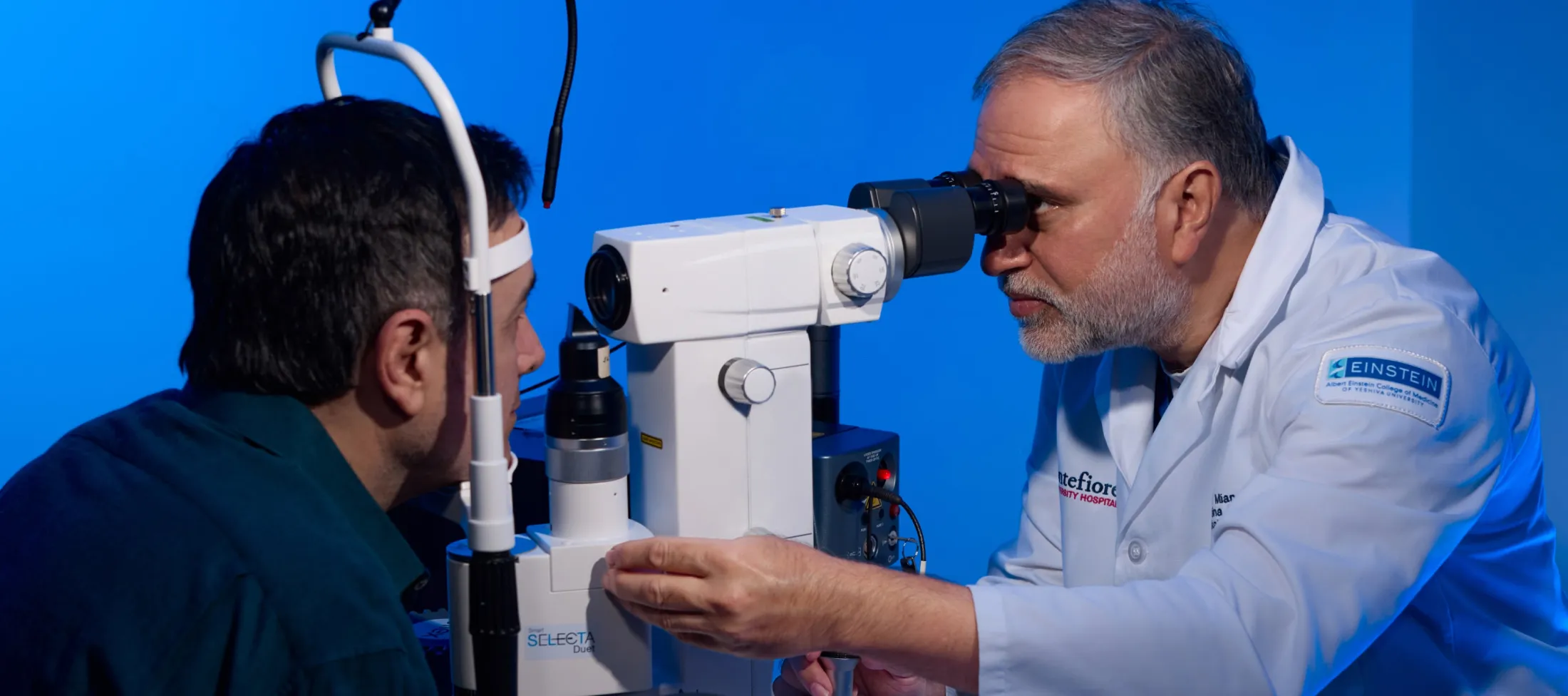
Ofrecemos acceso a las últimas tecnologías de diagnóstico y a los tratamientos más avanzados para la prevención, la detección precoz y el tratamiento de todo el espectro de trastornos de la retina y el vítreo.
Nuestro programa integra técnicas de imagen de alta resolución, como la tomografía de coherencia óptica (OCT), la angiografía OCT, la fotografía de fondo de ojo de campo amplio, la ecografía tridimensional (3D), la angiografía con fluoresceína y verde de indocianina, y la imagen de óptica adaptativa para visualizar con precisión los detalles estructurales y vasculares más finos de la retina. Las pruebas funcionales, como la microperimetría y la electroretinografía multifocal (ERG), y las pruebas genéticas mediante secuenciación de nueva generación permiten a nuestros especialistas identificar la enfermedad en sus etapas más tempranas, monitorizar su progresión y personalizar la atención para cada paciente. Además, integramos la detección y el análisis de imágenes con inteligencia artificial para mejorar la precisión diagnóstica, acelerar la detección y facilitar la intervención oportuna en personas con riesgo de pérdida de visión.
Los tratamientos abarcan todo el espectro de la atención moderna de la retina, desde procedimientos ambulatorios hasta cirugía vitreorretiniana compleja. El programa ofrece las farmacoterapias intravítreas más recientes aprobadas por la FDA, incluidos agentes anti-VEGF como las inyecciones de Eylea®. Los implantes de corticosteroides se pueden utilizar para el edema macular diabético crónico y enfermedades retinianas que causan inflamación, y los nuevos inhibidores del complemento para la atrofia geográfica (AG). Nuestra división de retina colabora estrechamente con el Departamento de Genética para el manejo médico complejo y el diagnóstico de enfermedades hereditarias.
También ofrecemos tratamientos láser de precisión, incluyendo láser focal/en rejilla y micropulso subumbral para enfermedades maculares, fotocoagulación láser dispersa, crioterapia e inyección intraocular de gas. Los procedimientos ambulatorios, como inyecciones e implantes intravítreos, se complementan con intervenciones quirúrgicas avanzadas, como vitrectomía pars plana con microincisión, cerclaje escleral, pelado de membrana, reparación de agujero macular y reparación de membrana epirretiniana. Nuestros cirujanos también cuentan con amplia experiencia en la reparación de desprendimiento de retina complejo y en procedimientos combinados que abordan múltiples afecciones oculares en una sola operación.
Las colaboraciones con servicios de rehabilitación y adaptación para personas con baja visión están integradas en nuestro enfoque para ayudar a los pacientes a adaptarse a los cambios en la visión, optimizar la visión que les queda y preservar su calidad de vida.
Ofrecemos un conjunto integral de diagnósticos y tratamientos avanzados para toda la gama de trastornos de la retina y el vítreo, que incluyen:
Tratamientos avanzados

Investigación y publicaciones
Lideramos la investigación colaborativa y dirigimos numerosos estudios, incluyendo varios financiados por el Instituto Nacional del Ojo/Institutos Nacionales de la Salud (NEI/NIH), transformando los descubrimientos científicos en nuevos diagnósticos y tratamientos para mejorar los resultados clínicos de las personas afectadas o en riesgo de padecer enfermedades de la retina y el vítreo. Las áreas principales de investigación incluyen la enfermedad vascular retiniana, la degeneración macular asociada a la edad, la retinopatía diabética, el desprendimiento de retina, las distrofias retinianas hereditarias, los tumores oculares y la inflamación ocular. Trabajos recientes han evaluado el valor en la práctica clínica de la terapia anti-VEGF, han impulsado el papel de la telemedicina para ampliar el acceso a poblaciones desatendidas y han examinado los resultados quirúrgicos en casos complejos de desprendimiento de retina.
Los investigadores exploran el potencial del uso de organoides retinianos (tejido cultivado en laboratorio que se asemeja a la retina) para generar células para trasplante en el tratamiento de enfermedades retinianas, lo que ofrece nuevas posibilidades para el trasplante celular con el fin de restaurar la visión. Además, los especialistas están desarrollando nuevos fármacos que activan selectivamente la autofagia mediada por chaperonas y han demostrado su eficacia para mejorar la degeneración retiniana y la progresión de la enfermedad en un modelo preclínico de retinosis pigmentaria. El programa también forma parte de la Red de Investigación Clínica de Retinopatía Diabética (Red de Retina DRCR), que lidera estudios que contribuyen a establecer los estándares nacionales en la atención de la enfermedad ocular diabética.
Líderes mundiales de confianza en atención oftalmológica basada en la evidencia.
Somos uno de los únicos 13 centros a nivel mundial designados como Centro Cochrane de Ojos y Visión (CEV) para la Atención Oftalmológica Basada en la Evidencia, una distinción financiada por el NEI/NIH que reconoce nuestro compromiso con el avance de la medicina y la atención oftalmológica basadas en la evidencia. Nuestras contribuciones a la investigación y a la identificación de los tratamientos más eficaces para la atención al paciente sirven de modelo para centros clínicos de todo el mundo.
-
Residuos y emisiones de gases de efecto invernadero producidos por cirugías oftalmológicas: una revisión exploratoria
-
La rentabilidad de un programa de detección de retinopatía diabética mediante telemedicina en Nueva York.
-
Tasa de retinopatía del prematuro (ROP) grave y evaluación de la carga del cribado de ROP en un único hospital público de atención terciaria en Pakistán.
-
Los niveles elevados de hemoglobina fetal se asocian con una menor incidencia de retinopatía en adultos con enfermedad de células falciformes.

Servicios de orientación y apoyo en la atención médica
Tanto si le han diagnosticado recientemente una afección retiniana, como si experimenta síntomas como pérdida de visión, destellos, moscas volantes o distorsión, si padece una enfermedad sistémica crónica que afecta a la retina o si busca una segunda opinión, nuestro equipo de renombre mundial en Oftalmología y Ciencias Visuales de Montefiore Einstein está aquí para brindarle una atención, un apoyo y unos recursos excepcionales adaptados a sus necesidades individuales.
Nuestro centro integral ofrece atención completa para la retina y el vítreo en todas las etapas de la vida, desde la detección, la prevención y el diagnóstico hasta el tratamiento y la recuperación. Colaboramos con otros especialistas y servicios de apoyo en todo Montefiore Einstein para brindar apoyo social, asesoramiento genético, educación del paciente, orientación en la atención, servicios de salud mental y bienestar, y rehabilitación visual, garantizando así una atención integral y coordinada. Nuestro equipo de médicos, enfermeros, especialistas y personal de apoyo, compasivos y altamente capacitados, se dedica a ayudarle en cada paso de su proceso de atención de la retina y el vítreo, con acceso a la amplia gama de recursos que ofrece nuestro sistema de salud.
Nuestro equipo de atención de retina y vítreo


MD Richard M. Klein


Nuestro equipo multidisciplinario de médicos de renombre mundial incluye oftalmólogos certificados y con formación especializada en retina médica y cirugía vitreorretiniana. Nos especializamos en el diagnóstico y tratamiento de todo el espectro de afecciones vitreorretinianas, utilizando los diagnósticos y tratamientos más avanzados para proteger y preservar la visión, prevenir la progresión de la enfermedad y sus complicaciones, y mejorar la calidad de vida de cada paciente.
Programas e iniciativas comunitarias transformadoras
Nuestro programa se distingue por su enfoque colaborativo y atención clínica integral que se extiende más allá de las instalaciones de Montefiore Einstein, llegando a la comunidad a través de iniciativas de alcance dirigidas a preservar la visión, ralentizar la progresión de la enfermedad, prevenir la pérdida de visión y la ceguera, y mejorar la calidad de vida, especialmente entre las poblaciones vulnerables. Entre los esfuerzos clave se incluyen la educación comunitaria, estrategias basadas en la telemedicina para la detección temprana y el manejo de afecciones vitreorretinianas, y nuestra colaboración con el programa Technology Peers for Accessible Living (Tech Pals) de Lighthouse Guild International, que conecta generaciones mediante mentoría tecnológica personalizada para personas con pérdida de visión. Esta iniciativa única vincula a jóvenes adultos ciegos o con discapacidad visual con adultos mayores para fomentar la alfabetización digital y la independencia. A través de estas y otras iniciativas, continuamos ampliando el acceso a la atención, preservando la continuidad y reduciendo las desigualdades, promoviendo así la salud ocular en las comunidades a las que servimos.
Acerca de las afecciones vitreorretinianas
Las afecciones vitreorretinianas son un grupo de trastornos oculares que afectan la retina (la parte del ojo que detecta la luz y envía señales al cerebro) y el humor vítreo (la sustancia transparente y gelatinosa que llena el centro del ojo). Estas incluyen afecciones retinianas comunes que pueden provocar pérdida de visión, como la degeneración macular asociada a la edad, la retinopatía diabética, el edema macular y la oclusión de la vena retiniana, así como trastornos estructurales como agujeros maculares, pliegues maculares, desprendimiento posterior del vítreo y desgarros y desprendimientos retinianos complejos. Las afecciones hereditarias y pediátricas, como la retinosis pigmentaria, la enfermedad de Stargardt (distrofia macular juvenil) y la retinopatía del prematuro, también pueden causar discapacidad visual. Los trastornos oncológicos, como el retinoblastoma y otros tumores oculares, afectan la retina y requieren atención multidisciplinaria altamente especializada.
Estas afecciones pueden afectar la visión de diversas maneras. Algunas provocan cambios graduales, como visión borrosa, moscas volantes o destellos, mientras que otras, como el desprendimiento de retina o los tumores oculares, pueden causar una pérdida de visión repentina y grave, requiriendo atención urgente. Dado que la retina desempeña un papel fundamental en la visión, su daño puede provocar una pérdida permanente de la visión si no se trata rápidamente. La detección temprana mediante una evaluación integral y pruebas avanzadas, junto con un diagnóstico preciso y una intervención oportuna, es esencial para preservar la visión, prevenir complicaciones y mejorar los resultados a largo plazo.