

Prevención y reconocimiento del accidente cerebrovascular
Once a stroke occurs, patients who arrive at the emergency room within 3 hours of their first symptoms often have less disability three months afterward than those who received delayed care. Knowing what to look for can make the difference.

How You Can Stop Stroke Before it Starts
While a stroke can occur at any time to almost anyone, there are ways you can reduce your risk, starting today.
Control your high blood pressure.
You can control the single most important treatable risk factor simply by changing diet and exercise habits and taking medication if needed. The goal is to keep blood pressure below 130/80.
Manage your diabetes.
Diabetes can be managed with a combination of diet, exercise, and medications. The goal is to keep blood sugar levels (HgA1C) less than 7%
Stop smoking.
There are tools available to help smokers kick the habit that include medications that help remove the cravings and side effects of quitting.
Lower your cholesterol.
High cholesterol is one of the main causes of ischemic strokes. It can be managed by diet exercise, and medication.
Treat atrial fibrillation (a-fib).
A person with this type of irregular heartbeat is at risk for developing a blood clot in the heart, which can then travel to the brain and cause a stroke. A-fib is treated with blood thinners that make it harder for clots to form in the heart.
Get checked for carotid artery disease.
Fatty deposits/plaque can develop in the two large arteries that supply blood to the front of the brain and possibly decrease blood flow. A carotid endarterectomy [en-dahr-tuh-rek-tuh-mee] is a procedure used to remove plaque in these arteries.
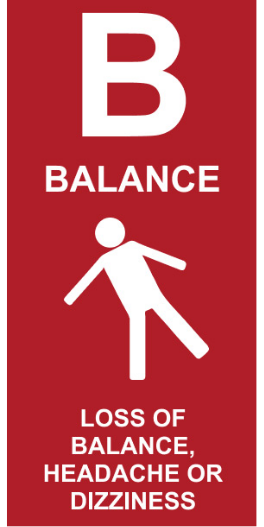
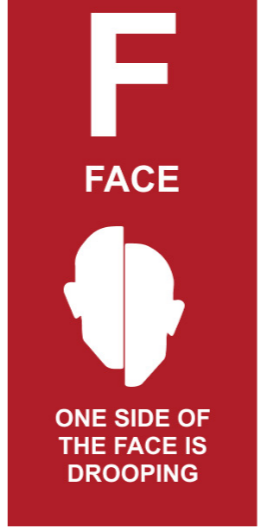
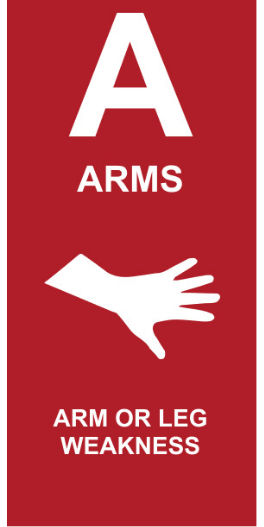
Know the Warning Signs of a Stroke




El tratamiento para el accidente cerebrovascular que puede prevenir la discapacidad
Las innovaciones en el diagnóstico y tratamiento de los accidentes cerebrovasculares están salvando cerebros —y vidas— y haciendo posible revertir la discapacidad que estos provocan. Dado que la mayoría de los accidentes cerebrovasculares son isquémicos, es decir, causados por un coágulo de sangre en el cerebro, cuanto antes podamos utilizar un procedimiento llamado trombectomía para eliminar el coágulo y restablecer el flujo sanguíneo cerebral, mayores serán nuestras posibilidades de recuperar la función cerebral y prevenir la discapacidad a largo plazo.

7 cosas que debes saber sobre cómo un accidente cerebrovascular es diferente para las mujeres.
Los expertos explican por qué los accidentes cerebrovasculares afectan a las mujeres de manera diferente y qué pueden hacer al respecto.

Los accidentes cerebrovasculares en adultos jóvenes pueden ser causados con mayor frecuencia por migrañas y otros factores no tradicionales.
Las investigaciones demuestran que las migrañas y otros factores de riesgo no tradicionales pueden ser la principal causa de accidentes cerebrovasculares en adultos menores de 35 años.