


Obstetrics & Gynecology and Women’s Health Research

3D rendered illustration of chromosomes floating in a colorful cellular environment.

Science at the Heart of Medicine

At Montefiore Einstein Obstetrics & Gynecology and Women’s Health, we have been leading the way with groundbreaking research and continue to advance the field with pioneering innovations and transformative breakthroughs that are shaping the future of women’s health. Our internationally renowned physician-scientists and researchers collaborate closely across disciplines and with investigators around the world, leading research and spearheading numerous studies and clinical trials that translate novel scientific discoveries into new diagnostics and treatments—to improve clinical outcomes and transform lives. With over 300 active clinical trials across our Department and National Cancer Institute (NCI)-designated comprehensive cancer center, our patients have access to emerging technologies and innovative treatments not available to the general public.

Our breakthrough discoveries have led to the development of many of the latest diagnostics and treatments used today—from Taxol, one of the world’s most widely used anti-tumor drugs for breast and ovarian cancer, and N,N-Dimethylformamide (DMA), a common, inexpensive, and widely available compound that could benefit millions of at-risk women and infants by reducing or preventing preterm birth. We were selected as one of the lead U.S. sites for an NCI clinical trial evaluating at-home self-collected vaginal samples for HPV testing to improve cervical cancer prevention. We also remain one of the few centers in the nation with an active Phase 1 program using cellular therapies to treat patients with solid gynecological tumors. Our work has shaped national guidelines and continues to redefine and establish new standards of care in obstetrics, gynecology and women’s health.

We are actively spearheading basic, translational and clinical research across every major area of women’s health with breakthroughs that continue to lead to life-changing treatments. Our reproductive endocrinology team has led the largest study to date analyzing clinical and neonatal outcomes between frozen and fresh oocytes after fresh embryo transfer. The team continues to lead numerous large-scale Society for Assisted Reproductive Technology Clinic Outcome Reporting System (SART CORS) studies. In complex family planning, we were selected by the National Institute of Child Health and Human Development (NICHD) as a member of the Contraceptive Clinical Trials Network (CCTN) to help develop new methods of female and male contraception.

In collaboration with our Department of Genetics, our basic science programs are advancing cellular and molecular research—from investigating the mechanisms responsible for birth defects in 22q11.2 deletion syndrome (22q11.2DS) to leading the nation’s largest pilot newborn screening study of its kind (ScreenPlus). In fetal medicine, our researchers served as global principal investigators of the SNP-based Microdeletion and Aneuploidy Registry Trial (SMART) Study—the largest multicenter, prospective noninvasive prenatal testing (NIPT) study ever conducted and the first large-scale study to collect genetic outcomes in most participants. They continue to lead numerous studies in prenatal diagnostics.

Together, these contributions reflect our unwavering commitment to pushing the boundaries of modern science, advancing care and transforming the landscape of women’s health.

Abstract visualization of DNA sequencing data on a digital screen with colorful vertical bars.

Transdisciplinary Research

Innovation happens when individuals with different perspectives, methodologies and areas of expertise come together. Our transdisciplinary research programs unite internationally recognized bench and physician-scientists across academic disciplines to collaborate on basic, translational and clinical research. Each investigator contributes a unique area of expertise and perspective to advancing novel diagnostics and treatments across the full spectrum of obstetrics, gynecology and women’s health.

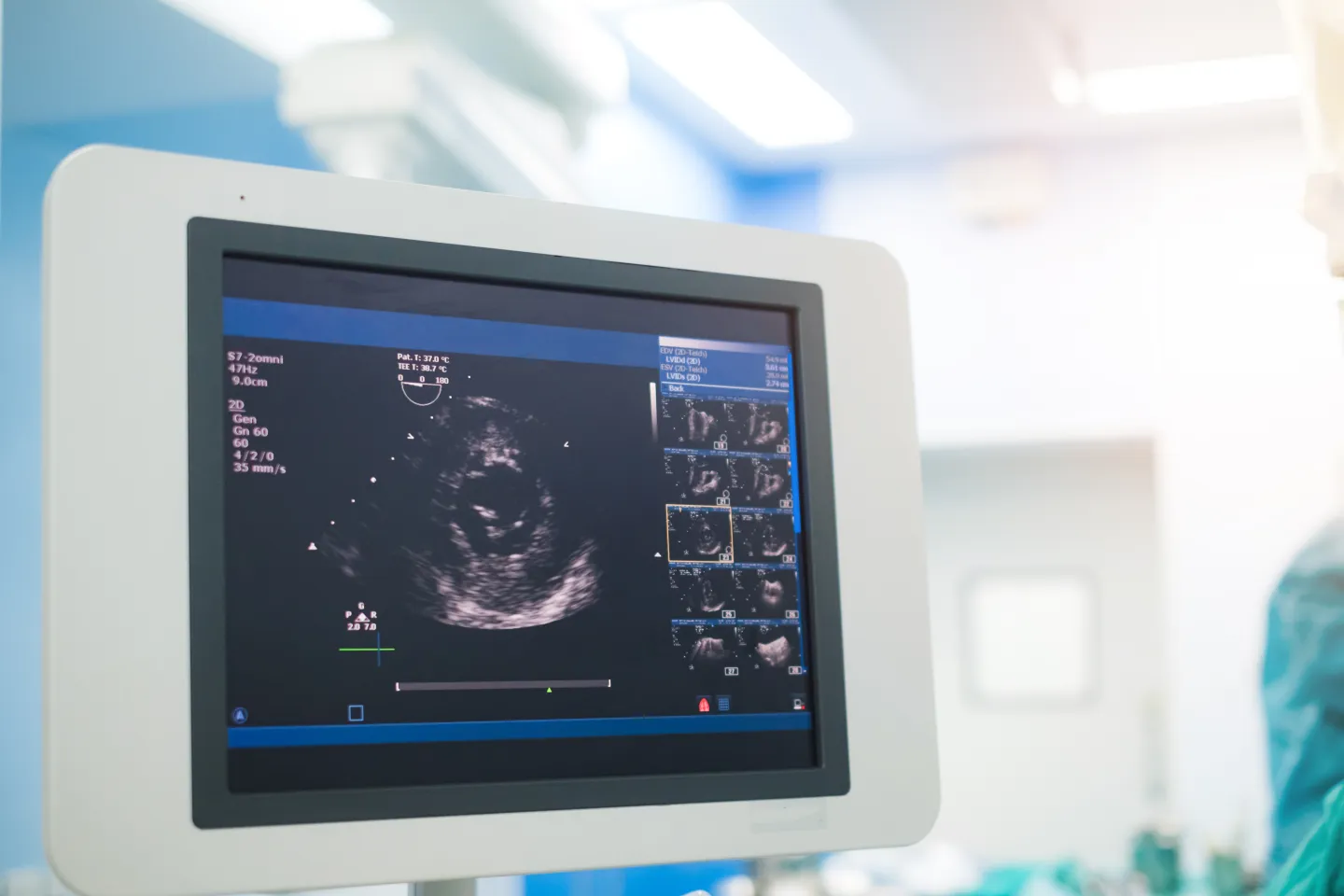
Our research spans every major area of women’s health, advancing innovation across each subspecialty to improve outcomes. In maternal-fetal medicine, we lead investigations in noninvasive fetal monitoring, fetal ultrasound, preterm birth prevention, virtual reality–enhanced simulation to improve delivery techniques and the use of artificial intelligence (AI) to enhance imaging precision and improve assessments of fetal well-being. In reproductive and medical genetics, our work focuses on advancing novel methods for prenatal screening, diagnostic testing and early detection, enhancing AI-driven risk assessment and predictive modeling for personalized care, as well as developing and evaluating new modalities for diagnosis and management of hereditary cancer syndromes to inform screening, prevention strategies and genetic counseling. In reproductive endocrinology and infertility, our research includes fertility preservation and treatment and the development of new innovations in assisted reproductive technologies (ART) to boost procedural success rates. In complex family planning, we are advancing the development of new contraceptive methods and improving the management of pregnancy loss.

In general gynecology, our research addresses sexual and reproductive health, maternal mental health, estrogen-related conditions in perimenopause and menopause and health concerns in women living with human immunodeficiency virus (HIV). In gynecologic oncology, we focus on HPV prevention and vaccination, cancer screening and early cancer detection, stem cell biology and the development of novel targeted therapies for HPV-related and other gynecologic cancers. In gynecologic surgery, we continue to develop and refine minimally invasive surgical and simulation-based approaches, and in urogynecology, our research explores the underlying mechanisms and pathophysiology of pelvic floor disorders, regenerative therapies, neuromodulation and evaluating and developing treatments for overactive bladder and stress urinary incontinence.

Our research focuses on advancing novel methods for prenatal screening, diagnostic testing and early detection, as well as developing and evaluating new modalities for the diagnosis and management of hereditary cancer syndromes to inform screening, prevention strategies and genetic counseling. Through these initiatives, we aim to expand reproductive options, improve early identification of genetic conditions and optimize clinical outcomes for individuals and families affected by or at risk for genetic and hereditary conditions.

Our physician-scientists are recognized thought leaders in the field, contributing to the development of practice resources and clinical guidelines for the American College of Medical Genetics and Genomics (ACMG)—from prenatal and preconception screening for fetal chromosome abnormalities and autosomal recessive and X-linked conditions during pregnancy to the management of individuals with pathogenic variants. We also developed a novel functional variant assay designed to identify mismatch repair defects that may help identify individuals at increased risk for hereditary cancer syndromes with a high level of precision.

In collaboration with our Department of Genetics, our basic science programs are advancing cellular and molecular research—from investigating the mechanisms responsible for birth defects in 22q11.2 deletion syndrome (22q11.2DS) to leading the nation’s largest pilot newborn screening study of its kind (ScreenPlus).

Our researchers actively conduct basic, translational and clinical research to advance maternal-fetal medicine and improve health outcomes for women and their newborn babies. Major areas of focus include fetal genetics and developmental biology, genetic screening for prenatal diagnosis, novel treatments for high-risk pregnancies, maternal health outcomes, perinatal and reproductive medicine, genomic medicine, stem cell biology, mother-child health and maternal mental health.

We are also developing and evaluating new diagnostic and therapeutic strategies, including noninvasive fetal monitoring technologies, novel interventions to reduce or prevent preterm birth and virtual reality-enhanced haptic simulation technologies to improve obstetric delivery techniques.

Our physicians discovered and patented the use of N,N-Dimethylformamide (DMA), a common, inexpensive and widely available compound that could benefit millions of at-risk women and infants by reducing or preventing preterm birth. Various delivery methods for this groundbreaking therapy are currently being evaluated through a four-year grant from the National Institute of General Medical Sciences (NIGMS).

Our main areas of research focus include exploring the underlying mechanisms of infertility and menopause; advancing fertility preservation and fertility treatments; studying the development of reproductive disorders, human endometrial maturation and the effects of obesity and weight loss on reproductive function; investigating new causes and prevention of pregnancy loss, and examining the role of microRNAs as gene regulators in endometrial function.

Our researchers have made numerous seminal contributions to the field, including identifying that colony-stimulating factor 1 (CSF-1) signaling is essential for preimplantation development and defining the mechanism of how progesterone negatively regulates estrogen-induced uterine epithelial cell proliferation and preparing the uterus for blastocyst implantation.

We are studying the function of nucleolar channel systems (NCSs)—micron-sized membranous organelles—in human reproduction which are implicated in the preparation of the endometrium for uterine attachment of the fertilized egg and the timing of embryo transfer in in vitro fertilization (IVF) cycles to boost IVF success rates. Our researchers also recently developed a personalized prediction model of live birth after IVF in women with polycystic ovary syndrome.

We are also conducting numerous large-scale Society for Assisted Reproductive Technology (SART) Clinic Outcome Reporting System studies. We conducted the largest study to date, analyzing clinical and neonatal outcomes between frozen and fresh oocytes after fresh embryo transfer, in both donor and autologous oocyte cycles. We conducted the first and largest study to use the SART national registry to understand the clinical implications of using intracytoplasmic sperm injection (ICSI) stratified by type of embryo transfer (fresh, frozen-thawed with preimplantation genetic testing—PGT and frozen-thawed without PGT) and whether ICSI is indicated.

Our research focuses on translational, educational, and clinical interventions that address fertility choices, contraceptive applications, management of pregnancy loss and selective termination.

Montefiore Einstein has been selected by the National Institute of Child Health and Human Development (NICHD) as a member of the Contraceptive Clinical Trials Network (CCTN) to help develop new methods of female and male contraception. We are leading innovative research and clinical trials—from evaluating the contraceptive efficacy and safety of a novel transdermal delivery system, to assessing the safety of an investigational nonhormonal vaginal contraceptive, to optimizing the generation of monoclonal antibodies for the prevention and treatment of the herpes simplex virus. (The Herold Lab)

Our researchers lead basic, translational and clinical investigations to advance fetal medicine and improve outcomes for both mother and baby. Key areas of focus include fetal genetics and developmental biology, prenatal genetic screening and diagnosis, early detection of structural anomalies through advanced ultrasound imaging, fetal therapies for high-risk pregnancies and the integration of genomic medicine into prenatal care. We are also developing and evaluating new diagnostic and therapeutic strategies, including noninvasive fetal monitoring technologies and novel interventions to prevent preterm birth.

Our team has led numerous studies in fetal medicine and prenatal diagnostics. As global principal investigators of the SMART Study—the largest multicenter prospective NIPT study ever conducted and the first large-scale study to collect genetic outcomes in most participants—we investigated the performance of cell-free deoxyribonucleic acid (cfDNA) screening for the prenatal detection of 22q11.2DS and how high-risk screening results for 22q11.2DS influenced obstetric and neonatal management. We also assessed obstetrical, perinatal and genetic outcomes associated with nonreportable cfDNA screening results.

Additional work includes evaluating the clinical utility of expanded NIPT, the impact of the routine implementation of cfDNA aneuploidy screening on the performance of first-trimester ultrasound and the development of an AI model for early prediction of preeclampsia using cfDNA biomarkers and patient data. In placenta accreta spectrum (PAS) research, we investigated first-trimester screening and used machine learning for the prediction of PAS-related surgical morbidity. We also studied the association between second-trimester fetal abdominal circumference and the prediction of small for gestational age (SGA) at birth, and examined the association of third-trimester resolution of low placentation and other prenatal ultrasound markers and postpartum hemorrhage with delivery.

Our researchers lead basic, translational and clinical investigations to advance obstetric medicine and improve outcomes for both mother and baby. Key areas of focus include fetal genetics and developmental biology, prenatal genetic screening and diagnosis, early detection of structural anomalies through advanced ultrasound imaging, innovative therapies for high-risk pregnancies, maternal mental health, breastfeeding, maternal and fetal health outcomes and the integration of genomic medicine into prenatal care. We are also developing and evaluating new diagnostic and therapeutic strategies, including noninvasive fetal monitoring technologies and novel interventions to prevent preterm birth, as well as virtual reality-enhanced haptic simulation research to improve delivery techniques.

In placenta accreta spectrum (PAS) research, we investigated first-trimester screening and used machine learning for the prediction of PAS-related surgical morbidity. We also studied the association between second-trimester fetal abdominal circumference and the prediction of small for gestational age at birth (SGA), and examined the association of third-trimester resolution of low placentation and other prenatal ultrasound markers and postpartum hemorrhage with delivery.

Our researchers actively lead basic, translational and clinical investigations to advance the understanding, diagnosis and treatment of a wide range of obstetric, gynecologic and women’s health conditions—from high-risk pregnancies, fetal and maternal health concerns and preterm birth to pelvic floor disorders, menopausal changes, sexually transmitted infections (STIs), HPV detection and gynecologic cancer prevention. The research is designed to improve outcomes across every stage of life—from adolescence through menopause—and optimize care for both mother and baby.

Key areas of focus include fetal genetics and developmental biology, prenatal genetic screening and diagnosis, early detection of structural anomalies through advanced ultrasound imaging, maternal mental health, breastfeeding and the integration of genomic medicine into prenatal care. We are also developing and evaluating new diagnostic and therapeutic strategies, including noninvasive fetal monitoring technologies and novel interventions to prevent preterm birth, as well as virtual reality-enhanced haptic simulation research to improve delivery techniques. In gynecology, our researchers are exploring and advancing innovations in pelvic floor disorder management, menopause and hormonal health, STI prevention and gynecologic cancer screening.

Our Gynecologic Oncology Program is fully integrated with our comprehensive cancer center—among the elite 1% NCI-designated comprehensive cancer centers in the U.S. Our researchers lead basic, translational and clinical investigations to advance outcomes in gynecologic cancer care—improving prevention, early detection, diagnosis, treatment and survivorship through innovations in screening technologies, targeted therapies and strategies that enhance long-term quality of life. Key areas of research include HPV prevention through vaccines and other risk-reduction strategies; the development of advanced screening and diagnostic tools for earlier, more accurate detection of cancer; exploration of stem cell biology; identification of molecular and genetic biomarkers to inform personalized treatments, and the development of novel targeted therapies for HPV-related and other gynecologic cancers.

Our breakthrough discoveries have led to the development of many of the latest diagnostics and treatments used today––from Taxol, one of the world’s most widely used anti-tumor drugs for breast and ovarian cancer to a novel HPV screening test to more accurately detect hard-to-find cervical cancers that are often missed by Pap tests. We remain one of the few centers in the nation with an active Phase 1 program using cellular therapies to treat patients with solid gynecological tumors. Our work has shaped national guidelines for cervical cancer screening and HPV vaccination, and continues to redefine standards in gynecologic oncology.

Montefiore Einstein was selected as one of the lead U.S. sites testing at-home self-collected vaginal samples for HPV testing as part of a National Cancer Institute (NCI) clinical trial to improve cervical cancer prevention. We also developed a novel HPV screening test to more accurately detect hard-to-find cervical cancers that are often missed by Pap tests. Our landmark research on primary HPV screening and molecular cervical cancer screening in women living with HIV has contributed to national guidelines on cervical cancer screening and HPV vaccination.

Our research spans basic, translational and clinical science, with a focus on advancing the understanding and management of complex gynecologic and women’s health conditions. Core areas of investigation include the development of novel surgical technologies and techniques, strategies to improve perioperative outcomes—including the prevention of surgical site infections, enhancement of the patient experience across the surgical care continuum and the evaluation and implementation of enhanced recovery after surgery (ERAS) protocols. Our researchers are also exploring the clinical applications of emerging minimally invasive approaches, such as vaginal natural orifice transluminal endoscopic surgery (vNOTES).

Additional research efforts include advancements and updates in uterine artery embolization techniques for the management of leiomyomas, as well as the integration of surgical ergonomics education within minimally invasive gynecologic skills training aimed at improving surgeon well-being and optimizing technical performance. We also contributed to the development of the American Association of Gynecologic Laparoscopists (AAGL) endometriosis classification—a new anatomy-based surgical complexity score designed to more reliably differentiate levels of surgical complexity and inform clinical decision-making.

In partnership with Montefiore Einstein Urology, our researchers are advancing the understanding of the underlying mechanisms and pathophysiology of pelvic floor disorders, including bladder pain syndrome and overactive bladder; exploring applications of telemedicine in urogynecology and reconstructive pelvic surgery; investigating the association between frailty and pelvic floor dysfunction; evaluating medical therapies for overactive bladder, and studying pelvic health outcomes.

Through National Institutes of Health (NIH)-funded grants, we are also examining the role of neuron-satellite glia cell signaling in pelvic pain and visceral cross-sensitization and pioneering clinical trials for the treatment of overactive bladder using naked DNA gene transfer. Additionally, we are developing novel surgical techniques for the treatment of stress urinary incontinence.

Clinical Trials

We are spearheading all phases and types of clinical trials, including several sponsored by the NIH, translating novel scientific discoveries into new diagnostics and treatments to help improve clinical outcomes. By enrolling in a clinical trial, you can help our scientists develop new treatments, diagnostic tools and other strategies to prevent, diagnose and treat maternal, fetal, obstetric, gynecologic and women’s health conditions. Through our clinical trials, you may also be able to access emerging technologies and innovative treatments that may otherwise not be available to the general public.

Microscopic view of an embryo being injected with a pipette during an in vitro fertilization procedure.

The Latest Research

Stay up to date on the latest research news and advances in obstetrics, gynecology and women’s health at Montefiore Einstein Obstetrics & Gynecology and Women’s Health.

Surreal digital artwork of two hands holding a sphere made of colorful, oval mirrors reflecting abstract human faces, set against a purple and rainbow-gradient background.

Make a Gift

Your contribution to Montefiore Einstein Obstetrics & Gynecology and Women’s Health supports our vital efforts in research, education and clinical excellence.