

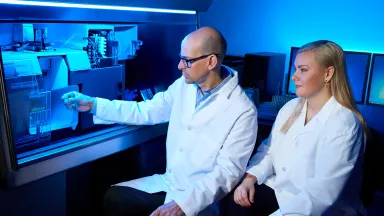


¿Por qué elegir Montefiore Einstein para el tratamiento de trastornos inmunohematológicos?
El Programa de Inmunohematología de Montefiore Einstein es un centro de referencia que ofrece atención integral y personalizada para adultos y niños con una amplia gama de trastornos hematológicos inmunitarios. Estos incluyen púrpura trombocitopénica inmunitaria (PTI), púrpura trombocitopénica trombótica (PTT), síndrome de anticuerpos antifosfolípidos (SAF), anemia hemolítica autoinmune por anticuerpos calientes (AHAIc), enfermedad por crioaglutininas (ECA), neutropenia autoinmune, síndrome de Evans y trastornos del complemento como hemoglobinuria paroxística nocturna (HPN) y síndrome urémico hemolítico atípico (SUHa).
Nuestro equipo multidisciplinario de hematólogos, inmunólogos, reumatólogos, nefrólogos, genetistas y otros especialistas de renombre mundial garantiza una atención integral en nuestras sedes del Bronx y el área metropolitana de Nueva York, incluyendo el condado de Westchester y el valle del Hudson. Nuestro equipo médico se especializa en el diagnóstico de enfermedades hematológicas autoinmunes raras y complejas, utilizando un enfoque de atención centrado en el paciente y basado en la investigación, adaptado a las necesidades únicas de cada persona. También colaboramos con un equipo multidisciplinario especializado en microangiopatía trombótica (MAT) para garantizar una evaluación rápida, un diagnóstico precoz y un tratamiento oportuno de las MAT, asegurando así resultados óptimos. Utilizamos los diagnósticos más avanzados y los tratamientos de vanguardia, incluyendo el acceso a numerosos ensayos clínicos, lo que permite a nuestros pacientes beneficiarse de los últimos avances en trastornos hematológicos autoinmunes raros que podrían no estar disponibles para el público en general.
Somos un centro de referencia para los casos más complejos. Nuestro programa ofrece un espectro completo de servicios, desde la prevención, el diagnóstico y el tratamiento hasta el acceso a asesoramiento genético, organizaciones de apoyo al paciente y educación. También colaboramos con la Centro para trastornos sanguíneos e inmunitarios de origen genéticoUna de las primeras y únicas clínicas del país dedicadas a la atención multidisciplinaria de pacientes con trastornos sanguíneos e inmunitarios de origen genético. En Inmunohematología de Montefiore Einstein, nos comprometemos a brindar atención de la más alta calidad, mejorar los resultados y garantizar que cada paciente reciba una atención hematológica excepcional y especializada.
Su equipo de inmunohematología
Nuestro equipo multidisciplinario de médicos de renombre internacional se especializa en la prevención, el diagnóstico y el tratamiento de todo tipo de enfermedades inmunohematológicas en adultos y niños. Brindamos una atención integral y personalizada, centrada en optimizar la salud y mejorar la calidad de vida de cada paciente.

Irina Murakhovskaya, Doctora en Medicina

Dr. Zhengrui Xiao
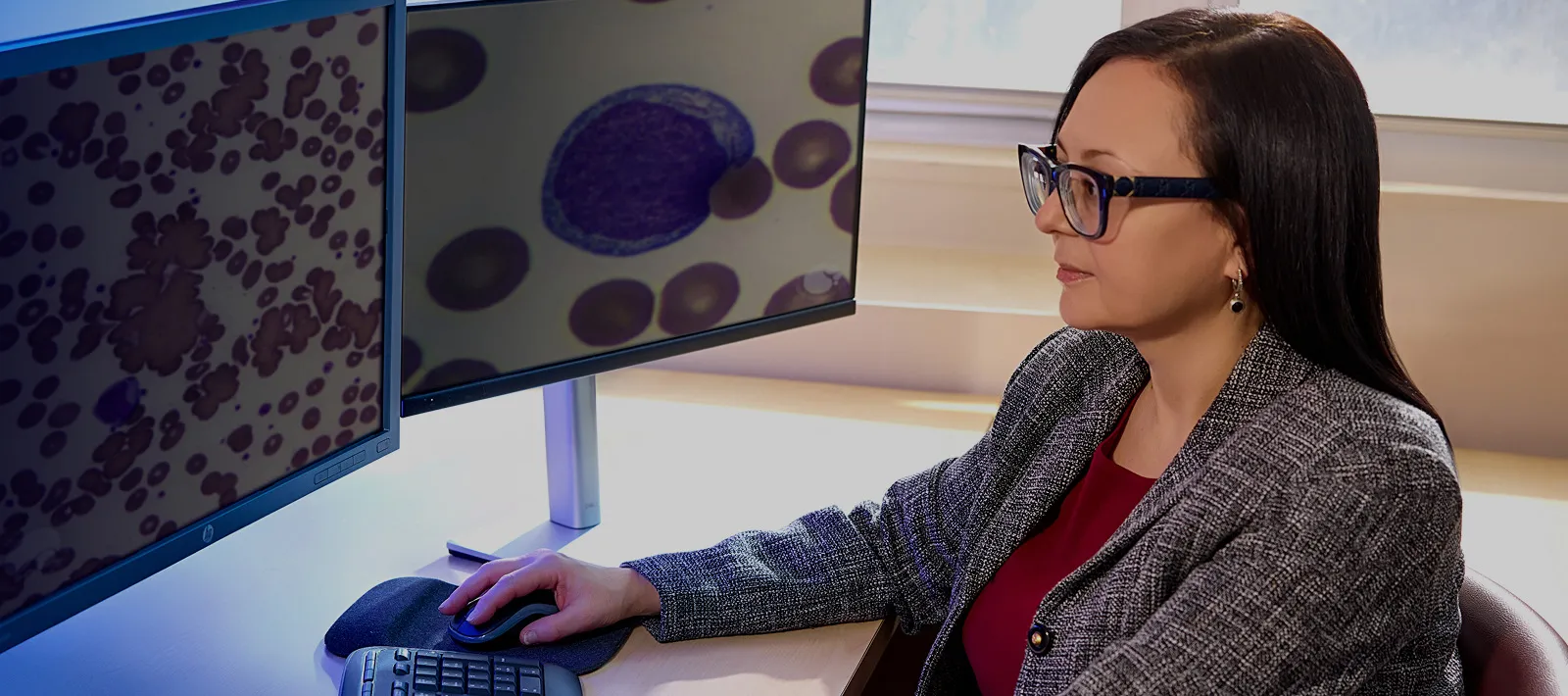
Diagnóstico y tratamientos avanzados para trastornos hematológicos inmunitarios.
Utilizamos los métodos de diagnóstico y tratamiento más avanzados para la prevención, el diagnóstico y el manejo de todo el espectro de trastornos hematológicos e inmunológicos en adultos y niños. Nuestro equipo ofrece una atención integral y personalizada, centrada en optimizar la salud y la calidad de vida.
Además del hemograma completo, el recuento de reticulocitos y el análisis de frotis de sangre periférica, realizamos evaluaciones diagnósticas clínicas y de laboratorio exhaustivas utilizando las pruebas de laboratorio más avanzadas. Estas incluyen estudios avanzados de coagulación, análisis de plaquetas, estudios de autoanticuerpos antiplaquetarios e inmunoglobulinas, pruebas de antiglobulina indirecta y pruebas de antiglobulina directa que evalúan la presencia de inmunoglobulina y/o complemento en la superficie de los glóbulos rojos. Otros diagnósticos incluyen pruebas de ADAMTS13; pruebas de complemento; evaluación de TMA e inmunodeficiencia; y estudios para otras afecciones genéticas, linfoproliferativas, autoinmunes y metabólicas asociadas. También ofrecemos acceso a pruebas genéticas con secuenciación masiva en paralelo para facilitar enfoques de medicina de precisión. Utilizamos imágenes avanzadas, incluyendo tomografía computarizada (TC) y resonancia magnética (RM) de 3T, y realizamos pruebas de detección de infecciones que podrían estar relacionadas con la PTI y otras afecciones. Para ciertos casos, también ofrecemos las técnicas más recientes de aspiración y biopsia de médula ósea.
Según el diagnóstico y otros factores como el recuento sanguíneo, los síntomas y los tratamientos previos, ofrecemos una gama completa de los tratamientos personalizados y específicos más recientes. Se ofrecen modificaciones del estilo de vida y medidas de apoyo, como evitar la exposición al frío para pacientes con enfermedad coronaria o suspender la terapia farmacológica para pacientes con anemia hemolítica autoinmune inducida por fármacos, así como otras terapias de apoyo como transfusiones de plaquetas o glóbulos rojos, eritropoyetina recombinante para pacientes con anemia hemolítica autoinmune (AHAI) con recuentos reticulocitarios insuficientes, y profilaxis antitrombótica y antibiótica.
Ofrecemos acceso a los tratamientos farmacológicos más avanzados, desde medicamentos tradicionales como corticosteroides y otros agentes inmunosupresores, inmunoglobulina intravenosa, transfusión de plaquetas y terapias hemostáticas, como el ácido tranexámico, hasta terapias de reciente aparición. Brindamos acceso a una amplia gama de terapias con anticuerpos monoclonales que actúan sobre diferentes partes del sistema inmunitario, como rituximab (anticuerpo quimérico anti-CD20), inhibidores del complemento como sutimlimab (anti-C1s), eculizumab (anti-C5), ravulizumab (anti-C5), pegcetacoplan (anti-C3) e iptacopan (anti-factor B) para pacientes con trastornos del complemento. Además, proporcionamos fostamatinib (un inhibidor de la tirosina quinasa esplénica) para pacientes con antecedentes de eventos trombóticos y agonistas del receptor de trombopoyetina (como eltrombopag o romiplostim) para el tratamiento de la trombocitopenia inmune crónica.
Para la AIHA, ofrecemos acceso a diversas terapias emergentes, que incluyen terapia dirigida a las células B (inhibición de CD20, PI3K, BTK, BAFF y mTOR), inhibición de la fagocitosis (inhibición de Syk y FcRn), terapia dirigida a las células plasmáticas (inhibición del proteasoma y anticuerpos monoclonales CD38) e inhibición del complemento con el inhibidor de C1s sutimlimab.
Para la hemólisis intravascular mediada por el complemento en afecciones como la HPN y el SHUa, ofrecemos acceso a nuevos inhibidores del complemento, incluidos los inhibidores de C5 como eculizumab, ravulizumab de acción prolongada y biosimilares de eculizumab. También ofrecemos los inhibidores del complemento proximales recientemente aprobados pegcetacoplan, iptacopan y danicopan, así como otros tratamientos emergentes que actúan en múltiples puntos de la vía del complemento.
En casos refractarios, puede estar indicada la extirpación del bazo (esplenectomía). En estos casos, nuestro equipo de cirujanos de renombre internacional utiliza las técnicas quirúrgicas más avanzadas, tanto abiertas como mínimamente invasivas y robóticas.

Investigación y ensayos clínicos para trastornos hematológicos inmunitarios.
Lideramos la investigación colaborativa y dirigimos numerosos estudios y ensayos clínicos, algunos de ellos iniciados por investigadores, financiados por la industria y patrocinados por los Institutos Nacionales de Salud. Gracias a nuestros ensayos clínicos, nuestros pacientes pueden acceder a tecnologías emergentes y tratamientos innovadores que, de otro modo, no estarían disponibles para el público en general.
Hemos participado en numerosos ensayos clínicos que evalúan la eficacia y seguridad de diversos medicamentos novedosos para el tratamiento de enfermedades hematológicas inmunológicas como la anemia hemolítica autoinmune por anticuerpos calientes (AHAI-c), la enfermedad arterial coronaria (EAC), la púrpura trombocitopénica idiopática (PTI), la púrpura trombocitopénica trombótica (PTT), el síndrome urémico hemolítico atípico (SUHa) y la hemoglobinuria paroxística nocturna (HPN). También estamos estudiando los inhibidores del factor activador de células B como posible terapia inmunomoduladora en la AHAI-c y recientemente publicamos los resultados de un estudio de fase 2, abierto, de parsaclisib para el tratamiento de la AHAI primaria. Asimismo, publicamos un estudio de cohorte retrospectivo que describe los patrones de tratamiento en la práctica clínica real y la utilización de recursos sanitarios en pacientes con AHAI-c que inician tratamiento de primera línea con corticosteroides orales con o sin rituximab.
También desempeñamos un papel fundamental en la elaboración de recomendaciones consensuadas para el diagnóstico y el tratamiento del síndrome de Evans en adultos.
Ensayos clínicos activos
Entre nuestros ensayos clínicos activos, participamos en un estudio multicéntrico de fase 3, aleatorizado, doble ciego y controlado con placebo que evalúa la eficacia y seguridad de rilzabrutinib, un inhibidor de la tirosina quinasa de Bruton administrado por vía oral, en adultos y adolescentes con PTI persistente o indetectable. También participamos en un estudio de fase 3, aleatorizado y doble ciego que evalúa la eficacia y seguridad de ianalumab en comparación con placebo en pacientes con AIHA húmeda que no respondieron al menos a una línea de tratamiento y en un estudio de fase 3, aleatorizado y doble ciego de ianalumab (VAY736) frente a placebo además de corticosteroides de primera línea en trombocitopenia inmune primaria (VAYHIT1).
También participamos en un programa de extensión multicéntrico, abierto, para caracterizar la seguridad y la tolerabilidad a largo plazo de iptacopan en pacientes con hemoglobinuria paroxística nocturna (HPN) que han completado los estudios de fase 2 y fase 3 de HPN con iptacopan.

Servicios de orientación y apoyo asistencial para trastornos inmunohematológicos
Si usted o su hijo han recibido un diagnóstico reciente de una afección hematológica inmunológica o están recibiendo tratamiento, nuestro equipo de renombre mundial en Hematología (Trastornos de la Sangre) de Montefiore Einstein está aquí para brindarle apoyo, atención y recursos excepcionales. Nuestro centro integral ofrece una amplia gama de atención tradicional y holística, desde la detección, la prevención y el diagnóstico hasta el tratamiento y la recuperación, incluyendo servicios sociales y de apoyo, acceso a organizaciones de apoyo al paciente, asesoramiento genético y educación. Nuestra amplia gama de recursos nos permite brindar una atención altamente especializada y coordinada que considera a la persona en su totalidad, abordando las complejas necesidades médicas de cada individuo y mejorando su calidad de vida. Nuestro equipo de médicos, enfermeros, especialistas y personal de apoyo, compasivos y con amplios conocimientos, está dedicado a ayudarle en cada etapa de su proceso de atención.
Acerca de los trastornos inmunohematológicos
Los trastornos hematológicos inmunitarios son un amplio grupo de afecciones en las que el sistema inmunitario ataca las células sanguíneas mediante la producción de autoanticuerpos que atacan y destruyen los glóbulos rojos, los glóbulos blancos y/o las plaquetas del individuo, causando citopenias (niveles bajos de estas células) o activando el sistema del complemento, lo que puede provocar daño tisular y desencadenar inflamación sistémica. Estas afecciones pueden estar asociadas con inmunodeficiencia subyacente, autoinmunidad sistémica, ciertos medicamentos, transferencia transplacentaria de aloanticuerpos maternos y anticuerpos contra factores de coagulación, lo que puede resultar en trombosis y hemorragia. También pueden causar reacciones hemolíticas y no hemolíticas durante las transfusiones de sangre.
Las citopenias autoinmunes incluyen PTI, AHAI, AHAI-c, EAC, neutropenia autoinmune y síndrome de Evans. La PTT suele ser de origen inmunológico debido a autoanticuerpos que inhiben la actividad de ADAMTS13 plasmática, aunque a veces puede ser hereditaria. El SAF es un trastorno autoinmune en el que los autoanticuerpos atacan los fosfolípidos y pueden aumentar el riesgo de coágulos sanguíneos. Los trastornos mediados por el complemento, como la HPN y el SHUa, también pueden provocar hemólisis y trombosis. Comprender la fisiopatología de los trastornos hematológicos autoinmunes y brindar una atención preventiva y terapéutica adecuada son fundamentales para reducir la morbilidad y prevenir el riesgo de complicaciones.