



Laboratorio de Neurociencia de la Drogadicción y de la Toma de Decisiones
Acerca de nuestro programa
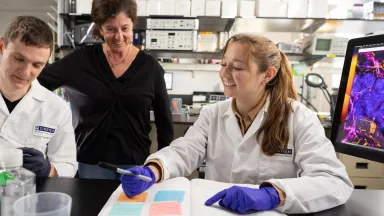
The Neuroscience of Drug Addiction and Decision-Making Laboratory at the Psychiatry Research Institute at Montefiore Einstein (PRIME) studies the neural basis of reward-guided decision-making, drug addiction and motivated behavior. We are an interdisciplinary team that uses a broad range of approaches from molecular, systems, computational and behavioral neuroscience, emphasizing quantitative rigor and pushing the technical boundaries of experimentation.
Seeking to address drug addiction and its public health burden for which few effective biologically based treatments exist, we are developing novel translational strategies for treating drug addiction.
Áreas de concentración
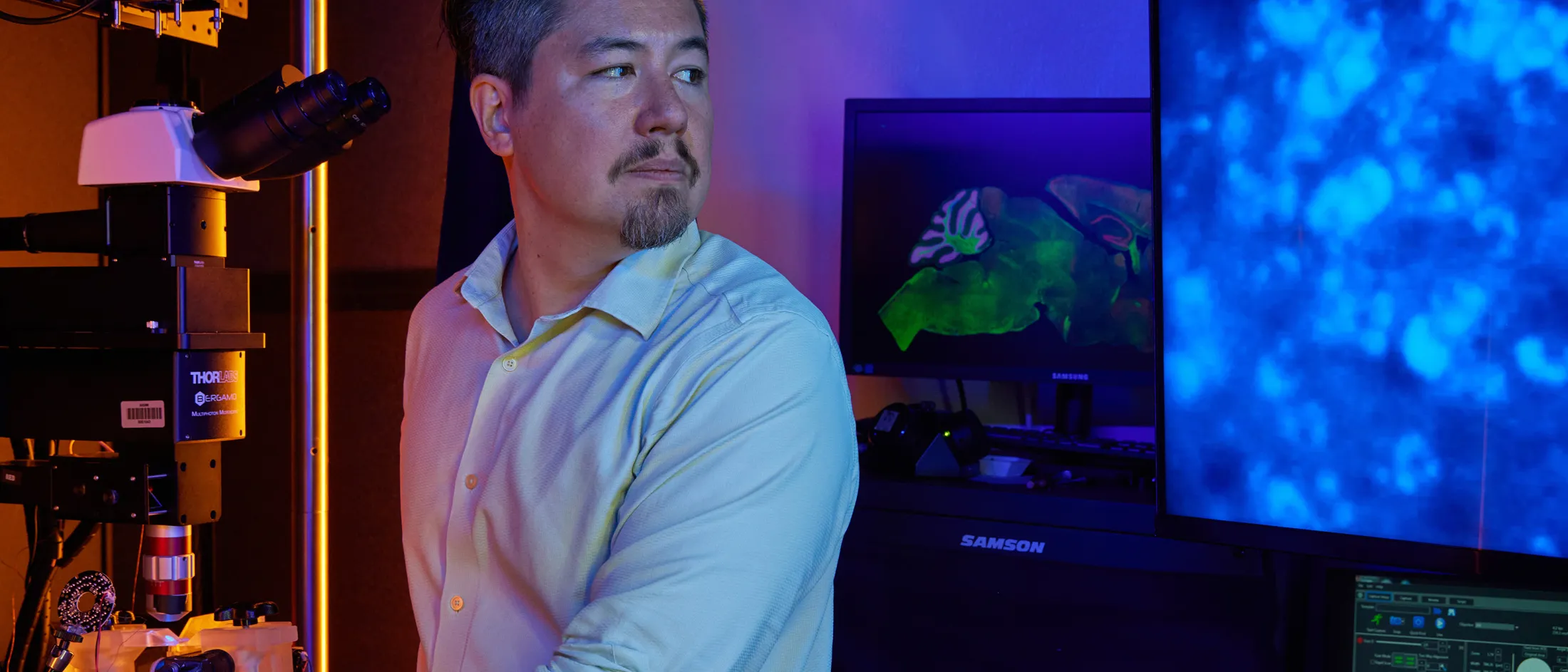
The Neuroscience of Drug Addiction and Decision-Making Laboratory studies how interactions between the hippocampus, nucleus accumbens and prefrontal cortex underlie both physiological reward valuation and the pathological overvaluation of drugs of abuse.
Our previous work characterized the role of interactions between hippocampus and nucleus accumbens in cocaine conditioned place preference, finding evidence that selective potentiation of specific hippocampal inputs to accumbens stores information linking certain spatial contexts to drug use. This research provides a possible mechanistic substrate for the well-known phenomenon by which relapse is triggered by exposure to “people, places and things” previously associated with drug use.
Proyectos y colaboraciones actuales
Our current work expands upon the role of interactions between the hippocampus and nucleus accumbens in cocaine conditioned place preference. We use a range of sophisticated approaches and focus on opioid and cocaine use disorders, including the novel designer receptors exclusively activated by designer drugs (DREADD) variants we have developed to target and manipulate several parts of the canonical basal ganglia-ventral tegmental area (VTA) circuit.
The foundation of most of our experiments includes:
- Carefully designed behavioral tasks that isolate the variables of interest and allow them to be measured quantitatively
- Freely moving and head-fixed versions of tasks in which an animal chooses between different options with unpredictable reward values
- Multi-site silicon optoprobe recordings in transgenic mice performing behavioral tasks
- Use of closed-loop optogenetic manipulations triggered on real-time analysis of local field potentials, spiking activity and behavioral events
- Linking transcriptomically defined cell classes to their functional roles during decision-making and addiction-related behaviors
- Developing a viral vector system to express DREADDs reversibly in wild animals for primate testing in collaboration with the Eskandar Laboratory for Learning & Cognition Research
About Lucas Sjulson, MD, PhD

Lucas Sjulson, MD, PhD
Profesor adjunto, Departamento de Psiquiatría y Ciencias del Comportamiento
Assistant Professor, Dominick P. Purpura Department of Neuroscience
Dr. Lucas Sjulson is a neuroscientist interested in the neural basis of reward-guided decision-making and drug addiction. He uses a broad approach incorporating cutting-edge systems, computational methods and molecular neuroscience. He is also a practicing psychiatrist interested in developing novel gene-based treatments for clinical use. Dr. Sjulson received a five-year, $2.5-million National Institutes of Health Director’s Pioneer Award from the National Institute on Drug Abuse (NIDA).