




Programa de Investigación sobre el Suicidio Juvenil
Acerca de nuestro programa
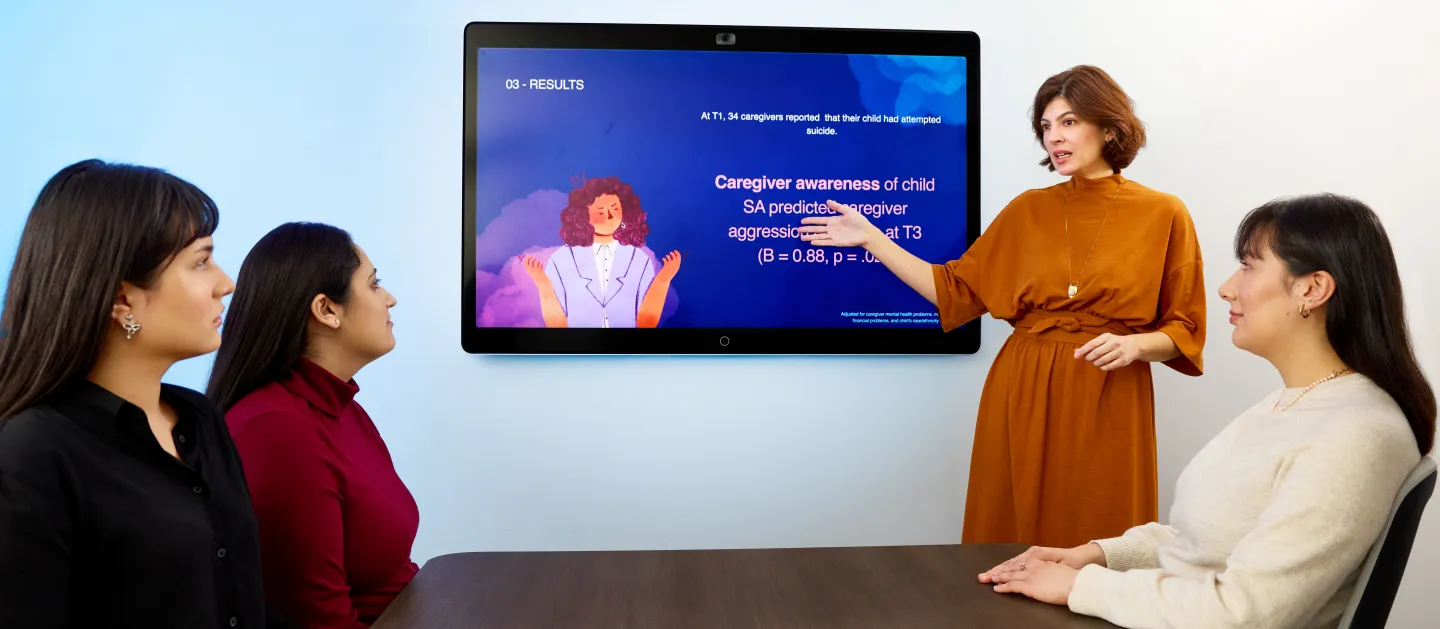
En el Programa de Investigación sobre el Suicidio Juvenil del Instituto de Investigación Psiquiátrica de Montefiore Einstein (PRIME, por sus siglas en inglés), se utilizan enfoques bigeneracionales para optimizar las evaluaciones de riesgo y las intervenciones dirigidas a niños con pensamientos y conductas suicidas, a la vez que se promueve el bienestar de toda la familia. A partir de nuestro enfoque, se reconoce que la dinámica y las influencias bidireccionales entre niños y cuidadores inciden tanto en el desarrollo infantil como en la salud familiar. Se plantea que las intervenciones centradas en la familia, que aprovechan las experiencias compartidas de los niños y sus cuidadores, probablemente sean más eficaces para reducir el riesgo de suicidio que los enfoques unigeneracionales.

Áreas de concentración
En el Programa de Investigación sobre el Suicidio Juvenil, dirigido por la Dra. Ana Ortin Peralta, se utiliza un enfoque de metodologías mixtas para analizar cómo interactúan el desarrollo y el contexto en el aumento del riesgo de suicidio en niños y adolescentes. Además, su investigación se centra en la identificación de los mecanismos psicológicos implicados.
Esta línea de investigación combina métodos mixtos y visuales para comprender mejor las características y los factores de riesgo de los pensamientos suicidas en niños de diversos entornos. Nuestro objetivo es mejorar las evaluaciones de riesgos y las intervenciones de planificación de la seguridad mediante la incorporación de nuevas perspectivas de desarrollo e informes de múltiples informantes.
Transmisión intergeneracional del riesgo de suicidio
El suicidio tiende a repetirse en las familias; sin embargo, este ámbito sigue estando poco explorado a pesar de su importancia para la prevención. A partir del análisis de grandes conjuntos de datos epidemiológicos, en nuestra investigación se busca identificar las condiciones y los mecanismos a través de los cuales se transmite el riesgo de suicidio en el ámbito familiar.
Dinámica familiar e influencias bidireccionales
Mediante metodologías mixtas y enfoques de múltiples informantes, nuestro objetivo es comprender cómo cada miembro de la familia y sus interacciones influyen en el desarrollo y la persistencia de los pensamientos y conductas suicidas en los niños. Al centrar la atención en la dinámica familiar y las influencias bidireccionales, buscamos identificar nuevos objetivos de intervención que atiendan las necesidades del niño o niña y de su familia.
Proyectos y colaboraciones actuales
En nuestro laboratorio, se llevan a cabo investigaciones epidemiológicas y clínicas de manera activa, y también nos dedicamos a la difusión. En nuestros estudios actuales, se realizan análisis cualitativos de diversas fuentes de datos, como entrevistas, dibujos y representaciones corporales, de niños con pensamientos y conductas suicidas. Además, se realizan análisis secundarios de conjuntos de datos epidemiológicos que incorporan informes de múltiples informantes sobre los factores socioemocionales y el riesgo de suicidio.
Con la financiación de una subvención R01 del Instituto Nacional de Salud Mental (NIMH, por sus siglas en inglés), en colaboración con la Dra. Regina Miranda, del Hunter College de la City University of New York (CUNY), y la Dra. Lauren Gulbas, de Steve Hicks School of Social Work de The University of Texas at Austin, en nuestro programa se utilizan metodologías mixtas y enfoques de múltiples informantes para caracterizar los pensamientos suicidas y las manifestaciones de angustia en la infancia. Con el apoyo de un consejo asesor comunitario, se reclutan a 150 niños de entre 8 y 12 años, de diversos contextos, que recientemente hayan experimentado pensamientos suicidas o intentos de suicidio, junto con sus cuidadores, provenientes de los servicios de urgencias del Bronx y Manhattan (Nueva York) y Austin (Texas).
Acerca de Ana Ortin Peralta, PhD

Ana Ortin Peralta, PhD
Profesora Clínica Adjunta, Departamento de Psiquiatría y Ciencias del Comportamiento
La Dra. Ortin Peralta es profesora adjunta del Programa de Psicología Infantil Clínica y Educativa de Ferkauf Graduate School of Psychology de Yeshiva University y profesora clínica adjunta del Instituto de Investigación Psiquiátrica de Montefiore Einstein (PRIME).
La Dra. Ortin Peralta completó su capacitación en psicología clínica en el Hospital Universitario Vall d’Hebron de Barcelona, España. En 2010, la Fundación Alicia Koplowitz le otorgó un fellowship predoctoral de dos años en el Instituto Psiquiátrico del Estado de Nueva York/Centro Médico de la Universidad de Columbia. Poco después de doctorarse en la Universitat Autónoma de Barcelona, en 2015, se incorporó al Laboratorio para el Estudio de la Cognición Juvenil y el Suicidio del Hunter Collage de la City University of New York (CUNY), donde completó su capacitación postdoctoral.
La Dra. Ortin Peralta ha recibido financiación como investigadora principal de la Fundación Estadounidense para la Prevención del Suicidio (AFSP, por sus siglas en inglés) y la Sociedad para la Investigación en el Desarrollo Infantil (SRCD, por sus siglas en inglés). Además, participa como coinvestigadora en una subvención R01/RF1 en la que se investigan los procesos cognitivos y bioconductuales relacionados con la conducta suicida en adolescentes y en un proyecto complementario destinado a analizar el contenido de los pensamientos suicidas en niños.