


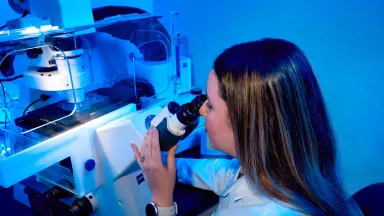
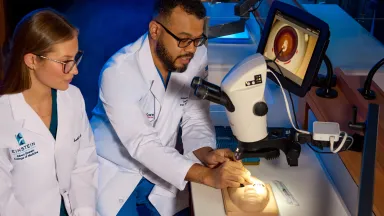

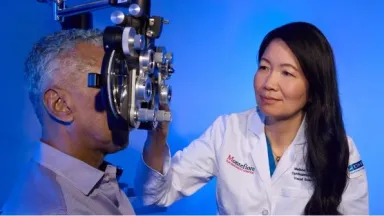

Nuestro enfoque para la uveítis (inflamación ocular)



El Departamento de Oftalmología y Ciencias Visuales de Montefiore Einstein es líder mundial en la prestación de atención integral y personalizada para adultos y niños con todo el espectro de inflamación ocular debida a enfermedades autoinmunes, etiologías infecciosas o síndromes que simulan otras afecciones. Estas incluyen uveítis anterior, uveítis intermedia, uveítis posterior, panuveítis, vasculitis retiniana, escleritis y penfigoide cicatricial ocular.
Nuestro equipo multidisciplinario de médicos de renombre mundial incluye oftalmólogos certificados y con formación especializada en uveítis e inmunología ocular. Dado que la uveítis suele estar asociada a enfermedades sistémicas subyacentes, colaboramos estrechamente con reumatólogos pediátricos y de adultos, infectólogos, gastroenterólogos, neumólogos, oncólogos y otros expertos, brindando una atención integral y coordinada para garantizar los mejores resultados posibles para cada paciente. Mediante el uso de las últimas tecnologías de diagnóstico y las terapias médicas y quirúrgicas más avanzadas, incluyendo agentes inmunomoduladores ahorradores de esteroides, terapias biológicas y de liberación sostenida, nuestro equipo proporciona una atención individualizada adaptada a las necesidades de cada paciente. Como centro de referencia para los casos más complejos y de alto riesgo, nos comprometemos a proteger y preservar la visión, controlar la inflamación ocular, prevenir la progresión de la enfermedad y las complicaciones oculares, y mejorar la calidad de vida de cada paciente. Tanto si le han diagnosticado recientemente uveítis o escleritis, como si padece una enfermedad autoinmune o sistémica crónica que afecta a los ojos o si busca una segunda opinión, nuestro equipo está aquí para brindarle atención y orientación expertas en cada etapa de su tratamiento para la uveítis o la escleritis.
Experiencia reconocida internacionalmente en uveítis rara y hereditaria.
Además de atender las formas más comunes de uveítis, nuestros especialistas poseen una experiencia inigualable en el manejo de afecciones uveíticas raras y hereditarias. Evaluamos y tratamos síndromes como el síndrome de Blau, la nefritis tubulointersticial y uveítis (TINU) y la uveítis asociada al antígeno leucocitario humano (HLA), que a menudo requieren atención altamente especializada. Para personas con afecciones hereditarias o genéticas, colaboramos con el programa de Genética Pediátrica del Hospital Infantil de Montefiore Einstein, uno de los primeros y más reconocidos programas del país en brindar asesoramiento genético, pruebas y apoyo familiar.
A la vanguardia de la detección temprana de la uveítis y el control de la inflamación ocular.
Dado que la uveítis recurrente o crónica puede provocar daños estructurales irreversibles en el ojo y pérdida de visión si no se trata a tiempo, el diagnóstico precoz y el control sostenido de la inflamación son fundamentales en nuestro enfoque multidisciplinario. Nuestros especialistas en uveítis, formados mediante becas de especialización (entre los menos de 70 que existen en todo el país), combinan diagnósticos avanzados con una estrecha colaboración entre reumatología y otras subespecialidades para detectar la enfermedad precozmente, adaptar el tratamiento a la causa subyacente y brindar atención a largo plazo que preserve la visión, prevenga complicaciones y mejore la calidad de vida.
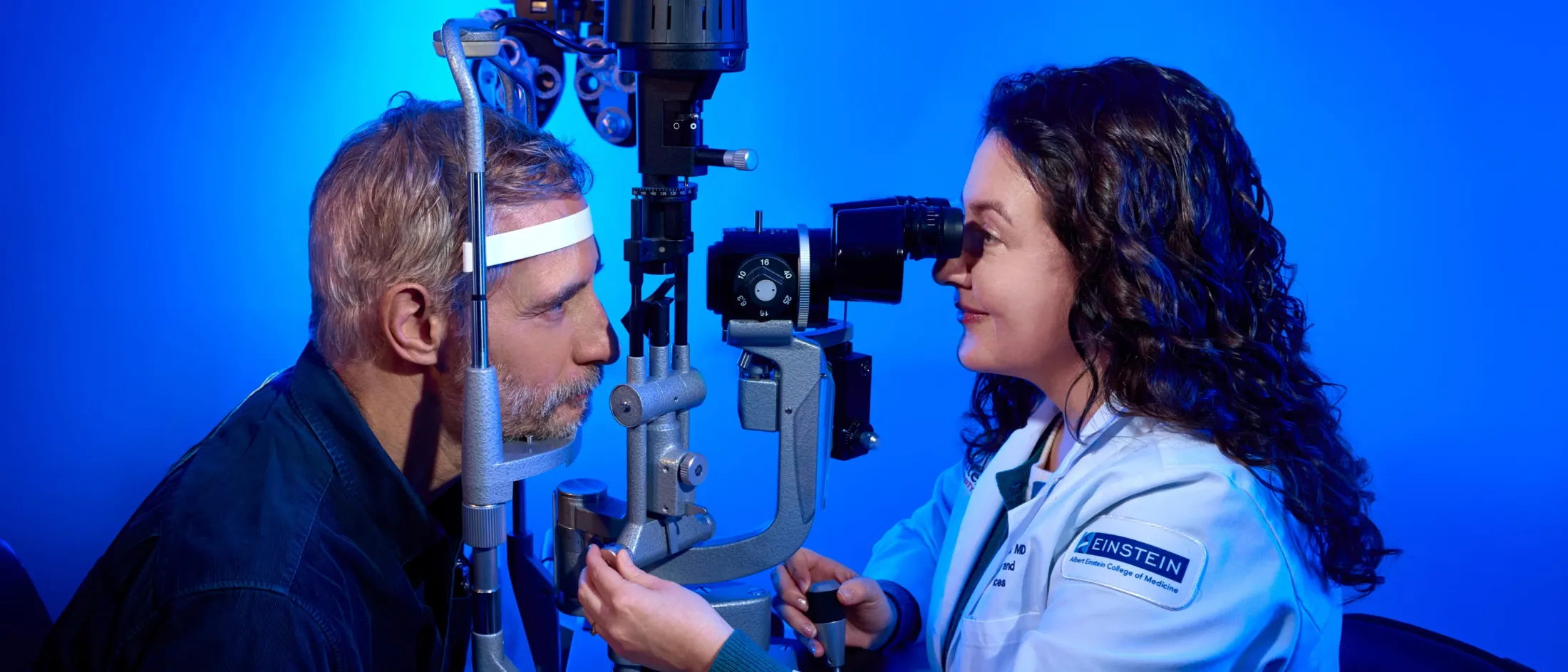
Diagnóstico y tratamientos avanzados
Ofrecemos acceso a las últimas tecnologías de diagnóstico y a los tratamientos más avanzados para la prevención, la detección precoz y el tratamiento de todo el espectro de la uveítis y las afecciones inflamatorias oculares.
Nuestros especialistas utilizan imágenes de alta resolución, incluyendo tomografía de coherencia óptica (OCT), angiografía OCT, angiografía con fluoresceína y verde de indocianina de campo ultraamplio, autofluorescencia del fondo de ojo e imágenes retinianas de campo amplio para visualizar incluso los cambios inflamatorios oculares más sutiles. También empleamos ecografía ocular y pruebas genéticas y de laboratorio específicas, incluyendo tipificación HLA y secuenciación de nueva generación, para identificar con precisión las causas infecciosas, autoinmunes y hereditarias de la uveítis. Para pacientes con enfermedades complejas o sistémicas, integramos imágenes multimodales avanzadas e inteligencia artificial, junto con herramientas mejoradas para monitorizar la inflamación, controlar la respuesta al tratamiento y guiar la atención a largo plazo.
Nuestro enfoque terapéutico se adapta a cada paciente, con el objetivo de abordar la causa subyacente de la uveítis y controlar la inflamación intraocular para preservar la visión y mejorar la calidad de vida. Ofrecemos terapias con corticosteroides locales y sistémicos, agentes inmunomoduladores ahorradores de esteroides y terapias biológicas, incluyendo inhibidores del factor de necrosis tumoral alfa (TNF-α) y de la interleucina-6 (IL-6), para la uveítis no infecciosa y refractaria, así como regímenes antimicrobianos específicos para las causas infecciosas. Para los pacientes que requieren un control a largo plazo de la inflamación ocular, utilizamos implantes intravítreos de corticosteroides de liberación sostenida (Ozurdex®) y sistemas de administración supracoroidea, como XIPERE® (acetónido de triamcinolona), para el edema macular asociado a la uveítis.
Nuestro equipo también trata todas las complicaciones de la uveítis que amenazan la visión, como el edema macular uveítico, la neovascularización coroidea inflamatoria, el glaucoma secundario y las cataratas. Además del tratamiento médico, utilizamos procedimientos avanzados de láser y fotocoagulación cuando está indicado, como el láser panretiniano o sectorial para la vasculitis isquémica, el láser de barrera para la retinitis necrotizante y la ciclocoagulación para el glaucoma uveítico refractario.
Cuando se requiere cirugía, nuestros cirujanos oftalmólogos realizan procedimientos avanzados adaptados a las necesidades específicas de los pacientes con uveítis. Estos incluyen cirugía de cataratas con protocolo para uveítis y control de la inflamación perioperatoria, vitrectomía para opacidades vítreas o membranas epirretinianas y cirugía corneal o escleral para daños inflamatorios graves. Para el glaucoma uveítico, nuestros oftalmólogos son pioneros en cirugía de glaucoma mínimamente invasiva (MIGS), habiendo coinventado el Trabectome®, el primer dispositivo MIGS aprobado por la Administración de Alimentos y Medicamentos de los Estados Unidos (FDA), y también se especializan en la implantación de dispositivos de drenaje (derivaciones tubulares) y trabeculectomía cuando es apropiado.
Para ayudar a los pacientes a adaptarse a los cambios en la visión y mantener su independencia, también integramos cuidados de apoyo en el tratamiento, que incluyen rehabilitación para baja visión, terapia con prismas y tecnologías adaptativas diseñadas para maximizar la visión y mejorar la calidad de vida.
Ofrecemos un conjunto integral de diagnósticos y tratamientos avanzados para toda la gama de uveítis y afecciones oculares inflamatorias, que incluyen:
Tratamientos avanzados

Nuestra investigación
Lideramos la investigación colaborativa y numerosos estudios, incluyendo varios financiados por el Instituto Nacional del Ojo/Institutos Nacionales de la Salud (NEI/NIH), traduciendo nuevos descubrimientos científicos en diagnósticos y tratamientos innovadores para mejorar los resultados clínicos en personas afectadas o con riesgo de padecer uveítis y afecciones oculares inflamatorias relacionadas. Nuestra investigación abarca la ciencia básica, traslacional y clínica, con especial atención a la comprensión de los mecanismos, el diagnóstico y el tratamiento de la inflamación ocular. Las áreas centrales de investigación incluyen la uveítis asociada a enfermedades autoinmunes y sistémicas, las causas infecciosas de la uveítis y la prevención y el manejo de complicaciones que amenazan la visión, como el edema macular, el glaucoma y la neovascularización coroidea. También lideramos estudios sobre el diagnóstico y el manejo sistémico del penfigoide cicatricial ocular, así como iniciativas de mejora de la calidad, como el inicio oportuno de la terapia ahorradora de esteroides en pacientes con uveítis. Además, nuestros investigadores evalúan activamente nuevos agentes inmunomoduladores y biológicos, sistemas de liberación sostenida de fármacos y terapias dirigidas adaptadas a vías patológicas específicas. Al integrar la investigación y la atención al paciente, nuestros médicos-científicos están ayudando a dar forma al futuro de la atención oftalmológica integral, al tiempo que mejoran la visión y la calidad de vida de los pacientes en la actualidad.
Líderes mundiales de confianza en atención oftalmológica basada en la evidencia.
Somos uno de los únicos 13 centros a nivel mundial designados como Centro Cochrane de Ojos y Visión (CEV) para la Atención Oftalmológica Basada en la Evidencia, una distinción financiada por el Instituto Nacional del Ojo/Institutos Nacionales de la Salud (NEI/NIH) que reconoce nuestro compromiso con el avance de la medicina y la atención oftalmológica basadas en la evidencia. Nuestras contribuciones a la investigación y a la identificación de los tratamientos más eficaces para la atención al paciente sirven de modelo para centros clínicos de todo el mundo.

Servicios de orientación y apoyo en la atención médica
Tanto si le han diagnosticado uveítis recientemente, como si experimenta dolor ocular, enrojecimiento, visión borrosa o disminuida, si padece una enfermedad autoinmune o sistémica crónica que afecta a los ojos o si busca una segunda opinión, nuestro equipo de renombre mundial en Oftalmología y Ciencias Visuales de Montefiore Einstein está aquí para brindarle una atención, un apoyo y unos recursos excepcionales adaptados a sus necesidades individuales.
Nuestro centro integral ofrece una amplia gama de atención tradicional y holística en cada etapa de la vida, desde la detección, la prevención y el diagnóstico hasta el tratamiento y la recuperación, incluyendo servicios sociales y de apoyo, asesoramiento genético para personas con afecciones oculares hereditarias o complejas, o con riesgo de padecerlas, educación del paciente, orientación en la atención, servicios de salud mental y bienestar, rehabilitación visual y otros programas de apoyo. Nuestra amplia gama de recursos nos permite brindar una atención altamente especializada y coordinada que considera a la persona en su totalidad, abordando las necesidades médicas de cada individuo para preservar, restaurar y mejorar la visión, prevenir la pérdida de visión y mejorar los resultados y la calidad de vida. Nuestro equipo de médicos, enfermeros, especialistas y personal de apoyo, compasivos y con amplios conocimientos, está dedicado a ayudarle en cada paso de su tratamiento para la uveítis.
Nuestro equipo de atención para la uveítis
Nuestro equipo multidisciplinario de médicos de renombre mundial incluye oftalmólogos certificados y con formación especializada en uveítis e inmunología ocular. Nos especializamos en el diagnóstico y tratamiento de todo el espectro de la uveítis y afecciones oculares inflamatorias relacionadas, utilizando los diagnósticos y tratamientos más avanzados para proteger y preservar la visión, controlar la inflamación ocular, prevenir la progresión de la enfermedad y sus complicaciones, y mejorar la calidad de vida de cada paciente.

Claudia P. Castiblanco, Doctora en Medicina

Yu Hyon Kim, MD

Matthew S. Wieder, MD
Programas e iniciativas comunitarias transformadoras
Nuestro programa se distingue por su enfoque colaborativo y atención clínica integral que se extiende más allá de las instalaciones de Montefiore Einstein, llegando a la comunidad a través de iniciativas de alcance dirigidas a preservar la visión, ralentizar la progresión de la enfermedad, prevenir la pérdida de visión y la ceguera, y mejorar la calidad de vida, especialmente entre las poblaciones vulnerables. Entre los esfuerzos clave se incluyen la educación comunitaria, estrategias basadas en la telemedicina para la detección temprana y el manejo de la uveítis y otras afecciones oculares inflamatorias, y nuestra colaboración con el programa Technology Peers for Accessible Living (Tech Pals) de Lighthouse Guild International, que conecta generaciones mediante mentoría tecnológica personalizada para personas con pérdida de visión. Esta iniciativa única vincula a jóvenes adultos ciegos o con discapacidad visual con adultos mayores para fomentar la alfabetización digital y la independencia. A través de estas y otras iniciativas, continuamos ampliando el acceso a la atención, preservando la continuidad y reduciendo las desigualdades, promoviendo así la salud ocular en las comunidades a las que servimos.
Acerca de la uveítis
La uveítis, o inflamación ocular, se refiere a la inflamación de la úvea, la capa intermedia del ojo que incluye el iris, el cuerpo ciliar y la coroides. Sin embargo, el término se usa a menudo de forma más amplia para describir un grupo de afecciones inflamatorias oculares que también pueden afectar la retina, el nervio óptico, el vítreo o la esclerótica. La uveítis es una de las principales causas de ceguera prevenible en Estados Unidos. Se puede clasificar como anterior, intermedia, posterior o panuveítis, según la zona del ojo donde se produzca la inflamación. La uveítis puede presentarse en adultos y niños, ser aguda o crónica, afectar uno o ambos ojos y provocar síntomas como dolor ocular, enrojecimiento, visión borrosa o disminuida, sensibilidad a la luz, miodesopsias y pérdida de visión.
Las causas de la uveítis son diversas e incluyen enfermedades autoinmunes e inflamatorias sistémicas, como afecciones asociadas al HLA-B27, artritis idiopática juvenil, artritis reumatoide, sarcoidosis, enfermedad de Behçet, esclerosis múltiple, lupus y enfermedad inflamatoria intestinal; infecciones, como tuberculosis, sífilis, virus del herpes, citomegalovirus, toxoplasmosis y enfermedad de Lyme; traumatismos y síndromes hereditarios, como el síndrome de Blau y el síndrome de nefritis tubulointersticial y uveítis (TINU). En muchos casos, no se identifica ninguna causa subyacente (uveítis idiopática). Si no se trata, la uveítis puede provocar complicaciones que amenazan la visión, como cataratas, glaucoma, edema macular o pérdida permanente de la visión. Dado que la uveítis y las enfermedades oculares inflamatorias relacionadas suelen estar asociadas a afecciones sistémicas, un diagnóstico preciso y un tratamiento eficaz requieren un enfoque multidisciplinario. La detección precoz mediante una evaluación integral y pruebas avanzadas es fundamental, ya que una intervención oportuna y una terapia adecuada pueden preservar la visión, prevenir complicaciones y mejorar los resultados a largo plazo.