




Our Approach to Uveitis (Eye Inflammation)
Video could not be played

Video could not be played

Video could not be played
Montefiore Einstein’s Department of Ophthalmology and Visual Sciences, is a global leader in providing comprehensive, personalized care for adults and children with the full spectrum of ocular inflammation due to autoimmune conditions, infectious etiologies or masquerade syndromes. These include anterior uveitis, intermediate uveitis, posterior uveitis, panuveitis, retinal vasculitis, scleritis and ocular cicatricial pemphigoid.
Our multidisciplinary team of world-renowned doctors includes board certified, fellowship-trained ophthalmologists with subspecialized expertise in uveitis and ocular immunology. Since uveitis is often associated with underlying systemic diseases, we collaborate closely with pediatric and adult rheumatologists, infectious disease specialists, gastroenterologists, pulmonologists, oncologists, and other experts, delivering seamless, coordinated care to ensure the best possible outcomes for each patient. Using the latest diagnostic technologies and most advanced medical and surgical therapies, including steroid-sparing immunomodulatory agents, biologics and sustained-release therapies, our team provides individualized care tailored to the needs of each patient. As a referral site for the most complex and high-risk cases, we are committed to protecting and preserving vision, controlling ocular inflammation, preventing disease progression and ocular complications and enhancing the quality of life for each patient. Whether you are newly diagnosed with uveitis or scleritis, managing a chronic autoimmune or systemic condition that affects the eyes or seeking a second opinion, our team is here to provide expert care and guidance at every stage of your uveitis or scleritis care journey.
Internationally Recognized Expertise in Rare & Hereditary Uveitis
In addition to caring for the most common forms of uveitis, our specialists have unparalleled expertise in managing rare and hereditary uveitic conditions. We evaluate and manage syndromes such as Blau syndrome, tubulointerstitial nephritis and uveitis (TINU), and human leukocyte antigen (HLA)–associated uveitis, which often require highly specialized care. For individuals with hereditary or genetic conditions, we collaborate with the Children's Hospital at Montefiore Einstein’s Pediatric Genetics, one of the nation’s first and best-known programs to provide genetic counseling, testing and family support.
At the Forefront of Early Uveitis Detection & Ocular Inflammation Control
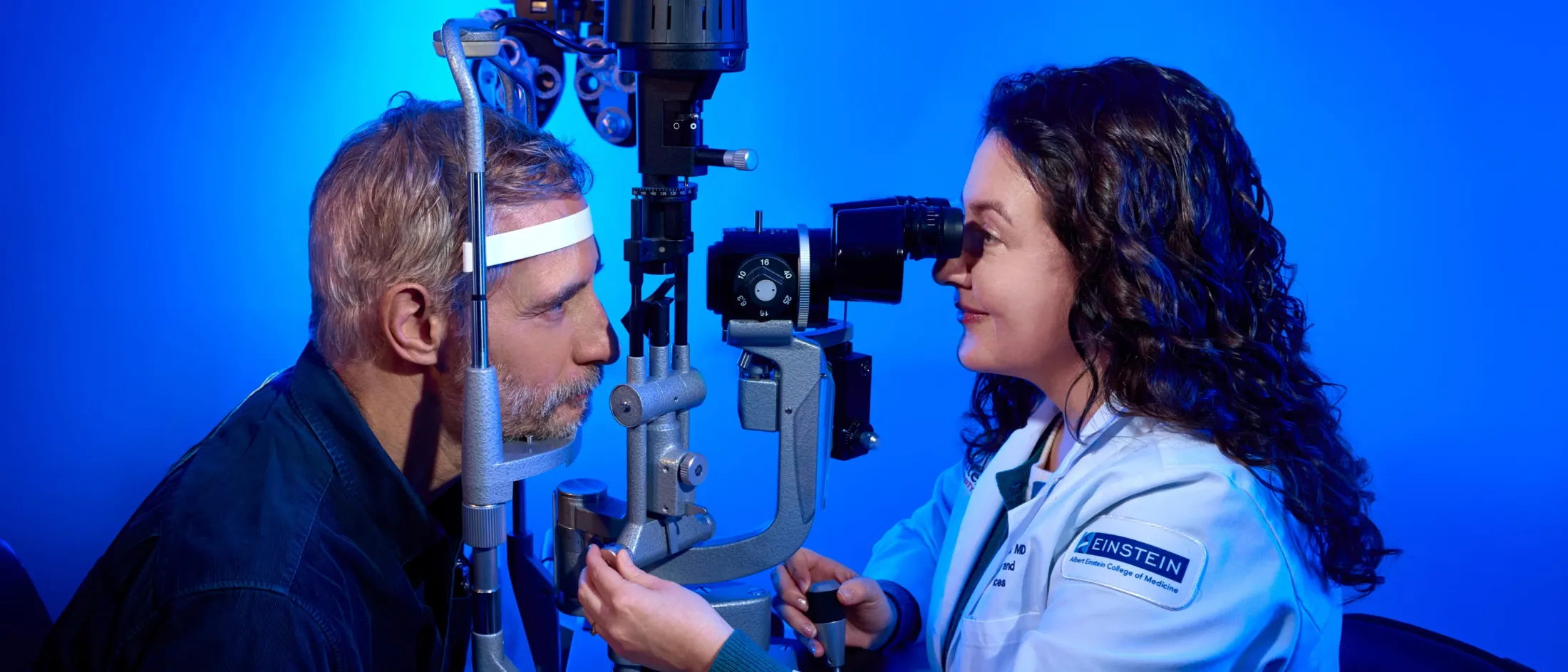
Since recurrent or chronic uveitis can lead to irreversible structural eye damage and vision loss if not treated promptly, early diagnosis and sustained inflammation control are central to our multidisciplinary approach. Our fellowship-trained uveitis specialists—among fewer than 70 nationwide—combine advanced diagnostics with close collaboration across rheumatology and other subspecialties to detect disease early, tailor therapy to the underlying cause and deliver long-term care that preserves vision, prevents complications and enhances quality of life.
Video could not be played
Advanced Diagnostics & Treatments
We offer access to the latest diagnostic technologies and the most advanced treatments for the prevention, early detection and management of the full spectrum of uveitis and inflammatory eye conditions.
Our specialists use high-resolution imaging, including optical coherence tomography (OCT), OCT angiography, ultra-widefield fluorescein and indocyanine green angiography, fundus autofluorescence and widefield retinal imaging to visualize even the most subtle ocular inflammatory changes. We also employ ocular ultrasound and targeted laboratory and genetic testing, including HLA typing and next generation sequencing, to identify infectious, autoimmune and hereditary causes of uveitis with precision. For patients with complex or systemic disease, we integrate advanced multimodal imaging and artificial intelligence, along with enhanced tools to track inflammation, monitor treatment response and guide long-term care.
Our treatment approach is tailored to each individual, with the goal of addressing the underlying cause of uveitis and controlling intraocular inflammation to preserve vision and improve quality of life. We offer local and systemic corticosteroid therapies, steroid-sparing immunomodulatory agents and biologic therapies, including tumor necrosis factor alpha (TNF-α) and interleukin-6 (IL-6) inhibitors, for noninfectious and refractory uveitis, as well as targeted antimicrobial regimens for infectious causes. For patients requiring longer-term control of ocular inflammation, we use sustained-release intravitreal corticosteroid implants (Ozurdex®) and suprachoroidal delivery systems, such as XIPERE® (triamcinolone acetonide), for uveitis-associated macular edema.
Our team also manages the full range of vision-threatening uveitis-related complications, including uveitic macular edema, inflammatory choroidal neovascularization, secondary glaucoma and cataract. In addition to medical therapy, we use advanced laser and photocoagulation procedures when indicated, such as panretinal or sectoral laser for ischemic vasculitis, barrier laser for necrotizing retinitis and cyclophotocoagulation for refractory uveitic glaucoma.
When surgery is required, our ophthalmic surgeons perform advanced procedures tailored to the unique needs of patients with uveitis. These include uveitis-protocol cataract surgery with perioperative inflammation control, vitrectomy for vitreous opacities or epiretinal membranes and corneal or scleral surgery for severe inflammatory damage. For uveitic glaucoma, our ophthalmologists are pioneers in minimally invasive glaucoma surgery (MIGS), having co-invented the Trabectome®, the first U.S. Food and Drug Administration (FDA)-cleared MIGS device and also specialize in drainage device implantation (tube shunts) and trabeculectomy when appropriate.
To help patients adapt to vision changes and maintain independence, we also integrate supportive care into treatment, including low-vision rehabilitation, prism therapy and adaptive technologies designed to maximize vision and enhance quality of life.
We offer a comprehensive suite of advanced diagnostics and treatments for the full range of uveitis and inflammatory eye conditions, including:
We use state-of-the-art imaging technologies and testing to detect and monitor uveitic conditions with precision.
- Ocular imaging and structural testing
- Multimodal retinal & choroidal imaging
- High-resolution optical coherence tomography (OCT)
- OCT angiography (OCTA)
- Ultra-widefield fundus photography and fluorescein angiography (UWF-FA)
- Fundus autofluorescence (FAF) for rate of perceived exertion (RPE) activity
- Indocyanine green angiography (ICGA) for choroiditis/birdshot
- Anterior segment imaging
- Anterior segment OCT and ultrasound biomicroscopy (UBM) for angle/scleral assessment.
- Ocular ultrasound (B-scan)
- Multimodal retinal & choroidal imaging
- Functional vision testing
- Visual fields (static, kinetic)
- Microperimetry
- Full-field/multifocal electroretinogram (mfERG)
- Color/contrast testing
- Targeted laboratory and molecular testing
- Syphilis serology, TB testing, Lyme, HIV, angiotensin-converting enzyme (ACE)/lysozyme (for sarcoid) levels
- HLA typing (e.g. HLA-A29, HLA-B27, HLA-B51)
- Genetic testing for rare inherited syndromes (HLA-A29 (birdshot), and panels for inherited inflammatory syndromes)
- Polymerase chain reaction (PCR) for infectious agents (such as HSV/VZV/CMV/Toxoplasma in infectious uveitis)
- Cytology and flow cytometry, including IL-10:IL-6 analysis in suspected masquerade syndromes
- Systemic imaging for associated diseases
- Chest computed tomography—CT (e.g. for sarcoidosis)
- 3T magnetic resonance imaging (MRI) brain/orbits (e.g. for neuroinflammatory disease)
- Positron emission tomography (PET)/CT when malignancy is suspected
Advanced Treatments
We offer a full range of individualized medical therapies tailored to each patient, delivered through eye drops, oral medications, injections or sustained-release implants, depending on the type and severity of disease.
- Corticosteroid therapy (local and systemic)
- Topical, periocular and intravitreal steroids
- Dexamethasone intravitreal implant (Ozurdex®) for NIU of the posterior segment (NIU-PS)
- Suprachoroidal triamcinolone (XIPERE®) for uveitic macular edema
- Topical, periocular and intravitreal steroids
- Steroid-sparing immunomodulatory therapy (IMT)
- Antimetabolites: methotrexate, mycophenolate mofetil, azathioprine
- Calcineurin inhibitors: cyclosporine, tacrolimus
- Alkylators: cyclophosphamide
- Biologic and targeted therapies (noninfectious uveitis)
- TNF-α inhibitors: adalimumab (Humira®) for noninfectious intermediate, posterior and panuveitis
- IL-6 pathway inhibition: tocilizumab for refractory uveitic macular edema and JIA-uveitis in select cases
- Janus kinase (JAK) inhibitors (e.g. tofacitinib, baricitinib) for refractory cases
- Targeted infectious uveitis treatment
- Systemic and intravitreal antivirals
- Anti-toxoplasma regimens
- Anti-TB therapy
- Intravenous (IV) penicillin/ceftriaxone for ocular syphilis
- Antifungals for endogenous fungal uveitis (often combined with intravitreal therapy)
We provide comprehensive management for complications that can arise from uveitis and its treatment, using specialized medical strategies to preserve vision and reduce long-term risks.
- Uveitic macular edema
- Local steroids (periocular, intravitreal or suprachoroidal)
- Systemic immunomodulatory therapy (IMT)/biologics
- Carbonic anhydrase inhibitors
- Inflammatory choroidal neovascularization
- Anti-vascular endothelial growth factor (VEGF) therapy (bevacizumab, ranibizumab, aflibercept) ± combination with immunosuppressive therapy to control underlying inflammation
- Uveitic glaucoma
- Stepwise intraocular pressure–lowering medications and IMT
- Surgical approaches are used if medical management is insufficient.
- Cataract from inflammation or corticosteroid therapy
- Medical optimization and perioperative planning to help ensure safe and effective surgery
- Other complications
- Include epiretinal membranes or vitreomacular interface disease, which may require close monitoring and possible surgical management if vision is threatened
- When complications cannot be controlled medically, surgical interventions such as cataract extraction, glaucoma surgery or pars plana vitrectomy are performed (see Advanced Surgical Interventions).
- Panretinal or sectoral photocoagulation for ischemic vasculitis and retinitis complications
- Barrier laser for necrotizing retinitis-related tears
- Cyclophotocoagulation (CPC, micropulse CPC) for refractory uveitic glaucoma
- Laser peripheral iridotomy and iridoplasty for uveitic secondary angle-closure glaucoma
We perform advanced surgical procedures when medical therapy alone is insufficient, using specialized techniques tailored to the unique needs of patients with uveitis and ocular inflammation.
- Glaucoma surgery (uveitic glaucoma)
- Minimally invasive glaucoma surgery (MIGS)
- Trabeculectomy with antimetabolites (mitomycin-C)
- Glaucoma drainage devices (Ahmed, ClearPass shunts and Baerveldt tube shunts) for refractory cases
- Cataract and lens surgery
- Uveitis-protocol cataract extraction with intraocular lens (IOL) implantation (timed for management of inflammation with peri-operative steroid/immunomodulatory therapy—IMT)
- Secondary IOL implantation or IOL exchange in select cases
- Retina and vitreous surgery
- Vitreous biopsy for suspected masquerade syndromes (e.g. intraocular lymphoma) or infectious workup
- Pars plana vitrectomy (PPV) to reduce inflammatory load and manage complications (e.g. non-clearing vitreous opacities, vitreomacular traction or epiretinal membranes)
- Surgical management of retinal detachment related to necrotizing retinitis or proliferative vitreoretinopathy (PVR)
- Cornea and scleral surgery
- Keratoplasty (penetrating or lamellar) for corneal scarring, thinning or perforation in scleritis-related disease
- Amniotic membrane grafting for severe ocular surface inflammation
- Surgical management of band keratopathy (ethylenediaminetetraacetic acid—EDTA chelation, superficial keratectomy)
- Scleral grafting/repair for severe necrotizing scleritis or scleral perforation
- Surgical excision/debulking of nodular scleritis or granulomatous lesions
We provide comprehensive vision rehabilitation and supportive services to help patients maximize their remaining vision, adapt to daily challenges and preserve quality of life.
- Low-vision rehabilitation for reading and driving in collaboration with Lighthouse Guild
- Prism therapy for double vision
- Adaptive devices and digital assistive technology to enhance independence
- Occupational and physical therapy for functional adaptation
- Orientation and mobility training for patients with permanent vision loss
- Genetic counseling and long-term care planning for hereditary or chronic inflammatory conditions

Video could not be played
Our Research
We are leading collaborative research and spearheading numerous studies, including several funded by the National Eye Institute/National Institutes of Health (NEI/NIH), translating novel scientific discoveries into new diagnostics and treatments to help improve clinical outcomes for individuals affected by, or at-risk for, uveitis and related inflammatory eye conditions. Our research spans basic, translational and clinical science, with a focus on advancing the understanding of the mechanisms, diagnosis and treatment of ocular inflammation. Core areas of investigation include autoimmune and systemic disease-associated uveitis, infectious causes of uveitis and the prevention and management of sight-threatening complications such as macular edema, glaucoma and choroidal neovascularization. We are also leading studies in the diagnosis and systemic management of ocular cicatricial pemphigoid, as well as quality improvement initiatives such as the timely initiation of steroid-sparing therapy in uveitis patients. In addition, our investigators are actively evaluating novel immunomodulatory and biologic agents, sustained-release drug delivery systems and targeted therapies tailored to specific disease pathways. By integrating research and patient care, our physician-scientists are helping to shape the future of comprehensive eye care while improving vision and quality of life for patients today.
Trusted Global Leaders in Evidence-Based Eye Care
We are one of only 13 centers worldwide designated as a Cochrane Eyes and Vision (CEV) Center for Evidence-Based Vision Care, a National Eye Institute/National Institutes of Health (NEI/NIH)-funded distinction recognizing our commitment to advancing evidence-based medicine and eye care. Our contributions to research and identifying the most effective treatments in patient care serve as a model for clinical sites around the world.

Video could not be played
Care Navigation & Support Services
Whether you are newly diagnosed with uveitis, experiencing eye pain, redness, blurred or decreased vision, managing a long-term autoimmune or systemic condition that affects the eyes or seeking a second opinion, our world-renowned team at Montefiore Einstein Ophthalmology and Visual Sciences is here to provide you with exceptional care, support and resources tailored to your individual needs.
Our full-service center offers a comprehensive range of traditional and holistic care at every stage of life, from screening, prevention and diagnosis through treatment and recovery, including social and support services, genetic counseling for individuals with or at-risk for inherited or complex eye conditions, patient education, care navigation, mental health and wellness services, vision rehabilitation and other supportive programs. Our expansive breadth of resources enables us to deliver highly specialized, coordinated care that takes into account the whole person, addressing each individual’s medical needs to preserve, restore and enhance vision, prevent vision loss and improve outcomes and quality of life. Our team of compassionate and deeply knowledgeable doctors, nurses, specialists and support staff is dedicated to helping you at every step of your uveitis care journey.
Our Uveitis Care Team
Our multidisciplinary team of world-renowned doctors includes board certified, fellowship-trained ophthalmologists with subspecialized expertise in uveitis and ocular immunology. We specialize in the diagnosis and management of the full spectrum of uveitis and related inflammatory eye conditions, using the most advanced diagnostics and treatments to protect and preserve vision, control ocular inflammation, prevent disease progression and complications and enhance quality of life for each patient.

Video could not be played
Claudia P. Castiblanco, MD

Video could not be played
Yu Hyon Kim, MD

Video could not be played
Matthew S. Wieder, MD
Transformative Community Programs & Initiatives
Our Program is recognized for its collaborative approach and comprehensive clinical care extending beyond the walls of Montefiore Einstein into the community through targeted outreach initiatives designed to preserve vision, slow disease progression, prevent both vision loss and blindness and enhance quality of life, particularly among vulnerable populations. Key efforts include community education, telemedicine-based strategies for the early detection and management of uveitis and other inflammatory eye conditions and our partnership with Lighthouse Guild International’s Technology Peers for Accessible Living (Tech Pals) Program, which bridges generations through personalized technology mentorship for individuals with vision loss. This unique initiative pairs blind or visually impaired young adults with older adults to foster digital literacy and independence. Through these and other initiatives, we continue to expand access to care, preserve continuity and reduce disparities—advancing eye health across the communities we serve.
About Uveitis
Uveitis, or eye inflammation, refers to inflammation of the uvea, the middle layer of the eye that includes the iris, ciliary body and choroid. However, the term is often used more broadly to describe a group of inflammatory eye conditions that may also affect the retina, optic nerve, vitreous or sclera. Uveitis is one of the leading causes of preventable blindness in the United States. It can be classified as anterior, intermediate, posterior or as panuveitis, depending on where in the eye the inflammation occurs. Uveitis can occur in adults and children, be acute or chronic, affect one or both eyes and lead to symptoms such as eye pain, redness, blurred or decreased vision, light sensitivity, floaters and vision loss.
The causes of uveitis are diverse and include autoimmune and systemic inflammatory diseases, such as HLA-B27–associated conditions, juvenile idiopathic arthritis, rheumatoid arthritis, sarcoidosis, Behcet disease, multiple sclerosis, lupus and inflammatory bowel disease; infections, such as tuberculosis, syphilis, herpes viruses, cytomegalovirus, toxoplasmosis and Lyme disease; trauma, and hereditary syndromes, such as Blau syndrome and tubulointerstitial nephritis and uveitis (TINU) syndrome. In many cases, no underlying cause is identified (idiopathic uveitis). If untreated, uveitis can result in vision-threatening complications, including cataract, glaucoma, macular edema or permanent vision loss. Because uveitis and related inflammatory eye diseases are often associated with systemic conditions, accurate diagnosis and effective management require a multidisciplinary approach. Early detection through comprehensive evaluation and advanced testing is critical, as timely intervention and appropriate therapy can preserve vision, prevent complications and improve long-term outcomes.
Learn More About Screening, Prevention & Treatment of Uveitis and Related Inflammatory Eye Conditions
Location details: Greene Medical Arts Pavilion (MAP), Henkind Eye Institute
Greene Medical Arts Pavilion (MAP), Henkind Eye Institute
Location details: Bronx East Ophthalmology
Bronx East Ophthalmology
Location details: LASIK & Eye Care Center
LASIK & Eye Care Center