




Our Approach to Macular Degeneration
Video could not be played

Video could not be played

Video could not be played
The Montefiore Einstein Department of Ophthalmology and Visual Sciences is a globally recognized leader in providing comprehensive, personalized care for individuals with the full spectrum of macular degeneration conditions, from early dry age-related macular degeneration (AMD) and geographic atrophy to wet AMD, inherited macular dystrophies and other complex and rare macular degenerations. Our multidisciplinary team of world-renowned doctors includes board certified, fellowship-trained ophthalmologists with subspecialized expertise in macular degeneration and retinal care, who collaborate closely with optometrists, low-vision specialists, genetic counselors and other experts, delivering seamless, coordinated care to ensure the best possible outcomes for each patient. Using the latest diagnostic technologies and most advanced treatments, including sustained-release drug delivery systems, bispecific anti-vascular endothelial growth factor (VEGF) therapies, emerging gene and complement-based therapies, targeted laser and photodynamic treatments and advanced surgical interventions, we provide individualized care tailored to the needs of each patient. We are a referral site for the most complex and high-risk cases.
As pioneers in the field, our team has helped redefine the standard of care for macular degeneration. Our physician-scientists played a key role in the development of Macugen® (pegaptanib sodium), the first U.S. Food and Drug Administration (FDA)-approved injectable treatment for wet AMD and the first anti-angiogenic therapy approved in ophthalmology. For individuals with juvenile macular degeneration and inherited macular dystrophies, we provide genetic counseling in collaboration with our Division of Pediatric Genetic Medicine, one of the nation’s first and best-known programs, which has been leading the way in genetic and genomic disease care for over fifty years and continues to serve as a model for the field. We also provide access to comprehensive vision rehabilitation and collaborate closely with our Winifred Masterson Burke Rehabilitation Center, ranked among the top 1% of all hospitals in the nation for rehabilitation, according to U.S. News & World Report.
Whether you are newly diagnosed with macular degeneration, undergoing routine monitoring, managing advanced stages of disease or seeking a second opinion, we are committed to stabilizing and preserving vision, preventing disease progression, optimizing visual acuity and enhancing quality of life.
Trusted Global Leaders in Evidence-Based Eye Care
We are one of only 13 centers worldwide designated as a Cochrane Eyes and Vision (CEV) Center for Evidence-Based Vision Care, a National Eye Institute/National Institutes of Health (NEI/NIH)-funded distinction recognizing our commitment to advancing evidence-based medicine and eye care. Our contributions to research and determining the most effective treatments in patient care serve as a model for clinical sites around the world.
Video could not be played
Advanced Diagnostics & Treatments
We offer access to the latest diagnostics and the most advanced medical and surgical treatments for the prevention, early detection and management of the full spectrum of macular degeneration conditions.
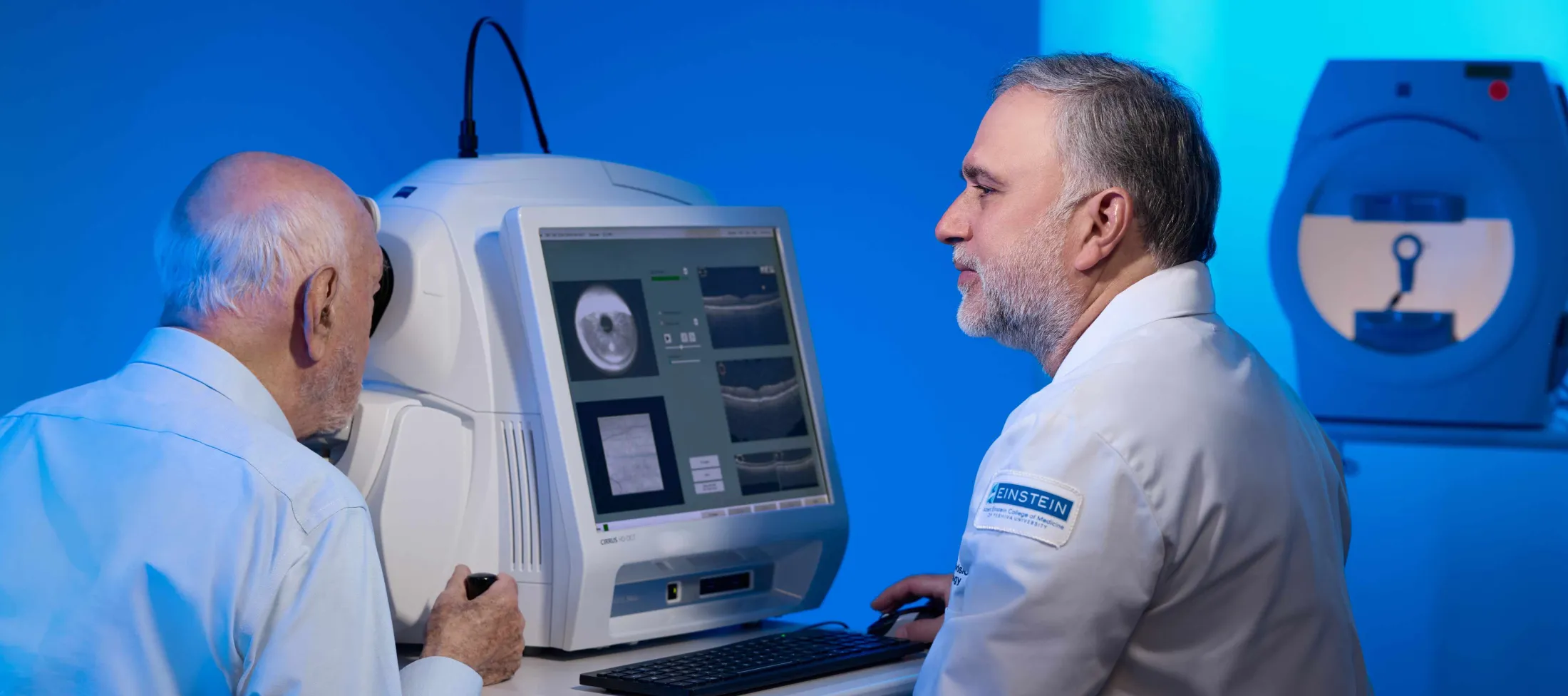
We use state-of-the-art, high-resolution imaging technologies, including optical coherence tomography (OCT), OCT angiography (OCTA), fundus autofluorescence (FAF), fluorescein angiography (FA) and indocyanine green angiography (ICGA), to detect even the earliest retinal changes with exceptional precision. These advanced diagnostic tools enable us to assess subtle structural and microvascular abnormalities, individualize treatment strategies and monitor disease progression over time.
Our treatment approach is tailored to each individual, combining the latest medical therapies with advanced surgical options when needed. We offer a full range of intravitreal anti-VEGF injections, including aflibercept, ranibizumab, bevacizumab and faricimab. For select cases of macular degeneration, targeted laser treatments may be considered as an adjunctive treatment as well.
We offer a comprehensive suite of advanced diagnostics and treatments for macular degeneration, including:
We use state-of-the-art imaging technologies to detect early retinal changes, guide treatment decisions and monitor disease progression with precision.
- Optical coherence tomography (OCT)
- Optical coherence tomography angiography (OCTA)
- Fundus autofluorescence (FAF)
- Fluorescein angiography (FA)
- Indocyanine green angiography (ICGA)
- Widefield fundus photography
We offer the most advanced medical, laser and surgical therapies to protect and restore vision in patients with macular degeneration.
We offer a full range of individualized medical therapies tailored to control neovascular activity, stabilize vision and reduce disease burden.
- Intravitreal anti-VEGF injections (e.g. aflibercept—Eylea®, ranibizumab—Lucentis®, bevacizumab—Avastin® and faricimab—Vabysmo®, a bispecific antibody targeting VEGF and Ang-2, which may allow for extended dosing intervals in eligible patients)
We offer targeted laser and photodynamic therapies for select cases of macular degeneration, including choroidal neovascular lesions that are unresponsive to intravitreal injections.
- Focal laser photocoagulation
Our vitreoretinal surgeons perform advanced surgical interventions to manage complex vision-threatening complications associated with macular degeneration.
- Submacular surgery for removal of large CNV membranes
- Pars plana vitrectomy
We provide comprehensive vision rehabilitation and support services to help patients maximize remaining vision and preserve quality of life.
- Refractive optimization (e.g. specialized lenses and prescriptions)
- Orientation and mobility training
- Vision rehabilitation therapy (in collaboration with vision rehabilitation specialists)
- Nutritional supplementation (e.g. AREDS2 formula of antioxidants and zinc for eligible patients with intermediate or advanced AMD to potentially help slow disease progression)
Research & Publications
We are leading collaborative research and spearheading numerous studies and clinical trials, including several funded by the National Eye Institute/National Institutes of Health (NEI/NIH), translating novel scientific discoveries into new diagnostics and treatments to help improve clinical outcomes for individuals with or at risk for macular degeneration. Through our clinical trials, our patients can access emerging technologies and innovative treatments that may otherwise be unavailable to the general public.
Our research spans basic, translational and clinical science, with a focus on advancing the understanding and management of glaucoma. Core areas of investigation include imaging biomarkers for early detection and disease progression, novel therapeutic strategies to improve visual outcomes and innovative surgical techniques for complex macular conditions. Recent studies have explored the importance of maintaining consistent treatment schedules for patients with neovascular AMD. Ongoing work is also evaluating near-infrared reflectance imaging for quantifying atrophy associated with AMD. Our researchers are also pioneering new techniques for the repair of macular holes, aiming to improve closure rates and optimize visual recovery for patients with complex presentations.
Our researchers are exploring the potential of using retinal organoids, laboratory-grown tissue resembling the retina, to generate cells for transplantation in the treatment of retinal diseases. Additionally, they are developing novel drug compounds that selectively activate chaperone-mediated autophagy and have demonstrated their efficacy in ameliorating retinal degeneration and disease progression in a preclinical model of retinitis pigmentosa. These advances may pave the way for new therapeutic strategies to help individuals with other retinal degenerative disorders such as AMD and diabetic retinopathy.
In addition to pioneering laboratory and clinical research, our experts are members of the Preferred Practice Patterns Committee (PPPC), contributing to the development of the American Academy of Ophthalmology’s Comprehensive Adult Medical Eye Evaluation Preferred Practice Pattern® (PPP) guidelines, which help to identify and define characteristics and components of quality eye care and establish the standard of care for conditions such as AMD.
-
Defective chaperone-mediated autophagy in the retinal pigment epithelium of age-related macular degeneration patients
Jiménez-Loygorri JI, Shang P, Bayramoglu I, Gómez-Sintes R, Martín-Segura A, Ambrosino H, Hoang J, Díaz A, Geng Z, Gavathiotis E, Dutton JR, Dengjel J, Cuervo AM, Ferrington DA, Boya P. Defective chaperone-mediated autophagy in the retinal pigment epithelium of age-related macular degeneration patients. EMBO Mol Med. 2025 Dec;17(12):3472-3495. doi: 10.1038/s44321-025-00329-w. Epub 2025
These findings may explain the specific vulnerability of the RPE during AMD and shed light on CMA as a new druggable target for this as-of-now incurable disease. -
Comparison of Clinical Trial and Systematic Review Outcomes for the 4 Most Prevalent Eye Diseases
Saldanha IJ, Lindsley K, Do DV, Chuck RS, Meyerle C, Jones LS, Coleman AL, Jampel HD, Dickersin K, Virgili G. Comparison of Clinical Trial and Systematic Review Outcomes for the 4 Most Prevalent Eye Diseases. JAMA Ophthalmol. 2017 Sep 1;135(9):933-940. doi: 10.1001/jamaophthalmol.2017.2583. PMID: 28772305; PMCID: PMC5625342.
This study examines the most frequent outcomes used in trials and Cochrane reviews of prevalent eye diseases and the overlap between outcomes in the reviews and the trials included in the reviews.

Video could not be played
Care Navigation & Support Services
Our world-renowned team at Montefiore Einstein Ophthalmology and Visual Sciences is dedicated to providing exceptional care, support and resources tailored to your individual needs. Whether you are newly diagnosed with macular degeneration, undergoing routine monitoring for early retinal changes, managing neovascular or advanced stages of disease, exploring options for treatment-resistant cases or seeking a second opinion. Our span of resources enables us to deliver highly specialized care that addresses each individual’s medical needs to preserve, restore and enhance vision, prevent vision loss and improve outcomes and quality of life.
Our Macular Degeneration Care Team

Video could not be played
Umar K. Mian, MBBS

Video could not be played
Yu Hyon Kim, MD

Video could not be played
Richard M. Klein, MD

Video could not be played
Saadia Rashid, MD

Video could not be played
Matthew S. Wieder, MD
Our multidisciplinary team of world-renowned doctors includes board certified, fellowship-trained ophthalmologists with subspecialized expertise in macular degeneration and retinal care. We specialize in the diagnosis and management of the full spectrum of macular degeneration conditions, using the most advanced diagnostics and treatments to stabilize and preserve vision, prevent disease progression, optimize visual acuity and enhance quality of life for each patient.
Transformative Community Programs & Initiatives
Our Program is recognized for its collaborative approach and comprehensive clinical care—extending beyond the walls of Montefiore Einstein into the community through targeted outreach initiatives designed to preserve vision, slow disease progression, prevent both vision loss and blindness and enhance quality of life—particularly among vulnerable populations. Key efforts include community education, telemedicine-based strategies for the early detection and management of macular degeneration and other ophthalmic conditions and our partnership with Lighthouse Guild International’s Technology Peers for Accessible Living (Tech Pals) Program, which bridges generations through personalized technology mentorship for individuals with vision loss. This unique initiative pairs blind or visually impaired young adults with older adults to foster digital literacy and independence. Through these and other initiatives, we continue to expand access to care, preserve continuity and reduce disparities—advancing eye health across the communities we serve.
About Macular Degeneration
Macular degeneration is a progressive eye condition that primarily affects the macula, the light-sensitive central region of the retina responsible for sharp, detailed vision needed for activities such as reading, driving and recognizing faces. The most common form is age-related macular degeneration (AMD), which typically occurs in individuals over the age of 50 years and is a leading cause of vision loss and legal blindness in older adults. AMD is broadly categorized into two types: dry (nonexudative) and wet (neovascular). Dry AMD involves gradual thinning of the macular tissues with age and can progress to geographic atrophy, the advanced stage of dry AMD, while wet AMD is characterized by the growth of abnormal blood vessels under the retina, leading to fluid leakage, macular damage and rapid vision loss. In addition to AMD, inherited macular dystrophies, such as Stargardt disease and Best disease, can affect younger individuals and lead to central vision impairment. Although macular degeneration does not typically cause complete blindness, it can significantly impact central vision and quality of life. Early detection through regular comprehensive eye exams is essential, as timely intervention can help slow disease progression and preserve remaining vision.
Learn More About Screening, Prevention & Treatment of Macular Degeneration
Location details: Greene Medical Arts Pavilion (MAP), Henkind Eye Institute
Greene Medical Arts Pavilion (MAP), Henkind Eye Institute
Location details: Hutchinson Campus Ophthalmology - Tower 2
Hutchinson Campus Ophthalmology - Tower 2
Location details: LASIK & Eye Care Center
LASIK & Eye Care Center
Location details: Wakefield Ophthalmology
Wakefield Ophthalmology
Location details: Bronx East Ophthalmology
Bronx East Ophthalmology
Location details: Bainbridge Ophthalmology
Bainbridge Ophthalmology