



Video could not be played
Ronald M. Burde, MD, Microsurgical Simulation Laboratory
Ronald M. Burde, MD, Microsurgical Simulation Laboratory
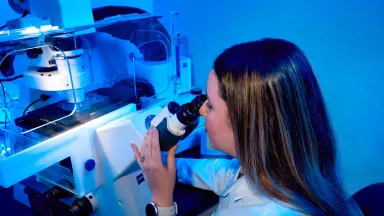
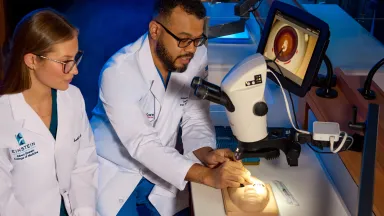
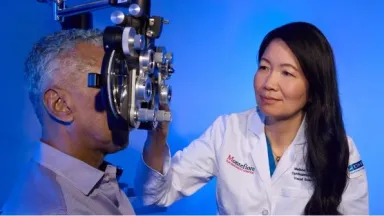
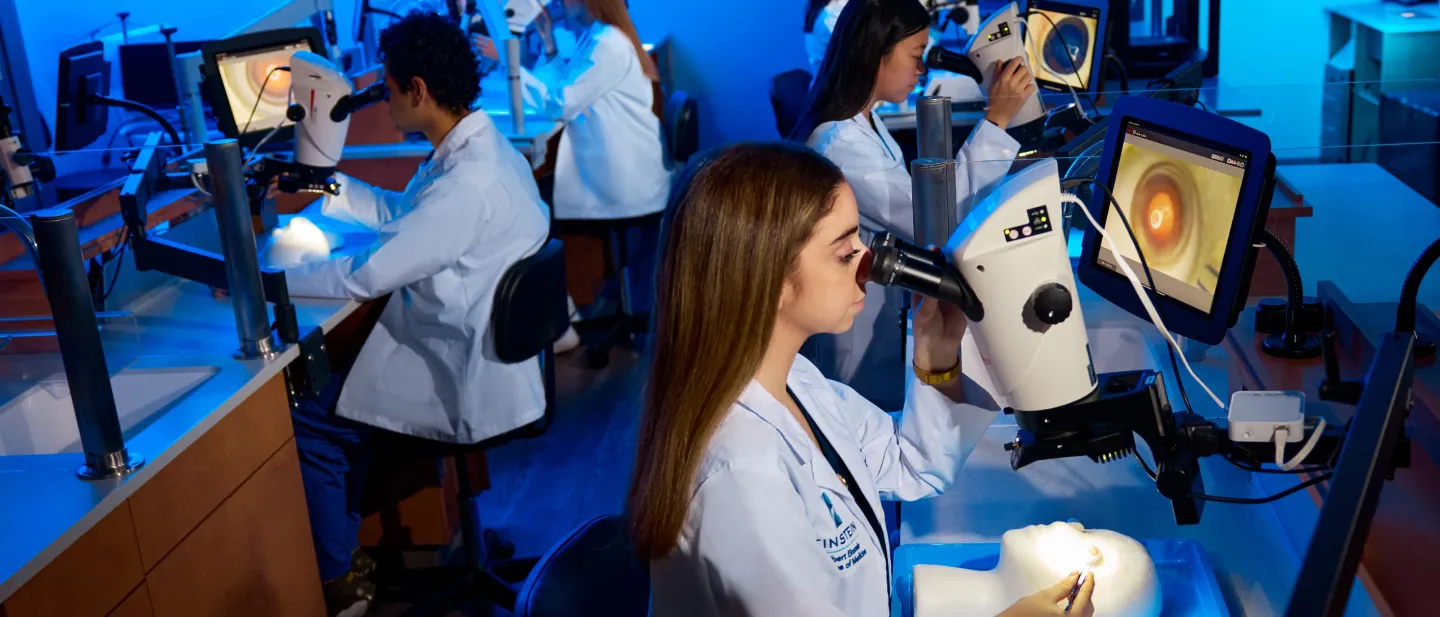
The Ronald M. Burde, MD, Microsurgical Simulation Laboratory was established in 2013 and is housed within the Center for Ophthalmic Innovation (COIN), a collaboration that reflects the Department’s dedication to combining surgical teaching with research and device development. The Center provides residents with access to one of the most advanced ophthalmic surgical training facilities in the country. The Laboratory operates 24 hours a day, 7 days a week, and allows residents to perform complex eye procedures, including entire cataract procedures, in a highly realistic simulated environment. Phacoemulsification units are permanently housed in the Laboratory to allow for training on multiple commonly used platforms.
Advanced Microsurgery Education
The Burde Laboratory is among the most advanced multimedia surgical training facilities in the world. It holds the distinction of being the featured wet lab in “The Anatomy of a Lab: Experiences in the Development of an Advanced Digital Microsurgical Training Facility” by Angela Verkade, MD. A surgical wet lab curriculum has been incorporated and organized into the monthly academic calendar, and residents are trained by our subspecialty faculty in a variety of division-specific skill transfer sessions. A three-dimensional (3D) virtual reality anatomy simulator is housed in the Laboratory, allowing users to view and manipulate complex eye and brain structures, far beyond what is possible from a traditional anatomy atlas or textbook. The Laboratory has a total of 17 (expandable to 22) video-enabled microscope stations featuring iPad integration and digital whiteboards, along with a multimedia conference center housed within the facility that allows for a combined didactic experience.
Training the Next Generation of Leaders in Ophthalmology
The Laboratory provides residents with endless opportunities to improve their surgical skills well before operating on a live human eye. The facility continues to undergo expansion, serving as a community educational resource laboratory, innovation center and local training site for multiple device manufacturers. The Burde Laboratory has helped define the Department of Ophthalmology and Visual Science’s commitment to resident education and to training our residents to be the best ophthalmic surgeons they can be.