





Our Approach to Diabetic Eye Disease

Video could not be played

Video could not be played
Video could not be played

Video could not be played

Video could not be played
The Montefiore Einstein Department of Ophthalmology and Visual Sciences is an internationally recognized leader, providing comprehensive, personalized care for adults and children with the full spectrum of diabetic eye conditions from early retinal changes to advanced complications such as diabetic retinopathy, diabetic macular edema and neovascular glaucoma. Our multidisciplinary team of world-renowned doctors includes board certified ophthalmologists with subspecialized expertise in diabetic eye disease and retinal care who collaborate closely with optometrists, endocrinologists, diabetes educators, low-vision specialists and other experts. Together they deliver seamless, coordinated care, including systemic diabetes management and ocular care, to stabilize and preserve vision, improve overall health and ensure the best possible outcomes for each patient. We’re a referral site for the most complex and high-risk cases and ranked in the top 1% of all hospitals in the nation for diabetes and endocrinology care, according to U.S. News & World Report.
We offer the latest diagnostics and treatments, with unparalleled expertise in preventing and managing diabetes-related vision loss. Our personalized approach integrates state-of-the-art imaging ranging from optical coherence tomography (OCT), OCT angiography with the most advanced medical, laser and surgical therapies available tailored to address diabetic retinopathy at every stage. For individuals with significant visual impairment we collaborate closely with our Burke Rehabilitation Hospital, ranked among the top 1% of all hospitals in the nation for rehabilitation, according to U.S. News & World Report. We are committed to preserving vision through early detection, advanced treatment and proactive disease management. Whether you are newly diagnosed with diabetes, undergoing routine screening, experiencing early retinal changes, managing advanced or vision-threatening diabetic retinopathy or seeking a second opinion, our team is here to provide expert care and guidance at every stage of your diabetic eye care journey.
Advancing the Standard of Diabetic Retinopathy Care to Prevent Diabetes-Related Blindness
As part of our commitment to improving outcomes for patients with diabetes, we have expanded our telemedicine (teleretinal) screening Program to accelerate the diagnosis of diabetic retinopathy and improve access to care. Our specialized diabetes eye care team includes leaders in diabetic eye care, retinal disease and pediatric ophthalmology, providing expert diagnosis, treatment, counseling and long-term disease management.
We also closely monitor individuals with or at risk for diabetic retinopathy using personalized risk assessments and evidence-based therapies to slow or prevent disease progression. By integrating advanced imaging technologies with individualized treatment strategies and leveraging remote screening tools, we help individuals preserve vision and quality of life, often long before surgical intervention may be needed.
As members of the American Academy of Ophthalmology (AAO)’s Preferred Practice Patterns Committee (PPPC), our ophthalmologists help shape national guidelines for comprehensive adult eye care, including diabetic retinopathy. We remain dedicated to advancing the standard of diabetic eye care through early detection, personalized treatment and integrated care, improving outcomes for our communities and beyond.
Trusted Global Leaders in Evidence-Based Eye Care
We are one of only 13 centers worldwide designated as a Cochrane Eyes and Vision (CEV) Center for Evidence-Based Vision Care, a distinction funded by the National Eye Institute/National Institutes of Health (NEI/NIH) that recognizes our commitment to advancing evidence-based medicine and eye care. Our contributions to research and determining the most effective treatments in patient care serve as a model for clinical sites around the world.
Video could not be played
Advanced Diagnostics & Treatments
We offer access to the latest diagnostics and the most advanced medical, laser and surgical treatments for the prevention, early detection and management of the full spectrum of diabetic eye conditions.
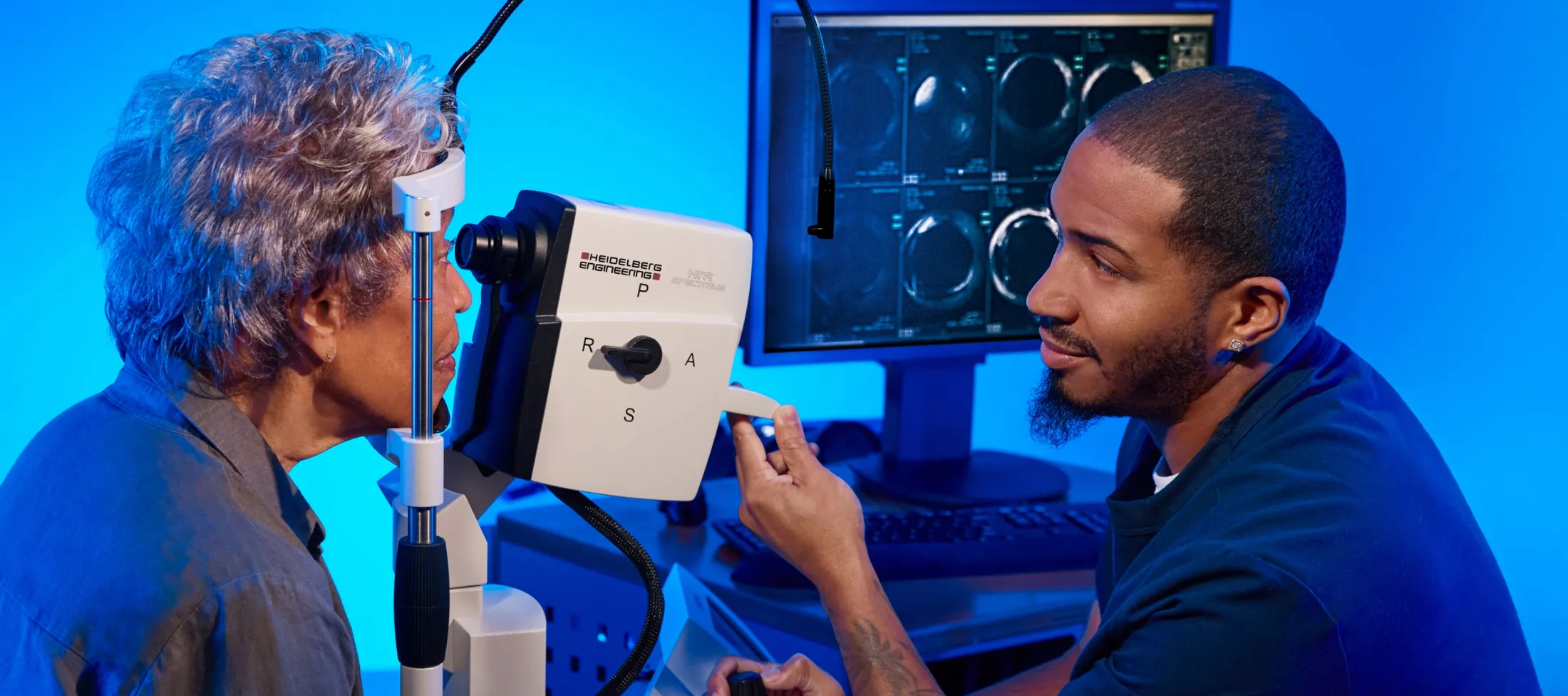
At the forefront of innovation, our Program uses advanced, high-resolution imaging technologies, including OCT, OCTA, widefield fundus photography and fluorescein angiography, to detect even the earliest signs of diabetic eye disease. These tools allow us to assess subtle vascular changes, such as macular ischemia and capillary nonperfusion, often before symptoms arise or vision is affected.
We offer a full range of medical therapies tailored to each patient’s condition and treatment response. These include intravitreal anti-vascular endothelial growth factor (VEGF) injections and corticosteroid implants for chronic diabetic macular edema. For patients with advanced disease, we provide precision laser therapies such as panretinal photocoagulation for proliferative diabetic retinopathy as well as advanced surgical interventions such as vitrectomy, membrane peeling and glaucoma surgery. Our retina specialists are experienced in performing combined procedures to address multiple ocular conditions in a single surgical setting.
To support long-term outcomes, we provide personalized rehabilitation and supportive care services to help patients adapt to vision changes, optimize remaining sight and maintain quality of life.
We offer a comprehensive suite of advanced diagnostics and treatments for diabetic eye disease, including:
We use state-of-the-art imaging tools to detect early changes, guide treatment decisions and monitor disease progression with precision.
- Optical coherence tomography (OCT)
- Optical coherence tomography angiography (OCTA)
- Widefield fundus photography
- Retinal angiography (FA, ICG)
- Ultrasound B-scan
- Fundus autofluorescence (FAF)
Advanced Treatments
We offer the most advanced medical, laser and surgical therapies to protect and restore vision in patients with diabetic eye disease.
Our medical therapies are tailored to reduce disease burden, preserve vision and minimize treatment frequency.
- Intravitreal anti-VEGF injections (e.g. aflibercept, ranibizumab, bevacizumab)
- Intravitreal corticosteroid injections or implants (e.g. dexamethasone implant—Ozurdex®
- Systemic disease management
- Coordinated care to optimize blood glucose, blood pressure and lipid levels
We use targeted laser and minimally invasive treatments to reduce the risk of vision loss, stabilize retinal disease and preserve vision in patients with diabetic retinopathy and diabetic macular edema.
- Panretinal photocoagulation (PRP)
- Focal/grid laser photocoagulation
Our retina surgeons perform advanced surgical interventions to manage vision-threatening complications of diabetic eye disease and restore visual function.
- Pars plana vitrectomy (PPV)
- Membrane peeling and retinal reattachment procedures
- Combined Retina and Glaucoma surgery for neovascular glaucoma
- Combined phacoemulsification and vitrectomy
We provide personalized rehabilitation and support services to help patients adapt to vision changes, optimize remaining sight and preserve quality of life.
- Refractive management

Video could not be played
Research & Publications
As part of the NIH-sponsored DRCR Retina Network, Montefiore Einstein has helped drive major advances in the clinical care of diabetic eye disease. Our collaborative research spans multiple clinical trials, including NEI/NIH-funded studies, translating new scientific discoveries into improved diagnostics and treatments for people with or at risk for diabetic retinopathy.
Montefiore Einstein played a pivotal role in the landmark NIDDK-funded Diabetes Control and Complications Trial (DCCT), which transformed diabetes care by showing that early, intensive blood glucose control markedly lowers the risk of diabetic retinopathy and other vision-threatening complications. Our research integrates basic, translational and clinical science to advance understanding, diagnosis and management of diabetic eye disease, with key efforts in molecular mechanisms of retinopathy, health outcomes, telemedicine-based screening, cost-effectiveness of screening and therapies, and the development of novel diagnostics and treatments.
A teleretinal triage program at Montefiore Einstein demonstrated that telemedicine and digital health tools can increase screening, expand sight-saving access to care and improve adherence to annual eye exams in underserved communities with high rates of type 2 diabetes and retinopathy. Our scientists are also defining molecular drivers of disease, including work on tumor necrosis factor ligand-related molecule 1A, which may help explain progression of proliferative diabetic retinopathy after primary vitrectomy, and our ophthalmologists help shape national standards through leadership roles in the American Academy of Ophthalmology’s Preferred Practice Patterns Committee, ensuring that evidence-based guidelines for screening and managing diabetic eye disease inform care locally and globally.
-
In a Large Healthcare System in the Bronx, Teleretinal Triaging Was Found to Increase Screening and Healthcare Access for an Underserved Population with a High Incidence of T2DM and Retinopathy.
Dahlan K, Suman P, Rubaltelli D, Shrivastava A, Chuck R, Mian U. In a Large Healthcare System in the Bronx, Teleretinal Triaging Was Found to Increase Screening and Healthcare Access for an Underserved Population with a High Incidence of T2DM and Retinopathy. Int J Environ Res Public Health. 2023 Mar 31;20(7):5349. doi: 10.3390/ijerph20075349. PMID: 37047964; PMCID: PMC10094588.
The study aimed to assess the effectiveness of a teleretinal screening program where digital photos of the retina are taken at primary care clinics and read remotely by specialists at Montefiore. The goal was to overcome traditional barriers to care and improve screening rates for diabetic retinopathy (DR), a leading cause of preventable blindness -
Artificial Intelligence Applications in Sickle Cell Retinopathy Imaging: Current Progress, Challenges, and Future Directions
Shah P, Farah HA, Wisotsky DJ, Nawani P, Kovrizhkin K, Muir ER, Mian U, Duong TQ. Artificial Intelligence Applications in Sickle Cell Retinopathy Imaging: Current Progress, Challenges, and Future Directions. J Ophthalmol. 2026 Feb 20;2026:5579203. doi: 10.1155/joph/5579203. PMID: 41727523; PMCID: PMC12921631.
This review summarizes recent artificial intelligence progress in SCR imaging and highlights future opportunities for clinical translation. -
Retinal Outcomes in Diabetes: Antihyperglycemic Therapy, EWDR, and Perioperative Considerations
Wang T, Zeng J, Tan M, Zhong M, Zhou H, Dai Y, Song S. Retinal Outcomes in Diabetes: Antihyperglycemic Therapy, EWDR, and Perioperative Considerations. Biomedicines. 2026 Apr 23;14(5):963. doi: 10.3390/biomedicines14050963. PMID: 42193290; PMCID: PMC13203953.
This review summarizes current evidence linking NVU biology, EWDR risk, and perioperative diabetes-related factors. It discusses how these factors may interact in patients with diabetes and how they may influence retinal outcomes. The review is intended to synthesize current evidence and mechanistic interpretations rather than to provide formal clinical practice recommendations. -
Premature infants with gestational age less than 25 weeks require increased ophthalmology resources for retinopathy of prematurity
Hawn VS, Muhtadi R, Suman P, Latuga MS, Quinn G, Mian U. Premature infants with gestational age less than 25 weeks require increased ophthalmology resources for retinopathy of prematurity. J AAPOS. 2022 Dec;26(6):307.e1-307.e5. doi: 10.1016/j.jaapos.2022.09.007. Epub 2022 Oct 28. PMID: 36404441.
This study compared the examination and treatment rates of infants born at GA of <25 weeks and those born at GA of at least 25 weeks. -
Healthcare Utilization Patterns in Sickle Cell Patients and Their Association With Sickle Cell Retinopathy
Minniti CP, Suman PD, Dahlan K, Crouch A, Goodman M, Mian UK. Healthcare Utilization Patterns in Sickle Cell Patients and Their Association With Sickle Cell Retinopathy. Eur J Haematol. 2025 Apr;114(4):615-619. doi: 10.1111/ejh.14369. Epub 2024 Dec 23. PMID: 39711322.
This study evaluates patterns of healthcare utilization among patients with sickle cell disease (SCD) and retinopathy. -
Impact of Anxiety Levels and Sleep Patterns on Perceived Pain During Intravitreal Bevacizumab Injections
Wieder MS, Szlechter M, Fischman N, Inker S, Rusu I, Mbekeani JN. Impact of Anxiety Levels and Sleep Patterns on Perceived Pain During Intravitreal Bevacizumab Injections. Ophthalmic Surg Lasers Imaging Retina. 2021 Sep;52(9):498-504. doi: 10.3928/23258160-20210819-02. Epub 2021 Sep 1. PMID: 34505802.
This study evaluates the impact of anxiety and sleep patterns on intravitreal injection pain.

Video could not be played
Our Diabetic Eye Care Team

Video could not be played
Yu Hyon Kim, MD

Video could not be played
Richard M. Klein, MD

Video could not be played
Umar K. Mian, MBBS

Video could not be played
Saadia Rashid, MD

Video could not be played
Matthew S. Wieder, MD
Our multidisciplinary team of world-renowned doctors includes board certified, fellowship-trained ophthalmologists with subspecialized expertise in diabetic eye disease and retinal care. We specialize in the diagnosis and management of the full spectrum of diabetic eye conditions, using the most advanced diagnostics and treatments to stabilize and preserve vision, prevent disease progression, improve overall health and enhance quality of life for each patient.
Transformative Community Programs & Initiatives
Our Program is recognized for its collaborative approach and comprehensive clinical care—extending beyond the walls of Montefiore Einstein into the community through targeted outreach initiatives designed to preserve vision, slow disease progression, prevent both vision loss and blindness and enhance quality of life—particularly among vulnerable populations. Key efforts include community education, telemedicine-based strategies for the early detection and management of diabetic eye disease and other ophthalmic conditions and our partnership with Lighthouse Guild Technology Peers for Accessible Living (Tech Pals) Program, which bridges generations through personalized technology mentorship for individuals with vision loss. This unique initiative pairs blind or visually impaired young adults with older adults to foster digital literacy and independence. Through these and other initiatives, we continue to expand access to care, preserve continuity and reduce disparities—advancing eye health across the communities we serve.
About Diabetic Eye Disease
Diabetic eye disease refers to a group of vision-threatening conditions that can affect individuals with diabetes, including nonproliferative and proliferative diabetic retinopathy, diabetic macular edema (DME), macular ischemia, cataracts and glaucoma. In its early stages, diabetic retinopathy may not cause noticeable symptoms, but as the disease progresses, it can lead to vision loss and blindness if left untreated.
Diabetic retinopathy, the most common form, occurs when chronically elevated blood sugar levels damage the small blood vessels in the retina, the light-sensitive tissue at the back of the eye. Diabetic macular edema, a complication of retinopathy, involves swelling in the macula, the central area of the retina responsible for sharp vision, and can significantly impair central vision. Additional complications of advanced diabetic retinopathy include neovascular glaucoma, vitreous hemorrhage and tractional retinal detachment. People with diabetes are also at increased risk for developing cataracts at a younger age. Diagnosis typically involves a comprehensive dilated eye exam, and treatment may include medications, laser therapy or surgery depending on the severity and type of condition. Regular comprehensive eye exams are essential for early detection and treatment. Maintaining optimal control of blood sugar levels, blood pressure and cholesterol can significantly reduce the risk and progression of diabetic eye disease.
Learn More About Diabetic Eye Disease-Related Conditions
Location details: Greene Medical Arts Pavilion (MAP), Henkind Eye Institute
Greene Medical Arts Pavilion (MAP), Henkind Eye Institute
Location details: Bronx East Ophthalmology
Bronx East Ophthalmology
Location details: Hutchinson Campus Ophthalmology - Tower 2
Hutchinson Campus Ophthalmology - Tower 2
Location details: LASIK & Eye Care Center
LASIK & Eye Care Center
Location details: Wakefield Ophthalmology
Wakefield Ophthalmology
Location details: Bainbridge Ophthalmology
Bainbridge Ophthalmology