




Our Approach to Cataract & Lens Disorders
Video could not be played
Video could not be played
Video could not be played
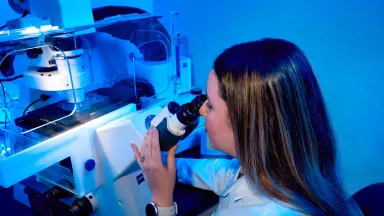
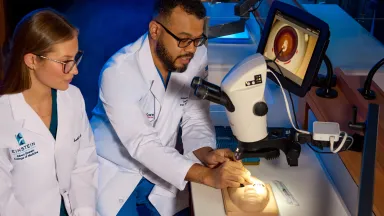
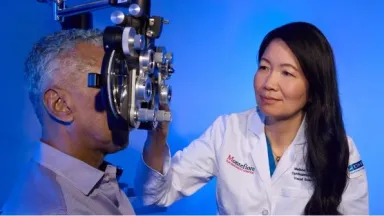
Montefiore Einstein is an internationally recognized leader, providing comprehensive, state-of-the-art care for adults and children with the full spectrum of cataract and lens disorders, from age-related, secondary, and traumatic cataract to congenital and pediatric cataract, complex lens dislocations, and rare lens anomalies. Our multidisciplinary team of world-renowned doctors includes board certified ophthalmologists with advanced expertise in cataract and lens surgery who collaborate closely with optometrists, retina, glaucoma, pediatric and oculoplastics specialists, primary care physicians and other providers to ensure seamless, coordinated care. Our cataract specialists are experts in the most advanced treatments, offering the latest diagnostics and lens-based solutions. These treatments range from monofocal and toric (astigmatism-correcting) intraocular lenses (IOLs) to multifocal lenses, advanced presbyopia-correcting options such as extended depth-of-focus (EDOF) lenses that allow for postoperative vision customization. We use state-of-the-art phacoemulsification platforms, micro- and small-incision techniques and high-definition three-dimensional (3D) visualization systems to enhance surgical precision and promote faster recovery. As a referral center, we specialize in both routine and the most complex cataract cases, including those requiring advanced techniques for lens dislocation, traumatic cataract or coexisting ocular conditions such as glaucoma, corneal disease or prior refractive surgery.
We provide an individualized approach to cataract care, tailoring each treatment plan to the patient’s unique ocular anatomy, vision goals and lifestyle. Our specialists prioritize shared decision-making to ensure each patient is informed and empowered throughout their care. As pioneers in cataract and minimally invasive eye surgery, our physician-scientists also co-invented the Trabectome, the first U.S. Food and Drug Administration (FDA)-cleared device for minimally invasive glaucoma surgery (MIGS), which is often performed in combination with cataract surgery to help lower intraocular pressure in individuals with coexisting glaucoma. For individuals with congenital cataract or syndromic conditions with lens involvement, we offer genetic counseling and work together with the Children’s Hospital at Montefiore Einstein’s Pediatric Genetic Medicine, one of the nation’s first and most renowned programs. For more than 50 years, we have been leading the way in genetic and genomic disease care and continue to serve as a model for the field.
Internationally Recognized Care, Close to Home
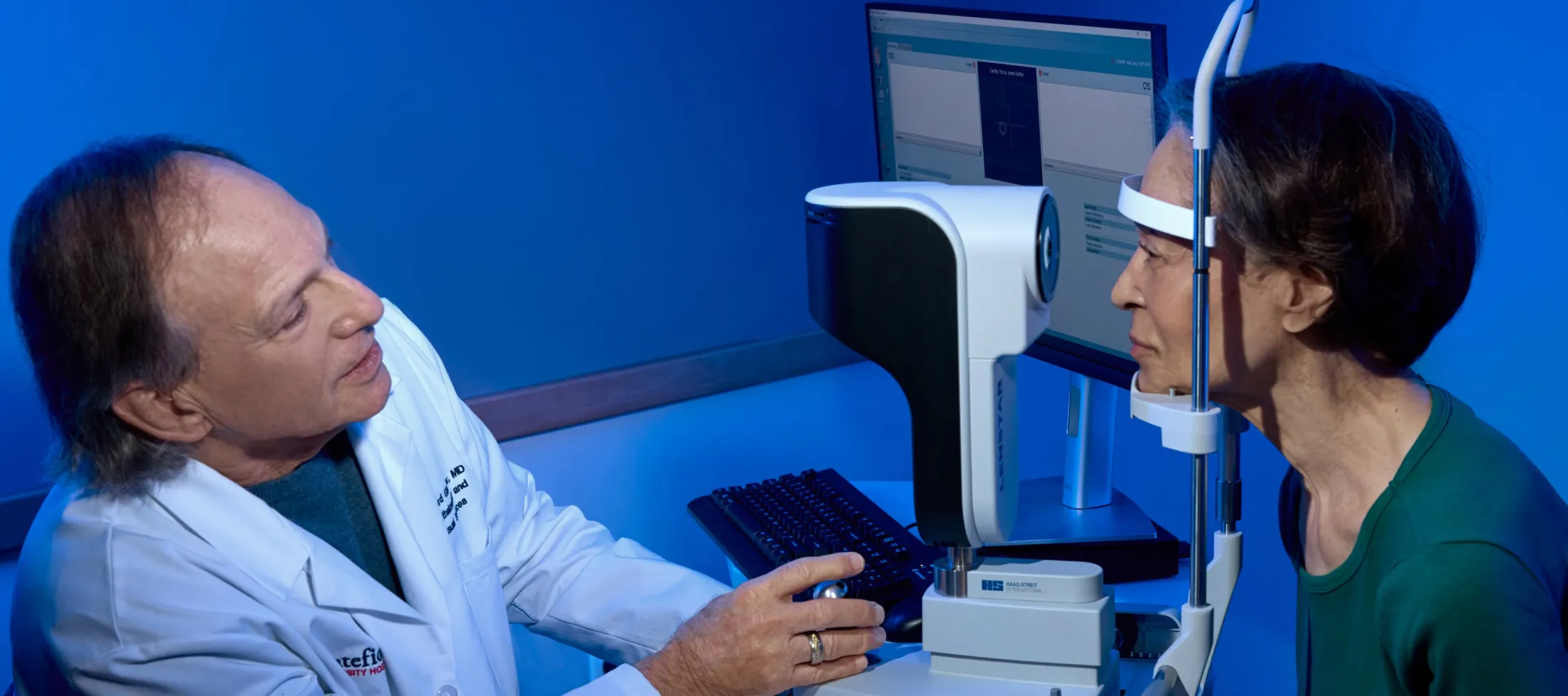
Our state-of-the-art Lasik and Eye Care Center expands access to world-renowned vision care for patients across New York State. Designed to enhance the patient experience, the Center features customized operating suites equipped with the most advanced cataract surgical technologies available including the latest phacoemulsification platforms, and high-definition operating microscopes. Nearly all procedures are performed on an outpatient basis, enabling patients to receive leading-edge care in a comfortable, accessible setting close to home.
Video could not be played
Advanced Diagnostics & Treatments
We offer the most advanced diagnostics and treatments for the prevention, detection and management of all types and stages of cataract and lens disorders. Montefiore Einstein’s state-of-the-art diagnostic technologies deliver exceptional precision in cataract evaluation and treatment planning. We utilize advanced swept-source optical coherence tomography (OCT) biometry, high-resolution corneal topography and tomography, posterior corneal astigmatism analysis.
Montefiore Einstein offers a wide range of nonsurgical management strategies for individuals who are not yet candidates for surgery, including prescription optimization, glare reduction and lifestyle modifications, along with advanced imaging to monitor cataract progression over time providing seamless, patient-centered care at every stage.
To ensure comprehensive care, we perform thorough preoperative assessments of the macula and optic nerve, allowing us to optimize outcomes for patients with coexisting retinal conditions. For families affected by congenital cataract, our Program collaborates with the world-renowned Division of Genetics at the Children’s Hospital at Montefiore Einstein (CHAM) to integrate advanced genetic testing including massively parallel next-generation sequencing—with compassionate genetic counseling. This comprehensive approach empowers adults and children and their families to make fully informed decisions about their care while understanding the genetic factors that may influence treatment options.
When surgery is the best option for restoring your vision, we offer a full range of the most advanced cataract removal and lens replacement procedures available today. Our world-renowned Montefiore Einstein cataract surgeons employ leading-edge techniques designed to deliver exceptional outcomes with maximum comfort and precision. Our surgical options include microincision phacoemulsification with intelligent fluidics for gentle, efficient cataract removal. For complex cases requiring specialized care, we use advanced micro- and small-incision approaches tailored to each patient’s unique needs.
Montefiore Einstein provides the latest premium IOL technologies to achieve customized vision correction for adults and children. Our extensive lens portfolio includes monofocal, and toric (astigmatism-correcting), multifocal. Each lens option is carefully selected to match your specific vision goals and lifestyle needs.
Our cataract surgeons are experts in managing the most challenging eye and lens conditions, including lens subluxation or dislocation, zonular weakness, previous refractive surgery complications and coexisting glaucoma. We employ sophisticated techniques such as scleral- or iris-fixated IOLs, capsular tension devices and combined MIGS to achieve optimal outcomes even in the most complex situations.
Montefiore Einstein extends beyond surgery to include advanced preoperative optimization and personalized postoperative care. We manage ocular surface conditions, such as dry eye and meibomian gland dysfunction (MGD), prior to surgery to ensure the highest level of biometric accuracy and enhance surgical outcomes.
For appropriate candidates, we offer dropless cataract surgery, reducing the need for postoperative eye drops through intracameral medication delivery during the procedure. Postoperatively, we provide individualized rehabilitation plans that may include secondary enhancements and yttrium aluminum garnet (YAG) laser capsulotomy for posterior capsular opacification when necessary, to ensure optimal vision restoration.
Montefiore Einstein’s comprehensive suite of advanced diagnostics and treatments for cataract and lens disorders includes:
- Comprehensive eye examination
- Slit-lamp biomicroscopy
- Digital lens opacity grading (LOCS III or equivalent systems)
- Optical biometry (e.g. IOLMaster®, Lenstar) for axial length, keratometry, anterior chamber depth, lens thickness and white-to-white measurements
- Swept-source OCT biometry (for dense cataract where traditional biometry is limited)
- Corneal topography and tomography (to detect astigmatism, corneal irregularities or prior refractive surgery)
- Anterior segment optical coherence tomography (AS-OCT)
- Specular microscopy (for endothelial cell analysis)
- Pachymetry (for corneal thickness measurements)
- Wavefront aberrometry (to identify higher-order aberrations and optimize IOL selection)
- Pupil size and dilation assessment
- Macular OCT imaging (to detect subclinical retinal or macular pathology preoperatively)
- B-scan ocular ultrasound (in cases of dense cataract where posterior segment visualization is limited)
While cataract surgery is generally the definitive treatment for visually significant cataract, nonoperative management may be appropriate in the early stages or for individuals who are not yet ready or eligible for surgery. These treatments include:
- Visual optimization and monitoring
- Prescription glasses or contact lenses adjustments (to compensate for early lens changes, refractive shifts or astigmatism)
- Magnification aids and enhanced lighting (to improve near vision and contrast sensitivity)
- Tinted lenses or anti-glare coatings (to reduce glare from lens opacities)
- Presbyopia eye drops (e.g. Vuity®) for temporary near vision improvement in presbyopia—not for cataract directly, but may delay need for lens surgery in select patients
- Medical management and monitoring
- Pharmacologic pupil dilation (cycloplegic drops) to improve the visual axis in specific scenarios, such as small pupil cataract
- Anti-inflammatory medications (e.g. topical steroids or nonsteroidal anti-inflammatory drugs—NSAIDs for lens-induced uveitis or phacolytic glaucoma)
- Intraocular pressure control (in lens-related glaucoma or phacomorphic crises, as a temporizing measure before surgery)
- Nutritional support and antioxidants for overall eye health
- Cataract surgery techniques
- Microincision cataract surgery (MICS)
- Small incision cataract surgery (SICS)
- Phacoemulsification with ultrasound energy optimization (e.g. advanced platforms such as Centurion Vision System® and Stellaris Elite™)
- Advanced fluidics management with real-time intraoperative pressure control (e.g. Active Sentry® System)
- Intraocular lens (IOL) implantation options
- Monofocal IOLs
- Toric IOLs (for astigmatism correction)
- Multifocal and extended depth of focus (EDOF) IOLs
- Accommodating IOLs
- Refractive lens exchange (RLE) for individuals seeking surgical presbyopia or refractive error correction prior to cataract formation
- Premium lens counseling and customization services
- Astigmatism management
- Limbal relaxing incisions (LRIs)
- Arcuate keratotomy
- Keratorefractive Enhancement
- Complex lens procedures
- IOL exchange and repositioning
- Intraoperative pupil expansion techniques (e.g. Malyugin Ring, iris hooks)
- Capsular tension rings and support devices for zonular instability or weakness
- Scleral-fixated IOLs (Yamane technique, glued IOLs)
- Iris-fixated IOLs
- Secondary lens implantation
- Combined minimally invasive glaucoma surgery (MIGS) when appropriate
- Combined cataract and corneal procedures (e.g. Descemet membrane endothelial keratoplasty—DMEK or corneal relaxing incisions)
- Posterior capsulotomy (YAG laser) for posterior capsule opacification
- Ocular surface optimization presurgery, including management of dry eye and meibomian gland dysfunction to ensure accurate biometry and improve surgical accuracy
- Genetic counseling (for congenital cataract or syndromic conditions with lens involvement)
- Lifestyle and occupational vision counseling to guide lens selection based on professional, recreational and daily activity needs
- Patient-specific counseling and shared decision-making tools to support personalized IOL selection and surgical planning
- Perioperative medical optimization collaboration with primary care or specialists for patients with systemic comorbidities that affect surgical planning

Video could not be played
Ophthalmology Research
Montefiore Einstein is leading collaborative research and spearheading numerous studies and clinical trials, including several funded by the National Eye Institute (NEI)/National Institutes of Health (NIH), translating novel scientific discoveries into new diagnostics and treatments to help improve clinical outcomes. Through our clinical trials, our patients can access emerging technologies and innovative treatments that may otherwise be unavailable to the general public.
Our research spans basic, translational and clinical science, with a focus on advancing the diagnosis, treatment and long-term management of cataract and complex lens-related conditions. Key areas of investigation include the development of novel surgical techniques and technologies, next-generation IOL solutions and data-driven strategies to improve surgical outcomes. We are studying the use of AI to help improve the performance of IOL calculation formulas and provide an enhanced framework for IOL formula optimization.
Beyond surgical innovation, our research addresses critical challenges in perioperative care, medical therapy and surgical education. We are evaluating the role of perioperative pharmacologic strategies in cataract surgery, including the use of NSAIDs to reduce perioperative inflammation, drug-eluting intraocular implants for sustained antimicrobial protection and systemic medications that influence iris physiology, such as alpha-adrenergic antagonists, and their effects on surgical outcomes. We are also exploring nonsurgical therapeutic approaches, including a subgroup analysis from a Phase 1/2 randomized clinical trial evaluating 2.6% edetate disodium (EDTA) ophthalmic solution as a potential medical treatment for patients with age-related cataract.
Our team is also leading efforts to advance surgical training and education through the use of high-fidelity simulators, with a focus on the evaluation of ophthalmic surgical simulators for continuous curvilinear capsulorhexis training and the impact of case complexity in resident-performed cataract surgery.
Trusted Global Leaders in Evidence-Based Eye Care
Montefiore Einstein is one of only 13 centers worldwide designated as a Cochrane Eyes and Vision (CEV) Center for Evidence-Based Vision Care, a prestigious NEI/NIH-funded distinction. This recognition reflects our world-renowned commitment to advancing evidence-based medicine and establishing the most effective treatments in patient care. Our research contributions serve as a global model for clinical sites worldwide.

Video could not be played
Our Cataract & Lens Disorders Team

Video could not be played
Claudia P. Castiblanco, MD

Video could not be played
Richard P. Gibralter, MD

Video could not be played
Viral V. Juthani, MD

Video could not be played
Joann J. Kang, MD

Video could not be played
Gene Kim, MD

Video could not be played
Anthony Marte, MD

Video could not be played
Jeffrey S. Schultz, MD

Video could not be played
Alex B. Theventhiran, MD

Video could not be played
Wen-Jeng M. Yao, MD
Our multidisciplinary team of world-renowned ophthalmologists specializes in the diagnosis and management of the full spectrum of cataract and lens disorders, using the most advanced medical and surgical techniques to preserve, restore and enhance vision, prevent further vision loss, reduce dependence on glasses and improve quality of life for each patient.
About Cataract & Lens-Related Conditions
Cataracts are the leading cause of blindness worldwide. Other lens-related conditions, such as lens dislocation or complications following lens surgery, are less common but can also lead to significant vision loss when not properly managed. A cataract is a clouding or opacification of the eye’s naturally clear lens or its surrounding capsule, which prevents light from properly passing through the lens to the retina of the eye. This clouding of the lens typically caused by a gradual breakdown and aggregation of proteins in the lens over time can lead to a range of visual symptoms, including blurred vision, glare, difficulty with night driving, reduced visual acuity, halos around lights and increased light sensitivity (photophobia). While age-related cataract are the most common form, other types include congenital cataract (present at birth), traumatic cataract (resulting from injury) and secondary cataract associated with systemic diseases, certain medications or chronic anterior uveitis (eye inflammation).
In addition to cataract, lens-related conditions can involve lens dislocation (ectopia lentis), lens instability from zonular weakness or complications related to intraocular lenses after cataract surgery. Accurate diagnosis and timely, multidisciplinary management are essential to preserve vision and prevent long-term complications. Treatment may include careful monitoring, prescription of corrective lenses or medical management in the early stages, and surgical intervention when cataract significantly interfere with daily activities or quality of life.
Learn More About Screening, Prevention & Treatment of a Wide Range of Cataract and Lens-Related Conditions
Location details: Greene Medical Arts Pavilion (MAP), Henkind Eye Institute
Greene Medical Arts Pavilion (MAP), Henkind Eye Institute
Location details: LASIK & Eye Care Center
LASIK & Eye Care Center