



¿Por qué elegir Montefiore Einstein para el tratamiento de las neoplasias mieloproliferativas clásicas?

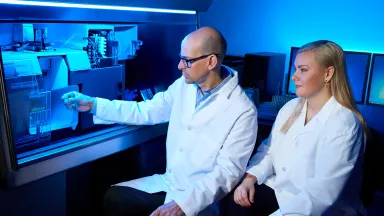
El Programa de Neoplasias Mieloproliferativas de Montefiore Einstein es un líder reconocido internacionalmente, especializado en el diagnóstico y tratamiento de todo el espectro de neoplasias mieloproliferativas clásicas (NMP) negativas para el cromosoma Filadelfia, también conocidas como BCR-ABL1 negativas, incluyendo policitemia vera, trombocitopenia esencial, mielofibrosis, leucemia mieloide crónica, leucemia neutrofílica crónica y leucemia eosinofílica crónica. A la vanguardia de la investigación académica, la educación y la atención clínica, nuestro equipo multidisciplinario de hematólogos, patólogos, genetistas, cardiólogos, oncólogos, obstetras, ginecólogos, cirujanos y otros especialistas de renombre mundial brinda atención integral y coordinada, adaptada a las necesidades únicas de cada paciente, en ubicaciones en el Bronx y el área metropolitana de Nueva York, incluyendo el condado de Westchester y el valle del Hudson.
Nuestro equipo médico, que utiliza un enfoque personalizado y basado en la investigación para el diagnóstico y el tratamiento de las neoplasias mieloproliferativas (NMP), emplea los métodos de diagnóstico y tratamiento más avanzados, desde las últimas pruebas morfológicas y moleculares hasta terapias dirigidas modernas como los inhibidores de la Janus quinasa (JAK), terapias emergentes y trasplantes de células madre cuando procede. Gracias a nuestros ensayos clínicos, también podemos ofrecer a los pacientes acceso a tratamientos innovadores que aún no están disponibles para el público en general. Nos encontramos entre el 1 % de los mejores hospitales del país en atención oncológica, según Informe de Estados Unidos y del mundo, y somos un centro de referencia internacional para los casos más complejos.
Trabajamos como un equipo unificado con nuestro Centro Oncológico Integral Montefiore Einstein, que se encuentra entre el 1% de los centros oncológicos integrales designados por el Instituto Nacional del Cáncer (NCI) en los EE. UU. Dedicados a mejorar la experiencia de atención al paciente y los resultados, brindamos una gama completa de servicios, desde prevención, diagnóstico y tratamiento hasta servicios sociales y de apoyo, asesoramiento genético y educación. Dado que todos los subtipos de NMP se asocian con un mayor riesgo de eventos tromboembólicos y hemorrágicos, los pacientes también son monitoreados regularmente para detectar estas complicaciones potencialmente mortales.
Colaboramos estrechamente con nuestro Centro de Tratamiento de la Hemofilia, uno de los principales centros del país para el tratamiento de trastornos de la coagulación y el sangrado, y con nuestro Programa de Prevención y Tratamiento de la Trombosis, uno de los más grandes de su tipo en el país. Nos comprometemos a brindar una atención compasiva y centrada en el paciente de la más alta calidad, reduciendo o eliminando la producción excesiva de células sanguíneas, previniendo las complicaciones relacionadas con las neoplasias mieloproliferativas, aliviando los síntomas y mejorando la calidad de vida de cada paciente y su familia.
El equipo de su programa de neoplasias mieloproliferativas

Swati Goel, MD
Nuestro equipo multidisciplinario de hematólogos de renombre mundial se especializa en la prevención, el diagnóstico y el tratamiento de todo el espectro de las neoplasias mieloproliferativas clásicas, brindando una atención integral y personalizada. Nos comprometemos a optimizar los resultados, reducir o eliminar la producción excesiva de células sanguíneas, prevenir las complicaciones relacionadas con las neoplasias mieloproliferativas, aliviar los síntomas y mejorar la calidad de vida de todos los pacientes y sus familias .
Diagnóstico y tratamientos avanzados para las neoplasias mieloproliferativas clásicas.
Ofrecemos acceso a los diagnósticos y tratamientos más avanzados para la prevención, la detección precoz y el manejo de todo tipo de neoplasias mieloproliferativas en adultos y niños.
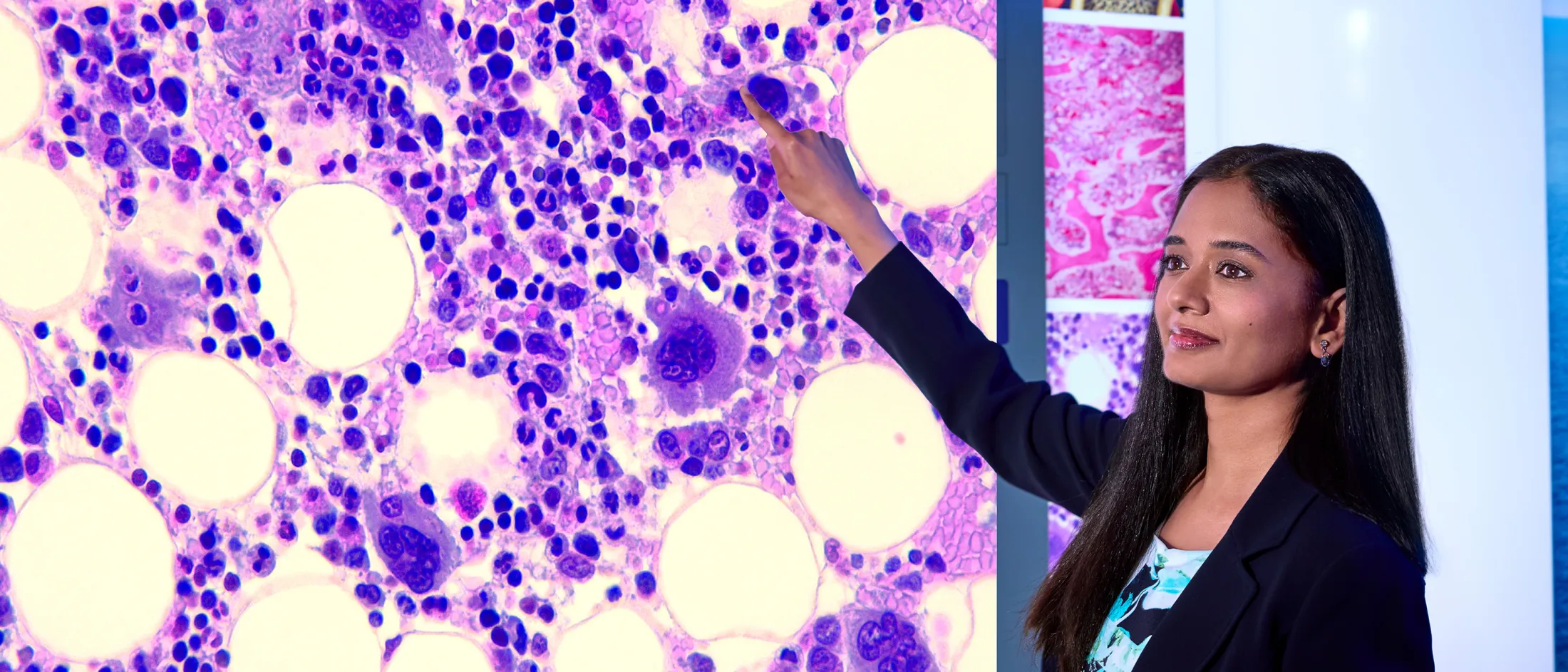
Ofrecemos pruebas hematopatológicas avanzadas con las últimas técnicas hematológicas, morfológicas, genéticas y genómicas, incluyendo secuenciación genómica de última generación para detectar con precisión mutaciones en genes como JAK2, MPL y calreticulina, entre otros, lo que contribuye a optimizar el manejo y el pronóstico de las neoplasias mieloproliferativas (NMP) y facilita planes de atención de precisión. Utilizamos las técnicas más recientes de aspiración y biopsia de médula ósea e incorporamos morfología digital y evaluaciones basadas en inteligencia artificial para mejorar la precisión y la eficiencia en la identificación de células patológicas en la médula ósea y la sangre. Asimismo, empleamos las técnicas más avanzadas de tipificación del antígeno leucocitario humano (HLA) para garantizar los mejores resultados posibles para los pacientes candidatos a trasplante alogénico de células madre.
Nos basamos en tecnologías de imagen avanzadas, como la ecografía dúplex venosa para la evaluación de la trombosis venosa profunda, así como la gammagrafía de ventilación/perfusión y la angiografía pulmonar para la evaluación de la embolia pulmonar. Brindamos cuidados de apoyo, como transfusiones, y monitorizamos regularmente a los pacientes para prevenir riesgos potenciales como eventos tromboembólicos o hemorrágicos, transformación leucémica aguda y complicaciones cardiovasculares, además de detectarlos precozmente y tratarlos.
Según el diagnóstico, la puntuación pronóstica, la evaluación de riesgos y la presencia de síntomas asociados, ofrecemos una gama completa de tratamientos personalizados y específicos, individualizados para cada paciente y basados en la biología de su neoplasia mieloproliferativa (NMP). Estos tratamientos abarcan desde los convencionales hasta las terapias más avanzadas y novedosas, pasando por tratamientos combinados. Algunos de los tratamientos que ofrecemos son:
Líderes en trasplante de células madre
Como pioneros en trasplantes de médula ósea y terapias celulares, nuestro Programa de Terapia Celular y con Células Madre está acreditado por la Fundación para la Acreditación de la Terapia Celular, ofreciendo una amplia gama de opciones de trasplante, como trasplantes autólogos, de donantes emparentados compatibles, de donantes no emparentados compatibles y haploidénticos o parcialmente compatibles. Nuestro equipo de trasplante de células madre se especializa en trasplantes alogénicos, que actualmente constituyen la única terapia potencialmente curativa para las neoplasias mieloproliferativas (NMP), en particular la mielofibrosis.
Somos uno de los pocos hospitales en EE. UU. que cuenta con un laboratorio de histocompatibilidad para trasplantes miembro de la Red de Obtención y Trasplante de Órganos (OPTN). Nuestro laboratorio interno de inmunología, acreditado por la Sociedad Americana de Histocompatibilidad e Inmunogenética (ASI), ofrece pruebas de histocompatibilidad, inmunología e inmunogenética de vanguardia, incluyendo las técnicas más recientes de tipificación HLA, anticuerpos y pruebas de compatibilidad cruzada. También ofrecemos programas innovadores de desensibilización para pacientes con altos niveles de anticuerpos y grupos sanguíneos incompatibles. Para garantizar el éxito del trasplante de células madre hematopoyéticas, optimizamos la supervivencia del injerto con terapias inmunosupresoras avanzadas y nuevos protocolos de tolerancia inmunológica.
A la vanguardia en el manejo de los trastornos de la coagulación.
Utilizamos las terapias anticoagulantes, antitrombóticas y de reversión hemostática más recientes, así como las tecnologías de monitorización, para la prevención, el diagnóstico y el tratamiento de toda la gama de eventos de coagulación y sangrado asociados con las neoplasias mieloproliferativas.

Investigación y ensayos clínicos para neoplasias mieloproliferativas clásicas
Lideramos la investigación colaborativa y dirigimos numerosos estudios y ensayos clínicos, transformando los descubrimientos científicos más novedosos en nuevos diagnósticos y tratamientos para mejorar los resultados clínicos y cambiar vidas. Gracias a nuestros ensayos clínicos, podemos brindar a los pacientes acceso a tratamientos que aún no están disponibles para el público en general.
Nuestros investigadores han realizado importantes contribuciones al campo. Parte de nuestra investigación se centra en el estudio de los resultados de tratamientos novedosos para las neoplasias mieloproliferativas (NMP) y sus complicaciones, el desarrollo de nuevas terapias para las NMP, el estudio de las diferencias genéticas y los determinantes socioeconómicos de los resultados de la mielofibrosis, y la exploración de la aplicación traslacional de la inmunomodulación en el trasplante de células madre.
Estamos investigando los resultados del tratamiento con antitrombóticos en las neoplasias mieloproliferativas (NMP) y recientemente publicamos nuestros hallazgos. Los resultados no mostraron una diferencia significativa en los eventos tromboembólicos o hemorrágicos recurrentes en pacientes con trombosis asociada a NMP anticoagulados con anticoagulantes orales directos (AOD) y antagonistas de la vitamina K. También participamos recientemente en un estudio observacional multicéntrico internacional —parte de un proyecto de la Red Europea de Leucemia— cuyo objetivo era estimar la incidencia y los factores de riesgo de complicaciones trombóticas y hemorrágicas en pacientes con NMP, fibrilación auricular y tromboembolismo venoso tratados con un AOD en la práctica clínica habitual.
Nuestros investigadores también fueron los primeros en descubrir que las células madre participan en la trogocitosis, un proceso que desempeña un papel en la regulación de las respuestas inmunitarias y otros sistemas celulares. Descubrieron que la inhibición del receptor del factor de células madre (c-Kit) prevendría la trogocitosis y permitiría la movilización de un mayor número de células madre hematopoyéticas, haciéndolas disponibles para el trasplante. Este hallazgo revolucionario podría aumentar la eficacia y ampliar el uso de los trasplantes de células madre. Asimismo, nuestros investigadores demostraron que las señales del sistema nervioso simpático regulan la salida de las células madre hematopoyéticas de la médula ósea y que los nervios adrenérgicos regulan su liberación circadiana.
También publicamos resultados de la práctica clínica real del tratamiento con ruxolitinib para la policitemia vera y encontramos que crizotinib tiene eficacia preclínica en las MPN negativas para el cromosoma Filadelfia, lo que sugiere que se debería investigar crizotinib para el tratamiento de pacientes con MPN. Recientemente publicamos los resultados finales de un estudio de fase 2 de parsaclisib como tratamiento complementario, un inhibidor de PI3Kδ, para pacientes con mielofibrosis y respuesta subóptima a ruxolitinib, y encontramos que parsaclisib redujo el volumen del bazo y mejoró las puntuaciones de los síntomas cuando se añadió a ruxolitinib en pacientes con mielofibrosis.
Nuestro equipo de investigación clínica garantiza que los pacientes tengan acceso a una amplia gama de ensayos clínicos que les permitan acceder a tratamientos innovadores aún no disponibles para el público en general. Algunas de las nuevas terapias inmunológicas y dirigidas en fase de investigación son los inhibidores de bromodominios y motivos extraterminales (BET), la terapia dirigida basada en anticuerpos, la terapia con células T CAR y los inhibidores de puntos de control inmunitario.