



Investigación hematológica
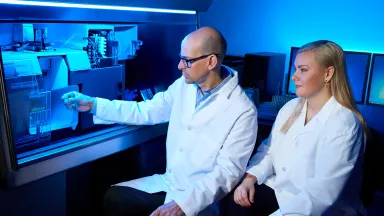
At Montefiore Einstein Hematology (Blood Disorders), we are committed to finding new and better ways to improve patient care and advance the future of hematology. We are leading collaborative research and spearheading numerous studies sponsored by the Centers for Disease Control and Prevention, American Thrombosis and Hemostasis Network (ATHN), Maternal and Child Health Bureau and National Institutes of Health, as well as other investigator-initiated and industry-funded clinical trials. Our team is translating novel scientific discoveries into new diagnostics and treatments to help improve clinical outcomes and change lives. We have helped establish new standards of care in hematology and have been involved in multiple trials that have led to the approval of novel medications by the U.S. Food and Drug Administration (FDA). Through our clinical trials, our patients can access emerging technologies and innovative treatments that are otherwise unavailable to the general public.
Basic, Translational & Clinical Research Initiatives
Home to the first Sickle Cell Center and Research Laboratory in the U.S., we have been leading groundbreaking research in hematology for more than 70 years. Our research portfolio spans basic, translational and clinical studies focused on advancing the understanding and treatment of a broad spectrum of hematologic conditions.
Basic Science Research
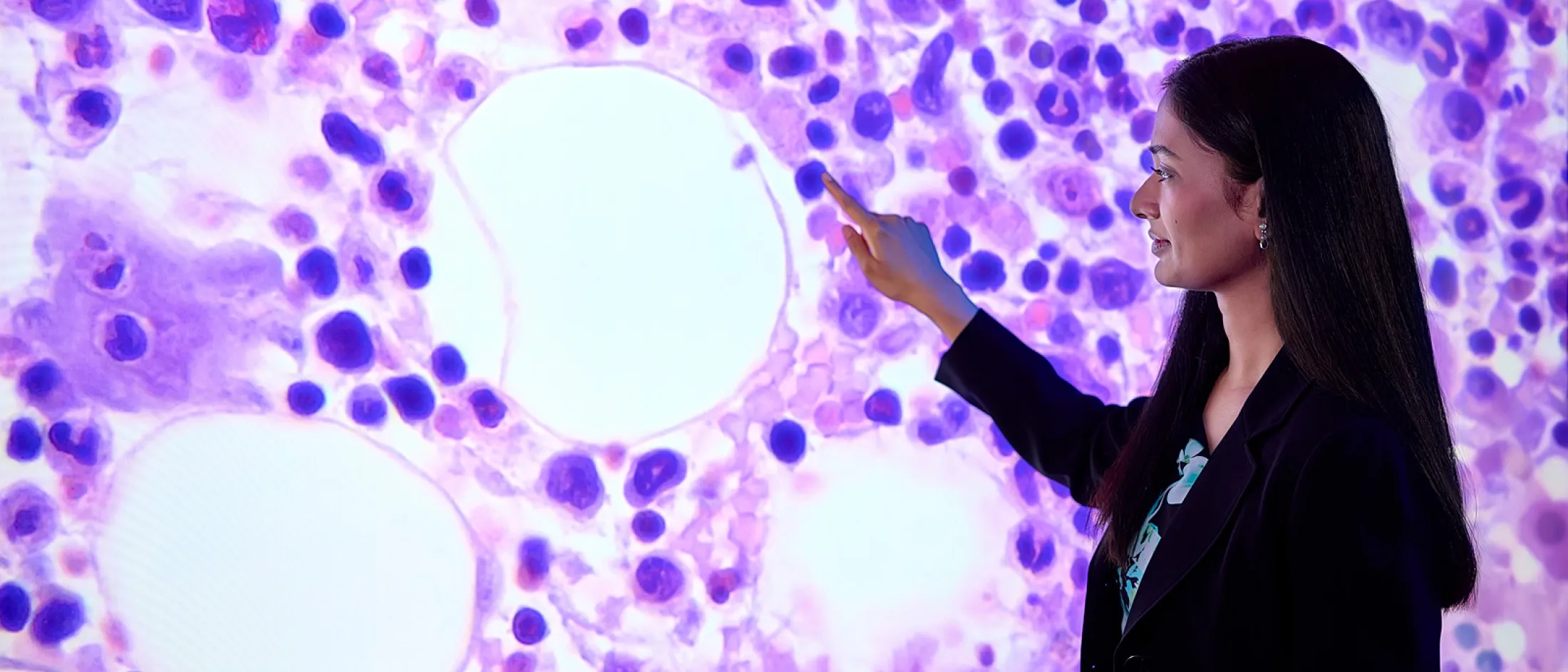
Our basic science research focuses on investigating the biology, genetics, epigenetics and underlying mechanisms that contribute to a wide range of blood disorders. We are exploring the molecular basis of sickle cell disease (SCD), the genetic regulation of hemoglobinopathies and hematopoietic stem cell biology. Our researchers were among the first contributors to epigenetics, the study of how genetic factors affect heritable defects like sickle cell and continue to investigate SCD through genetic mapping, microvascular studies and other research.
Pioneers in Sickle Cell Research
Our researchers discovered that altered adhesive properties of leukocytes, not just misshapen erythrocytes, played a major role in sickle cell vascular occlusion. Paired with our research on selectins, our landmark findings resulted in the development and FDA approval of anti‐P‐selectin monoclonal antibodies and intravenous immunoglobulin as novel therapies for vaso‐occlusion in SCD. Our researchers also described the mechanisms by which the microbiome regulates aged neutrophils to promote vaso‐occlusion and organ damage in SCD. We are also studying the biology of hematopoietic stem cells in the context of SCD and have developed clustered regularly interspaced short palindromic repeats (CRISPR)-based methods to perform knock-in of minicircles in human hematopoietic stem cells for gene therapy of hemoglobinopathies and other genetic disorders affecting erythroid cells. This leading-edge research continues to lay the groundwork for transformative therapies in hematology.
Translational Research
Translational research at our center bridges laboratory discoveries and clinical application. We are actively investigating and advancing new treatments for SCD, including gene therapy and partial-match bone marrow transplantation, new approaches to treat the effects of this disease, and the translational application of immune modulation to stem cell transplantation. Together with our colleagues at the Center for Health Data Innovations, we have contributed to the longitudinal assessment of lifespan challenges associated with SCD, including monitoring transition patients for successful transition data. Our participation in data hubs enables us to incorporate machine learning into our algorithms to optimize the delivery of care and implement evidence-based pain protocols to standardize care. We have also been involved in Hemoglobin F inducer protocols.
Our Hematology Biobank serves as an institutional repository, integrating patient clinical histories, longitudinal medical data and a linked but deidentified collection of blood samples. This comprehensive resource is designed to support the development of a large database that will facilitate research across a wide range of hematologic disorders. In addition to enabling epidemiologic and clinical studies, the biobank can support in vitro investigations and translational research efforts aimed at identifying novel biomarkers and therapeutic targets, ultimately advancing precision medicine approaches in hematology.
Clinical Research
Our clinical research portfolio encompasses all phases and types of clinical trials, national registries and large observational studies aimed at improving patient outcomes across a wide range of hematologic conditions. These efforts span multiple disease-focused programs, each dedicated to advancing care through rigorous clinical investigation.

Hematology (Blood Disorders) Clinical Trials
We are spearheading all phases and types of clinical trials for individuals with a wide range of hematologic conditions. Through our clinical trials, you may also be able to access emerging technologies and innovative treatments that may otherwise not be available to the general public.
Recent Hematologic Publications
Recent Publications – Hematology
-
Minniti CP, Suman PD, Dahlan K, Crouch A, Goodman M, Mian UK. Healthcare Utilization Patterns in Sickle Cell Patients and Their Association With Sickle Cell Retinopathy. Eur J Haematol. 2025 Apr;114(4):615-619.doi: 10.1111/ejh.14369. Epub 2024 Dec 23.
-
Fattizzo B, Marchetti M, Michel M, et al. Diagnosis and management of Evans syndrome in adults: first consensus recommendations. Lancet Haematol. 2024;11(8):e617–e628. doi:10.1016/S2352-3026(24)00144-3. PMID: 38968944.
-
Fattizzo B, Bortolotti M, Fantini NN, et al. Autoimmune hemolytic anemia during pregnancy and puerperium: an international multicenter experience. Blood. 2023 Feb 2;141(16):2016–2021. doi: 10.1182/blood.2022018890
-
Su S, Bao W, Liu Y, et al. IFN-I promotes T-cell-independent immunity and RBC autoantibodies via modulation of B-1 cell subsets in murine SCD. Blood. 2025 Jan 16;145(3):334-347. doi: 10.1182/blood.2024025175. PMID: 39656114; PMCID: PMC11775509.
-
Yan J, Hammami MB, Wei JX, et al. Socio-demographic determinants of myelofibrosis outcomes in an underserved center and the SEER national database. Ann Hematol. 2024 Sep;103(9):3543-3551. doi: 10.1007/s00277-024-05894-7. Epub 2024 Jul 24. PMID: 39046510; PMCID: PMC11358356.
-
Kamel J, Yan J, Rockwell B, et al. Inter-racial genetic differences in myelofibrosis: a diverse inner-city center analysis. Leuk Lymphoma. 2025 Feb;66(2):329-332. doi: 10.1080/10428194.2024.2414121. Epub 2024 Oct 21. PMID: 39432864.