


Actividades académicas y de investigación
Montefiore Einstein es un centro médico académico y, como tal, su misión es sanar, enseñar, descubrir y promover la salud de nuestras comunidades. Si bien nuestra pasantía prioriza el servicio clínico (“sanar”), buscamos un equilibrio entre esta tarea, la capacitación y la educación (“enseñar”), y la investigación (“descubrir”). Dentro de los ejemplos de nuestro compromiso con el liderazgo y la educación podemos mencionar nuestra intensa y exhaustiva supervisión clínica, la jornada completa de didáctica que realizamos semanalmente los jueves, las conferencias periódicas de casos y las Rondas Clínicas del Departamento de Psiquiatría, que se realizan semanalmente de septiembre a junio, con ponentes de renombre de todo el país. Además, los pasantes deben completar un proyecto de investigación durante el año de la pasantía y, con frecuencia, el profesorado los invita a participar en proyectos académicos adicionales, que van desde escribir artículos y contribuir con capítulos a estudios publicados, hasta hacer presentaciones en congresos.
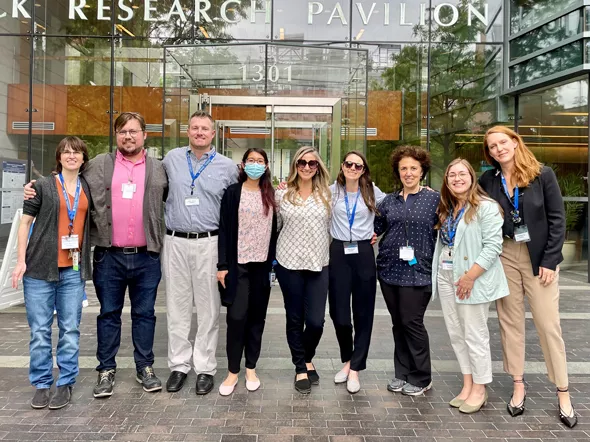
La Dra. Amanda Zayde, Directora Fundadora del Programa de Conexión y Reflexión sobre la Experiencia (CARE), junto con su equipo clínico y de investigación, en el Día Anual de Investigación de PRIME.
Supervisión
En el Programa de Capacitación de Pasantías en Psicología, se hace un gran énfasis en la supervisión. En promedio, los pasantes de las cuatro especializaciones reciben entre 5 y 7 horas de supervisión semanales, con 3 o 4 horas de supervisión individual y 2 o 3 horas de supervisión grupal o diádica.
Los miembros del profesorado del Programa de Capacitación de Pasantías en Psicología son expertos en diversos enfoques teóricos (p. ej., terapia cognitivo conductual, terapia dialéctico conductual, psicoterapia psicodinámica, psicoterapia interpersonal, etc.) y modalidades (p. ej., individual, de pareja, familiar y grupal). Además, los pasantes participan en equipos multidisciplinarios de tratamiento semanales, se turnan para presentar un dilema ético durante la reunión mensual de la División de Psicología y asisten a una reunión también mensual llamada “Convertirse en supervisor”, organizada por nuestros cinco fellows postdoctorales. Finalmente, dependiendo de la rotación y el supervisor de cada pasante, la supervisión puede implicar la grabación de sesiones en audio y/o video, la revisión de notas de progreso, la observación y/o la participación en sesiones de coterapia.
Cosas didácticas
Los jueves son los días que el departamento dedica a capacitación y educación. Por ello, todos los pasantes asisten a conferencias de 9:00 am a 10:15 am y de 1:00 pm a 3:00 pm durante el año de capacitación. A algunas de estas conferencias también asisten residentes de psiquiatría, fellows y externos de psicología. El plan de estudios, presentado por miembros del profesorado y otros invitados seleccionados, se organiza en torno a varios módulos directamente relacionados con nuestras metas y objetivos, incluidas varias conferencias sobre cultura y diversidad, así como temas de especial importancia para los nuevos psicólogos de los servicios de salud.
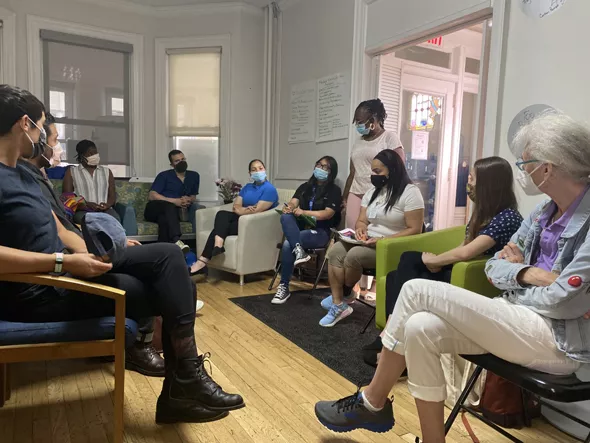
Entre nuestras actividades didácticas también hay aprendizaje fuera del aula, como visitar el Project Bravo Food Pantry. Esta iniciativa comunitaria, impulsada por un hospital, combate la inseguridad alimentaria de personas y familias en alto riesgo en el Bronx.
La mayoría de los años, el programa de estudios incluye gestión de crisis, psicofarmacología para psicólogos, pruebas psicológicas, evaluación neuropsicológica y discapacidades de aprendizaje. Los enfoques terapéuticos incluyen 5 días completos de capacitación en TDC, TCC, terapia de aceptación y compromiso, terapia psicodinámica, terapia centrada en el trauma para niños, entrevista motivacional y conciencia plena. Además, impartimos conferencias sobre diversas modalidades terapéuticas, como la terapia familiar, la terapia de pareja, la educación para el matrimonio y las relaciones, la terapia de grupo y la terapia sexual. También solemos ofrecer conferencias sobre el tratamiento de trastornos específicos, como los trastornos de conducta disruptiva, los trastornos por consumo de sustancias, la geriatría y el final de la vida, los trastornos del sueño, los dolores de cabeza y el dolor.
Finalmente, ofrecemos una serie de clases magistrales para ampliar el conocimiento de nuestros pasantes sobre las diversas oportunidades profesionales de los psicólogos en diferentes ámbitos, como la psicología de consulta y enlace, la medicina familiar y social, un centro para el tratamiento del SIDA, la atención primaria integrada, los programas de trasplantes y la psicología forense. Al finalizar el año, los pasantes asisten a conferencias centradas en diversos temas del desarrollo profesional, incluidos la obtención de la licencia en psicología, la creación de una consulta privada, las cuestiones éticas, la formación de supervisores, el autocuidado y el agotamiento profesional, y el manejo eficaz de los medios de comunicación.
Rondas clínicas y conferencias de casos
Los pasantes también deben asistir a la serie de Rondas Clínicas del Departamento de Psiquiatría, que se lleva a cabo todos los jueves de septiembre a junio, de 10:30 am a 12 pm. Esta serie cuenta con la participación frecuente de distinguidos ponentes invitados de todo el país, quienes presentan diversos temas de actualidad en psiquiatría y psicología. La mayoría de ellos acepta un almuerzo privado con los pasantes después de las rondas clínicas y, a veces, se queda después del almuerzo para impartir un minitaller, que reemplaza las clases teóricas programadas para la tarde.
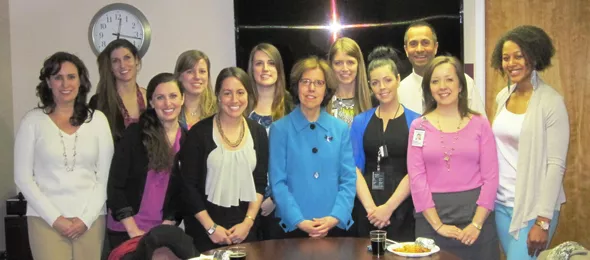
Pasantes, externos y profesores en un almuerzo con la Dra. Judith Beck después de su presentación en las Rondas Clínicas del Departamento de Psiquiatría.
Entre los presentadores destacados del pasado se encuentran:
Linda Carter Sobell
Douglas Woods
Blair Simpson
Barbara Milrod
Lata McGinn
Moira Rynn
David Barlow
Alec Pollard
David Moscovitch
Jonathan Abramowitz
Robert Kohlenberg y Mavis Tsai
Kelly Posner
Fugen Neziroglu
Scott Lilienfeld
Susan Orsillo
Dianne Chambless
Katherine Shear
Rachel Yehuda
Joseph Garner
Adam Radomsky
Kristene Doyle
Douglas Mennin
Martin Franklin
Randy Frost
Nancy McWilliams
Terence Wilson
Martin Antony
Robert Leahy
Barbara Rothbaum
Steven Taylor
Judith Beck
Haga clic aquí para ver el calendario de sesiones magistrales de 2023-24..
Además de participar de las rondas clínicas departamentales, los pasantes suelen asistir a conferencias semanales de casos y/o a reuniones de equipos multidisciplinarios en las rotaciones de cada servicio clínico, lo que les permite consultar con expertos y especialistas sobre casos clínicos en curso. Asimismo, se organiza una conferencia trimestral de casos clínicos para el profesorado, a la cual los pasantes también pueden asistir. En esta conferencia, se presenta un caso complejo y difícil, y se analiza desde múltiples perspectivas clínicas.
Investigación obligatoria y otros proyectos académicos opcionales
Todos los pasantes deben participar en actividades de investigación durante el año de la pasantía. Muchos profesores de Montefiore Einstein (tanto dentro como fuera del Departamento de Psicología) participan activamente en investigación y están disponibles para supervisar a los pasantes en sus proyectos.
Además de la investigación obligatoria, el Programa de Capacitación de Pasantías en Psicología de Montefiore Einstein ofrece a los pasantes diversas oportunidades para participar en proyectos académicos. Por ejemplo, pueden colaborar con el profesorado en presentaciones en congresos científicos, participar en proyectos de escritura (como capítulos de libros, reseñas y artículos para revistas) o incluso ser coautores de un libro.
El Instituto de Investigación Psiquiátrica de Montefiore Einstein (PRIME) se creó en 2017 en colaboración con el Departamento de Neurociencia para proporcionar una infraestructura para la colaboración en la investigación.
Finalmente, en mayo de 2022, el Departamento de Psiquiatría y Ciencias del Comportamiento realizó una ceremonia de inauguración, retrasada por la pandemia, y celebró el primer Día de la Investigación PRIME (Instituto de Investigación Psiquiátrica de Montefiore Einstein o PRIME, por sus siglas en inglés), en la sede del Instituto, ubicada en el cuarto piso del Edificio Van Etten del Campus Einstein. Cada año, se anima a los pasantes a presentar un póster en este evento, que ahora se celebra anualmente en mayo. Además, los miembros del profesorado de PRIME pueden ser excelentes mentores para los pasantes que desean seguir una carrera en investigación o en el ámbito académico al finalizar su pasantía.