




Nuestro enfoque para el cuidado del glaucoma


El Departamento de Oftalmología de Montefiore Einstein es líder mundial en la prestación de atención integral y de vanguardia para adultos y niños con todo el espectro de glaucoma y afecciones relacionadas del nervio óptico, desde sospecha de glaucoma e hipertensión ocular hasta glaucoma primario de ángulo abierto, glaucoma de ángulo cerrado, glaucoma congénito y glaucoma secundario. Nuestro equipo multidisciplinario de médicos de renombre mundial incluye oftalmólogos certificados y con formación especializada, con experiencia en el manejo de todos los tipos y etapas del glaucoma. Como sede de una de las prácticas académicas de glaucoma más grandes de la región triestatal, colaboramos estrechamente con optometristas, especialistas en córnea, cataratas, retina, neurooftalmología, pediatría y oculoplástica, médicos de atención primaria y otros expertos para brindar una atención integral y coordinada, y garantizar los mejores resultados posibles para cada paciente. Como pioneros en la cirugía mínimamente invasiva de glaucoma (MIGS, por sus siglas en inglés), nuestros oftalmólogos fueron co-inventores del Trabectome®, el primer dispositivo aprobado por la FDA para MIGS, y continúan impulsando el campo a través de la innovación y la colaboración.
Utilizando las últimas tecnologías de diagnóstico y los tratamientos más avanzados, brindamos una atención personalizada y de precisión, adaptada a las necesidades únicas de cada paciente y a la progresión de su enfermedad. Priorizamos la toma de decisiones compartida para garantizar que cada paciente esté informado y participe activamente en su proceso de atención. Además, somos un centro de referencia para los casos de glaucoma más complejos y refractarios.
Nuestro enfoque integra imágenes de vanguardia, análisis avanzado del campo visual y monitorización precisa de la presión intraocular para guiar tanto el manejo médico como la toma de decisiones quirúrgicas. Oftalmología de Montefiore Einstein ofrece todo el espectro de intervenciones para el glaucoma, desde la optimización de la medicación y terapias láser en la consulta hasta opciones quirúrgicas avanzadas que incluyen MIGS, implantes de drenaje para el glaucoma y procedimientos de filtración complejos. Para personas con glaucoma congénito o sindrómico, ofrecemos asesoramiento genético en colaboración con el Hospital Infantil de Medicina Genética Pediátrica de Montefiore Einstein, uno de los programas pioneros y más reconocidos del país, que ha liderado la atención de enfermedades genéticas y genómicas durante más de cincuenta años y continúa siendo un modelo para el sector. Para brindar mayor apoyo a las personas con discapacidad visual significativa, también ofrecemos acceso a rehabilitación visual integral y trabajamos en estrecha colaboración con nuestro Centro de Rehabilitación Burke, clasificado entre el 1% superior de todos los hospitales del país en rehabilitación, según US News and World Report .
Nos dedicamos a preservar la visión, prevenir la progresión de la enfermedad y mejorar la calidad de vida, en estrecha colaboración con Lighthouse Guild International en Manhattan, Nueva York. Ya sea que esté monitoreando la enfermedad en etapa temprana, manejando un glaucoma complejo o refractario, recuperándose de una cirugía o buscando una segunda opinión, nuestro equipo está aquí para brindarle atención y orientación experta en cada etapa de su tratamiento contra el glaucoma.
A la vanguardia de la detección temprana y el tratamiento del glaucoma para prevenir la pérdida irreversible de la visión o la ceguera.
Utilizamos los últimos avances en tecnologías de diagnóstico y enfoques pioneros de telemedicina, incluyendo innovaciones en teleglaucoma, para ampliar el acceso a la atención médica y llegar a poblaciones en riesgo. Nuestro equipo emplea tomografía de coherencia óptica (OCT) de alta resolución, pruebas avanzadas de campo visual y monitorización precisa de la presión intraocular para detectar el glaucoma en sus etapas iniciales y ayudar a los pacientes a preservar y proteger su visión. Asimismo, realizamos un seguimiento exhaustivo de las personas con hipertensión ocular y de quienes sospechan padecer glaucoma, aplicando evaluaciones de riesgo personalizadas y terapias médicas basadas en la evidencia para retrasar o prevenir la progresión de la enfermedad.
Además de brindar una atención clínica excepcional, nuestro programa sigue estableciendo nuevos estándares en el tratamiento del glaucoma y se compromete a impulsar el campo mediante la investigación, el desarrollo de dispositivos y la formación. Nuestros médicos-científicos desempeñaron un papel fundamental en el desarrollo de nuevas terapias de liberación sostenida aprobadas por la FDA, una nueva clase de tratamientos para el glaucoma que ofrecen el potencial de un control a largo plazo de la presión intraocular sin la necesidad de usar gotas oftálmicas a diario.
Como miembros del Comité de Patrones de Práctica Preferidos de la Academia Estadounidense de Oftalmología, nuestros oftalmólogos contribuyen a la elaboración de las guías nacionales para la atención oftalmológica integral en adultos. Estas guías recomiendan exámenes oftalmológicos completos más frecuentes para personas con mayor riesgo de glaucoma, lo que subraya la importancia crucial de la detección temprana, el cribado basado en el riesgo y la atención integral para prevenir la pérdida de visión y mejorar los resultados en poblaciones de alto riesgo.
Líderes mundiales de confianza en atención oftalmológica basada en la evidencia.
Somos uno de los únicos 13 centros a nivel mundial designados como Centro Cochrane de Ojos y Visión (CEV) para la Atención Oftalmológica Basada en la Evidencia, una distinción financiada por el Instituto Nacional del Ojo (NEI)/Institutos Nacionales de la Salud (NIH) que reconoce nuestro compromiso con el avance de la medicina y la atención oftalmológica basadas en la evidencia. Nuestras contribuciones a la investigación y a la determinación de los tratamientos más eficaces para la atención al paciente sirven de modelo para centros clínicos de todo el mundo.
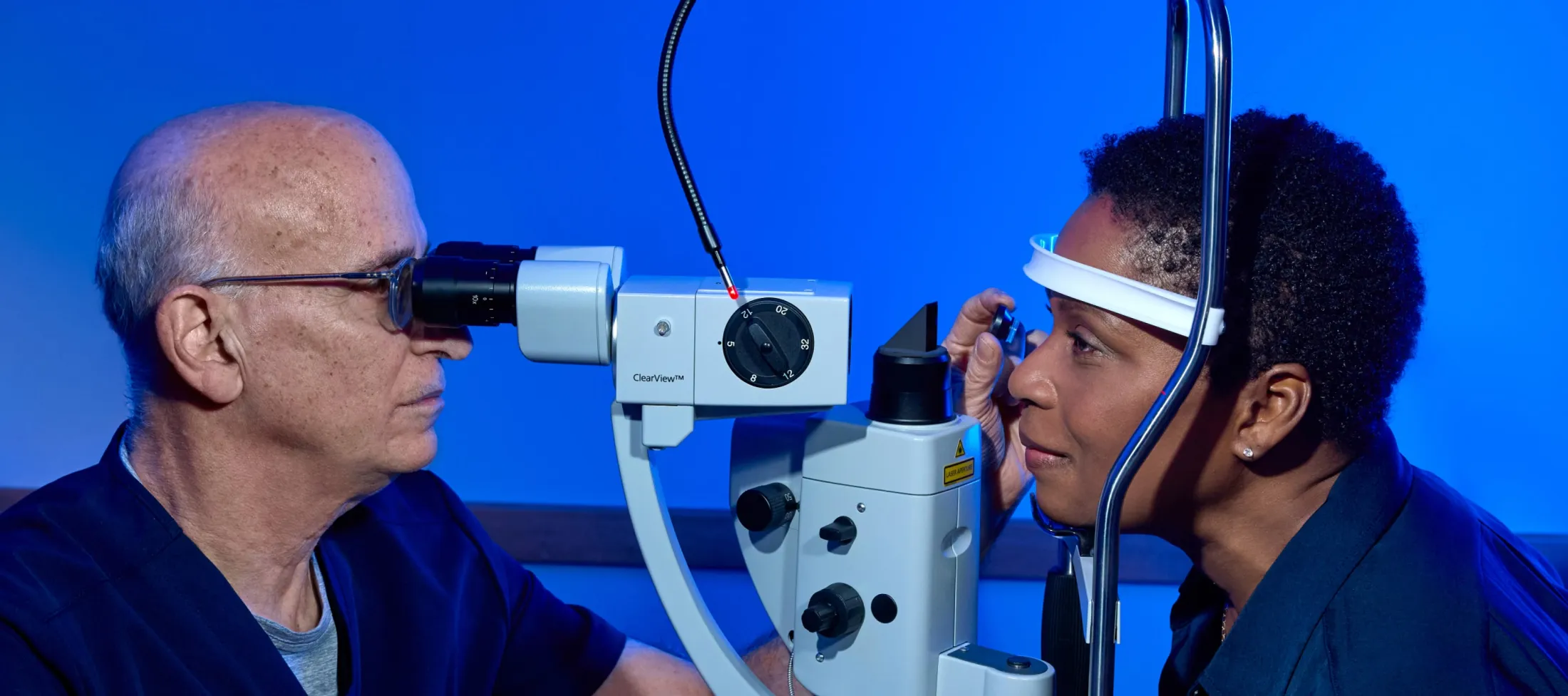
Diagnóstico y tratamientos avanzados
Ofrecemos acceso a los diagnósticos más recientes y a los tratamientos médicos, láser y quirúrgicos más avanzados para la prevención, la detección precoz y el tratamiento de todo el espectro del glaucoma y las afecciones relacionadas del nervio óptico.
Nuestro programa integra tecnologías de imagen de vanguardia con monitorización de precisión para detectar el glaucoma en sus etapas iniciales, a menudo antes de que se produzca la pérdida de visión. Utilizamos tomografía de coherencia óptica (OCT) de alta resolución para evaluar el nervio óptico y la capa de fibras nerviosas de la retina, pruebas avanzadas de campo visual para monitorizar los cambios funcionales a lo largo del tiempo y evaluación de la presión intraocular mediante tonometría y mediciones corneales dinámicas. Aplicamos análisis biométricos avanzados para la planificación preoperatoria y utilizamos herramientas de imagen de última generación para una monitorización postoperatoria detallada. Estas tecnologías permiten una evaluación de riesgos individualizada y guían la toma de decisiones médicas y quirúrgicas, asegurando que la atención se adapte a la progresión de la enfermedad y a la anatomía ocular única de cada paciente. Además, estamos aprovechando las plataformas de inteligencia artificial para mejorar la precisión diagnóstica y facilitar la monitorización longitudinal a lo largo del tiempo.
Cuando se requiere tratamiento, ofrecemos una amplia gama de opciones basadas en la evidencia, desde medicamentos tópicos y terapias de liberación prolongada hasta tratamientos láser en consulta y soluciones quirúrgicas avanzadas. Nuestro equipo se especializa en cirugía de glaucoma mínimamente invasiva (MIGS) y procedimientos avanzados del ángulo iridocorneal. Estos procedimientos están diseñados para reducir la presión intraocular con menor riesgo y una recuperación más rápida en comparación con las cirugías de glaucoma tradicionales. Para casos avanzados o refractarios, realizamos la implantación de dispositivos de drenaje para glaucoma (cirugía con tubo), trabeculectomía y cirugías de filtración complejas.
Nuestro enfoque integral también incluye el manejo de las enfermedades de la superficie ocular para optimizar los resultados quirúrgicos, así como la prestación de atención longitudinal a los pacientes con sospecha de glaucoma y a aquellos con afecciones del nervio óptico que pueden imitar o coexistir con el glaucoma, como anomalías del disco óptico y excavación pseudoglaucomatosa.
El departamento de Oftalmología de Montefiore Einstein ofrece un conjunto integral de diagnósticos y tratamientos avanzados para el glaucoma, que incluyen:
Tratamientos avanzados

Investigación y publicaciones
El Departamento de Oftalmología de Montefiore Einstein promueve la comprensión y el tratamiento del glaucoma mediante un programa integrado de investigación básica, traslacional y clínica que abarca la detección temprana, la clasificación de la enfermedad y la obtención de imágenes avanzadas con tomografía de coherencia óptica (OCT) para el diagnóstico y el seguimiento. Los esfuerzos principales se centran en perfeccionar las técnicas y tecnologías quirúrgicas, incluida la cirugía mínimamente invasiva para el glaucoma (MIGS), optimizando los resultados quirúrgicos, abordando las consideraciones de la cirugía refractiva en pacientes con sospecha de glaucoma, comprendiendo las disparidades en salud en poblaciones vulnerables e incorporando la inteligencia artificial y las tecnologías emergentes en la toma de decisiones clínicas. Nuestro profesorado contribuyó a establecer nuevos estándares de atención liderando ensayos clínicos que dieron como resultado medicamentos y dispositivos novedosos aprobados por la FDA, coinventó el Trabectome®, el primer dispositivo MIGS aprobado por la FDA, y desempeñó un papel fundamental en el desarrollo de terapias de liberación sostenida para el glaucoma que proporcionan un control a largo plazo de la presión intraocular sin las molestias ni los posibles efectos secundarios de las gotas oftálmicas diarias.
Con el apoyo de prestigiosas subvenciones de los NIH, nuestros médicos-científicos están llevando a cabo estudios innovadores sobre la diferenciación, el crecimiento axonal y la guía de las células ganglionares de la retina humana (CGR) utilizando modelos avanzados de organoides y microfisiológicos para subsanar lagunas de conocimiento cruciales en el desarrollo temprano del nervio óptico y los mecanismos de degeneración de las CGR en enfermedades que causan ceguera, como el glaucoma. Este trabajo sustenta la creación de conjuntos de datos innovadores, herramientas de diagnóstico y estrategias terapéuticas dirigidas a fármacos protectores de las CGR, terapias de reemplazo y tratamientos regenerativos que podrían, en última instancia, restaurar la visión en adultos y niños. Otras investigaciones incluyen una calculadora de glaucoma de bajo coste para la estratificación del riesgo, la evaluación del impacto de la cirugía de cataratas en la atención del glaucoma, análisis de técnicas de trabeculectomía, toma de decisiones compartida, precisión de la codificación de los registros médicos y la utilidad de las métricas globales de OCT en la enfermedad avanzada, así como estudios de resonancia magnética funcional de los cambios en la corteza visual e investigación de biomarcadores genéticos y moleculares para permitir una atención personalizada del glaucoma.
La División de Glaucoma de Montefiore ha sido pionera en el establecimiento de colaboraciones de datos que impulsan la investigación en diversas instituciones estadounidenses. Al aprovechar los datos de millones de consultas de pacientes, tanto dentro como fuera de Montefiore, nuestros equipos han creado una base sólida para una amplia gama de iniciativas de investigación.
-
El impacto de las modificaciones en el flujo de trabajo de un registro médico electrónico en las derivaciones a servicios terciarios para pacientes con discapacidad visual en la ciudad de Nueva York.
Allen OS, Fields LS, Sweeney MJ, Als SL, Seiple WH, Shrivastava A. El impacto de las modificaciones del flujo de trabajo en un registro médico electrónico sobre las derivaciones a servicios terciarios para pacientes con discapacidad visual en la ciudad de Nueva York. Clin Ophthalmol. 2025;19:3693-3702 https://doi.org/10.2147/OPTH.S532586
El estudio se diseñó para determinar si la integración de una solicitud obligatoria y automatizada en el registro médico electrónico (RME) podría aumentar las tasas de derivación para rehabilitación visual (RV) en pacientes con discapacidad visual permanente. Los investigadores se propusieron superar las barreras clínicas comunes, como la "fatiga de derivación" de los médicos y la complejidad de identificar pacientes elegibles durante las clínicas concurridas del Centro Médico Montefiore, junto con los centros académicos vecinos en el área metropolitana de Nueva York. -
Relación entre la biomecánica corneal y la dinámica de la presión intraocular en pacientes sometidos a inyección intravítrea - PubMed
Dackowski EK, Moon JY, Wang J, Shrivastava A, Schultz JS. La relación entre la biomecánica corneal y la dinámica de la presión intraocular en pacientes sometidos a inyección intravítrea. J Glaucoma. 1 de mayo de 2021;30(5):451-458. doi: 10.1097/IJG.0000000000001833. PMID: 33710068.
Las inyecciones intravítreas provocan una rápida expansión del volumen dentro del globo ocular, lo que resulta en un aumento inmediato y brusco de la presión intraocular (PIO). Este estudio se diseñó para investigar si las propiedades biomecánicas de la córnea —específicamente la histéresis corneal (HC) y el factor de resistencia corneal (FRC)— podrían predecir qué pacientes experimentarían los picos de presión más altos y con qué rapidez su presión volvería a la normalidad. -
Traumatismos oculares relacionados con el pickleball y otros deportes de pelota en Estados Unidos - PubMed
Shah J, Pathuri S, Shrivastava A, Ong J, Zheng J, Acar IF, Plotnik J, Golnik K, Salevitz MI, Suh A, Lee AG. Traumatismos oculares relacionados con el pickleball y los deportes de pelota en Estados Unidos. Eye (Lond). 16 de enero de 2026. doi: 10.1038/s41433-025-04192-4. Publicado electrónicamente antes de la impresión. PMID: 41545712.
El estudio se realizó para caracterizar los patrones nacionales, la incidencia y la demografía de los traumatismos oculares relacionados con otros deportes de pelota, específicamente pickleball, dodgeball y kickball. Utilizando datos del Sistema Nacional Electrónico de Vigilancia de Lesiones (NEISS, por sus siglas en inglés) de 2014 a 2023, los investigadores buscaron identificar qué poblaciones corren mayor riesgo y si ha habido un cambio significativo en las tasas de lesiones durante la última década. -
Representación etnorracial y geográfica en los ensayos clínicos sobre glaucoma en Estados Unidos (2004-2023) - PubMed
Shah J, Pathuri S, Zheng J, Khan B, Okome K, Schultz JS, Shrivastava A. Representación etnorracial y geográfica en los ensayos clínicos de glaucoma en Estados Unidos (2004-2023). Ophthalmol Glaucoma. 8 de octubre de 2025:S2589-4196(25)00211-X. doi: 10.1016/j.ogla.2025.09.011. Publicado electrónicamente antes de la impresión. PMID: 41072577.
El estudio tuvo como objetivo caracterizar las tendencias en la forma en que se informan y representan la raza, la etnia y la geografía en los ensayos clínicos sobre glaucoma realizados en Estados Unidos. Dado que el glaucoma afecta de manera desproporcionada a ciertas poblaciones minoritarias y a personas en regiones desatendidas, los investigadores buscaron determinar si la inscripción en los ensayos refleja con precisión la carga epidemiológica real de la enfermedad. -
Colgajos de trabeculectomía conjuntival basados en el fórnix versus basados en el limbo para el glaucoma - PubMed
Theventhiran AB, Kim G, Yao W. Colgajos de trabeculectomía conjuntival basados en el fórnix versus basados en el limbo para el glaucoma. Cochrane Database Syst Rev. 26 de agosto de 2021;8(8):CD009380. doi: 10.1002/14651858.CD009380.pub3. PMID: 34437715; PMCID: PMC8407098.
El estudio tuvo como objetivo determinar si la ubicación de la incisión conjuntival (en el limbo para la técnica basada en el fórnix frente a una incisión más posterior para la técnica basada en el limbo) influye en el éxito a largo plazo de la trabeculectomía. Los investigadores analizaron específicamente las diferencias en el control de la presión intraocular (PIO), las tasas de fracaso quirúrgico y la incidencia de complicaciones como fugas de la ampolla de filtración o infecciones. -
Cirugía refractiva para pacientes con sospecha de glaucoma - PubMed
Hein JC, Tauber J, Shrivastava A. Cirugía refractiva para pacientes con sospecha de glaucoma. Curr Opin Ophthalmol. 1 de julio de 2023;34(4):290-295. doi: 10.1097/ICU.0000000000000954. Publicado en línea el 29 de marzo de 2023. PMID: 36995100.
Este análisis es una revisión clínica exhaustiva que aborda las complejidades de realizar procedimientos refractivos electivos en pacientes con riesgo de glaucoma. El artículo se redactó para proporcionar directrices perioperatorias para la evaluación y el manejo de pacientes con sospecha de glaucoma: aquellos que pueden presentar presión intraocular (PIO) elevada o nervios ópticos sospechosos, pero que aún no tienen la enfermedad confirmada. El objetivo principal es ayudar a los cirujanos a comprender la contraindicación relativa del glaucoma en la cirugía refractiva, destacando cómo estos procedimientos pueden interferir con el seguimiento futuro del glaucoma.

Nuestro equipo de glaucoma


MD Anthony Marte


Nuestro equipo multidisciplinario de médicos de renombre mundial incluye oftalmólogos certificados y con formación especializada en glaucoma. Nos especializamos en el diagnóstico y tratamiento de todo el espectro del glaucoma y afecciones relacionadas del nervio óptico, utilizando las técnicas médicas, láser y quirúrgicas más avanzadas para preservar la visión, prevenir la progresión de la enfermedad y mejorar la calidad de vida.
Programas e iniciativas comunitarias transformadoras
Nuestro programa se distingue por su enfoque colaborativo y atención clínica integral, que se extiende más allá de las instalaciones de Montefiore Einstein hacia la comunidad a través de iniciativas de alcance dirigidas a preservar la visión, ralentizar la progresión de la enfermedad, prevenir la pérdida de visión y la ceguera, y mejorar la calidad de vida, especialmente entre las poblaciones vulnerables. Entre los esfuerzos clave se incluyen la educación comunitaria, las estrategias basadas en la telemedicina para la detección temprana y el manejo del glaucoma y otras enfermedades oculares, y nuestra colaboración con el programa Technology Peers for Accessible Living (Tech Pals) de Lighthouse Guild International, que conecta generaciones mediante mentoría tecnológica personalizada para personas con pérdida de visión. Esta iniciativa única vincula a jóvenes adultos ciegos o con discapacidad visual con adultos mayores para fomentar la alfabetización digital y la independencia. A través de estas y otras iniciativas, continuamos ampliando el acceso a la atención, preservando la continuidad y reduciendo las desigualdades, promoviendo así la salud ocular en las comunidades a las que servimos.
Acerca del glaucoma
El glaucoma, la segunda causa principal de ceguera irreversible en todo el mundo, representa un grupo de afecciones oculares complejas caracterizadas por una neuropatía óptica progresiva, o daño al nervio óptico, la estructura responsable de transmitir la información visual del ojo al cerebro. Este daño suele estar asociado, aunque no siempre, con una presión intraocular (PIO) elevada. Con el tiempo, el glaucoma puede provocar una pérdida irreversible de la visión, que generalmente comienza con la visión periférica y puede progresar a la pérdida de la visión central si no se trata. En Estados Unidos, la forma más común es el glaucoma primario de ángulo abierto, que suele desarrollarse gradualmente y a menudo sin síntomas perceptibles en sus primeras etapas. Otros tipos incluyen el glaucoma de ángulo cerrado, el glaucoma de tensión normal, el glaucoma congénito y los glaucomas secundarios relacionados con traumatismos, uso de esteroides, enfermedades sistémicas, inflamación ocular u otras afecciones oculares. Dado que el glaucoma suele progresar silenciosamente, las revisiones periódicas y la detección temprana son fundamentales para preservar la visión. Una vez diagnosticada la afección, el tratamiento se centra en reducir la presión intraocular mediante medicamentos, tratamientos con láser o cirugía para ralentizar o prevenir un mayor daño al nervio óptico.