


Beca de especialización en Medicina del Dolor
Acerca del Fellowship de Medicina del Dolor
El programa de Becas Multidisciplinarias para el Dolor Montefiore Einstein es el programa de dolor en Medicina Física y Rehabilitación (PM&R) más grande del país, acreditado por el Consejo de Acreditación en Educación Médica para Graduados (Consejo de Acreditación en Educación Médica para Graduados (ACGME)). Somos el proveedor médico líder en una comunidad de más de tres millones de personas. Nuestra misión es aliviar el dolor y mejorar la función mediante prácticas farmacológicas responsables, un juicio clínico sólido y sólidos principios científicos, incorporando las técnicas intervencionistas más avanzadas.
El Fellowship de Medicina del Dolor es un programa de un año que capacita a los fellows en diversas competencias esenciales, según lo exige el ACGME. Los candidatos elegibles incluyen residentes de las áreas de medicina del dolor y rehabilitación, anestesiología, neurología, medicina de emergencias o psiquiatría que estén certificados o sean elegibles para la certificación.
El objetivo educativo del programa es preparar a los fellows para ejercer de forma independiente en el manejo intervencionista del dolor y desarrollar las competencias fundamentales en medicina del dolor. El fellowship se compromete a ofrecerles la educación clínica y didáctica necesaria para la práctica del manejo del dolor. Además, el programa los prepara para enfrentar los futuros cambios fiscales en la medicina a nivel mundial y les enseña los aspectos comerciales y administrativos de la medicina del dolor.
Se pone especial atención en el desarrollo personal del fellow de fisiatría y rehabilitación, ya que los especialistas destacados en medicina del dolor necesitan tanto conocimientos como habilidades para ofrecer la mejor atención posible al paciente, con compasión y respeto. Nos comprometemos a ofrecerles la oportunidad de desarrollarse tanto en la práctica académica como en la clínica del dolor.
Centros de capacitación
Los fellows se forman en dos centros médicos: el Campus Hutchinson (Hutch) de Montefiore Einstein y el Jacobi Medical Center. En el Campus Hutch, los fellows se reportan en la octava planta, equipada con tres salas ambulatorias, una unidad de reanimación postanestesia de ocho camas y un ala con 12 consultorios de exploración dedicada a la medicina del dolor. El resto de la planta lo comparten la División de Neurología/Dolor de Cabeza, Anestesiología y Medicina de Rehabilitación. Todas las especialidades ofrecen servicios multidisciplinarios de manejo del dolor a los pacientes. Los fellows pasan el 75 % de su tiempo en Hutch.
Los fellows también rotan por el Jacobi Medical Center, un hospital perteneciente al Sistema de Salud y Hospitales de la Ciudad de Nueva York, durante dos meses. Se capacitan en procedimientos de quirófano, consultas hospitalarias en una unidad de 24 camas y en consultas externas con cinco salas de exploración. Las experiencias únicas en el Jacobi Medical Center incluyen cirugías percutáneas avanzadas, evaluación fisiátrica y manejo del dolor crónico.
Programa Educativo
Nuestro profesorado multidisciplinario supervisa y capacita a los fellows en diversos componentes clínicos, de procedimiento y de investigación. Durante los 12 meses de capacitación, los fellows reciben capacitación en exámenes físicos musculoesqueléticos (MSK) y neurológicos integrales, interpretación radiológica, evaluaciones psiquiátricas, aspectos psicosociales de las afecciones clínicas, evaluaciones estructurales y funcionales del dolor agudo y crónico, manejo de la medicación con opioides, intervenciones de rehabilitación y modalidades de tratamiento complementario.
Nuestro programa está altamente orientado a la investigación y cuenta con múltiples ensayos clínicos activos y en curso. Se anima y exige la participación de los recién graduados en estos ensayos, y se les proporcionan recursos suficientes, incluidos tiempo dedicado, personal de apoyo (fellows de investigación dedicados), asistencia logística (por ejemplo, materiales), ayuda con las solicitudes a la Institutional Review Board (IRB) y apoyo estadístico.
Los recién graduados se rigen por los más altos estándares de profesionalismo. Reciben capacitación para brindar una atención médica rentable, duradera y adecuada a sus pacientes, garantizando que cada uno cuente con todas las opciones para abordar eficazmente sus problemas individuales y alcanzar sus objetivos funcionales a corto y largo plazo.
Realizamos sesiones didácticas semanales protegidas y rondas clínicas con la supervisión del profesorado y la participación activa de los fellows. Los fellows deben prepararse y presentar diversos temas educativos preseleccionados bajo la guía del profesorado. Además, se les capacita para obtener la certificación mediante sesiones estructuradas de preguntas y respuestas. Todas las sesiones didácticas y seminarios son impartidos por un miembro del profesorado. A continuación, se presenta una lista de ejemplos de procedimientos clínicos en los que cada fellow recibirá capacitación.
Nuestro programa de 12 meses consta de 6 bloques de rotación central de dos meses. En los bloques AE, los becarios se asignan a los médicos adjuntos que se indican a continuación. Durante una semana típica en la clínica, los becarios dedican un promedio de 2 días a procedimientos y 3 días a visitas clínicas regulares. La jornada suele comenzar a las 8:30 a. m. y terminar alrededor de las 4:30 p. m., con cierta variabilidad. Además, los becarios adquirirán una valiosa experiencia en áreas especializadas como la clínica de atención médica paliativos, así como rotaciones específicas en la clínica de neurología/cefalea durante una semana y en psicología de las adicciones durante otra semana.
- Bloque A: Dr. Wahezi (médico de cabecera y rehabilitador)
- Bloque B: Dr. Vydyanathan (Anestesiología)
- Bloque C: Dr. Caparo (Médico de Medicina Física y Rehabilitación)
- Bloque D: Dr. Aquino, Dr. Gritsenko, Dr. Shaparin (Anestesiología)
- Bloque E: Dr. Tran, Dr. Siegel (Anestesiología/EM)
- Jacobi Medical Center/North Central Bronx (Consultas de dolor agudo y clínica musculoesquelética)
| Procedimiento | Cantidad estimada por fellow |
|---|---|
| Neuroestimulación (incluyendo SCS, PNS) | 50–100 |
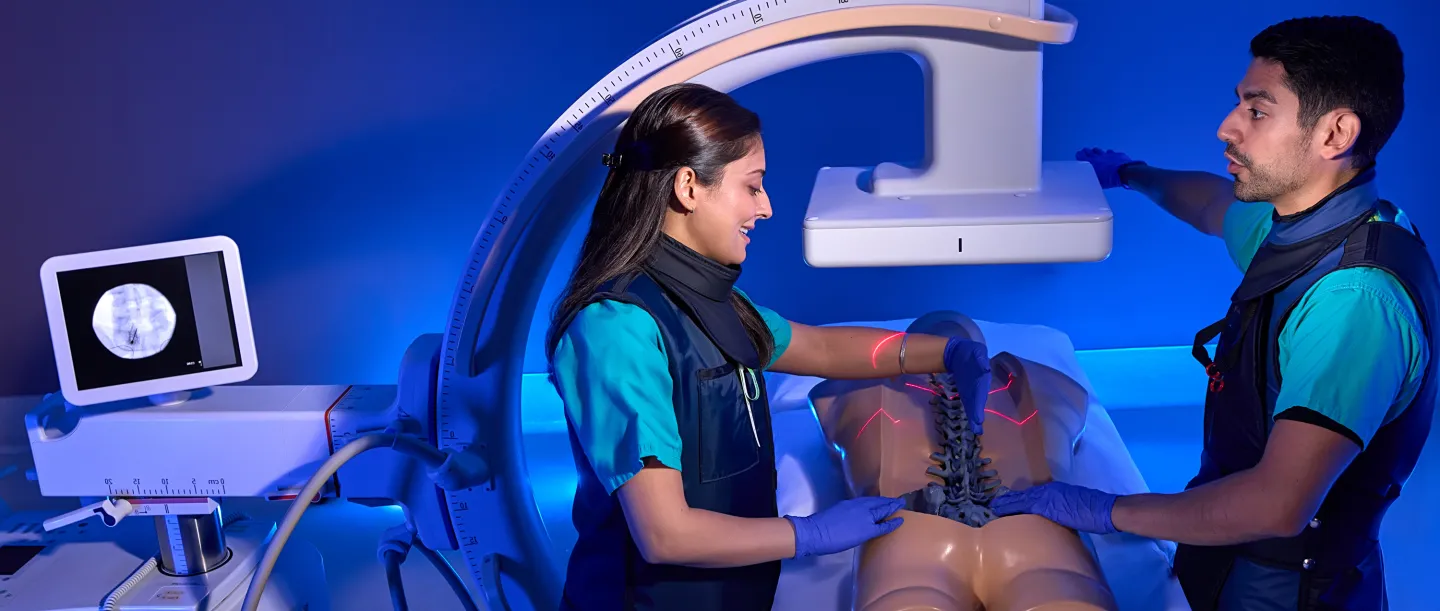
| Procedimientos axiales guiados por fluoroscopia | 800–1000 |
| Procedimientos MSK por ultrasonido paraaxial | 200 |
| Cirugías percutáneas | 100–200 |
| Cifoplastia | 5–10 |
| Anestesia regional/bloqueos de nervios periféricos | 200–300 |
Vacaciones: Los becarios disfrutan de 4 semanas de vacaciones al año, con tiempo de formación médica continua disponible para congresos. El programa dispone de días libres adicionales para entrevistas, a discreción del programa.
Horario de guardia: A lo largo del año, los becarios reciben una guardia semanal aproximadamente cada 5 semanas, con el objetivo principal de atender oportunamente las urgencias ambulatorias de 17:00 a 7:00. En promedio, los becarios suelen recibir entre 0 y 3 llamadas durante su turno de guardia semanal. Los becarios no tienen responsabilidades de guardia durante la rotación en el Jacobi Medical Center .
Supervisión y evaluación
Los fellows de medicina del dolor reciben supervisión directa durante todo el año, tanto en la clínica como durante los procedimientos. Cada uno de nuestros médicos a cargo los asesora en bloques de dos meses. El aprendizaje se lleva a cabo en tiempo real durante las horas de atención médica al paciente. Las sesiones de docencia, que incluyen didáctica, revisión de la junta y reuniones del club de publicaciones, se realizan semanalmente. El personal docente supervisa directamente a los fellows durante todas sus tareas clínicas.
Toda la retroalimentación y las evaluaciones se llevan a cabo de manera individual. Además, los fellows participan en evaluaciones globales anónimas de 360 grados, que abarcan valoraciones del profesorado sobre los fellows, de los fellows sobre el profesorado y de ambos sobre el programa.
Información de la solicitud
Buscamos becarios que moldearán el futuro de la atención médica. Nuestro programa de Becas de Dolor participa en el Programa Nacional de Emparejamiento de Residentes (NRMP) para becas. Las solicitudes se aceptan únicamente a través del Sistema Electrónico de Solicitud de Residencia (ERAS). Las solicitudes se aceptan generalmente en ERAS entre diciembre y abril del ciclo de solicitud. Las solicitudes se evaluarán en mayo y junio. Las entrevistas se realizarán en julio y agosto.
Los documentos requeridos son:
- CV
- Declaración personal
- expediente académico de la escuela de medicina y carta del decano
- 3-4 cartas de recomendación
- Fotografía tamaño pasaporte
- ITE/SAE se puede enviar por correo electrónico a mviruet@montefiore.org
Para obtener más información, póngase en contacto con:
Sayed E. Wahezi, Doctor en Medicina
Director de Programa
swahezi@montefiore.org
Moorice A. Caparo, MD
Director asociado del programa
mcaparo@montefiore.org
Marivell Viruet
Enlace del Departamento de Medicina de Rehabilitación
mviruet@montefiore.org