





Acute Lymphoblastic Leukemia (ALL) Treatment
Obtenga una atención médica excepcional para la leucemia linfoblástica aguda y otros tipos de cánceres de sangre y médula ósea por parte de los especialistas de Montefiore Einstein Comprehensive Cancer Center. Nuestro equipo multidisciplinario tiene amplia experiencia en la atención médica de este cáncer raro. Designado por el NCI como centro integral del cáncer desde hace más de 50 años, hemos sido líderes en la investigación, el diagnóstico y el tratamiento de más de 200 tipos de cáncer.
We’re at the forefront of treatment and research for acute lymphoblastic leukemia and other blood and bone marrow cancers. We have expertise across the entire spectrum of blood cancers, including stem cell transplants and other cell-based treatments such as Terapia con células CAR-T, a leading-edge treatment that helps your body’s own immune system better fight cancer.
When you need acute lymphoblastic leukemia care, turn to our providers who are passionate about ending cancer and addressing your whole health needs.

El Montefiore Einstein Comprehensive Cancer Center, designado como centro integral del cáncer por el National Cancer Institute (NCI), apoya la misión y las normas del NCI. La siguiente información sobre los tipos de cáncer, prevención y tratamientos ha sido facilitada por el NCI.
Acute Lymphoblastic Leukemia Treatment (PDQ®)–Patient Version
General Information About Acute Lymphoblastic Leukemia
Puntos clave
- Acute lymphoblastic leukemia (ALL) is a type of cancer in which the bone marrow makes too many lymphocytes (a type of white blood cell).
- La leucemia puede afectar los glóbulos rojos, los glóbulos blancos y las plaquetas.
- Previous chemotherapy and exposure to radiation may increase the risk of developing ALL.
- Signs and symptoms of ALL include fatigue, fever, and easy bruising or bleeding.
- Tests that examine the blood and bone marrow are used to diagnose ALL.
- After ALL has been diagnosed, tests are done to find out if the cancer has spread to the central nervous system (brain and spinal cord) or to other parts of the body.
- Some people decide to get a second opinion.
- Certain factors affect prognosis (chance of recovery) and treatment options.
Acute lymphoblastic leukemia (ALL) is a type of cancer in which the bone marrow makes too many lymphocytes (a type of white blood cell).
Acute lymphoblastic leukemia (ALL; also called acute lymphocytic leukemia) is a cancer of the blood and bone marrow. This type of cancer usually gets worse quickly if it is not treated.
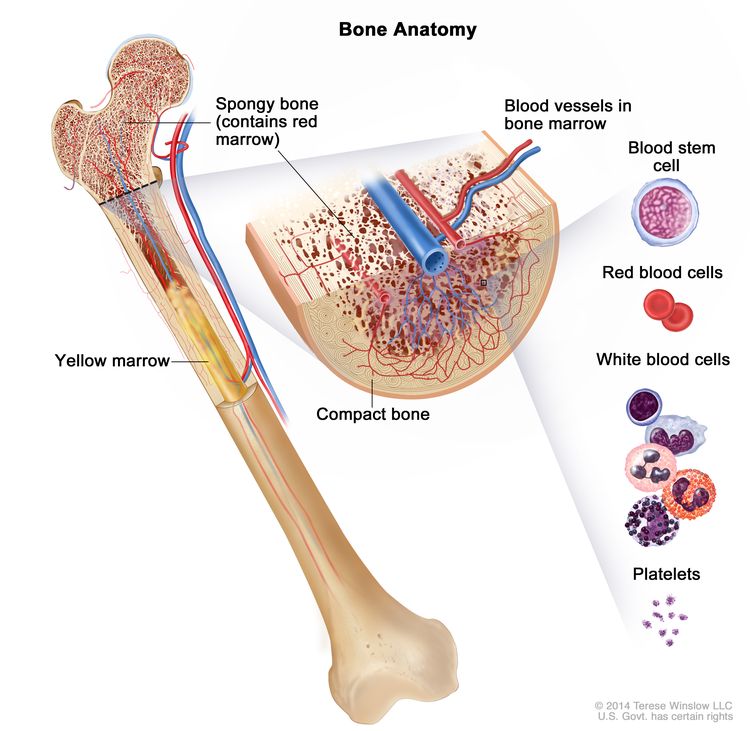
Anatomía del hueso. El hueso está formado por hueso compacto, hueso esponjoso y médula ósea. El hueso compacto constituye la capa externa del hueso. El hueso esponjoso se encuentra sobre todo en los extremos de los huesos y contiene médula roja. La médula ósea se encuentra en el centro de la mayoría de los huesos y tiene muchos vasos sanguíneos. Hay dos tipos de médula ósea: roja y amarilla. La médula roja contiene células madre sanguíneas que pueden convertirse en glóbulos rojos, glóbulos blancos o plaquetas. La médula amarilla está compuesta principalmente de grasa.
La leucemia puede afectar los glóbulos rojos, los glóbulos blancos y las plaquetas.
The bone marrow makes blood stem cells (immature cells) that become mature blood cells over time. A blood stem cell may become a myeloid stem cell or a lymphoid stem cell.
A lymphoid stem cell becomes a lymphoblast and then one of three types of lymphocytes (white blood cells):
- B lymphocytes that make antibodies to help fight infection
- T lymphocytes that help B lymphocytes make the antibodies that help fight infection
- natural killer cells that attack cancer cells and viruses
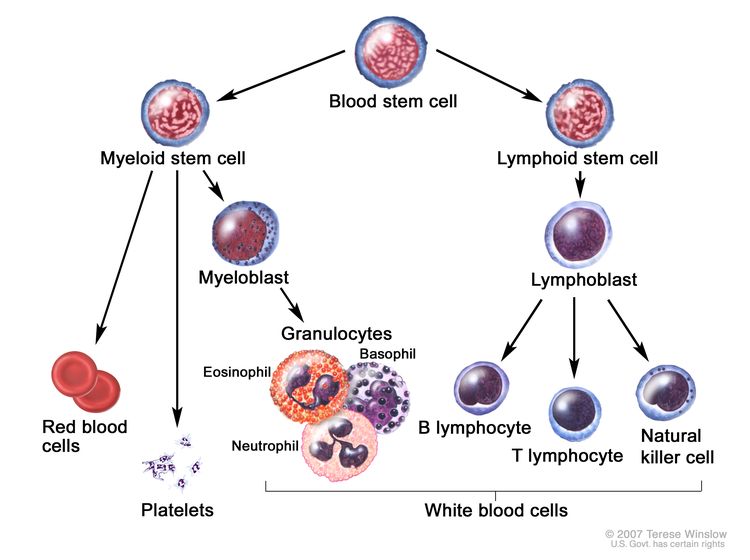
Desarrollo de las células sanguíneas. Una célula madre sanguínea pasa por varios estadios para convertirse en un glóbulo rojo, una plaqueta o un glóbulo blanco.
In ALL, too many stem cells become lymphoblasts, B lymphocytes, or T lymphocytes. These cells are also called leukemia cells. Leukemia cells are not able to fight infection very well. Also, as the number of leukemia cells increases in the blood and bone marrow, there is less room for healthy white blood cells, red blood cells, and platelets. This may cause infection, anemia, and easy bleeding. The cancer can also spread to the central nervous system (brain and spinal cord), lymph nodes, spleen, liver, testicles, and other organs.
Previous chemotherapy and exposure to radiation may increase the risk of developing ALL.
ALL is caused by certain changes to the way blood stem cells function, especially how they grow and divide into new cells. A risk factor is anything that increases the chance of getting a disease. Some risk factors for cancer, like smoking, can be changed. However, risk factors also include things people cannot change, like their genetics, getting older, and their health history.
There are many risk factors for ALL, but many do not directly cause cancer. Instead, they increase the chance of DNA damage in cells that may lead to ALL. Learn more about how cancer develops at What Is Cancer?
Having one or more of these risk factors does not mean that you will get ALL. Many people with risk factors never develop ALL, while others with no known risk factors do.
Possible risk factors for ALL include:
- being male
- being White
- being older than 70
- past treatment with chemotherapy or radiation therapy
- being exposed to high levels of radiation in the environment (such as nuclear radiation)
- having certain genetic disorders, such as Down syndrome
Talk with your doctor if you think you may be at risk.
Signs and symptoms of ALL include fatigue, fever, and easy bruising or bleeding.
The early signs and symptoms of ALL may be like the flu or other common diseases. Check with your doctor if you have:
- weakness or fatigue
- fever or drenching night sweats
- Hematomas o sangrados que aparecen con facilidad
- petechiae (flat, pinpoint spots under the skin, caused by bleeding)
- Dificultad para respirar
- weight loss or loss of appetite
- pain in the bones or stomach
- pain or feeling of fullness below the ribs
- painless lumps in the neck, underarm, stomach, or groin
- frequent infections
These and other signs and symptoms may be caused by ALL or by other conditions.
Tests that examine the blood and bone marrow are used to diagnose ALL.
In addition to asking about your personal and family health history and doing a physical exam, your doctor may perform the following tests and procedures:
- Hemograma completo (CBC, por sus siglas en inglés) con diferencial analiza una muestra de sangre para detectar:
- el número de glóbulos rojos y plaquetas
- el número y tipo de glóbulos blancos
- la cantidad de hemoglobina (la proteína que transporta oxígeno) en los glóbulos rojos
- the amount of hematocrit (whole blood that is made up of red blood cells)
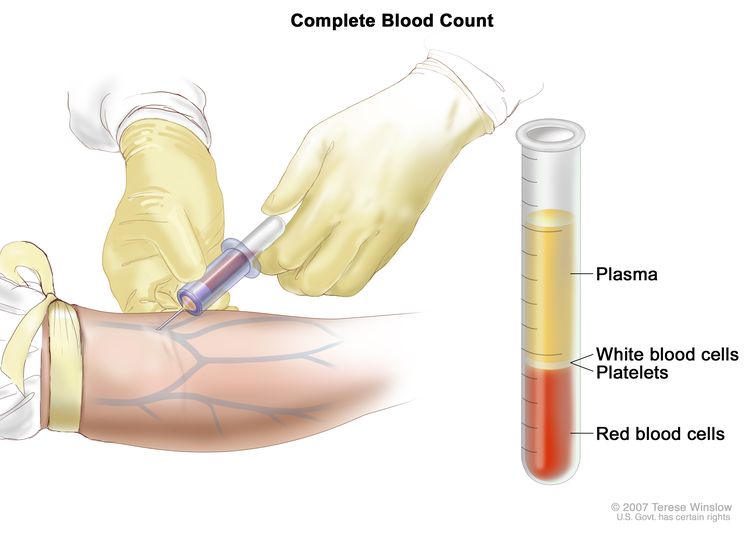
Hemograma completo (HC): la sangre se extrae insertando una aguja en una vena y dejando que fluya hacia un tubo. La muestra se envía al laboratorio y se cuentan los glóbulos rojos, los glóbulos blancos y las plaquetas. El HC se utiliza para detectar, diagnosticar y controlar diversas afecciones.
- El estudio de la química sanguínea utiliza una muestra de sangre para medir la cantidad de ciertas sustancias que los órganos y tejidos del cuerpo liberan en la sangre. Una cantidad anormal de una sustancia puede ser un signo de enfermedad.
- Peripheral blood smear checks a sample of blood for blast cells, the number and kinds of white blood cells, the number of platelets, and changes in the shape of blood cells.
- Biopsia y aspiración de la médula ósea is the removal of bone marrow, blood, and a small piece of bone by inserting a hollow needle into the hipbone or esternón. Un pathologist examina la médula ósea, la sangre y los huesos bajo un microscopio para detectar células anómalas.
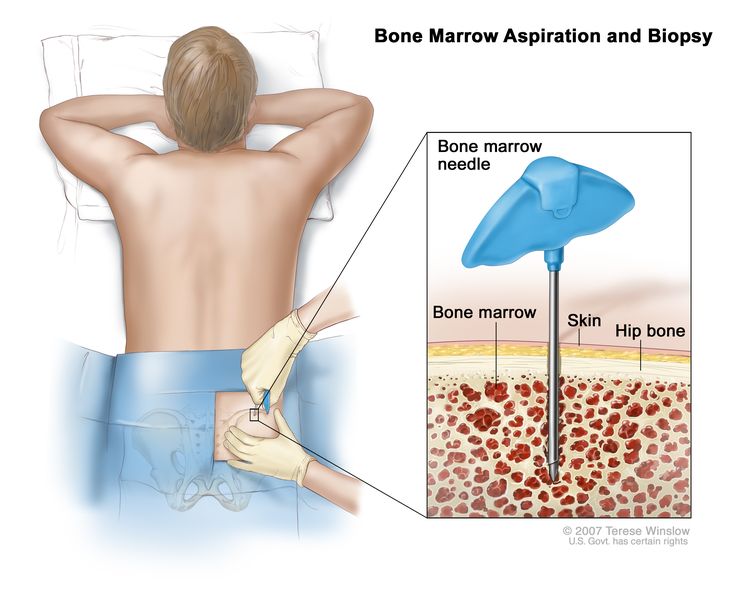
Aspiración y biopsia de médula ósea. Tras anestesiar una pequeña zona de la piel, se introduce una aguja larga y hueca a través de la piel y el hueso de la cadera del paciente hasta la médula ósea. Se extrae una muestra de médula ósea y un pequeño fragmento de hueso para su examen microscópico.
The following tests may be done on the samples of blood or bone marrow tissue that are removed:
- El análisis citogenético checks the chromosomes of cells in a blood or bone marrow sample for changes, such as broken, missing, rearranged, or extra chromosomes. Changes in certain chromosomes may be a sign of cancer. For example, in Philadelphia chromosome–positive ALL, part of one chromosome switches places with part of another chromosome. This is called the "Philadelphia chromosome." Cytogenetic analysis is used to help diagnose cancer, plan treatment, or find out how well treatment is working.
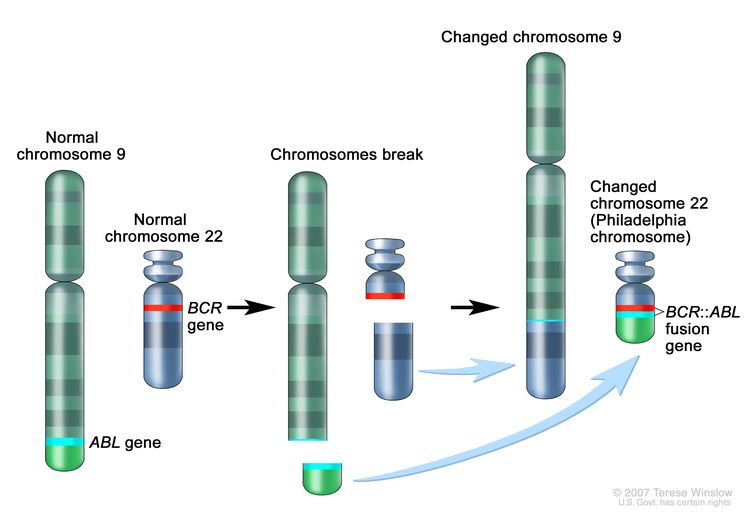
El cromosoma Filadelfia (Ph) es un cromosoma anómalo que se forma cuando se desprenden fragmentos de los cromosomas 9 y 22 e intercambian sus posiciones. El gen ABL1 del cromosoma 9 se fusiona con el gen BCR del cromosoma 22 para formar el gen de fusión BCR-ABL1. El cromosoma 22 modificado con este gen de fusión se denomina cromosoma Ph.
- Immunophenotyping uses antibodies to identify cancer cells based on the types of antigens or markers on the surface of the cells. This test is used to help diagnose specific types of leukemia. For example, a cytochemistry study may test the cells in a sample of tissue using chemicals (dyes) to look for certain changes in the sample. A chemical may cause a color change in one type of leukemia cell but not in another type of leukemia cell.
- El análisis citogenético checks the chromosomes of cells in a blood or bone marrow sample for changes, such as broken, missing, rearranged, or extra chromosomes. Changes in certain chromosomes may be a sign of cancer. For example, in Philadelphia chromosome–positive ALL, part of one chromosome switches places with part of another chromosome. This is called the "Philadelphia chromosome." Cytogenetic analysis is used to help diagnose cancer, plan treatment, or find out how well treatment is working.
After ALL has been diagnosed, tests are done to find out if the cancer has spread to the central nervous system (brain and spinal cord) or to other parts of the body.
The following tests and procedures may be used to find out if the leukemia has spread outside the blood and bone marrow:
- Chest x-ray is a type of radiation that can go through the body and make pictures of the organs and bones inside the chest.
- Lumbar puncture is a procedure used to collect a sample of cerebrospinal fluid (CSF) from the spinal column. This is done by placing a needle between two bones in the columna vertebral and into the lining around the spinal cord to remove a sample of CSF. The sample of CSF is checked under a microscope for signs that leukemia cells have spread to the brain and spinal cord. This procedure is also called an LP or spinal tap.
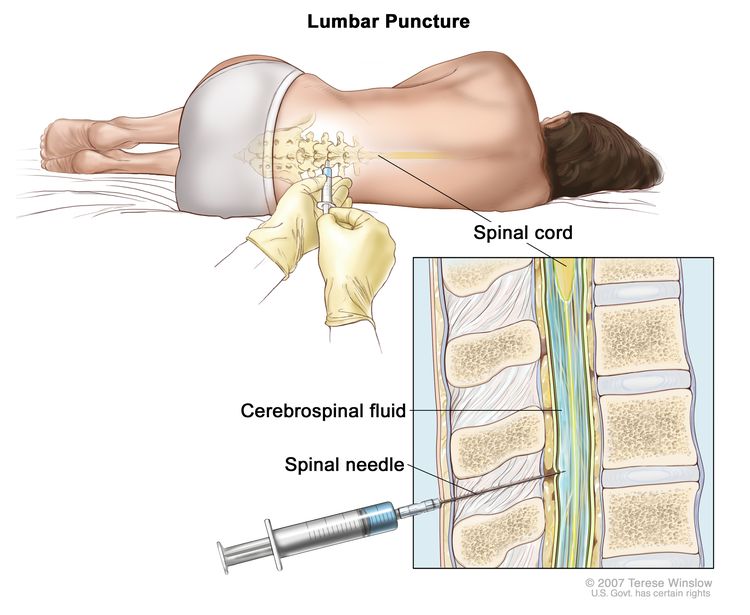
Lumbar puncture. A patient lies in a curled position on a table. After a small area on the lower back is numbed, a spinal needle (a long, thin needle) is inserted into the lower part of the spinal column to remove cerebrospinal fluid (CSF, shown in blue). The fluid may be sent to a laboratory for testing.
- Tomografía computarizada (CAT scan) uses a computer linked to an x-ray machine to make a series of detailed pictures of areas inside the body, such as the abdomen. The pictures are taken from different angles and are used to create 3-D views of tissues and organs. A dye may be injected into a vein or swallowed to help the organs or tissues show up more clearly. This procedure is also called computed tomography, computerized tomography, or computerized axial tomography. Learn more about Computed Tomography (CT) Scans and Cancer.
- Resonancia magnética (magnetic resonance imaging) uses a magnet, radio waves, and a computer to make a series of detailed pictures of areas inside the body. This procedure is also called nuclear magnetic resonance imaging (NMRI).
Some people decide to get a second opinion.
You may want to get a second opinion to confirm your ALL diagnosis and treatment plan. If you seek a second opinion, you will need to get medical test results and reports from the first doctor to share with the second doctor. The second doctor will review the pathology report, slides, and scans. They may agree with the first doctor, suggest changes or another treatment approach, or provide more information about your cancer.
To learn more about choosing a doctor and getting a second opinion, visit Finding Cancer Care. You can contact NCI's Cancer Information Service via chat, email, or phone (both in English and Spanish) for help finding a doctor, hospital, or getting a second opinion. For questions you might want to ask at your appointments, visit Questions to Ask Your Doctor About Cancer.
Certain factors affect prognosis (chance of recovery) and treatment options.
The prognosis and treatment options for ALL depend on:
Stages of Acute Lymphoblastic Leukemia
Puntos clave
- There is no standard staging system for acute lymphoblastic leukemia (ALL).
There is no standard staging system for acute lymphoblastic leukemia (ALL).
The extent or spread of cancer is usually described as stages. Instead of stages, ALL treatment is based on whether the cancer is untreated, in remission, or recurrent.
Untreated ALL
In untreated ALL, the disease is newly diagnosed. It has not been treated, except to relieve signs and symptoms caused by the cancer, such as fever, bleeding, or pain, and the following are true:
- The complete blood count (CBC) is abnormal.
- More than 5% of the cells in the bone marrow are blasts (leukemia cells).
- There are signs and symptoms of leukemia.
ALL in remission
In ALL in remission, the disease has been treated, and the following are true:
- The CBC is normal.
- 5% or fewer of the cells in the bone marrow are blasts (leukemia cells).
- There are no signs or symptoms of leukemia other than in the bone marrow.
Recurrent ALL
Recurrent ALL is cancer that has recurred (come back) after going into remission. ALL may come back in the blood, bone marrow, or other parts of the body.
Learn more in Recurrent Cancer: When Cancer Comes Back.
Treatment Option Overview
Puntos clave
- There are different types of treatment for patients with acute lymphoblastic leukemia (ALL).
- The treatment of ALL usually has two phases.
- The following types of treatment are used:
- Quimioterapia
- Radioterapia
- Chemotherapy with stem cell transplant
- Terapia dirigida
- Inmunoterapia
- New types of treatment are being tested in clinical trials.
- Treatment for ALL may cause side effects.
- Es posible que se necesiten cuidados de seguimiento.
There are different types of treatment for patients with acute lymphoblastic leukemia (ALL).
Different types of treatment are available for people with ALL. You and your cancer care team will work together to decide your treatment plan, which may include more than one type of treatment. Many factors will be considered, such as whether the ALL is untreated, in remission, or recurrent, and your overall health and preferences. Your plan will include information about your cancer, the goals of treatment, your treatment options and the possible side effects, and the expected length of treatment.
Talking with your cancer care team before treatment begins about what to expect will be helpful. You'll want to learn what you need to do before treatment begins, how you'll feel while going through it, and what kind of help you will need. Learn more at Questions to Ask Your Doctor About Treatment.
The treatment of ALL usually has two phases.
There are two treatment phases of ALL:
- Remission induction therapy is the first phase of treatment. The goal is to kill the leukemia cells in the blood and bone marrow. This puts the leukemia into remission.
- Consolidation therapy is the second phase of treatment. It begins once the leukemia is in remission. The goal of consolidation therapy is to kill any remaining leukemia cells that may not be active but could begin to regrow and cause a relapse. This phase is also called remission continuation therapy.
Treatment called central nervous system (CNS) prophylaxis is usually given during each phase of therapy. Because standard doses of chemotherapy may not reach leukemia cells in the CNS (brain and spinal cord), the leukemia cells are able to hide in the CNS. Systemic chemotherapy given in high doses, intrathecal chemotherapy, and radiation therapy to the brain are able to reach leukemia cells in the CNS. These treatments are given to kill the leukemia cells and lessen the chance the leukemia will recur (come back).
The following types of treatment are used:
Quimioterapia
Chemotherapy (also called chemo) uses drugs to stop the growth of cancer cells, either by killing the cells or by stopping them from dividing. The way the chemotherapy is given depends on whether the leukemia cells have spread to the central nervous system (CNS; brain and spinal cord).
Systemic chemotherapy is when chemotherapy drugs are taken by mouth or injected into a vein or muscle. When given this way, the drugs enter the bloodstream and can reach cancer cells throughout the body.
Intrathecal chemotherapy may be used to treat ALL that has spread, or may spread, to the brain and spinal cord. Intrathecal chemotherapy is a method of placing chemotherapy directly into the cerebrospinal fluid, which is the fluid that surrounds the brain and spinal cord. When used to lessen the chance leukemia cells will spread to the brain and spinal cord, it is called CNS prophylaxis.
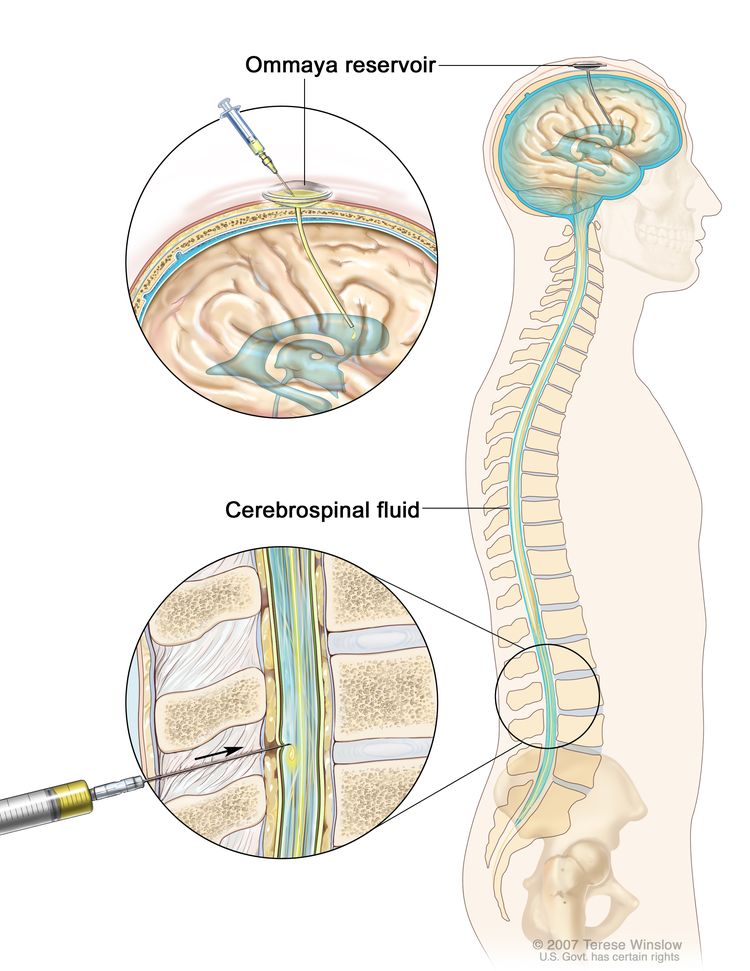
Intrathecal chemotherapy. Anticancer drugs are injected into the intrathecal space, which is the space that holds the cerebrospinal fluid (CSF, shown in blue). There are two different ways to do this. One way, shown in the top part of the figure, is to inject the drugs into an Ommaya reservoir (a dome-shaped container that is placed under the scalp during surgery; it holds the drugs as they flow through a small tube into the brain). The other way, shown in the bottom part of the figure, is to inject the drugs directly into the CSF in the lower part of the spinal column, after a small area on the lower back is numbed.
Learn more about Drugs Approved for Acute Lymphoblastic Leukemia.
Learn more about how chemotherapy works, how it is given, common side effects, and more at Chemotherapy to Treat Cancer and Chemotherapy and You: Support for People with Cancer.
Radioterapia
Radiation therapy uses high-energy x-rays or other types of radiation to kill cancer cells or keep them from growing. External radiation therapy uses a machine outside the body to send radiation toward the area of the body with cancer.
External radiation therapy may be used to treat ALL that has spread, or may spread, to the brain and spinal cord. When used this way, it is called central nervous system (CNS) sanctuary therapy or CNS prophylaxis. Total-body irradiation may be used to send radiation toward the whole body when preparing for a stem cell transplant. External radiation therapy may also be used as palliative therapy to relieve symptoms and improve quality of life.
Learn more about External Beam Radiation Therapy for Cancer and Radiation Therapy Side Effects.
Chemotherapy with stem cell transplant
Chemotherapy is given to kill cancer cells. Healthy cells, including blood-forming cells, are also destroyed by the cancer treatment. Stem cell transplant is a treatment to replace the blood-forming cells. Stem cells (immature blood cells) are removed from the blood or bone marrow of the patient or a donor and are frozen and stored. After the patient completes chemotherapy or total-body radiation therapy, the stored stem cells are thawed and given back to the patient through an infusion. These reinfused stem cells grow into (and restore) the body's blood cells.
Obtenga más información sobre los trasplantes de células madre en el tratamiento del cáncer .
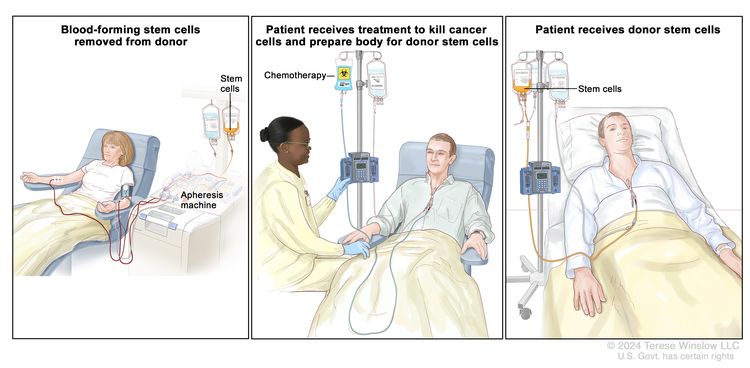
Trasplante de células madre de un donante. (Paso 1): Cuatro o cinco días antes de la recolección de células madre del donante, este recibe un medicamento para aumentar la cantidad de células madre que circulan por su torrente sanguíneo (no se muestra en la imagen). Las células madre hematopoyéticas se extraen del donante a través de una vena grande del brazo. La sangre fluye a través de una máquina de aféresis que extrae las células madre. El resto de la sangre se devuelve al donante a través de una vena del otro brazo. (Paso 2): El paciente recibe quimioterapia para destruir las células cancerosas y preparar su cuerpo para las células madre del donante. El paciente también puede recibir radioterapia (no se muestra en la imagen). (Paso 3): El paciente recibe una infusión de las células madre del donante.
Terapia dirigida
Targeted therapy uses drugs or other substances to identify and attack specific cancer cells. Your doctor may suggest biomarker tests to help predict your response to certain targeted therapy drugs. Learn more about Biomarker Testing for Cancer Treatment.
Targeted therapies used to treat ALL include:
Obtenga más información en Terapia dirigida para tratar el cáncer.
Inmunoterapia
Immunotherapy helps a person's immune system fight cancer. Your doctor may suggest biomarker tests to help predict your response to certain immunotherapy drugs. Learn more about Biomarker Testing for Cancer Treatment.
Immunotherapies used to treat ALL include:
- blinatumomab
- Inotuzumab ozogamicina
- CAR T-cell therapy with brexucabtagene autoleucel or tisagenlecleucel
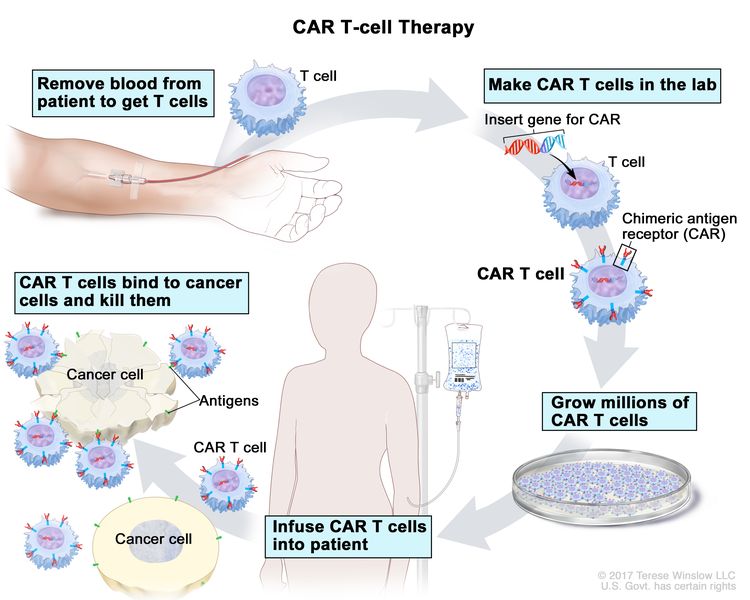
Terapia con células CAR-T: es un tratamiento en el que las células T del paciente (un tipo de célula inmunitaria) se modifican en el laboratorio para que se unan a las células cancerosas y las destruyan. La sangre del paciente fluye desde una vena del brazo a través de un tubo hacia una máquina de aféresis (no mostrada en el dibujo), que extrae los glóbulos blancos, incluidas las células T, y devuelve el resto de la sangre al paciente. En el laboratorio, se inserta un gen especial llamado receptor de antígeno quimérico (CAR) en las células T. Millones de estas células CAR-T se cultivan y se administran al paciente mediante una infusión. Una vez en el cuerpo, las células CAR-T se unen a un antígeno en las células cancerosas y las destruyen.
Obtenga más información sobre la inmunoterapia para el tratamiento del cáncer .
New types of treatment are being tested in clinical trials.
For some people, joining a clinical trial may be an option. There are different types of clinical trials for people with cancer. For example, a treatment trial tests new treatments or new ways of using current treatments. Supportive care and palliative care trials look at ways to improve quality of life, especially for those who have side effects from cancer and its treatment.
You can use the clinical trial search to find NCI-supported cancer clinical trials accepting participants. The search allows you to filter trials based on the type of cancer, your age, and where the trials are being done. Clinical trials supported by other organizations can be found on the ClinicalTrials.gov website.
Para más información sobre ensayos clínicos, cómo encontrarlos y participar en uno de ellos, visite la web Información sobre estudios clínicos para pacientes y cuidadores.
Treatment for ALL may cause side effects.
Para obtener más información sobre los efectos secundarios que aparecen durante el tratamiento del cáncer, consulte la sección Efectos secundarios.
Side effects from cancer treatment that begin after treatment and continue for months or years are called late effects. Late effects of treatment for ALL may include the risk of second cancers (new types of cancer). Regular follow-up exams are very important for long-term survivors.
Es posible que se necesiten cuidados de seguimiento.
A medida que avanza el tratamiento, se le realizarán pruebas o controles de seguimiento. Es posible que se repitan algunas pruebas para diagnosticar o estadificar el cáncer con el fin de evaluar cómo está funcionando el tratamiento. Las decisiones sobre si continuar, modificar o suspender el tratamiento pueden basarse en los resultados de estas pruebas.
Algunas pruebas seguirán realizándose de manera periódica después de terminar el tratamiento. Los resultados pueden indicar si su afección ha cambiado o si el cáncer ha redicivado (regresado).
Treatment of Untreated Acute Lymphoblastic Leukemia
Treatment of ALL during the remission induction phase includes:
- Quimioterapia combinada
- targeted therapy with imatinib, in certain patients, some of whom will also have combination chemotherapy
- supportive care including antibiotics and red blood cell and platelet transfusions
- central nervous system (CNS) prophylaxis including chemotherapy (intrathecal and/or systemic) with or without radiation therapy to the brain
Learn more about these treatments in the Treatment Option Overview.
Puede utilizar la búsqueda de ensayos clínicos y encontrar ensayos clínicos sobre cáncer patrocinados por el NCI que acepten participantes. La búsqueda le permite filtrar los ensayos según el tipo de cáncer, la edad y el lugar donde se realizan los ensayos. También encontrará información general sobre los ensayos clínicos.
Treatment of Acute Lymphoblastic Leukemia in Remission
Treatment of ALL during the post-remission phase includes:
- Quimioterapia
- targeted therapy with dasatinib, imatinib, or nilotinib
- chemotherapy with stem cell transplant
- central nervous system (CNS prophylaxis) including chemotherapy (intrathecal and/or systemic) with or without radiation therapy to the brain
Learn more about these treatments in the Treatment Option Overview.
Puede utilizar la búsqueda de ensayos clínicos y encontrar ensayos clínicos sobre cáncer patrocinados por el NCI que acepten participantes. La búsqueda le permite filtrar los ensayos según el tipo de cáncer, la edad y el lugar donde se realizan los ensayos. También encontrará información general sobre los ensayos clínicos.
Treatment of Recurrent Acute Lymphoblastic Leukemia
Treatment of recurrent ALL may include:
- combination chemotherapy followed by stem cell transplant
- immunotherapy (blinatumomab or inotuzumab ozogamicin) followed by stem cell transplant
- low-dose radiation therapy as palliative care to relieve symptoms and improve quality of life
- targeted therapy with dasatinib or revumenib for certain patients
- CAR T-cell therapy (brexucabtagene autoleucel or tisagenlecleucel) for certain patients
Some of the treatments being studied in clinical trials for recurrent ALL include stem cell transplant using the patient's stem cells.
Learn more about these treatments in the Treatment Option Overview.
Puede utilizar la búsqueda de ensayos clínicos y encontrar ensayos clínicos sobre cáncer patrocinados por el NCI que acepten participantes. La búsqueda le permite filtrar los ensayos según el tipo de cáncer, la edad y el lugar donde se realizan los ensayos. También encontrará información general sobre los ensayos clínicos.
To Learn More About Acute Lymphoblastic Leukemia
For more information from the National Cancer Institute about ALL, visit the Leukemia Home Page.
For general cancer information and other resources from the National Cancer Institute, visit:
Sobre este resumen del PDQ
Acerca del PDQ
El Physician Data Query (PDQ) es la base de datos integral sobre el cáncer del National Cancer Institute (NCI). La base de datos del PDQ contiene resúmenes con la última información publicada sobre prevención, detección, genética, tratamiento, atención médica de apoyo y medicina complementaria y alternativa relacionada con el cáncer. La mayoría de los resúmenes se presentan en dos versiones. Las versiones para profesionales de la salud contienen información detallada escrita en lenguaje técnico. Las versiones para pacientes están escritas en un lenguaje fácil de entender y no tan técnico. Ambas versiones contienen información precisa y actualizada sobre el cáncer. La mayoría de las versiones también están disponibles en español.
El PDQ es un servicio del NCI. El NCI es parte de los Institutos Nacionales de Salud (NIH), que son el centro de investigación biomédica del Gobierno federal. Los resúmenes del PDQ se basan en una revisión independiente de la literatura médica. No son declaraciones de políticas del NCI ni de los NIH.
Propósito de este resumen
This PDQ cancer information summary has current information about the treatment of acute lymphoblastic leukemia. It is meant to inform and help patients, families, and caregivers. It does not give formal guidelines or recommendations for making decisions about health care.
Revisores y actualizaciones
Los comités editoriales escriben los resúmenes de información sobre el cáncer del PDQ y los mantienen actualizados. Estos comités están formados por equipos de especialistas en el tratamiento del cáncer y otras especialidades relacionadas con esta enfermedad. Los resúmenes se revisan periódicamente y se modifican cuando hay información nueva. La fecha de actualización al pie de cada resumen indica cuándo se realizó el cambio más reciente.
The information in this patient summary was taken from the health professional version, which is reviewed regularly and updated as needed, by the PDQ Adult Treatment Editorial Board.
Información sobre ensayos clínicos
Un ensayo clínico es un estudio para responder a una pregunta científica como, por ejemplo, si un tratamiento es mejor que otro. Los ensayos se basan en estudios anteriores y en lo aprendido en el laboratorio. Cada ensayo responde a determinadas preguntas científicas que permiten encontrar nuevas y mejores formas de ayudar a los pacientes con cáncer. Durante los ensayos clínicos de tratamiento, se recopila información sobre los efectos de un nuevo tratamiento y su eficacia. Si un ensayo clínico demuestra que un nuevo tratamiento es mejor que uno que se utiliza actualmente, el nuevo tratamiento puede convertirse en “estándar”. Los pacientes pueden valorar la posibilidad de participar en un ensayo clínico. Algunos ensayos clínicos solo están abiertos a pacientes que no hayan iniciado el tratamiento.
Los ensayos clínicos se pueden encontrar en línea en el sitio web del NCI. Para obtener más información, llame al Servicio de Información sobre el Cáncer (CIS, por sus siglas en inglés), el centro de contacto del NCI, al 1-800-4-CANCER (1-800-422-6237).
Permiso de uso de este resumen
Physician Data Query (PDQ) es una marca registrada. Se autoriza el libre uso del contenido de los documentos del PDQ como texto. Sin embargo, no se podrá identificar como un resumen de información sobre cáncer del PDQ del NCI, salvo que se reproduzca en su totalidad y se actualice con regularidad. Por otra parte, se permite que los autores incluyan una oración como “en el resumen del PDQ del NCI sobre la prevención del cáncer de mama se describen, de manera concisa, los siguientes riesgos: [incluir fragmento del resumen]”.
La forma recomendada para citar este resumen del PDQ es:
Comité editorial del PDQ® sobre el tratamiento para adultos. Tratamiento de la leucemia linfoblástica aguda (PDQ). Bethesda, MD: National Cancer Institute. Actualizado el [DD/MM/AAAA]
Las imágenes de este resumen se utilizan con el permiso del autor, artista y/o editorial para uso exclusivo en los resúmenes del PDQ. Si desea usar una imagen de un resumen del PDQ sin incluir el resumen completo, debe obtener autorización del propietario. El National Cancer Institute no puede otorgar dicho permiso. Para obtener más información sobre el uso de las imágenes de este resumen o de otras ilustraciones relacionadas con el cáncer, consulte Visuals Online, una colección de más de 3,000 imágenes científicas.
Descargo de responsabilidad
La información de estos resúmenes no debe utilizarse para tomar decisiones sobre reembolsos de seguros. Puede encontrar más información sobre la cobertura de seguros en Cancer.gov en el sitio Manejo de la atención del cáncer.
Contáctenos
Puede encontrar más información sobre cómo contactarnos o recibir ayuda en el sitio web Cancer.gov en la página Comuníquese con el NCI. También puede enviar sus preguntas a Cancer.gov en el apartado Escríbanos del sitio web.
Updated:
Source URL: https://www.cancer.gov/node/4628/syndication
Agencia de origen: National Cancer Institute (NCI)
Captured Date: 2013-09-14 09:02:20.0