





Detección del cáncer de pulmón
Finding lung cancer in its earliest stage offers the best chance of successful treatments. That’s why screening for lung cancer is important if you are at an increased risk.
Montefiore Einstein Comprehensive Cancer Center is passionate about routine screenings for those at risk for lung cancer and many other cancer types at our NCI-designated Center.
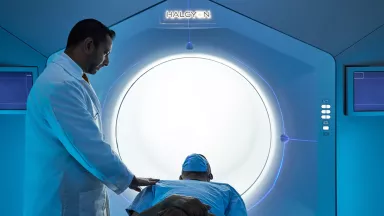
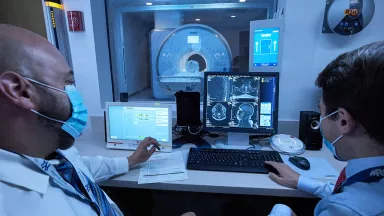
Our high-risk lung cancer screening program focuses on finding cancer as early as possible, even before symptoms occur, so you can take steps to protect your health. These screenings are essential to lung cancer prevention. The high-risk screening uses low-dose computed tomography (CT) scans to help detect the disease at its earliest, a method proven to reduce mortality due to lung cancer, compared with the standard chest x-ray. This program is the first of its kind in the Bronx, where the smoking rate is the second highest in New York City, at 16.2%. The program is offered to individuals who meet the criteria established in the landmark National Lung Screening Trial sponsored by the National Cancer Institute. Eligible patients must meet the following criteria:
- Between ages 50-80
- Have not had a chest CT scan in the previous year
- Fumar o ser un ex fumador que dejó de fumar en los últimos 15 años.
- Ha fumado un mínimo de 20 “paquetes-año”; por ejemplo, un paquete al día durante 20 años o dos paquetes al día durante 10 años.
At Montefiore Einstein Comprehensive Cancer Center, you can expect our compassionate and skilled healthcare providers to offer personalized screening in a supportive setting. And you’ll benefit from the latest, most advanced technology available to treat lung cancer as well as access to the latest in ensayos clínicos.
The discovery of a lung nodule requires timely evaluation to ensure the best possible outcome. At Montefiore Einstein Comprehensive Cancer Center, the Follow-Up ASessmenT of Lung Nodules (FAST) Clinic is dedicated to providing rapid assessment, diagnosis, and treatment. With advanced technology—including a leading-edge robotic bronchoscopy suite—our team delivers fast, accurate care to help patients move forward with confidence.
For more than 50 years, Montefiore Einstein Comprehensive Cancer Center has been a leader in the research, diagnosis, and treatment of over 200 types of cancer. Turn to us for comprehensive cancer screening.

El Montefiore Einstein Comprehensive Cancer Center, designado como centro integral del cáncer por el National Cancer Institute (NCI), apoya la misión y las normas del NCI. La siguiente información sobre los tipos de cáncer, prevención y tratamientos ha sido facilitada por el NCI.
Lung Cancer Screening (PDQ®)–Patient Version
What Is Screening?
Screening is looking for cancer before a person has any symptoms. This can help find cancer at an early stage. When abnormal tissue or cancer is found early, it may be easier to treat. By the time symptoms appear, cancer may have begun to spread.
Scientists are trying to better understand which people are more likely to get certain types of cancer. They also study the things we do and the things around us to see if they cause cancer. This information helps doctors recommend who should be screened for cancer, which screening tests should be used, and how often the tests should be done.
Es importante recordar que, si su médico le recomienda una prueba de detección, eso no significa necesariamente que sospeche que usted tiene cáncer. Las pruebas de detección se realizan cuando todavía no hay síntomas de la enfermedad.
Si el resultado de una prueba de detección es anómalo, es posible que deba someterse a más pruebas para determinar si tiene cáncer. Estos exámenes se denominan pruebas de diagnóstico.
General Information About Lung Cancer
Puntos clave
- Lung cancer is a disease in which malignant (cancer) cells form in the tissues of the lung.
- Lung cancer is the leading cause of cancer death in the United States.
- Different factors increase or decrease the risk of lung cancer.
Lung cancer is a disease in which malignant (cancer) cells form in the tissues of the lung.
The lungs are a pair of cone-shaped breathing organs in the chest. The lungs bring oxygen into the body as you breathe in. They release carbon dioxide, a waste product of the body's cells, as you breathe out. Each lung has sections called lobes. The left lung has two lobes. The right lung is slightly larger, and has three lobes. A thin membrane called the pleura surrounds the lungs. Two tubes called bronchi lead from the trachea (windpipe) to the right and left lungs. The bronchi are sometimes also involved in lung cancer. Tiny air sacs called alveoli and small tubes called bronchioles make up the inside of the lungs.

Anatomy of the respiratory system showing the trachea, the right and left lungs and their lobes, and the bronchi. The lymph nodes and the diaphragm are also shown. Oxygen is inhaled into the lungs and passes through the alveoli (the tiny air sacs at the end of the bronchioles) and into the bloodstream (see inset), where it travels to the tissues throughout the body.
There are two main types of lung cancer: small cell lung cancer and non-small cell lung cancer.
Other PDQ summaries containing information related to lung cancer include:
Lung cancer is the leading cause of cancer death in the United States.
Lung cancer is the second most common type of non-skin cancer in the United States. Lung cancer is the leading cause of cancer death in men and in women.
Different factors increase or decrease the risk of lung cancer.
Todo lo que aumente la probabilidad de tener una enfermedad se llama factor de riesgo. Todo lo que disminuya la probabilidad de tener una enfermedad se llama factor de protección.
Tobacco smoking is the most important risk factor for lung cancer. Cigarette, cigar, and pipe smoking all increase the risk of lung cancer. Tobacco smoking causes about 9 out of 10 cases of lung cancer in men and about 8 out of 10 cases of lung cancer in women. The best way to prevent lung cancer is to not smoke.
For information about risk factors and protective factors for lung cancer, see Lung Cancer Prevention.
Detección del cáncer de pulmón
Puntos clave
- Tests are used to screen for different types of cancer when a person does not have symptoms.
- Three screening tests have been studied to see if they decrease the risk of dying from lung cancer.
- Screening with LDCT scans has been shown to decrease the risk of dying from lung cancer in heavy smokers.
- Screening with chest x-rays and/or sputum cytology does not decrease the risk of dying from lung cancer.
- Screening tests for lung cancer are being studied in clinical trials.
Tests are used to screen for different types of cancer when a person does not have symptoms.
Scientists study screening tests to find those with the fewest harms and most benefits. Cancer screening trials also are meant to show whether early detection (finding cancer before it causes symptoms) helps a person live longer or decreases a person's chance of dying from the disease. For some types of cancer, the chance of recovery is better if the disease is found and treated at an early stage.
Three screening tests have been studied to see if they decrease the risk of dying from lung cancer.
The following screening tests have been studied to see if they decrease the risk of dying from lung cancer:
- Low-dose computed tomography (LDCT): A procedure that uses low-dose radiation to make a series of very detailed pictures of areas inside the body using an x-ray machine that scans the body in a spiral path. This procedure is also called spiral scan or helical scan.
- Chest x-ray: An x-ray of the organs and bones inside the chest. An x-ray is a type of energy beam that can go through the body and onto film, making a picture of areas inside the body.
- Sputum cytology: Sputum cytology is a procedure in which a sample of sputum (mucus that is coughed up from the lungs) is viewed under a microscope to check for cancer cells.
Screening with LDCT scans has been shown to decrease the risk of dying from lung cancer in heavy smokers.
The National Lung Screening Trial studied people aged 55 years to 74 years who had smoked at least 1 pack of cigarettes per day for 30 years or more. Participants were either current smokers or former smokers who had quit within the last 15 years. The trial used chest x-rays or LDCT scans to check for signs of lung cancer.
Screening with LDCT once a year for three years was better than chest x-rays at finding early-stage lung cancer and decreased the risk of dying from lung cancer in current and former heavy smokers.
Current smokers whose LDCT scan result shows possible signs of cancer may be more likely to quit smoking.
Screening with LDCT can cause possible harms, including:
- false-positive test results, which may lead to invasive procedures which are not needed
- overdiagnosis of some lung cancers, though it is not clear how often this happens
For more information about these possible harms, see the Risks of Lung Cancer Screening below.
A Guide is available for patients and doctors to learn more about the benefits and harms of screening for lung cancer.
Screening with chest x-rays and/or sputum cytology does not decrease the risk of dying from lung cancer.
Chest x-ray and sputum cytology are two screening tests that have been used to check for signs of lung cancer. Screening with chest x-ray, sputum cytology, or both of these tests does not decrease the risk of dying from lung cancer.
Screening tests for lung cancer are being studied in clinical trials.
Puede encontrar información sobre los ensayos clínicos financiados por el NCI en la página web de búsqueda de ensayos clínicos del NCI. Los ensayos clínicos financiados por otras organizaciones se pueden encontrar en el sitio web ClinicalTrials.gov.
Risks of Lung Cancer Screening
Puntos clave
- Las pruebas de detección conllevan riesgos.
- The risks of lung cancer screening tests include the following:
- Finding lung cancer may not improve health or help you live longer.
- Pueden producirse resultados falsos negativos.
- False-positive test results can occur.
- Chest x-rays and CT scans expose the chest to radiation.
- Talk to your doctor about your risk for lung cancer and your need for screening tests.
Las pruebas de detección conllevan riesgos.
Decisions about screening tests can be difficult. Not all screening tests are helpful and most have risks. Before having any screening test, you may want to discuss the test with your doctor. It is important to know the risks of the test and whether it has been proven to reduce the risk of dying from cancer.
The risks of lung cancer screening tests include the following:
Finding lung cancer may not improve health or help you live longer.
Screening may not improve your health or help you live longer if you have lung cancer that has already spread to other places in your body.
When a screening test result leads to the diagnosis and treatment of a disease that may never have caused symptoms or become life-threatening, it is called overdiagnosis. It is not known if treatment of these cancers would help you live longer than if no treatment were given, and treatments for cancer may have serious side effects. Harms of treatment may happen more often in people who have medical problems caused by heavy or long-term smoking.
Pueden producirse resultados falsos negativos.
Screening test results may appear to be normal even though lung cancer is present. A person who receives a false-negative test result (one that shows there is no cancer when there really is) may delay seeking medical care even if there are symptoms.
False-positive test results can occur.
Screening test results may appear to be abnormal even though no cancer is present. A false-positive test result (one that shows there is cancer when there really isn't) can cause anxiety and is usually followed by more tests (such as biopsy), which also have risks. A biopsy to diagnose lung cancer can cause part of the lung to collapse. Sometimes surgery is needed to reinflate the lung. Harms of diagnostic tests may happen more often in patients who have medical problems caused by heavy or long-term smoking.
Chest x-rays and CT scans expose the chest to radiation.
Radiation exposure from chest x-rays and low-dose CT scans may increase the risk of cancer. Younger people and people at low risk for lung cancer are more likely to develop lung cancer caused by radiation exposure from screening than to be spared death from lung cancer.
Talk to your doctor about your risk for lung cancer and your need for screening tests.
Talk to your doctor or other health care provider about your risk for lung cancer, whether a screening test is right for you, and about the benefits and harms of the screening test. You should take part in the decision about whether a screening test is right for you. For more information, see Cancer Screening Overview.
Sobre este resumen del PDQ
Acerca del PDQ
El Physician Data Query (PDQ) es la base de datos integral sobre el cáncer del National Cancer Institute (NCI). La base de datos del PDQ contiene resúmenes con la última información publicada sobre prevención, detección, genética, tratamiento, atención médica de apoyo y medicina complementaria y alternativa relacionada con el cáncer. La mayoría de los resúmenes se presentan en dos versiones. Las versiones para profesionales de la salud contienen información detallada escrita en lenguaje técnico. Las versiones para pacientes están escritas en un lenguaje fácil de entender y no tan técnico. Ambas versiones contienen información precisa y actualizada sobre el cáncer. La mayoría de las versiones también están disponibles en español.
El PDQ es un servicio del NCI. El NCI es parte de los Institutos Nacionales de Salud (NIH), que son el centro de investigación biomédica del Gobierno federal. Los resúmenes del PDQ se basan en una revisión independiente de la literatura médica. No son declaraciones de políticas del NCI ni de los NIH.
Propósito de este resumen
This PDQ cancer information summary has current information about lung cancer screening. It is meant to inform and help patients, families, and caregivers. It does not give formal guidelines or recommendations for making decisions about health care.
Revisores y actualizaciones
Los comités editoriales escriben los resúmenes de información sobre el cáncer del PDQ y los mantienen actualizados. Estos comités están formados por equipos de especialistas en el tratamiento del cáncer y otras especialidades relacionadas con esta enfermedad. Los resúmenes se revisan periódicamente y se modifican cuando hay información nueva. La fecha de actualización al pie de cada resumen indica cuándo se realizó el cambio más reciente.
La información de este resumen para pacientes se tomó de la versión para profesionales de la salud, la cual el comité editorial del PDQ sobre detección y prevención revisa y actualiza con regularidad según sea necesario.
Información sobre ensayos clínicos
Un ensayo clínico es un estudio para responder a una pregunta científica como, por ejemplo, si un tratamiento es mejor que otro. Los ensayos se basan en estudios anteriores y en lo aprendido en el laboratorio. Cada ensayo responde a determinadas preguntas científicas que permiten encontrar nuevas y mejores formas de ayudar a los pacientes con cáncer. Durante los ensayos clínicos de tratamiento, se recopila información sobre los efectos de un nuevo tratamiento y su eficacia. Si un ensayo clínico demuestra que un nuevo tratamiento es mejor que uno que se utiliza actualmente, el nuevo tratamiento puede convertirse en “estándar”. Los pacientes pueden valorar la posibilidad de participar en un ensayo clínico. Algunos ensayos clínicos solo están abiertos a pacientes que no hayan iniciado el tratamiento.
Los ensayos clínicos se pueden encontrar en línea en el sitio web del NCI. Para obtener más información, llame al Servicio de Información sobre el Cáncer (CIS, por sus siglas en inglés), el centro de contacto del NCI, al 1-800-4-CANCER (1-800-422-6237).
Permiso de uso de este resumen
Physician Data Query (PDQ) es una marca registrada. Se autoriza el libre uso del contenido de los documentos del PDQ como texto. Sin embargo, no se podrá identificar como un resumen de información sobre cáncer del PDQ del NCI, salvo que se reproduzca en su totalidad y se actualice con regularidad. Por otra parte, se permite que los autores incluyan una oración como “en el resumen del PDQ del NCI sobre la prevención del cáncer de mama se describen, de manera concisa, los siguientes riesgos: [incluir fragmento del resumen]”.
La forma recomendada para citar este resumen del PDQ es:
Comité editorial del PDQ® sobre detección y prevención. Detección del cáncer de pulmón (PDQ). Bethesda, MD: National Cancer Institute. Actualizado el [DD/MM/AAAA]
Las imágenes de este resumen se utilizan con el permiso del autor, artista y/o editorial para uso exclusivo en los resúmenes del PDQ. Si desea usar una imagen de un resumen del PDQ sin incluir el resumen completo, debe obtener autorización del propietario. El National Cancer Institute no puede otorgar dicho permiso. Para obtener más información sobre el uso de las imágenes de este resumen o de otras ilustraciones relacionadas con el cáncer, consulte Visuals Online, una colección de más de 3,000 imágenes científicas.
Descargo de responsabilidad
La información de estos resúmenes no debe utilizarse para tomar decisiones sobre reembolsos de seguros. Puede encontrar más información sobre la cobertura de seguros en Cancer.gov en el sitio Manejo de la atención del cáncer.
Contáctenos
Puede encontrar más información sobre cómo contactarnos o recibir ayuda en el sitio web Cancer.gov en la página Comuníquese con el NCI. También puede enviar sus preguntas a Cancer.gov en el apartado Escríbanos del sitio web.
Updated:
Source URL: https://www.cancer.gov/node/4980/syndication
Agencia de origen: National Cancer Institute (NCI)
Captured Date: 2013-09-14 09:02:33.0