Noticia breve
Cómo los fibroblastos cardíacos reparan el tejido cardíaco después de un ataque cardíaco
14 de mayo de 2025
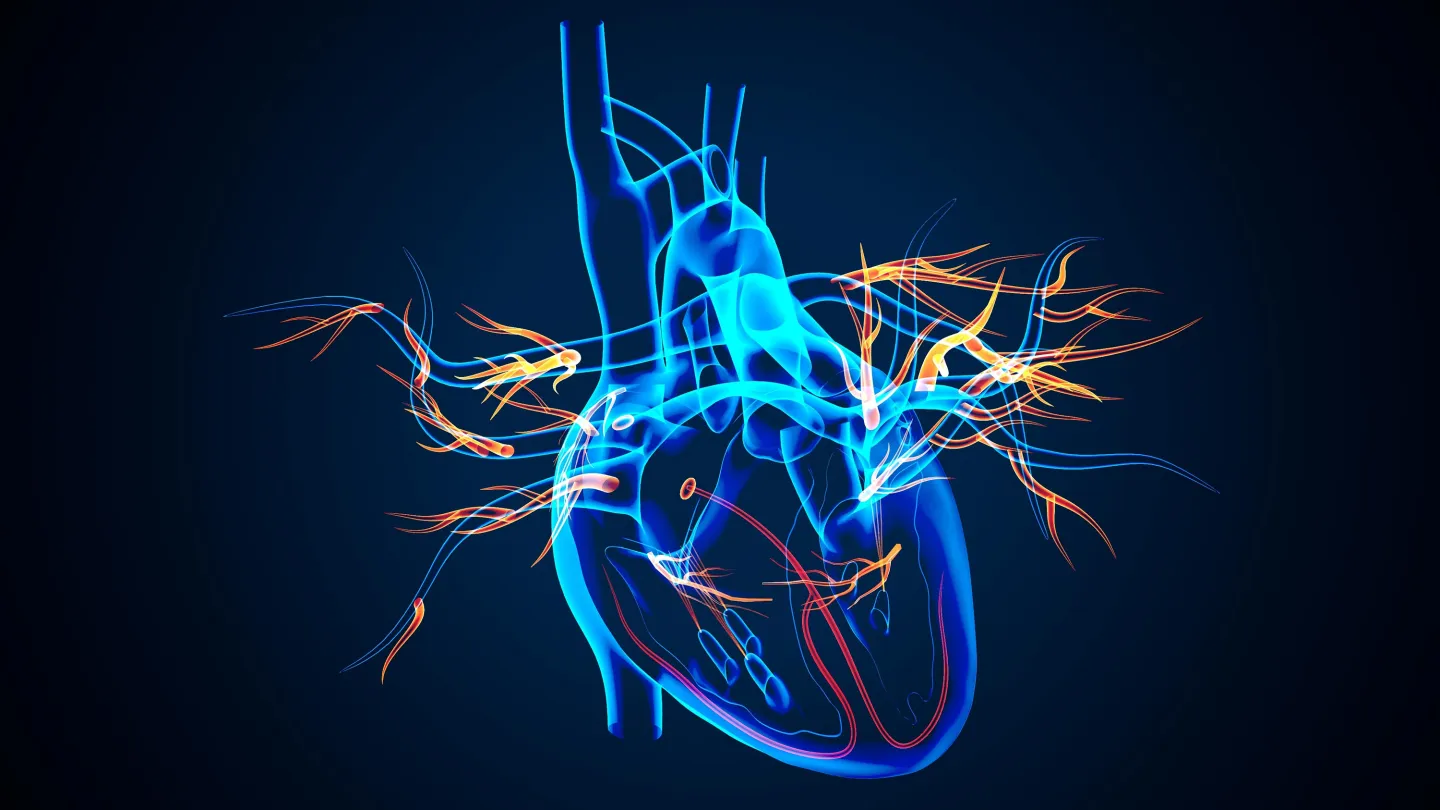
Following a heart attack (myocardial infarction, or MI), timely activation of heart tissue fibroblasts is needed for the repair of the damaged heart tissue. These fibroblasts are re-programmed to make new proteins and degrade old ones in a process called Chaperone-Mediated Autophagy (CMA). Preliminary research by Nikolaos Frangogiannis, M.D., and Ana Maria Cuervo, M.D., Ph.D., shows that disruptions of CMA in MI-specific fibroblasts perturb the repair of injured heart tissue.
The National Heart, Lung, and Blood Institute has awarded Drs. Frangogiannis and Cuervo a four-year, $3.1 million grant to study how CMA is regulated in MI-activated fibroblasts and how these fibroblasts repair the damaged heart, using laboratory and animal models. The study, the first of its kind, will also test the potential of small-molecule CMA activators as treatments for enhancing cardiac repair and reducing fibrosis (tissue scarring) following an MI.
Dr. Frangogiannis is professor of medicine and microbiology & immunology, and the Edmond J. Safra/Republic National Bank of New York Chair in Cardiovascular Medicine at Einstein. Dr. Cuervo is distinguished professor of developmental & molecular biology and of medicine and is the Robert and Renee Belfer Chair for the Study of Neurodegenerative Diseases at Einstein, is co-director of Einstein’s Institute for Aging Research, and is a member of the National Cancer Institute-designated Montefiore Einstein Comprehensive Cancer Center and the Marion Bessin Liver Research Center. (1R01HL174940-01A1)