



¿Qué es un espasmo hemifacial?
A la hora de identificar los tipos de dolor, se distinguen dos: el dolor agudo y el dolor crónico. El dolor agudo aparece rápidamente y puede ser intenso, pero dura relativamente poco. Suele aparecer tras una lesión o traumatismo y desaparece por sí solo.
A diferencia del dolor agudo, el dolor crónico es un dolor que dura mucho tiempo y no parece mejorar ni desaparecer. Este periodo de tiempo puede variar, pero generalmente abarca de tres a seis meses tras el inicio de los síntomas. El dolor crónico suele ser un síntoma debilitante de muchas enfermedades y se considera una enfermedad en sí misma cuando persiste más allá de la recuperación de una lesión o afección. El dolor crónico es un componente frecuente de muchos trastornos neurológicos.
El dolor le advierte de que algo no está del todo bien en su cuerpo y le puede llevar a realizar ciertas acciones y evitar otras. El dolor puede afectar significativamente a su calidad de vida, perjudicando su bienestar físico y emocional, alterando las relaciones con familiares, compañeros de trabajo y amigos y limitando su movilidad y su actividad diaria.
El espectro del dolor está compuesto por cientos de síndromes o trastornos. Una de las causas son las neuralgias craneales (NC), síndromes provocados por la alteración o el daño del sistema nervioso, incluyendo los nervios periféricos, la médula espinal y el cerebro. Estas afecciones causan ataques repentinos de dolor punzante y agudo en la cara y la cabeza, denominados paroxismos. Existen tres tipos comunes de NC: neuralgia del trigémino, neuralgia del glosofaríngeo y espasmo hemifacial.
El espasmo hemifacial es un trastorno neuromuscular que se caracteriza por contracciones o espasmos frecuentes de los músculos de un lado de la cara. Estos espasmos son involuntarios, es decir, ocurren espontáneamente. El trastorno afecta tanto a hombres como a mujeres, aunque es más frecuente en mujeres de mediana edad o mayores. También es mucho más común en la población asiática.
Tipos de espasmo hemifacial
El espectro del dolor está compuesto por cientos de síndromes o trastornos. Una de las causas son las neuralgias craneales (NC), síndromes provocados por la alteración o el daño del sistema nervioso, incluyendo los nervios periféricos, la médula espinal y el cerebro. Estas afecciones causan ataques repentinos de dolor punzante y agudo en la cara y la cabeza, denominados paroxismos. Existen tres tipos comunes de NC: neuralgia del trigémino, neuralgia del glosofaríngeo y espasmo hemifacial.
Causas del espasmo hemifacial
El espasmo hemifacial suele estar causado por un vaso sanguíneo que presiona el nervio facial en el punto donde sale del tronco encefálico. Esta afección puede ser causada por:
- Una lesión del nervio facial
- Un tumor
- Sin causa aparente
Factores de riesgo para el espasmo hemifacial
Este trastorno afecta tanto a hombres como a mujeres, aunque es más frecuente en mujeres de mediana edad o mayores. También es mucho más común en la población asiática.
Detección y prevención del espasmo hemifacial
Las personas con traumatismos, parálisis de Bell, lesiones del tronco encefálico (asociadas a esclerosis múltiple y accidente cerebrovascular), malformación de Chiari y aneurismas arteriales intracraneales tienen mayor riesgo de sufrir espasmos hemifaciales. Los síntomas de esta afección neuromuscular crónica pueden reducirse mediante:
- Controlar la ansiedad y el estrés
- Reducir o eliminar los estimulantes, como la cafeína.
- Evitar la fatiga
- Aumentar la ingesta de vitamina D
Signos y síntomas del espasmo hemifacial
El primer síntoma del espasmo hemifacial suele ser una contracción intermitente del músculo del párpado. Esto puede provocar el cierre forzado del ojo. El espasmo puede extenderse gradualmente a los músculos de la parte inferior del rostro, desviando la boca hacia un lado. Finalmente, los espasmos afectan a todos los músculos de un lado de la cara de forma casi continua. En raras ocasiones, los médicos observan casos de personas con espasmos en ambos lados de la cara.
Diagnóstico del espasmo hemifacial
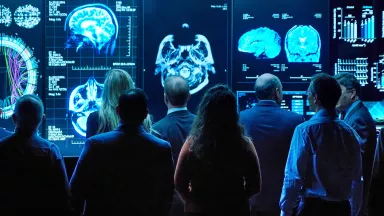
El espasmo hemifacial suele estar causado por la presión de un vaso sanguíneo sobre el nervio facial en el punto donde este sale del tronco encefálico. Su médico diagnosticará esta afección mediante un examen físico para detectar síntomas, e incluso podría utilizar pruebas de imagen, como una resonancia magnética o una angiografía por resonancia magnética (en la que se inyecta un medio de contraste en el vaso sanguíneo para visualizar cualquier vaso anormal).
Tratamiento del espasmo hemifacial
La inyección de toxina botulínica en las zonas afectadas es la terapia más eficaz. Además, suele ser la única que se utiliza. La cirugía de descompresión microvascular alivia la presión sobre el nervio facial y puede proporcionar alivio en muchos casos. Esta cirugía puede tener efectos secundarios importantes, por lo que es necesario sopesar los riesgos y los beneficios. La farmacoterapia generalmente no funciona.
Vivir con espasmo hemifacial
El pronóstico para las personas con espasmo hemifacial depende del tratamiento y de su respuesta. Algunas personas prácticamente desaparecen con la terapia de inyecciones. Otras pueden requerir cirugía. En la mayoría de los casos, las personas logran encontrar un equilibrio entre los síntomas que pueden tolerar y los riesgos del tratamiento.