Noticia breve
Descubriendo cómo las células leucémicas se adaptan rápidamente a la quimioterapia.
6 de julio de 2026
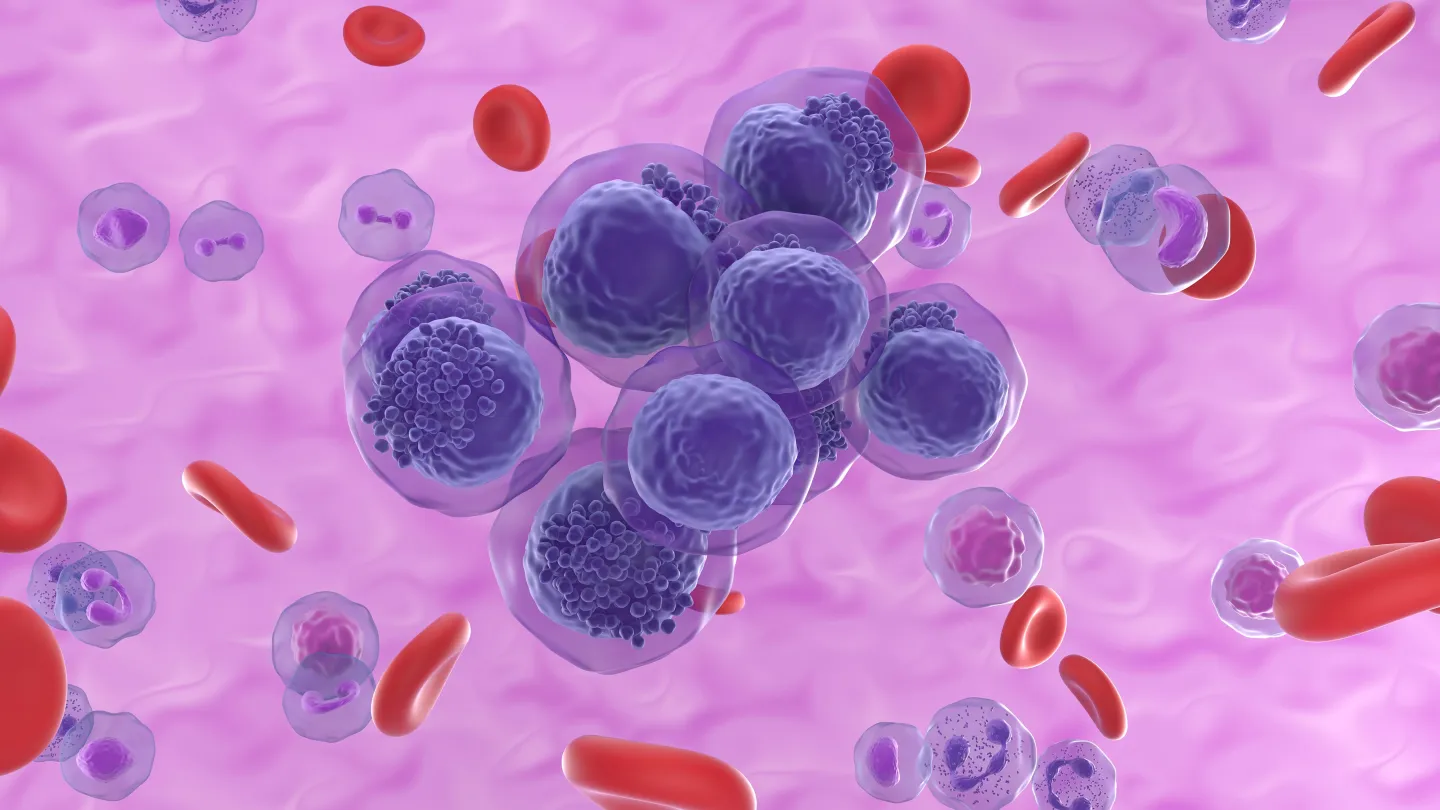
Muchos casos de leucemia mieloide aguda (LMA) y otros cánceres se vuelven incurables al desarrollar resistencia a la quimioterapia. La mayoría de las investigaciones sobre resistencia se han centrado en las mutaciones genéticas que surgen con el tiempo y contribuyen a la supervivencia de las células cancerosas. En un nuevo estudio publicado el 1 de julio en Blood Cancer Discovery, investigadores del Centro Oncológico Integral Montefiore Einstein (MECCC) y colaboradores han descubierto cómo las células de LMA se adaptan rápidamente a la citarabina, uno de los fármacos quimioterapéuticos más utilizados para esta enfermedad. En estudios preclínicos, el bloqueo de esta respuesta temprana aumentó la eficacia del tratamiento, lo que sugiere una nueva estrategia prometedora para prevenir la resistencia a los fármacos en la LMA y, potencialmente, en otros tipos de cáncer.
Los investigadores descubrieron que, poco después de que las líneas celulares de LMA y las células leucémicas de los pacientes se expusieran a la citarabina, muchas de estas células aumentaron drásticamente su producción de ARN mensajero (ARNm), las moléculas que contienen las instrucciones genéticas para la síntesis de proteínas. Las células que desarrollaron esta respuesta fueron más propensas a desarrollar resistencia al fármaco. Análisis posteriores, incluyendo ensayos especializados con resolución de molécula única, revelaron que la citarabina estimuló de forma rápida y específica la producción de ARNm de genes que codifican factores de transcripción, proteínas especializadas que ayudan a controlar la activación o desactivación de ciertos genes. La citarabina desencadenó una respuesta de activación génica rápida, hasta ahora desconocida, que ayudó a las células de LMA a sobrevivir al tratamiento.
La inhibición de la producción de ARN antes y durante el tratamiento redujo el desarrollo de resistencia a los fármacos en líneas celulares de LMA, células leucémicas de pacientes y modelos animales de la enfermedad. Estos hallazgos sugieren que combinar la quimioterapia con fármacos que bloquean esta respuesta temprana podría ofrecer una nueva estrategia para superar uno de los mayores desafíos en el tratamiento del cáncer: la resistencia a la quimioterapia. Se están realizando esfuerzos para avanzar en la aplicación de estos prometedores hallazgos en ensayos clínicos.
El estudio fue dirigido por Ulrich Steidl, MD, Ph.D., catedrático y director del departamento de biología celular, catedrático de oncología y medicina, y director del MECCC. El coautor Amit Verma, MBBS, es catedrático de oncología, medicina y biología molecular y del desarrollo, y subdirector del MECCC.