Noticia breve
Un estudio identifica un nuevo mecanismo detrás de la disfunción inmunitaria relacionada con la edad.
3 de junio de 2026
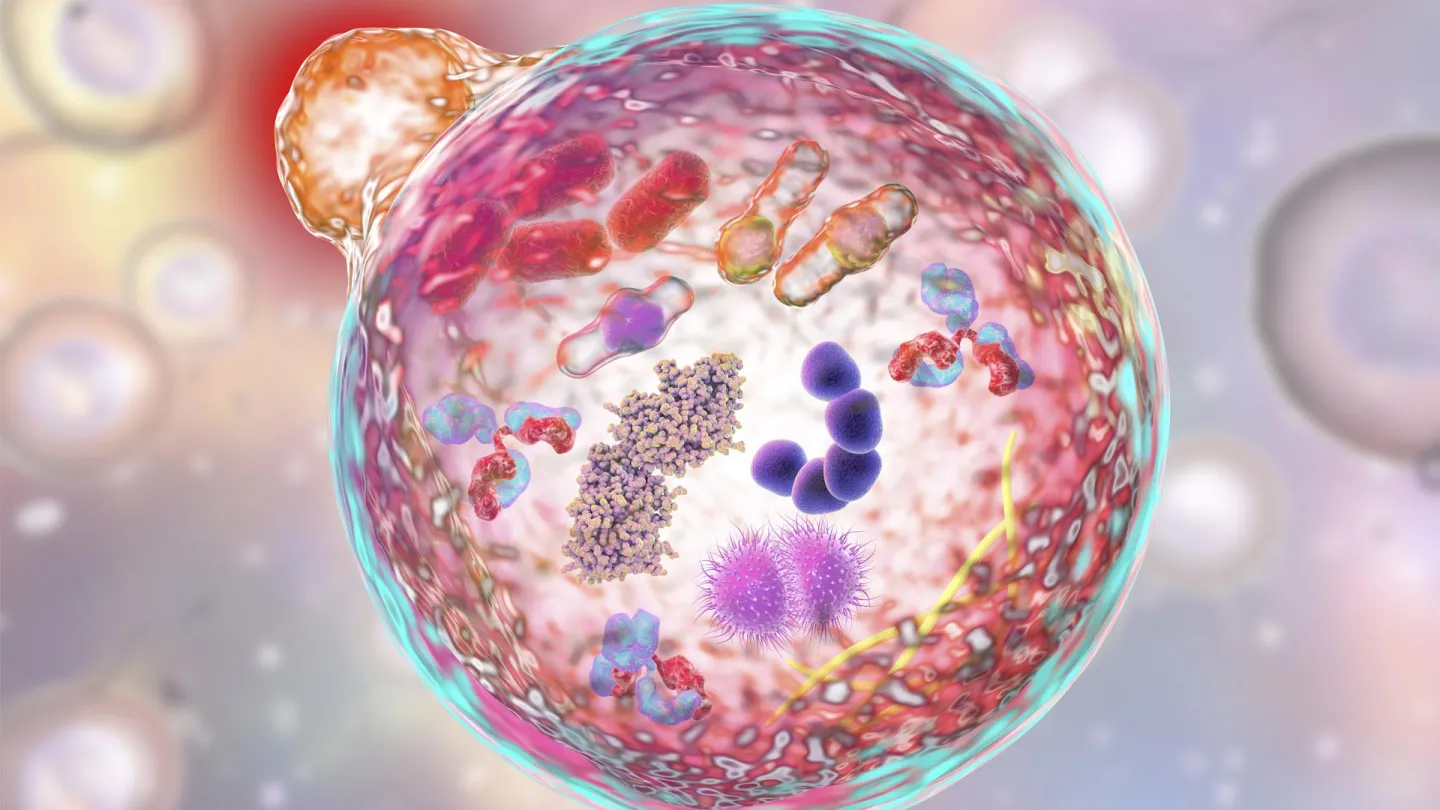
La probabilidad de desarrollar enfermedades inflamatorias crónicas y autoinmunes, como la artritis reumatoide y la enfermedad inflamatoria intestinal, aumenta considerablemente entre las personas mayores de 50 años. Esto se debe, en parte, a la disminución de la eficacia de las células especializadas que suprimen las respuestas inmunitarias hiperactivas. Investigadores del Albert Einstein College of Medicine han descubierto el mecanismo subyacente a este declive.
Los científicos del Instituto Einstein, liderados por el fallecido Fernando Macian-Juan, MD, Ph.D., y Ana Maria Cuervo, MD, Ph.D., descubrieron que las células T reguladoras (Tregs), que normalmente controlan un sistema inmunitario hiperactivo, se vuelven menos eficaces con la edad debido a la pérdida de la autofagia mediada por chaperonas (CMA) . Este proceso de reciclaje celular, que se ralentiza con la edad, elimina las proteínas viejas o defectuosas que, de otro modo, se acumularían e interferirían con la función celular normal. Los hallazgos, publicados el 22 de mayo en Comunicaciones de la naturaleza, surgieron del trabajo de Ranee Harrison, Ph.D., y Floralba Gjergjova, MS, co-dirigidas por los Dres. Macian-Juan y Cuervo.
Utilizando modelos murinos de enfermedad inflamatoria intestinal, los investigadores demostraron que los ratones con deficiencia de CMA en las células T reguladoras desarrollaban inflamación en múltiples órganos, tenían una menor esperanza de vida y experimentaban un rápido empeoramiento de la enfermedad. También descubrieron que la activación farmacológica de la CMA en ratones envejecidos restauraba la actividad supresora de las células T reguladoras y reducía los cambios inflamatorios asociados al envejecimiento, lo que sugiere que la CMA podría representar una diana terapéutica prometedora.
Mediante análisis proteómicos, los investigadores descubrieron que, además de regular proteínas importantes para la función de las células Treg, la CMA también regula la síntesis de proteínas al mediar directamente los niveles de FTO, una enzima que modula la estabilidad y la traducción a proteínas de muchos ARNm. Estos hallazgos revelan una nueva conexión entre la degradación de proteínas celulares y las vías de metilación del ARN que contribuyen al control de la función inmunitaria.
El estudio fue iniciado por el Dr. Macian-Juan y completado mediante la colaboración entre los laboratorios de Macian y Cuervo y Simone Sidoli, Ph.D., profesora asociada de bioquímica . El Dr. Cuervo, autor principal del estudio, es un distinguido profesor de biología molecular y del desarrollo, así como de medicina, titular de la Cátedra Robert y Renee Belfer para el Estudio de Enfermedades Neurodegenerativas y codirector del Instituto de Gerociencia de Einstein.
El Albert Einstein College of Medicine posee una cartera de propiedad intelectual relacionada con esta investigación y busca socios licenciatarios capaces de desarrollar y comercializar aún más esta tecnología. Los interesados pueden contactar con la Oficina de Biotecnología y Desarrollo Empresarial en biotech@einsteinmed.edu .