




Small Cell Lung Cancer Treatment
En Montefiore Einstein Comprehensive Cancer Center, podrá acceder a una atención excepcional para el cáncer de pulmón de células pequeñas. Tratamos a pacientes de toda la región y de todo el país. Nuestro centro de cáncer fue uno de los primeros designados por el NCI en el país y, durante más de 50 años, hemos sido líderes en la investigación, el diagnóstico y el tratamiento de más de 200 tipos de cáncer.
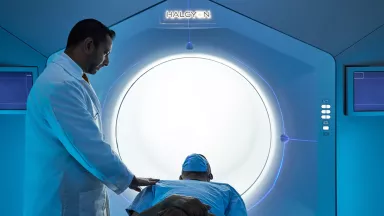
Nuestros investigadores se dedican con pasión a descubrir los últimos enfoques diagnósticos y tratamientos que pueden mejorar los resultados para los pacientes. En Montefiore Einstein Comprehensive Cancer Center, tendrá acceso a un equipo multidisciplinario de especialistas en cáncer. Juntos colaboran con especialistas en cuidados intensivos, especialistas en medicina nuclear, nutricionistas, patólogos, oncólogos psicosociales y orientadores en atención del cáncer torácico para brindarle la atención más avanzada. Encontrará la atención que necesita en nuestras instalaciones de vanguardia.
La investigación sobre el cáncer de pulmón que llevamos a cabo está impulsada por nuestros propios científicos, en colaboración con expertos del sector y grupos de investigación del National Cancer Institute. Nuestra amplia oferta de investigación le permite recibir novedosas terapias dirigidas e inmunoterapias para el cáncer de pulmón y de tórax que no están disponibles en otros lugares.
Al confiarnos su atención médica, recibirá un cuidado oncológico compasivo y personalizado que cumple con los más altos estándares de calidad y seguridad. El programa de cáncer de pulmón y tórax de nuestro centro oncológico es uno de los más completos del país.
Cuando necesite atención médica para el cáncer, confíe en nuestros proveedores, muy comprometidos con erradicar el cáncer y atender todas sus necesidades de salud.
El Montefiore Einstein Comprehensive Cancer Center, designado como centro integral del cáncer por el National Cancer Institute (NCI), apoya la misión y las normas del NCI. La siguiente información sobre los tipos de cáncer, prevención y tratamientos ha sido facilitada por el NCI.
Tratamiento del cáncer de pulmón de células pequeñas (PDQ®): versión para pacientes
Información general sobre el cáncer de pulmón de células pequeñas
Puntos clave
- El cáncer de pulmón de células pequeñas es un tipo de cáncer de rápido crecimiento que se forma en los tejidos del pulmón.
- Existen dos tipos principales de cáncer de pulmón de células pequeñas.
- Fumar es el principal factor de riesgo del cáncer de pulmón de células pequeñas.
- Entre los signos y síntomas del cáncer de pulmón de células pequeñas están la tos y la dificultad para respirar.
- Para diagnosticar y estadificar el cáncer de pulmón de células pequeñas se utilizan pruebas y procedimientos que examinan los pulmones en detalle.
- Una vez confirmado el diagnóstico de cáncer de pulmón de células pequeñas, se realizan estudios adicionales para determinar si el cáncer se ha diseminado dentro del pecho o a otras partes del cuerpo.
- Some people decide to get a second opinion.
- Certain factors affect prognosis (chance of recovery) and treatment options.
El cáncer de pulmón de células pequeñas es un tipo de cáncer de rápido crecimiento que se forma en los tejidos del pulmón.
Los pulmones son un par de órganos respiratorios en forma de cono ubicados en el pecho. Los pulmones llevan oxígeno al cuerpo cuando se inhala, y al exhalar, liberan dióxido de carbono, un producto de desecho de las células del cuerpo. Cada pulmón está dividido en secciones llamadas lóbulos: el pulmón izquierdo tiene dos lóbulos y el pulmón derecho, que es ligeramente más grande, tiene tres lóbulos. Una membrana delgada llamada pleura rodea los pulmones. Dos conductos llamados bronquios conectan la tráquea con los pulmones derecho e izquierdo, donde también puede formarse cáncer de pulmón. El interior de los pulmones está compuesto por diminutos sacos de aire llamados alvéolos y pequeños conductos conocidos como bronquiolos.

Anatomy of the respiratory system showing the trachea, the right and left lungs and their lobes, and the bronchi. The lymph nodes and the diaphragm are also shown. Oxygen is inhaled into the lungs and passes through the alveoli (the tiny air sacs at the end of the bronchioles) and into the bloodstream (see inset), where it travels to the tissues throughout the body.
Existen dos tipos de cáncer de pulmón: cáncer de pulmón de células pequeñas y cáncer de pulmón de células no pequeñas . El cáncer de pulmón de células pequeñas es menos común que el cáncer de pulmón de células no pequeñas.
Existen dos tipos principales de cáncer de pulmón de células pequeñas.
Las células cancerosas de cada tipo crecen y se propagan de maneras diferentes. Los tipos de cáncer de pulmón de células pequeñas reciben su nombre según los tipos de células que se encuentran en el cáncer y su apariencia al observarlas bajo un microscopio. Las células cancerosas de cada tipo crecen y se propagan de maneras diferentes:
- El carcinoma de células pequeñas (también llamado carcinoma de células pequeñas) es un tipo de cáncer de pulmón que puede crecer y propagarse rápidamente, lo que a menudo provoca que se extienda a otras partes del cuerpo en las primeras etapas de la enfermedad. Este es el tipo más común de cáncer de pulmón de células pequeñas.
- El carcinoma de células pequeñas combinado es un subtipo raro de cáncer de pulmón que presenta características tanto de cáncer de pulmón de células pequeñas como de cáncer de pulmón de células no pequeñas en el mismo tumor.
Fumar es el principal factor de riesgo del cáncer de pulmón de células pequeñas.
El cáncer de pulmón se debe a ciertos cambios en el funcionamiento de las células pulmonares, particularmente en su crecimiento y división anómala. Existen muchos factores de riesgo para el cáncer de pulmón, pero no todos lo causan directamente. En cambio, estos factores aumentan la probabilidad de daño al ADN celular, lo que puede derivar en cáncer de pulmón. Puede encontrar más información sobre cómo se desarrolla esta enfermedad en la sección ¿Qué es el cáncer?
Un factor de riesgo es cualquier elemento que incrementa la probabilidad de desarrollar una enfermedad. Algunos factores de riesgo del cáncer de pulmón, como el tabaquismo, se pueden modificar. Sin embargo, los factores de riesgo también abarcan aspectos que no se pueden cambiar, como la genética, la edad y los el historial familiar. Conocer los factores de riesgo del cáncer de pulmón puede ayudarle a realizar cambios que podrían disminuir el riesgo de desarrollarlo.
Fumar tabaco ahora o en el pasado es el factor de riesgo más importante para el cáncer de pulmón. Fumar cigarrillos, pipas o puros aumenta el riesgo de cáncer de pulmón. Cuanto antes se empieza a fumar, cuanto más se fuma y cuantos más años se fuma, mayor es el riesgo de cáncer de pulmón.
Otros factores de riesgo para el cáncer de pulmón incluyen:
- Estar expuesto al humo de tabaco
- Estar expuesto al asbesto, arsénico, cromo, berilio, níquel, hollín o alquitrán en el lugar de trabajo
- Estar expuesto a radiación de:
- Radioterapia en la mama o el tórax
- Radón en el hogar o en el lugar de trabajo
- Diagnóstico por imágenes como tomografías computarizadas
- Radiación de una bomba atómica
- Vivir en un lugar con contaminación atmosférica
- Tener un historial familiar de cáncer de pulmón
- Estar infectado con VIH
- Tomar suplementos de betacaroteno y ser un gran fumador
La edad avanzada es el principal factor de riesgo para la mayoría de los cánceres. La probabilidad de padecer cáncer aumenta con la edad.
Tener uno o más de estos factores de riesgo no significa necesariamente que vaya a tener cáncer de pulmón. Muchas personas con factores de riesgo nunca desarrollan cáncer de pulmón, mientras que otras sin factores de riesgo conocidos sí lo desarrollan. Hable con su médico si cree que puede tener un riesgo elevado.
Cuando fumar se combina con otros factores de riesgo, la probabilidad de desarrollar cáncer de pulmón se incrementa.
Entre los signos y síntomas del cáncer de pulmón de células pequeñas están la tos y la dificultad para respirar.
Estos y otros signos y síntomas pueden ser causados por un cáncer de pulmón de células pequeñas o por otras afecciones. Consulte a su médico si presenta:
- molestias o dolor en el pecho
- Tos que no desaparece o que empeora con el tiempo
- dificultad para respirar
- sibilancias
- sangre en el esputo (moco expectorado de los pulmones)
- ronquera
- dificultad para tragar
- Pérdida de apetito
- weight loss for no known reason
- Cansancio excesivo
- Hinchazón en el rostro y venas en el cuello
Para diagnosticar y estadificar el cáncer de pulmón de células pequeñas se utilizan pruebas y procedimientos que examinan los pulmones en detalle.
In addition to asking about your personal and family health history and doing a physical exam, your doctor may perform the following tests and procedures:
- Las pruebas de laboratorio son procedimientos médicos que analizan muestras de tejido, sangre, orina u otras sustancias del cuerpo. Estas pruebas ayudan a diagnosticar enfermedades, planificar y controlar tratamientos, o monitorear la enfermedad a lo largo del tiempo.
- Radiografía de tórax es un tipo de radiación que puede atravesar el cuerpo y generar imágenes de los órganos y huesos dentro del tórax.
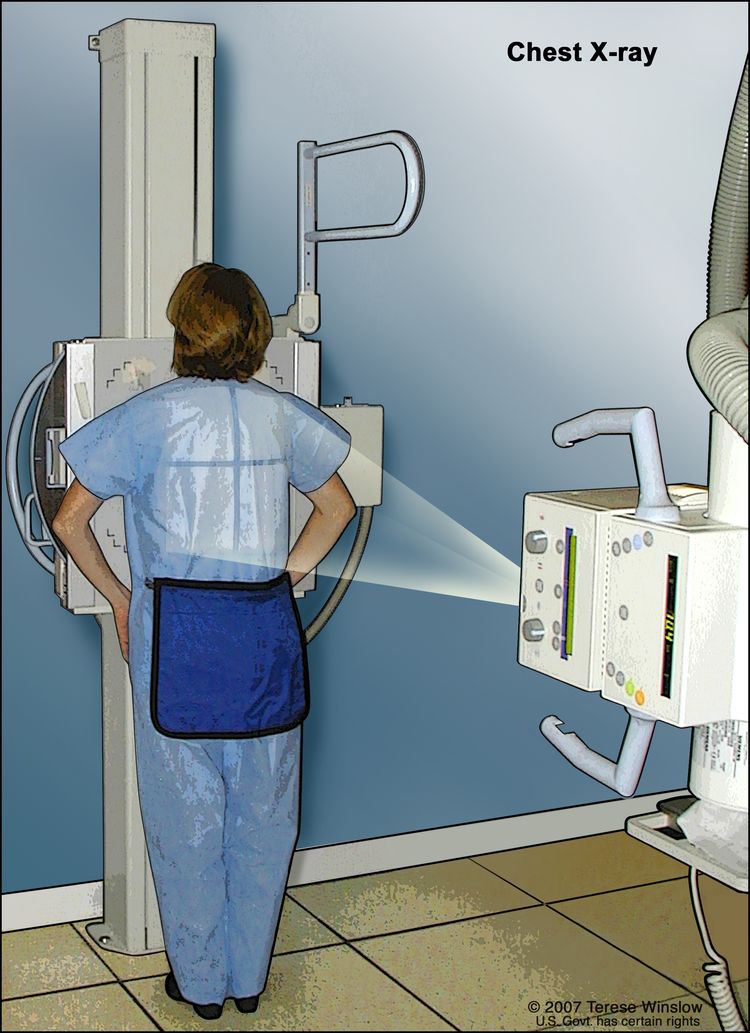
Una radiografía de tórax se utiliza para obtener imágenes de las estructuras y órganos dentro del tórax. Los rayos X atraviesan el cuerpo del paciente y se proyectan sobre una película o una computadora.
- La tomografía computarizada (TC) utiliza una computadora conectada a una máquina de rayos X para generar una serie de imágenes detalladas de las estructuras internas del cuerpo, como el cerebro, el tórax y el abdomen. Las imágenes se toman desde diferentes ángulos y se utilizan para crear vistas tridimensionales de tejidos y órganos. Para mejorar la visibilidad de los órganos y tejidos, se puede inyectar un tinte de contraste en una vena o ingerirlo. Este procedimiento también se conoce como tomografía axial computarizada o exploración por TAC. Más información sobre la tomografía computarizada (TC) y el cáncer.
- La citología del esputo utiliza un microscopio para detectar células cancerosas en el esputo (moco expectorado de los pulmones).
- Biopsy es la extracción de una muestra de células o tejido del tumor para que un patólogo pueda examinarla bajo el microscopio y detectar la presencia de cáncer. Las diferentes maneras de realizar una biopsia son:
- Biopsia de pulmón por aspiración con aguja fina (AAF) es la extracción de tejido o líquido del pulmón, utilizando una aguja fina. Una tomografía computarizada, ecografía, u otro procedimiento de imagen Se utiliza para detectar tejido o líquido anormal en el pulmón. Un pequeño incisión se puede hacer en la piel donde se inserta la aguja de la biopsia en el tejido o líquido anómalo. Se extrae una muestra con la aguja y se envía al laboratorio. A continuación, un patólogo examina la muestra con un microscopio para buscar células cancerosas. Después del procedimiento, se realiza una radiografía de tórax para asegurarse de que no haya fugas de aire del pulmón al tórax.
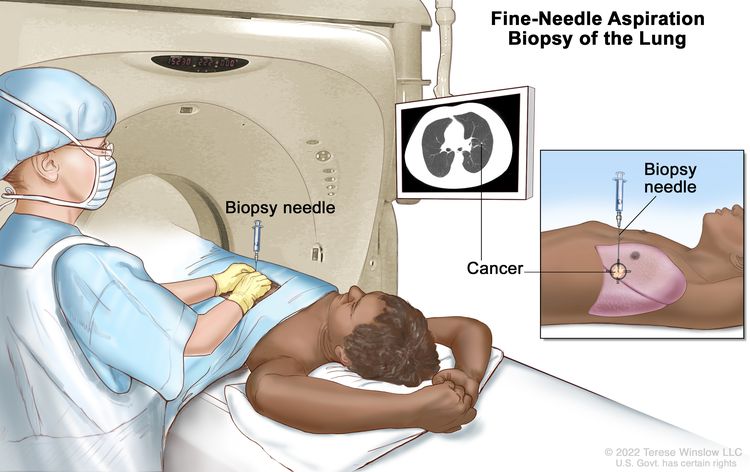
Biopsia por aspiración con aguja fina del pulmón. El paciente se recuesta sobre una mesa que se desliza a través de la máquina de tomografía computarizada (TC), la cual toma imágenes de rayos X del interior del cuerpo. Las imágenes de rayos X ayudan al médico a ver dónde se encuentra el tejido anómalo en el pulmón. Se inserta una aguja de biopsia a través de la pared torácica y en el área del tejido pulmonar anómalo. Se extrae un pequeño fragmento de tejido a través de la aguja y se examina con un microscopio para detectar signos de cáncer.
- Broncoscopia Es un procedimiento para examinar el interior de la tráquea y las vías respiratorias principales de los pulmones en busca de anomalías. Se introduce un broncoscopio por la nariz o la boca hasta la tráquea y los pulmones. El broncoscopio es un instrumento delgado, con forma de tubo, que cuenta con una luz y una lente para la visualización. También puede incluir un instrumento para extraer muestras de tejido, que se examinan al microscopio en busca de signos de cáncer.
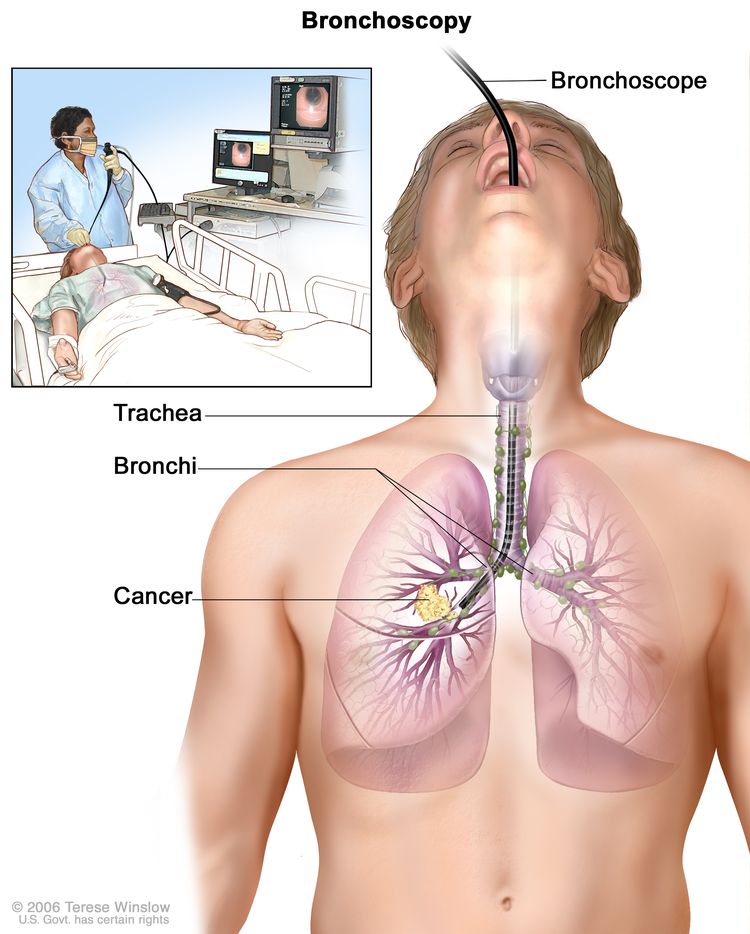
Broncoscopia. Se introduce un broncoscopio a través de la boca, la tráquea y los bronquios principales hasta el pulmón, con el objetivo de identificar áreas anómalas. El broncoscopio es un instrumento delgado en forma de tubo, con una luz y una lente para observar. En algunos casos, también cuenta con una herramienta de corte para la toma de muestras de tejido, que se analizan con microscopio en busca de posibles signos de enfermedad.
- La toracoscopia es un procedimiento quirúrgico que se realiza para examinar los órganos del interior del tórax y detectar áreas anómalas. Se realiza una incisión (corte) entre dos costillas y se inserta un toracoscopio en el tórax. Un toracoscopio es un instrumento delgado en forma de tubo con una luz y una lente para observar. También puede tener una herramienta para extraer muestras de tejido o ganglios linfáticos, que se examinan bajo un microscopio para detectar signos de cáncer. En algunos casos, este procedimiento se utiliza para extirpar parte del esófago o el pulmón. Si no se puede llegar a ciertos tejidos, órganos o ganglios linfáticos, se puede realizar una toracotomía. En este procedimiento, se realiza una incisión más grande entre las costillas y se abre el tórax.
- La toracocentesis consiste en la extracción de líquido del espacio entre la membrana que recubre el tórax y el pulmón, mediante una aguja. Un patólogo examina el líquido al microscopio para buscar células cancerosas.
- La mediastinoscopia es un procedimiento quirúrgico para examinar los órganos, tejidos y ganglios linfáticos entre los pulmones en busca de áreas anómalas. Se realiza una incisión (corte) en la parte superior del esternón y se inserta un mediastinoscopio en el pecho. Un mediastinoscopio es un instrumento delgado, similar a un tubo, con una luz y una lente para observar. También puede tener una herramienta para extraer muestras de tejido o ganglios linfáticos, que se examinan bajo un microscopio para detectar signos de cáncer.
- Biopsia de pulmón por aspiración con aguja fina (AAF) es la extracción de tejido o líquido del pulmón, utilizando una aguja fina. Una tomografía computarizada, ecografía, u otro procedimiento de imagen Se utiliza para detectar tejido o líquido anormal en el pulmón. Un pequeño incisión se puede hacer en la piel donde se inserta la aguja de la biopsia en el tejido o líquido anómalo. Se extrae una muestra con la aguja y se envía al laboratorio. A continuación, un patólogo examina la muestra con un microscopio para buscar células cancerosas. Después del procedimiento, se realiza una radiografía de tórax para asegurarse de que no haya fugas de aire del pulmón al tórax.
- La microscopía óptica y electrónica es una prueba de laboratorio en la que se observan las células de una muestra de tejido bajo microscopios convencionales y de alta potencia para detectar ciertos cambios en las células.
- La inmunohistoquímica utiliza anticuerpos para detectar determinados antígenos (marcadores) en una muestra de tejido de un paciente. Los anticuerpos suelen estar unidos a una enzima o a un colorante fluorescente. Una vez que los anticuerpos se unen a un antígeno específico en la muestra de tejido, la enzima o el colorante se activan y el antígeno se puede observar con un microscopio. Este tipo de prueba se utiliza para ayudar a diagnosticar el cáncer y para ayudar a diferenciar un tipo de cáncer de otro.
Una vez confirmado el diagnóstico de cáncer de pulmón de células pequeñas, se realizan estudios adicionales para determinar si el cáncer se ha diseminado dentro del pecho o a otras partes del cuerpo.
El proceso que se utiliza para determinar si el cáncer se ha diseminado dentro del tórax o a otras partes del cuerpo se denomina estadificación . La información obtenida durante la estadificación determina la etapa de la enfermedad. Es importante conocer la etapa para planificar el tratamiento. Algunas de las pruebas que se utilizan para diagnosticar el cáncer de pulmón de células pequeñas también se utilizan para estadificar la enfermedad.
Las pruebas de imagen que se pueden utilizar en el proceso de estadificación incluyen:
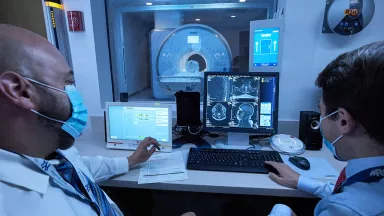
- La resonancia magnética (RM) utiliza un imán, ondas de radio y una computadora para generar imágenes detalladas de las estructuras internas del cuerpo, como el cerebro. Este procedimiento también se denomina resonancia magnética nuclear (RMN).
- La tomografía por emisión de positrones (PET) utiliza una pequeña cantidad de glucosa radiactiva (azúcar) que se inyecta en una vena. Luego, un escáner gira alrededor del cuerpo para generar imágenes computarizadas detalladas de las áreas internas donde se absorbe la glucosa. Dado que las células cancerosas suelen absorber más glucosa que las células normales, las imágenes pueden utilizarse para detectar células cancerosas en el cuerpo. Cuando este procedimiento se realiza simultáneamente con una tomografía computarizada (TC), se denomina PET-TC.
- La gammagrafía ósea detecta la presencia de células que se dividen rápidamente, como las cancerosas, en el hueso. Se inyecta una cantidad muy pequeña de material radiactivo en una vena y circula por el torrente sanguíneo. El material radiactivo se acumula en las zonas de los huesos con cáncer y se detecta mediante un escáner.
Some people decide to get a second opinion.
Es posible que desee obtener una segunda opinión para confirmar su diagnóstico de cáncer y su plan de tratamiento. Si busca una segunda opinión, deberá obtener los resultados de las pruebas médicas y los informes del primer médico para compartirlos con el segundo. Este último revisará el informe patológico, las diapositivas y las exploraciones. Puede que esté de acuerdo con el primero, sugiera cambios u otro enfoque de tratamiento, o le dé más información sobre su cáncer.
Para obtener más información sobre cómo elegir a un oncólogo y tener una segunda opinión, consulte Cómo encontrar atención médica para el cáncer. Puede comunicarse con el Servicio de Información sobre el Cáncer del NCI por chat, correo electrónico o teléfono (en inglés y español) para obtener ayuda para encontrar un doctor, un hospital o para una segunda opinión. Si tiene alguna pregunta durante sus citas, visite la sección Preguntas para su médico sobre el cáncer.
Certain factors affect prognosis (chance of recovery) and treatment options.
El pronóstico y las opciones de tratamiento dependen de:
- la etapa del cáncer (si se encuentra solo en la cavidad torácica o se ha extendido a otras partes del cuerpo)
- La edad, el sexo y la salud general del paciente
Para ciertos pacientes, el pronóstico también depende de si reciben tratamiento con quimioterapia o radioterapia.
Para la mayoría de las personas con cáncer de pulmón de células pequeñas, los tratamientos actuales no curan la enfermedad. Si se le diagnostica cáncer de pulmón, puede considerar participar en alguno de los numerosos ensayos clínicos que se realizan para mejorar el tratamiento. Se están llevando a cabo ensayos clínicos en la mayor parte del país para pacientes con cáncer de pulmón de células pequeñas en todas las etapas. Puede encontrar información sobre los ensayos clínicos en curso en el sitio web del NCI .
Estadios del cáncer de pulmón de células pequeñas
Puntos clave
- Los siguientes estadios se utilizan para clasificar el cáncer de pulmón de células pequeñas:
- Cáncer de pulmón de células pequeñas en estadio limitado
- Cáncer de pulmón de células pequeñas en estadio avanzado
- El cáncer de pulmón de células pequeñas puede recidivar (regresar) después de haber sido tratado.
La etapa del cáncer describe su extensión en el cuerpo, como el tamaño del tumor, si se ha diseminado y hasta dónde se ha propagado desde su lugar de origen. Es importante conocer la etapa del cáncer de pulmón de células pequeñas para planificar el mejor tratamiento.
El cáncer de pulmón de células pequeñas generalmente se clasifica en dos etapas debido a su tendencia a propagarse precozmente.
Los siguientes estadios se utilizan para clasificar el cáncer de pulmón de células pequeñas:
Cáncer de pulmón de células pequeñas en estadio limitado
En la etapa limitada, el cáncer se encuentra en el pulmón donde se originó y puede haberse extendido al área entre los pulmones o a los ganglios linfáticos por encima de la clavícula .
Cáncer de pulmón de células pequeñas en estadio avanzado
En la etapa avanzada, el cáncer se ha extendido más allá del pulmón, del área entre los pulmones o de los ganglios linfáticos situados por encima de la clavícula, a otras partes del cuerpo.
El cáncer de pulmón de células pequeñas puede recidivar (regresar) después de haber sido tratado.
El cáncer recurrente es aquel que reaparece después de haber sido tratado. Si el cáncer de pulmón de células pequeñas reaparece, puede hacerlo en el tórax, el sistema nervioso central u otras partes del cuerpo. Se realizarán pruebas para determinar la ubicación de la recidiva. El tipo de tratamiento para el cáncer de pulmón de células pequeñas dependerá de la localización de la recidiva.
Learn more in Recurrent Cancer: When Cancer Comes Back.
Treatment Option Overview
Puntos clave
- Existen diferentes tipos de tratamiento para pacientes con cáncer de pulmón de células pequeñas.
- The following types of treatment are used:
- Cirugía
- Quimioterapia
- Radioterapia
- Inmunoterapia
- Terapia con láser
- Colocación de stent endoscópico
- New types of treatment are being tested in clinical trials.
- El tratamiento para el cáncer de pulmón de células pequeñas puede causar efectos secundarios.
- Es posible que se necesiten cuidados de seguimiento.
Existen diferentes tipos de tratamiento para pacientes con cáncer de pulmón de células pequeñas.
Existen diferentes tipos de tratamientos para personas con cáncer de pulmón de células pequeñas. Usted y su equipo de atención oncológica trabajarán juntos para definir su plan de tratamiento, que puede incluir más de un tipo de tratamiento. Se considerarán muchos factores, como la etapa del cáncer, su estado de salud general y sus preferencias. Su plan incluirá información sobre su cáncer, los objetivos del tratamiento, las opciones de tratamiento disponibles, los posibles efectos secundarios y la duración prevista del tratamiento.
Hablar con su equipo de atención médica del cáncer antes de iniciar el tratamiento puede ser de gran ayuda. Es recomendable conocer qué debe hacer antes de empezar, cómo se sentirá durante el proceso y qué tipo de apoyo necesitará. Para obtener más información, consulte Preguntas para el médico sobre el tratamiento.
The following types of treatment are used:
Cirugía
La cirugía puede utilizarse si el cáncer se localiza únicamente en un pulmón y en los ganglios linfáticos cercanos. Dado que este tipo de cáncer de pulmón suele afectar a ambos pulmones, la cirugía por sí sola no se utiliza con frecuencia. Durante la cirugía, el médico también extirpará los ganglios linfáticos para determinar si contienen células cancerosas. En ocasiones, la cirugía puede utilizarse para extraer una muestra de tejido pulmonar y así determinar el tipo exacto de cáncer de pulmón.
After the doctor removes all the cancer that can be seen at the time of the surgery, some patients may be given chemotherapy or radiation therapy after surgery to kill any cancer cells that are left. Treatment given after the surgery, to lower the risk that the cancer will come back, is called adjuvant therapy.
Quimioterapia
La quimioterapia (también llamada quimio) utiliza fármacos para detener el crecimiento de las células cancerosas, ya sea matándolas o impidiendo que se dividan.
La quimioterapia para el cáncer de pulmón de células pequeñas suele ser sistémica, es decir, se inyecta en una vena o se administra por vía oral. De esta forma, los fármacos entran en el torrente sanguíneo y llegan a las células cancerosas de todo el cuerpo.
Los fármacos de quimioterapia utilizados para tratar el cáncer de pulmón de células pequeñas pueden incluir:
Se pueden utilizar combinaciones de estos fármacos de quimioterapia. También se pueden utilizar otros fármacos de quimioterapia no mencionados aquí.
La quimioterapia también puede combinarse con otros tipos de tratamiento. Por ejemplo, puede combinarse con radioterapia o fármacos de inmunoterapia .
Para obtener más información sobre cómo funciona la quimioterapia, cómo se administra, los efectos secundarios comunes y mucho más, visite Quimioterapia para tratar el cáncer y Quimioterapia y usted: Apoyo para personas con cáncer .
Radioterapia
La radioterapia es un tratamiento contra el cáncer que utiliza rayos X de alta energía u otros tipos de radiación para destruir las células cancerosas o impedir su crecimiento. La radioterapia externa utiliza un equipo externo al cuerpo para dirigir la radiación hacia la zona afectada por el cáncer. Se utiliza para tratar el cáncer de pulmón de células pequeñas y también puede emplearse como terapia paliativa para aliviar los síntomas y mejorar la calidad de vida . Asimismo, puede administrarse radioterapia cerebral para reducir el riesgo de metástasis en el cerebro.
Learn more about External Beam Radiation Therapy for Cancer and Radiation Therapy Side Effects.
Inmunoterapia
Immunotherapy helps a person's immune system fight cancer. Your doctor may suggest biomarker tests to help predict your response to certain immunotherapy drugs. Learn more about Biomarker Testing for Cancer Treatment.
Los fármacos de inmunoterapia utilizados para tratar el cáncer de pulmón de células pequeñas incluyen:
Obtenga más información sobre la inmunoterapia para el tratamiento del cáncer .
Terapia con láser
La terapia láser es un tratamiento contra el cáncer que utiliza un rayo láser (un haz estrecho de luz intensa) para destruir las células cancerosas.
Colocación de stent endoscópico
Un endoscopio es un instrumento delgado con forma de tubo que se utiliza para observar los tejidos dentro del cuerpo. Cuenta con una luz y una lente para la visualización y puede utilizarse para colocar un stent en una estructura corporal y mantenerla abierta. Un stent endoscópico puede utilizarse para abrir una vía respiratoria obstruida por tejido anormal.
New types of treatment are being tested in clinical trials.
For some people, joining a clinical trial may be an option. There are different types of clinical trials for people with cancer. For example, a treatment trial tests new treatments or new ways of using current treatments. Supportive care and palliative care trials look at ways to improve quality of life, especially for those who have side effects from cancer and its treatment.
You can use the clinical trial search to find NCI-supported cancer clinical trials accepting participants. The search allows you to filter trials based on the type of cancer, your age, and where the trials are being done. Clinical trials supported by other organizations can be found on the ClinicalTrials.gov website.
Para más información sobre ensayos clínicos, cómo encontrarlos y participar en uno de ellos, visite la web Información sobre estudios clínicos para pacientes y cuidadores.
El tratamiento para el cáncer de pulmón de células pequeñas puede causar efectos secundarios.
For information about side effects caused by treatment for cancer, visit our Side Effects page.
Es posible que se necesiten cuidados de seguimiento.
A medida que avanza el tratamiento, se le realizarán pruebas o controles de seguimiento. Es posible que se repitan algunas pruebas para diagnosticar o estadificar el cáncer con el fin de evaluar cómo está funcionando el tratamiento. Las decisiones sobre si continuar, modificar o suspender el tratamiento pueden basarse en los resultados de estas pruebas.
Algunas pruebas seguirán realizándose de manera periódica después de terminar el tratamiento. Los resultados pueden indicar si su afección ha cambiado o si el cáncer ha redicivado (regresado).
Tratamiento del cáncer de pulmón de células pequeñas en estadio limitado
El tratamiento del cáncer de pulmón de células pequeñas en estadio limitado puede consistir en:
- Quimioterapia combinada y radioterapia en el tórax
- Inmunoterapia (durvalumab) después de la quimiorradioterapia
- Quimioterapia combinada sola, para pacientes que no pueden recibir radioterapia
- Cirugía seguida de quimioterapia
- Cirugía seguida de quimiorradioterapia
- Radioterapia dirigida al cerebro, para pacientes que han tenido una respuesta completa a la quimioterapia, con el objetivo de prevenir la propagación del cáncer a esa zona.
Learn more about these treatments in the Treatment Option Overview.
Puede utilizar la búsqueda de ensayos clínicos y encontrar ensayos clínicos sobre cáncer patrocinados por el NCI que acepten participantes. La búsqueda le permite filtrar los ensayos según el tipo de cáncer, la edad y el lugar donde se realizan los ensayos. También encontrará información general sobre los ensayos clínicos.
Tratamiento del cáncer de pulmón de células pequeñas en estadio avanzado
El tratamiento del cáncer de pulmón de células pequeñas en estadio avanzado puede incluir:
- inmunoterapia ( atezolizumab o durvalumab ) y quimioterapia combinada
- Quimioterapia combinada
- radioterapia en el cerebro, la columna vertebral, los huesos u otras partes del cuerpo donde el cáncer se ha diseminado, como terapia paliativa para aliviar los síntomas y mejorar la calidad de vida.
- Radioterapia en el tórax si el cáncer respondía a la quimioterapia.
- Radioterapia cerebral tras una respuesta completa a la quimioterapia, para prevenir la propagación del cáncer al cerebro.
Learn more about these treatments in the Treatment Option Overview.
Puede utilizar la búsqueda de ensayos clínicos y encontrar ensayos clínicos sobre cáncer patrocinados por el NCI que acepten participantes. La búsqueda le permite filtrar los ensayos según el tipo de cáncer, la edad y el lugar donde se realizan los ensayos. También encontrará información general sobre los ensayos clínicos.
Tratamiento del cáncer de pulmón de células pequeñas recurrente
El tratamiento del cáncer de pulmón de células pequeñas recurrente puede incluir:
- Quimioterapia
- Inmunoterapia
- La radioterapia como terapia paliativa para aliviar los síntomas y mejorar la calidad de vida.
- terapia láser, colocación de stent para mantener las vías respiratorias abiertas y/o radioterapia interna como terapia paliativa para aliviar los síntomas y mejorar la calidad de vida.
Learn more about these treatments in the Treatment Option Overview.
Puede utilizar la búsqueda de ensayos clínicos y encontrar ensayos clínicos sobre cáncer patrocinados por el NCI que acepten participantes. La búsqueda le permite filtrar los ensayos según el tipo de cáncer, la edad y el lugar donde se realizan los ensayos. También encontrará información general sobre los ensayos clínicos.
Más información sobre el cáncer de pulmón de células pequeñas
Para obtener más información del National Cancer Institute sobre el cáncer de pulmón de células pequeñas, visite:
- Página principal sobre el cáncer de pulmón
- Lung Cancer Prevention
- Detección del cáncer de pulmón
- Medicamentos aprobados para el cáncer de pulmón de células pequeñas
- Tabaco (incluye ayuda para dejarlo)
- Consumo de cigarrillo: riesgos para la salud y cómo dejar de fumar
- Humo de tabaco en el ambiente y el cáncer
For general cancer information and other resources from the National Cancer Institute, visit:
Sobre este resumen del PDQ
Acerca del PDQ
El Physician Data Query (PDQ) es la base de datos integral sobre el cáncer del National Cancer Institute (NCI). La base de datos del PDQ contiene resúmenes con la última información publicada sobre prevención, detección, genética, tratamiento, atención médica de apoyo y medicina complementaria y alternativa relacionada con el cáncer. La mayoría de los resúmenes se presentan en dos versiones. Las versiones para profesionales de la salud contienen información detallada escrita en lenguaje técnico. Las versiones para pacientes están escritas en un lenguaje fácil de entender y no tan técnico. Ambas versiones contienen información precisa y actualizada sobre el cáncer. La mayoría de las versiones también están disponibles en español.
El PDQ es un servicio del NCI. El NCI es parte de los Institutos Nacionales de Salud (NIH), que son el centro de investigación biomédica del Gobierno federal. Los resúmenes del PDQ se basan en una revisión independiente de la literatura médica. No son declaraciones de políticas del NCI ni de los NIH.
Propósito de este resumen
Este resumen del PDQ sobre el cáncer contiene información actualizada del tratamiento del cáncer de pulmón de células pequeñas. El propósito es informar y ayudar a los pacientes, sus familiares y cuidadores. No da pautas ni recomendaciones formales para tomar decisiones relacionadas con la atención médica.
Revisores y actualizaciones
Los comités editoriales escriben los resúmenes de información sobre el cáncer del PDQ y los mantienen actualizados. Estos comités están formados por equipos de especialistas en el tratamiento del cáncer y otras especialidades relacionadas con esta enfermedad. Los resúmenes se revisan periódicamente y se modifican cuando hay información nueva. La fecha de actualización al pie de cada resumen indica cuándo se realizó el cambio más reciente.
The information in this patient summary was taken from the health professional version, which is reviewed regularly and updated as needed, by the PDQ Adult Treatment Editorial Board.
Información sobre ensayos clínicos
Un ensayo clínico es un estudio para responder a una pregunta científica como, por ejemplo, si un tratamiento es mejor que otro. Los ensayos se basan en estudios anteriores y en lo aprendido en el laboratorio. Cada ensayo responde a determinadas preguntas científicas que permiten encontrar nuevas y mejores formas de ayudar a los pacientes con cáncer. Durante los ensayos clínicos de tratamiento, se recopila información sobre los efectos de un nuevo tratamiento y su eficacia. Si un ensayo clínico demuestra que un nuevo tratamiento es mejor que uno que se utiliza actualmente, el nuevo tratamiento puede convertirse en “estándar”. Los pacientes pueden valorar la posibilidad de participar en un ensayo clínico. Algunos ensayos clínicos solo están abiertos a pacientes que no hayan iniciado el tratamiento.
Los ensayos clínicos se pueden encontrar en línea en el sitio web del NCI. Para obtener más información, llame al Servicio de Información sobre el Cáncer (CIS, por sus siglas en inglés), el centro de contacto del NCI, al 1-800-4-CANCER (1-800-422-6237).
Permiso de uso de este resumen
Physician Data Query (PDQ) es una marca registrada. Se autoriza el libre uso del contenido de los documentos del PDQ como texto. Sin embargo, no se podrá identificar como un resumen de información sobre cáncer del PDQ del NCI, salvo que se reproduzca en su totalidad y se actualice con regularidad. Por otra parte, se permite que los autores incluyan una oración como “en el resumen del PDQ del NCI sobre la prevención del cáncer de mama se describen, de manera concisa, los siguientes riesgos: [incluir fragmento del resumen]”.
La forma recomendada para citar este resumen del PDQ es:
Comité editorial del PDQ® sobre el tratamiento para adultos. Tratamiento del cáncer de pulmón de células pequeñas (PDQ). Bethesda, MD: National Cancer Institute. Actualizado el [DD/MM/AAAA].
Las imágenes de este resumen se utilizan con el permiso del autor, artista y/o editorial para uso exclusivo en los resúmenes del PDQ. Si desea usar una imagen de un resumen del PDQ sin incluir el resumen completo, debe obtener autorización del propietario. El National Cancer Institute no puede otorgar dicho permiso. Para obtener más información sobre el uso de las imágenes de este resumen o de otras ilustraciones relacionadas con el cáncer, consulte Visuals Online, una colección de más de 3,000 imágenes científicas.
Descargo de responsabilidad
La información de estos resúmenes no debe utilizarse para tomar decisiones sobre reembolsos de seguros. Puede encontrar más información sobre la cobertura de seguros en Cancer.gov en el sitio Manejo de la atención del cáncer.
Contáctenos
Puede encontrar más información sobre cómo contactarnos o recibir ayuda en el sitio web Cancer.gov en la página Comuníquese con el NCI. También puede enviar sus preguntas a Cancer.gov en el apartado Escríbanos del sitio web.
Actualizado:
URL de origen: https://www.cancer.gov/node/4052/syndication
Agencia de origen: National Cancer Institute (NCI)
Fecha de captura: 14/09/2013 09:02:00.0