


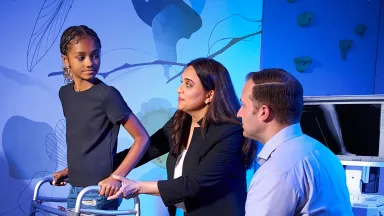


What Is Cerebral Palsy?
Cerebral palsy (CP) is a type of developmental disorder. Developmental disorders (or developmental disabilities) are a group of conditions and impairments in physical, learning, language or behavior that affect daily life. These disorders are primarily diagnosed in children but present before the age of 22.
Cerebral palsy refers to a group of neurological disorders that appear in infancy or early childhood and permanently affect body movement and muscle coordination. Cerebral refers to the brain, while palsy refers to the loss or impairment of motor function.
In some cases, the areas of the brain involved in muscle movement do not develop as expected during fetal growth. In others, brain damage results from injury before, during or after birth. Regardless, the damage is not reversible, and the disabilities that result are permanent.
CP is the leading cause of childhood disabilities in the U.S., but it doesn’t always cause profound disabilities. Someone with mild CP may not need any assistance or may have slight problems, such as difficulty walking, while a person with severe CP might need special equipment or lifelong care. The disorder isn’t progressive, meaning it doesn’t get worse over time, and some symptoms may change as the child gets older.
Types of Cerebral Palsy
Doctors classify CP according to the primary type of movement disorder involved. Depending on which areas of the brain are affected, one or more of the following movement disorders can occur:
- Stiff muscles (spasticity)
- Uncontrollable movements (dyskinesia)
- Poor balance and coordination (ataxia)
There are four main types of CP:
- Spastic cerebral palsy: The most common type of CP is spastic CP. Spastic CP affects about 80% of people with CP. People with spastic CP have increased muscle tone meaning their muscles are stiff and, as a result, their movements can be awkward. Spastic CP usually is described by what parts of the body are affected:
- Spastic diplegia/diparesis: In this type of CP, muscle stiffness is mainly in the legs, with the arms less affected or not affected at all. People with spastic diplegia might have difficulty walking because tight hip and leg muscles cause their legs to pull together, turn inward and cross at the knees (also known as scissoring).
- Spastic hemiplegia/hemiparesis: This type of CP affects only one side of a person’s body; usually, the arm is more affected than the leg.
- Spastic quadriplegia/quadriparesis: Spastic quadriplegia is the most severe form of spastic CP and affects all four limbs, the trunk and the face. People with spastic quadriparesis usually cannot walk and often have other developmental disabilities such as intellectual disability, seizures or problems with vision, hearing or speech.
- Dyskinetic cerebral palsy: This category also includes athetoid, choreoathetoid and dystonic cerebral palsies. People with dyskinetic CP have problems controlling the movement of their hands, arms, feet and legs, making it challenging to sit and walk. The uncontrollable movements can be slow and writhing or rapid and jerky. Sometimes the face and tongue are affected, and the person has a hard time sucking, swallowing and talking. A person with dyskinetic CP has muscle tone that can change (varying from too tight to too loose) not only from day to day but even during a single day.
- Ataxic cerebral palsy: People with ataxic CP have problems with balance and coordination. They might be unsteady when they walk, have difficulty with quick movements or movements that require a lot of control, like writing, or have trouble controlling their hands or arms when they reach for something.
- Mixed cerebral palsy: Some people have symptoms of more than one type of CP. The most common type of mixed CP is spastic-dyskinetic CP.
Causes of Cerebral Palsy
Cerebral palsy (CP) is caused by abnormal development of part of the brain or by damage to parts of the brain that control movement and maintain posture and balance. This damage can occur before, during or shortly after birth.
The majority of people with CP have congenital cerebral palsy (they were born with it), although it may not be detected until months or years later. Possible causes of congenital CP include genetic abnormalities, congenital brain malformations, maternal infections or fevers, or fetal injury.
A small number of individuals have acquired cerebral palsy, which means the disorder begins after birth. Some causes of acquired cerebral palsy include brain damage early in life, brain infections, problems with blood flow to the brain or head injury. In many cases, the cause of cerebral palsy is unknown.
The following types of brain damage may cause characteristic symptoms of cerebral palsy:
- Damage to the brain’s white matter (periventricular leukomalacia–PVL): White matter is responsible for transmitting signals inside the brain and to the rest of the body. Damage from PVL creates tiny holes in the white matter of an infant’s brain. Researchers have found that the developing fetal brain is vulnerable between 26 and 34 weeks of fetal development in the womb.
- Abnormal development of the brain (cerebral dysgenesis): Any interruption of brain growth during fetal development can cause brain malformations. Mutations in the genes that control brain development during this early period can keep the brain from developing. Infections, fevers, trauma or other conditions that cause unhealthy conditions in the womb also put an unborn baby’s nervous system at risk.
- Bleeding in the brain (intracranial hemorrhage): Bleeding inside the brain from blocked or broken blood vessels is commonly caused by fetal stroke. Babies can suffer a stroke while still in the womb because of blood clots in the placenta that block blood flow in the brain. Malformed or weak blood vessels in the brain or blood-clotting abnormalities cause other types of fetal stroke. Maternal high blood pressure (hypertension) during pregnancy and infection has also been shown to increase the risk of fetal stroke.
- Severe lack of oxygen in the brain: Inadequate supply of oxygen to the brain (asphyxia) can occur in a baby during pregnancy or delivery and has been linked to some cases of CP.
Risk Factors for Cerebral Palsy
Cerebral palsy is caused by abnormal development of part of the brain or damage to the parts of the brain that control movement. This damage can occur before, during or shortly after birth.
Most people with CP have the congenital form (they were born with it), although it may not be detected until months or years later. Possible causes of congenital CP include genetic abnormalities, congenital brain malformations, maternal infections or fevers, or fetal injury.
A small number of individuals have acquired cerebral palsy, which means the disorder began after birth. Some causes of acquired cerebral palsy include brain damage early in life, brain infections, problems with blood flow to the brain, or head injury. In many cases, the cause of cerebral palsy is unknown.
Some medical conditions or events can happen during pregnancy and delivery that may increase a baby’s risk of being born with CP. These risks include:
- Low birthweight and premature birth: Premature babies (born less than 37 weeks into pregnancy) and babies weighing less than five pounds, eight ounces at birth have a much higher risk of developing cerebral palsy. Tiny babies born at very early gestational ages are especially at risk.
- Multiple births: Twins, triplets and other multiple births, even those born at term, are linked to an increased risk of CP. The death of a baby’s twin or triplet before birth further increases the risk.
- Infections during pregnancy: Toxoplasmosis, rubella (German measles), cytomegalovirus, Zika virus, and herpes can infect the womb and placenta. The infection can trigger inflammation, damaging an unborn baby’s developing nervous system. Maternal fever during pregnancy or delivery can also set off an inflammatory response.
- Exposure to toxic substances: Female parents who have been exposed to toxic substances during pregnancy, such as methyl mercury, are at a heightened risk of having a baby with CP.
- Conditions such as thyroid abnormalities, intellectual disability, excess protein in the urine, or seizures: Female parents with these conditions are at heightened risk of having a baby with CP.
There are also medical conditions during labor and delivery and immediately after delivery that act as warning signs for an increased risk of CP. However, most of these children will not develop CP. Warning signs include:
- Breech presentation: Babies with cerebral palsy are more likely to be in a breech position (feet first) instead of headfirst at the start of labor.
- Complicated labor and delivery: A baby who has vascular or respiratory problems during labor and delivery may already have brain damage.
- Small for gestational age: Babies born at a small size for their gestational age are at risk for CP.
- Jaundice: More than 50% of newborns develop yellowing of the skin or whites of the eyes (jaundice) after birth when a substance typically found in bile builds up faster than the liver can break it down and pass it from the body. Severe, prolonged, untreated jaundice can cause deafness and CP.
- Seizures: An infant who has seizures faces a higher risk of being diagnosed later in childhood with CP.
Screening for & Preventing Cerebral Palsy
Cerebral palsy related to genetic abnormalities cannot be prevented, but some risk factors for congenital cerebral palsy can be managed or avoided. For example, rubella (German measles) can be prevented if female parents are vaccinated against the disease before becoming pregnant. Acquired cerebral palsy, often due to head injury, can be prevented using common safety tactics, such as car seats for infants and toddlers.
The first screening method is developmental monitoring (also called surveillance), which involves tracking a child’s growth and development over time. If any concerns about the child’s development are raised during monitoring, a second test—a developmental screening— should be administered as soon as possible.
A developmental screening is a short test to determine whether the child has specific developmental delays, such as motor or movement delays. If the screening test results cause concern, the doctor will refer the child for developmental and medical evaluations.
Developmental and medical evaluations are the final method of screening children for cerebral palsy. A developmental evaluation aims to diagnose the specific type of disorder affecting the child.
Parents can prevent their children from developing cerebral palsy by ensuring their children are vaccinated against all common infections. Additionally, it’s essential to avoid damage from common accidents, such as by using the proper car seat and ensuring that it’s installed correctly, using a crib with a bed rail and refraining from placing children on high countertops without supervision.
Signs & Symptoms of Cerebral Palsy
All people with CP have problems with movement and posture. However, the symptoms of CP differ in type and severity from one person to the next, depending on which parts of the brain have been injured, and may change over time.
Children with CP exhibit a wide variety of symptoms, including:
- Delays in reaching motor skill milestones
- Difficulty with precise movements such as writing or buttoning a shirt
- Lack of muscle coordination when performing voluntary movements (ataxia)
- Shaking (tremor) or random involuntary movements
- Stiff or tight muscles and exaggerated reflexes (spasticity)
- Walking on the toes, a crouched gait or a “scissored” gait
- Weakness in one or both arms or legs
- Variations in muscle tone, either too stiff or too floppy
Related conditions:
- Intellectual disability: Approximately 30–50% of individuals with CP have an intellectual disability.
- Seizure disorder: As many as half of all children with CP have one or more seizures. Children with both cerebral palsy and epilepsy are more likely to have intellectual disability.
- Delayed growth and development: Children with moderate to severe CP often lag in growth and development. The muscles and limbs affected by CP tend to be smaller.
- Spinal deformities and osteoarthritis: Scoliosis, kyphosis and lordosis are associated with CP. Pressure on and misalignment of the joints may result in pain, cartilage breakdown, and bone enlargement (osteoporosis).
- Impaired vision: Many children with CP have strabismus, commonly called crossed eyes. Left untreated, strabismus can lead to poor vision and interfere with the ability to judge distance. Some children with CP have difficulty understanding and organizing visual information. Other children may have poor vision or blindness in one or both eyes.
- Hearing loss: Impaired hearing is more common among those with CP than in the general population. Some children have partial or complete hearing loss, mainly due to jaundice or lack of oxygen to the developing brain.
- Speech and language disorders: More than 75% of people with CP have speech and language disorders, such as difficulty forming words and speaking clearly.
- Excessive drooling: Some individuals with CP drool because they lack control of the throat, mouth and tongue muscles.
- Incontinence: A possible complication of CP is incontinence, caused by poor control of the bladder muscles.
- Difficulty with sensations and perceptions: Some individuals with CP experience pain or have difficulty feeling simple sensations, such as touch.
- Learning difficulties: Children with CP may have difficulty processing particular spatial and auditory information.
- Infections and long-term illnesses: Many adults with CP have a higher risk of heart and lung disease and pneumonia.
- Contractures: Muscles can become painfully fixed into positions, called contractures, which can increase muscle spasticity and joint deformities in people with CP.
- Malnutrition: Swallowing, sucking or feeding problems can make it difficult for many individuals with CP, particularly infants, to get proper nutrition and gain or maintain weight.
- Dental problems: Many children with CP are at risk of developing gum disease and cavities because of poor dental hygiene.
- Inactivity: Many children with CP cannot participate in sports and other activities at a sufficient intensity level to develop and maintain strength and fitness. Inactive adults with CP often exhibit increased disease severity and reduced overall health and well-being.
- Bone health: Bone mineral density is significantly lower in individuals with CP, which puts them at risk of bone fractures.
- Psychological issues: People with CP are at greater risk of developing anxiety, depression, and social and emotional problems.
Early signs in infants with CP are developmental delays, such as a delayed ability to roll over, sit, crawl or walk. Decreased muscle tone (hypotonia) can make them appear relaxed, even floppy, while increased muscle tone (hypertonia) can make their bodies seem stiff or rigid. Children with CP may also have unusual postures or favor one side of the body when they reach, crawl or move.
Younger than six months of age:
- The head lags when you pick them up while they’re lying on their back.
- Their legs get stiff and cross or scissor when you pick them up.
- They feel floppy.
- They feel stiff.
Older than six months of age:
- They cannot bring their hands together.
- They don’t roll over in either direction.
- They have difficulty bringing their hands to their mouth.
- They reach out with only one hand while keeping the other fisted.
Older than 10 months of age:
- They cannot stand even while holding on to support.
- They crawl in a lopsided manner, pushing off with one hand and leg while dragging the opposite hand and leg.
Although symptoms may change over time, CP is not progressive. In cases where a child continuously loses motor skills, the problem is more likely a condition other than CP, such as a genetic or muscle disease, metabolism disorder or tumors in the nervous system.
Although CP diagnosis and treatment often focus on children and adolescents, adults with CP can develop unique physical and mental health challenges that may increase in severity with age. Some children and adolescents with CP also face these challenges.
- Premature aging: Most individuals with CP experience some form of premature aging by the time they reach their 40s because of the extra stress and strain the disease puts on their bodies. Developmental delays due to CP keep some organ systems from developing to their full capacity and level of performance. Consequently, organs such as the heart and lungs must work harder and age prematurely.
- Functional issues at work: As an employed individual with CP reaches middle age, the day-to-day workplace challenges will likely increase. However, some individuals can continue working with accommodations.
- Depression: The rate of depression is three to four times higher in people with disabilities such as cerebral palsy. It appears to be related not so much to the severity of their disabilities but to how well they cope with them. The amount of emotional support someone has and how successful they are at coping have a significant impact on mental health.
- Post-impairment syndrome: This condition is marked by a combination of pain, fatigue and weakness caused by muscle abnormalities, bone deformities, overuse syndromes (also known as repetitive motion injuries) and arthritis. Fatigue is often a challenge because individuals with CP may use three to five times more energy when they talk and move than people without disabilities.
- Osteoarthritis and degenerative arthritis: Musculoskeletal abnormalities that may not produce discomfort during childhood can cause pain in adulthood. The challenged relationships between joint surfaces and excessive joint compression can lead to the early development of painful osteoarthritis and degenerative arthritis. Individuals with CP are also at risk for overuse syndromes and nerve entrapments.
- Pain: Individuals with CP may experience acute or chronic pain. (Pain caused by CP usually comes on quickly and lasts a short while.) It is most commonly experienced in the hips, knees, ankles, and upper and lower back. Preventative treatment to correct skeletal and muscle problems early in life may help avoid the progressive accumulation of stress and strain that causes pain.
- Sexual health: Although CP doesn’t directly affect sex organs, skeletal and muscle issues can make sexual relations difficult and cause emotional concerns. It is important to note that adolescents and adults with CP have a sex drive and can have an active sexual life.
- Other medical conditions: Adults with CP have higher rates of medical conditions such as hypertension, incontinence, bladder dysfunction and swallowing difficulties. Scoliosis is likely to progress after puberty. There is also a higher incidence of bone fractures, occurring most frequently during physical therapy sessions.
Diagnosing Cerebral Palsy
Most children with cerebral palsy are diagnosed during the first two years of life. However, if a child’s symptoms are mild, it can be difficult for a doctor to make a reliable diagnosis before age four or five.
Doctors order tests to evaluate the child’s motor skills. During regular visits, they monitor the child’s development, growth, muscle tone, age-appropriate motor control, hearing and vision, posture and coordination to rule out other disorders that could cause similar symptoms.
Lab tests can identify other conditions that may cause symptoms similar to those associated with CP.
Neuroimaging techniques can detect abnormalities that indicate a potentially treatable movement disorder. These include:
- Cranial ultrasound uses high-frequency sound waves to produce pictures of the brain. It is used for high-risk premature infants because it is the least intrusive of the imaging techniques.
- Magnetic resonance imaging (MRI) uses a computer, a magnetic field and radio waves to create an anatomical picture of the brain’s tissues and structures. MRI can show the location and type of damage, such as subtle changes in the white matter, the type of brain tissue damaged in CP. It can also show characteristic brain abnormalities or malformations in metabolic disorders that can masquerade as CP.
Another test, an electroencephalogram, uses a series of electrodes either taped or temporarily pasted to the scalp to detect electrical activity in the brain. Changes in the typical electrical pattern may help detect seizures.
Treating Cerebral Palsy
Cerebral palsy can’t be cured, but treatment often improves a child’s capabilities. Many children can manage their disabilities, and the earlier treatment begins, the better chance children have of overcoming developmental disabilities.
No standard therapy works for every person with CP. Referrals to specialists such as a child neurologist, developmental pediatrician, ophthalmologist or otologist aid in a more accurate diagnosis and help doctors develop a specific treatment plan. Once the diagnosis is made, a team of healthcare professionals will work with the child and parents to identify specific impairments and needs and then develop an appropriate plan to tackle the core disabilities that affect the child’s quality of life.
Therapies
- Physical therapy, usually in the first few years of life, is a cornerstone of CP treatment. Specific exercises like stretching, resistive or strength training programs and activities can maintain or improve muscle strength, balance and motor skills and prevent contractures. Special braces (orthotic devices) may be used to improve mobility and stretch spastic muscles.
- Occupational therapy focuses on optimizing upper body function, improving posture and making the most of a child’s mobility. Occupational therapists help individuals address new ways to meet everyday activities and routines at home, at school and in the community.
- Recreation therapy encourages participation in art and cultural programs, sports and other events that help an individual expand physical and cognitive skills and abilities. Parents of children who participate in recreational therapies usually notice an improvement in their child’s speech, self-esteem and emotional well-being.
- Speech and language therapy can improve a child’s ability to speak, help with swallowing disorders and help the child learn new ways to communicate, such as using sign language and/or special communication devices such as a computer with a voice synthesizer.
- Treatments for problems with eating and drooling are often necessary when children with CP have difficulty eating and drinking because they have little control over the muscles that move their mouth, jaw and tongue.
Drug Treatments
- Oral medications such as diazepam, baclofen, dantrolene sodium and tizanidine are usually used as the first line of treatment to relax stiff, contracted or overactive muscles. Some drugs have side effects, such as drowsiness, changes in blood pressure and the risk of liver damage, that require continuous monitoring. Oral medications are most appropriate for children who need only a mild reduction in muscle tone or who have widespread spasticity.
- Botulinum toxin (BT-A), injected locally into muscles, has become a standard treatment for overactive muscles in children with spastic CP. BT-A relaxes contracted muscles by keeping nerve cells from over-activating muscles. The relaxing effects last approximately three months. Side effects include pain upon injection and occasionally mild flu-like symptoms. BT-A injections are most effective when followed by physical therapy and splinting. BT-A injections work best for children with some control over their motor movements and have a limited number of muscles to treat, none of which are fixed or rigid.
- Intrathecal baclofen therapy uses an implantable pump to deliver baclofen, a muscle relaxant, into the fluid surrounding the spinal cord. Baclofen decreases the excitability of nerve cells in the spinal cord, reducing muscle spasticity throughout the body. The pump can be adjusted if muscle tone worsens at certain times of the day or night. The baclofen pump is most appropriate for individuals with chronic, severe stiffness or uncontrolled muscle movement throughout the body.
Surgery
- Orthopedic surgery is often recommended when spasticity and stiffness are severe enough to make walking and moving about difficult or painful. Surgeons can lengthen muscles and tendons proportionately too short, improving mobility and lessening pain. Tendon surgery may help with symptoms in some children with CP but could also have negative long-term consequences. Orthopedic surgeries may be staggered at times appropriate to a child’s age and level of motor development. Surgery can also correct or significantly improve spinal deformities.
- Surgery to cut nerves, or selective dorsal rhizotomy (SDR), is recommended for severe spasticity that has not responded to more conservative treatments. A surgeon locates and selectively severs overactivated nerves at the base of the spinal column. SDR is most commonly used to relax muscles and decrease chronic limb pain. Potential side effects include sensory loss, numbness or uncomfortable sensations.
Assistive Devices
Assistive devices such as computers, computer software, voice synthesizers and picture books can significantly help some individuals with CP improve their communication skills. Other devices make it easier for people with CP to adapt to daily living activities.
- Orthotic devices help to compensate for muscle imbalance and increase independent mobility.
- Braces and splints use external force to correct muscle abnormalities and improve function, such as sitting or walking. Other orthotics help stretch muscles or position joints.
- Braces, wedges, special chairs and other devices can help people sit more comfortably.
- Wheelchairs, rolling walkers and powered scooters can help individuals who are not independently mobile.
- Vision aids include glasses, magnifiers, large-print books and computer typefaces. However, some individuals with CP may need surgery to correct vision problems.
- Hearing aids and telephone amplifiers may help people with CP hear more clearly.
Complementary & Alternative Therapies
Many children and adolescents with CP use some form of complementary or alternative medicine. Although there are anecdotal reports of some benefits in some children with CP, alternative therapies have not been approved by the U.S. Food and Drug Administration (FDA) for the treatment of CP. Such therapies include hyperbaric oxygen treatment, special clothing worn during resistance training, certain forms of electrical stimulation of muscles, and dietary supplements, such as herbal products. Most controlled clinical trials involving these therapies have been inconclusive or showed no benefit. Families of children with CP should discuss all therapies with their doctor.
Treatments for Other Conditions Associated with Cerebral Palsy
- Epilepsy: Many children with intellectual disability and CP also have epilepsy. Drugs are prescribed based on the type of seizures an individual experiences. Some people may need a combination of two or more drugs to achieve reasonable seizure control.
- Incontinence: Medical treatments for incontinence include special exercises, biofeedback, prescription drugs, surgery or surgically implanted devices to replace or aid muscles.
- Osteopenia: Children with CP who are unable to walk risk developing poor bone density (osteopenia), which makes them more likely to break bones. Vitamin D can help promote bone health.
- Pain: Pain can be a problem for people with CP due to spastic muscles and the stress and strain on parts of the body that are compensating for muscle abnormalities. Some individuals may also have frequent and irregular painful muscle spasms. Drug treatments such as diazepam, gabapentin, botulinum toxin injections and intrathecal baclofen have been shown to ease pain. Some people with CP use noninvasive and drug-free interventions such as distraction, relaxation training, biofeedback and therapeutic massage to treat pain.
Living with Cerebral Palsy
CP is the leading cause of childhood disabilities in the U.S., but it doesn’t always cause profound disabilities. Someone with mild CP may not need any assistance or may have slight problems, such as difficulty walking, while a person with severe CP might need special equipment or lifelong care. The disorder isn’t progressive, meaning it doesn’t get worse over time, and some symptoms may change as the child gets older.
To learn more about a diagnosis, consider participating in a clinical trial so clinicians and scientists can learn more about CP and related disorders. Clinical studies use human volunteers to help researchers learn more about a disorder and find better ways to detect, treat, or prevent disease safely.
All types of volunteers are needed—those who are healthy or may have an illness or disease—of all different ages, sexes, races and ethnicities to ensure that study results apply to as many people as possible and that treatments will be safe and effective for everyone who will use them.
For information about clinical research participation, visit NIH Clinical Research Trials and You. You can also learn about clinical trials currently seeking participants at Clinicaltrials.gov.