




Video could not be played
Elective Rotations
Add Elective Rotations to Customize Your Training
At the Montefiore Einstein Psychology Internship Training Program, we are proud to offer our interns tremendous flexibility in and around the core rotations of all four specializations. There is almost no limit to the number of ways in which the internship year at Montefiore Einstein can be customized! For example, an elective rotation may be added to fill a gap in your training or expand your existing knowledge, skills and abilities. Each intern matching with us is encouraged to focus on their specific interests and/or training needs and goals when considering whether to add electives to their core rotations. We will do our best to tailor your choices to meet your professional objectives.
Note: Interns typically select one or two electives for the year. Electives typically occupy either a half day or one full day per week for a period of four to six months.
Video could not be played
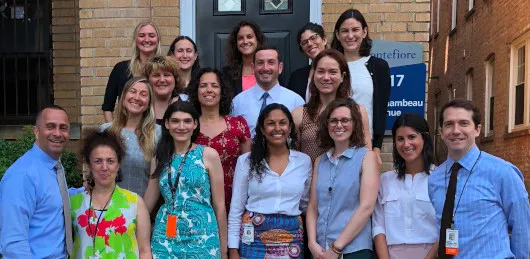
2018-19 Interns and faculty at the first-day orientation meeting
Current Elective Rotations
Note: This elective is required for the child and adolescent track but can be chosen as an elective for interns in the other tracks.
The Anxiety and Mood Program (AMP) at Montefiore Einstein’s Child Outpatient Psychiatry Division is a specialty program that offers evidence-based interventions for youth with primary and comorbid anxiety, mood and related disorders. AMP serves children, adolescents and emerging adults between the ages of 4 and 21, and families from the surrounding Bronx communities. In this elective, interns can conduct at least two comprehensive intake assessments (e.g. anxiety disorders interview schedule—ADIS). They will serve as primary therapists for up to two youth cases with patients experiencing anxiety (e.g. social anxiety disorder, generalized anxiety, separation anxiety disorder, panic disorder, phobias, obsessive-compulsive disorder—OCD or post-traumatic stress disorder—PTSD), depression, tics, trichotillomania and/or related concerns.
Elective cases can be selected to meet each intern’s training preferences to the extent possible. During this rotation, interns will provide and receive weekly supervision on individual and family-based cognitive behavioral therapies (CBTs), such as Coping Cat, exposure/response prevention, trauma-focused CBT, comprehensive behavioral intervention for tics and parent management training. They can elect to serve as co-leaders in cognitive behavioral group therapy for socially anxious adolescents, arts and integrated medicine groups or college readiness and transition groups for graduating high school seniors. Interns will participate in multidisciplinary team rounds and collaborate with teachers, school personnel, pediatricians or other providers who may be involved in the child or teen’s care. Interns can also participate in scholarly activities, including authoring articles, presenting at conferences, conducting research and leading workshops and in community service events for local groups.
The Adolescent Dialectical Behavior Therapy (A-DBT) Program is a specialty outpatient program within the Anxiety and Mood Program that serves depressed and suicidal teens and emerging adults (between the ages of 12 and 21) and their families. Many of these adolescents have experienced significant trauma and have comorbid anxiety and substance-related, personality and disruptive behavior disorders. During this elective, interns learn to conduct comprehensive diagnostic interviews and dialectical behavior therapy (DBT). Interns serve as primary therapists for at least one individual DBT case and have the opportunity to co-lead DBT multi-family skills groups. As part of this elective rotation, interns learn crisis intervention skills and learn to facilitate a DBT consultation team. Interns will receive individual supervision and participate in multidisciplinary rounds and as members of the DBT consultation team.
Interns interested in working with children, adolescents or adults with autism, Prader-Willi syndrome (PWS) and OCD spectrum may be involved in assessing patients who are considering a clinical trial in the Autism and Obsessive-Compulsive Spectrum Program. If interested, interns may also create a more intense research elective experience that includes participating in research studies and administering behavioral rating scales on cannabinoids in autism and PWS, oxytocin in PWS and a novel GABAA a5 receptor modulator and digital biomarker study in autistic adolescents and adults. Interns will participate in seminars, case conferences and scholarly activities. There are also projects on social media and mental health in youth. Supervision is provided by psychiatrist Dr. Eric Hollander and neuropsychologist Dr. Bonnie Taylor.
The Pediatric Behavioral Health Integration Program (BHIP) provides evidence-informed, integrated behavioral healthcare for children and their families within Montefiore Einstein’s primary care network. We provide HealthySteps programming for prevention and intervention in children from birth through age 5. We also treat mild to moderate anxiety, depression, attention/disruptive behavior disorders and trauma-related issues in school-aged and adolescent children. The program is available at various pediatric primary care sites and serves an estimated 90,000 children.
A multidisciplinary team of psychologists and psychiatrists, working alongside pediatricians, provides evidence-informed behavioral health services across the pediatric lifespan (birth through 21 years of age). Our care emphasizes population health, so all pediatric patients receive mental health screenings during routine medical appointments. This service allows our care team to identify children with mild to moderate behavioral health symptoms, aiming for early diagnosis and prevention.
When selected as an elective rotation, the intern will be assigned to a specific primary care site and learn to work collaboratively with a team of pediatric medical and behavioral health providers. Interns are expected to complete brief assessments and conceptualizations based on the use of appropriate screeners and clinical interviews and conduct short-term interventions for mild to moderate mental health problems. Coordination of care between the intern and the primary care provider (PCP) and relevant systems such as school and community resources will ensure a comprehensive approach to assessment and treatment. As community and health system guidelines evolve, BHIP services will continue to blend face-to-face and telehealth services. A licensed psychologist will supervise at least one hour per week.
The Butler Center for Children and Families is a dual-licensed clinic for primary care and mental health, specializing in trauma and child abuse and neglect. The mental health clinic, a satellite of COPD (Child and Adolescent Psychiatry), is a full-service Office of Mental Health (OMH) clinic with a psychiatrist, a psychologist and three clinical social workers. A one-day-a-week rotation with the OMH clinic at the Butler Center offers psychology interns the opportunity to develop an essential awareness of how to treat trauma, whether it takes the form of sexual or physical abuse, exposure to domestic and/or community violence, a perilous immigration journey or the living conditions of urban poverty. The ensuing symptoms of PTSD, anxiety disorders, depressive disorders and behavioral problems, including problematic sexual behaviors, are addressed with evidence-based interventions such as trauma-focused cognitive behavioral therapy (TF-CBT) or problematic sexual behavior CBT (PSB-CBT), a treatment that can be administered in a group or individual family format.
Services are offered in English and Spanish, responding to the needs of recent immigrants and our diverse Bronx community. Interns can also familiarize themselves with the forensic aspect of addressing abuse by observing interviews conducted primarily off-site by a multidisciplinary team (child protective service workers, forensic interviewers, pediatricians, nurse practitioners, detectives, social workers and assistant district attorneys). A licensed psychologist can provide individual supervision for at least one hour a week.
The Montefiore Einstein University Behavioral Associates child welfare programs provide comprehensive child-centered, family-focused and strengths-based services. This program is designed to address the safety and well-being of children and families in the Bronx who are impacted by a range of challenging family situations, including mental health and/or substance use disorder concerns, domestic violence, trauma and poverty. These programs support families where children are at risk for foster care placement by bringing together formal and informal networks of individuals and agencies. This work supports and strengthens each family’s unique capacity to meet their needs and nurture and care for their children in their homes. All families accepted into our child welfare program will receive clinical assessment, intensive case management, ongoing monitoring and support service referrals.
This rotation offers a variety of clinical training opportunities, including conducting comprehensive clinical assessments with adults and children. Interns co-facilitate voluntary groups (e.g. parenting groups) for families, facilitate structured family team conferences, provide in-vivo supervision to case management and therapeutic staff during in-home visits and help to create and deliver clinical training to staff. Interns will be an integral part of an interdisciplinary team committed to maintaining the safety and well-being of children and families. Licensed psychologists and other trainers in the program will provide one hour of individual supervision per week.
The Cognitive Behavioral Sleep Medicine (CBSM) Program at the Sleep-Wake Disorders Center provides interns with the opportunity to learn about diagnosing and treating patients with problems associated with sleeping and waking. Interns can participate in the evaluation of patients who have insomnia, hypersomnia, narcolepsy, circadian rhythm disorders, nightmares and difficulty adjusting to positive airway pressure (PAP) therapy for sleep apnea. Interns will learn cutting-edge treatments, such as cognitive behavior therapy for insomnia (CBT-I), systematic desensitization for PAP adherence, and imagery rehearsal therapy (IRT) for chronic nightmares. Though primarily focused on work with adults, child and adolescent patients are occasionally seen. Interns may also attend a weekly sleep-wake case conference. A clinical psychiatrist and behavioral sleep medicine specialist provide individual supervision of at least one hour per week.
Note: This elective is required for the combined track but can be chosen as an elective for interns enrolled in other tracks.
CARE is an innovative specialty program that offers a mentalizing-focused group intervention to parents and other primary caregivers who experience parent–child relational stress and difficulties in their capacity to reflect upon the mental states that underlie their children’s and their own behavior. Developed and located at Montefiore Einstein’s Child Outpatient Psychiatry Department–Wakefield Division, the bigenerational, transdiagnostic program integrates perspectives from attachment theory and developmental psychopathology and serves caregivers of children enrolled in outpatient services, typically between the ages of 6 and 18.
In initial studies, CARE has been found to reduce parenting stress, improve caregiver reflective functioning and strengthen youth-reported attachment security. This elective rotation is ideal for interns interested in group therapy, mentalization-based therapy, attachment theory, parenting interventions and/or gaining a deeper understanding of how clinical work and research can inform and enrich one another. During this rotation, interns receive training and weekly group supervision in the CARE model and will co-facilitate a parenting group. In addition, CARE offers interns the opportunity to engage with an ongoing clinical research program. There may also be opportunities to assist with program development and training. Licensed psychologists provide supervision.
The Eating Disorders Program at Montefiore Einstein (EDPM) is a multidisciplinary program between the Department of Psychiatry and Behavioral Sciences and the Department of Adolescent Medicine at the Children’s Hospital at Montefiore Einstein (CHAM). Our Program was formed due to the lack of availability of specialized treatment for patients with public insurance presenting to our clinics with eating disorders. At this time, there are no other outpatient clinics across all five boroughs in New York City that provide specialized treatment for eating disorders for child and adolescent patients receiving Medicaid. Additionally, our medical unit is one of the few in the area equipped to treat patients presenting with medical instability related to severe eating disorders.
The EDPM provides evidence-informed care for children and adolescents between the ages of 5 and 23 presenting with anorexia nervosa, bulimia nervosa, avoidant restrictive feeding and eating disorder (ARFID) and other specified feeding and eating disorders (OSFED). In addition to interventions that target primary eating disorders, we provide comprehensive care that may also include treatment for depression, anxiety, PTSD and personality disorders.
Interns participating in an elective rotation in the EDPM may have the opportunity to work with patients in our inpatient medical unit (CHAM 6) and our outpatient department. Our inpatient unit admits patients with eating disorders presenting with medical instability. Once in this unit, patients receive comprehensive medical and psychiatric assessments. Interns working on CHAM 6 will participate in every phase of treatment on the unit, including initial assessment, individual and family therapy and ongoing consultation with the medical team. In our outpatient setting, interns will be assigned cases with a primary diagnosis of an eating disorder. Our treatment Program uses multiple evidence-based approaches, including family-based treatment (FBT) and l DBT. Interns may also participate in monthly rounds with the Adolescent Medicine team. A licensed psychologist will supervise at least one hour per week.
The Einstein Student Mental Health Clinic serves PhD students and postdoctoral trainees at Albert Einstein College of Medicine on Montefiore Einstein’s Jack and Pearl Resnick Campus. This elective offers interns in all three specializations a unique opportunity to join a programmatic effort at Montefiore Einstein to promote mental health literacy and increase the accessibility and suitability of mental health services to a often highly stressed clinical population.
The ESMHC employs a brief psychotherapy framework for most patients, which therefore requires efficient assessment, case conceptualization and treatment planning, as well as a strong background in, and commitment to using, short-term, evidence-based treatments such as CBT, DBT and/or acceptance and commitment therapy (ACT). Interns will be the primary therapist for 5–10 individual therapy cases. Opportunities may also exist for interns to participate in program planning and implementation, assist in clinic initiatives coordinating with Montefiore Einstein to promote healthy mental health practices via campus outreach, co-lead a therapy group and participate in scholarly activities, including authoring articles and presenting at conferences. A licensed psychologist provides individual supervision of at least one hour per week.
EAC, a not-for-profit agency with an extensive criminal justice division, provides court-based diversion (alternative to detention and incarceration) and jail-reentry services for individuals with serious mental illness who are involved in the criminal justice system. EAC’s program is designed to clinically assess defendants charged with felonies or misdemeanors for the presence of psychiatric and/or substance use disorders, refer eligible defendants to treatment in their community, monitor their progress and communicate this progress to the court and other criminal justice partners. The goal of both the diversion and reentry programs is to help offenders with serious mental illness receive appropriate community-based care, focusing on individualized approaches to rehabilitation and risk management.
The EAC team collaborates with the district attorney’s office, the defense bar and the treatment courts in all five boroughs to identify and evaluate individuals who may be appropriate for mental health diversion services. Using empirically validated testing batteries, EAC provides an in-depth diagnostic evaluation of the defendant, including diagnostic, cognitive, personality, malingering and violence risk assessment, and identifies the most appropriate treatment resources to meet the individual’s needs. The results of the evaluations are communicated to the courts via formal forensic reports.
Psychology interns will work in interdisciplinary teams comprised of master’s-level forensic case managers, a clinical social worker and a licensed psychologist. Trainees will primarily work on diversion cases, although they may also work on re-entry cases with clients who are difficult to engage or require psychological testing. Doctoral interns will conduct forensic psychological evaluations for the courts, focusing on violence risk assessment. During clinical meetings and supervision, they will present cases to the psychologists and participate in treatment planning.
Once a defendant has been accepted for diversion, interns may be responsible for making referrals to treatment providers, monitoring the individual's progress and compliance, and providing the courts with regular updates on treatment progress. Trainees will communicate with defense attorneys, prosecutors and treatment providers involved in their clients' cases. Weekly didactics will cover a range of topics relevant to mental health and the criminal justice system. A licensed psychologist provides individual supervision for at least one hour per week.
Interns interested in working with older psychiatric patients may be assigned cases in the geriatrics service of the Adult Outpatient Psychiatry Division. Interns may also create a more intense elective experience that would include providing care at area nursing homes, conducting home visits and participating in an array of inter-professional seminars and case conferences. The activities are conducted in collaboration with the training program of the Division of Geriatric Medicine and comprehensive dementia assessments at the Center for the Aging Brain. Interns choosing this elective would also have opportunities to work with Holocaust survivors and participate in research sponsored by the National Institute of Mental Health (NIMH). Geriatric psychiatrists provide supervision.
Klau 2 is a 22-bed adult acute psychiatric unit within the main medical center at Montefiore Einstein. Klau 2 serves adults aged 18 and older, presenting with a wide range of serious mental illnesse. Patients are offered a multidisciplinary treatment approach that includes a broad range of traditional mental health services, as well as other wellness-oriented treatments designed to enhance recovery for those with mental illnesses. Individual, family and group psychotherapy, creative arts, recreational, milieu and pharmacological therapies are employed in accordance with the specific needs of the patients and assessed on an ongoing basis in treatment team meetings.
Upon admission, each patient is assigned to a primary therapist, a psychology intern or a psychiatry resident. Additionally, patients are assigned to a team that includes an attending psychiatrist, psychologist, social worker, integrative behavioral therapists, nurses, mental health assistants and trainees of various disciplines. As the primary point person for the patient, psychology interns are their best advocates. The multidisciplinary team collaborates with the patient to create an individualized plan throughout treatment. As the primary therapist, the intern takes the lead in involving the patient's family and/or significant others (based on the patient's needs and wishes), as well as outpatient treatment providers, to ensure a comprehensive disposition plan allowing the patient to return to the community safely and expeditiously.
Psychology Interns on Klau 2
For many psychology interns, the inpatient unit rotation provides a novel opportunity to work with patients during their most vulnerable psychiatric phase. Since this may be an intern’s first or last opportunity to work with an inpatient psychiatric population, this experience provides unique training to learn more flexibility, creativity and real-life intensive psychotherapy as they witness a patient’s recovery from acute illness to discharge. By providing both assessment and treatment in this multidisciplinary setting, interns learn how to apply their clinical knowledge base to this population, honing their skills in creatively collaborating with their supervisor and interdisciplinary treatment team, adapting evidence-based treatment to match each patient’s current acute therapy needs and assisting them through the most acute phases of mental illness towards their recovery.
During their rotation, psychology interns will acquire or further develop their skills in comprehensive admissions assessments and differential diagnosis, acute individual, group and family psychotherapy, crisis intervention and case formulation, treatment planning, case presentations and preparation of progress notes and discharge summaries.
Treatment and supervision focus on using evidence-based treatment models, modified and adapted to the setting and population, as part of a recovery-oriented model of care. Treatments include integrated treatment for co-occurring disorders, time-limited interpersonal therapy, strengths-based therapy, motivational interviewing, crisis intervention, social skills training, DBT, CBT, illness management and recovery, family psychoeducation and psychopharmacology.
Elective Options
Psychology interns can participate with one of two options on Klau 2: a four-day per week rotation or a three-day per week rotation (part-time), both to be completed between two and four months.
Four-Day Per Week Rotation:
This four-day per week rotation enables the psychology intern to fully become part of the treatment team, work in intensive therapy (individual and milieu) with a variety of patients presenting with (complicated and fascinating) acute mental illness and hone their clinical and creative skills outside of the standard therapy format. The four-day psychology internship rotation allows interns to serve as the primary therapist for two to three patients at a time. This includes daily individual psychotherapy sessions, twice weekly group therapy sessions, daily communication with the multidisciplinary treatment team and collaborating in developing their patient’s milieu treatment. This four-day rotation includes the following responsibilities and opportunities:
Clinical Patient Care
- As the primary therapists for two to three identified patients during their hospitalization, interns will initiate individual therapy daily and collaborate with the team in family meetings, behavior plans and milieu treatment.
- As part of the Klau 2 trainee cohort (including psychiatry residents and creative arts interns), the psychology intern will:
- Co-lead inpatient interpersonal group therapy
- Co-lead an additional group therapy (choice of orientation)
- Co-lead daily patient community meetings
Team Meetings
Participate as the primary therapist in the nurses’ morning report and as a member of the multidisciplinary treatment team, sign out and consult with the attending psychiatrist.
Supervision
- Participate in regular, frequent individual supervision with a psychologist (Dr. Sharon Spitzer) and weekly group therapy supervision with all Klau 2 trainees (psychiatry residents and interns)
- Participate in weekly chief resident supervision with all Klau 2 trainees
- Participate in weekly participant-based learning (PBL) rounds
- Participate in weekly case conferences
Three-Day Per Week, Part-Time Rotation:
The three-day rotation allows psychology interns to become adjunct team members on the multidisciplinary treatment team. Interns will have the opportunity to work with patients individually and on a group basis and hone their therapy skills with this unique population. On Klau 2, interns will gain increased understanding and practice in working as part of a multidisciplinary team and participate in:
- Clinical Patient Care:
- Meet each day with two to three identified patients for psychotherapy during their hospitalization
- Co-lead inpatient interpersonal group therapy
- Rotate into leading patient community meetings
- Team Meetings:
- Participate as primary therapist in the nurses’ morning report and as a member of the multidisciplinary treatment team, sign out and consult with the covering resident and attending psychiatrist
- Supervision:
- Participate in individual supervision with a psychologist (Dr. Sharon Spitzer) and weekly group therapy supervision with all Klau 2 trainees (psychiatry residents and interns)
- Possible Additions:
- Participate in weekly chief resident supervision with all Klau 2 trainees
- Co-lead an additional group therapy (choice of orientation)
- Participate in weekly case conferences
- Participate in weekly participant-based learning (PBL) rounds
Note: This elective is required for the neuropsychology and adult tracks but can be an elective for interns enrolled in the other tracks.
Interns may elect to perform additional neuropsychological testing with adult and/or pediatric outpatients referred to the Neuropsychology Assessment Service. The NAS provides assessment and diagnosis of the cognitive and behavioral effects of various neurological and psychiatric disorders, including traumatic brain injury, dementia, stroke, multiple sclerosis, cancer, sickle cell disease, lupus, epilepsy, learning disabilities and attention deficit disorder. Licensed neuropsychologists supervise these batteries.
The OnTrackNY program at Montefiore Einstein is a multidisciplinary outpatient treatment team serving adolescents and young adults with early psychosis. The OnTrackNY team provides comprehensive mental health services, including individual and group psychotherapy, medication management, peer support, education/employment assistance and family support. During this rotation, interns are trained in the evaluation and treatment of patients with a recent onset of psychotic symptoms such as hallucinations, delusions and disorganized thinking. Interns carry individual psychotherapy patients, attend team meetings and learn to use the recovery model of treatment and shared decision-making process with patients and their families. A licensed psychologist provides supervision.
Note: This elective is required for the adult track but can be chosen as an elective for interns enrolled in the other tracks.
The Psychiatric Observation Suite is a five-bed unit within the adult emergency department (ED) for patients presenting with psychiatric complaints. Patients are seen either in the POS, the main ED, or the pediatric ED for evaluation, crisis intervention and disposition. The attending or chief resident assigns patients and provides supervision. Interns will observe a wide range of diagnoses and psychopathology, including mood and psychotic disorders, substance use disorders, PTSD, ADHD and ASD. Interns will conduct diagnostic interviews and safety and risk assessments and gain experience gathering collateral from families, providers and agencies. They will gain competence in determining indications for hospitalization versus discharge.
Note: This election is required for interns enrolled in the adult track but can be elected by interns enrolled in the other tracks.
The Psychiatric Consultation Service rotation consists of experiences in the Psychiatry Consultation-Liaison Service and Abdominal Transplant. While working with the transplant team, interns will learn to assess for psychological contraindications to liver and kidney transplantation and living donation, as well as provide consultations for patients hospitalized post-transplant and presenting with a variety of psychological concerns, including addictions, depression and anxiety. Interventions used with transplant patients are based on CBT, motivational interviewing and mindfulness. Interns are part of a multidisciplinary team that includes surgeons, hepatologists, nephrologists, social workers and nurses. There are opportunities to participate in multidisciplinary team meetings with the transplant team.
The Psychiatry Consultation-Liaison Service provides interns with the opportunity to collaborate with an array of hospital-based medical teams and enhance their skills in managing and treating medically and/or psychiatrically compromised patients. A psychological consultation may be requested for a number of concerns, including pre-existing psychiatric issues, current illness-related distress, wide-ranging adjustment issues, behavioral management strategies, poor adherence to treatment and capacity issues to provide informed consent and/or clearance for hospital discharge. Psychology interns will learn the rapid assessment of medically compromised patients and hone the ability to render a diagnosis and provide brief bedside evidenced-based treatment in medical areas that require rapid decision-making and follow-up. Licensed psychologists supervise interns in their clinical evaluation of patients and their consultative role with other providers.
Psychology interns will have the opportunity to work in the Psycho-Oncology Service; an integrated outpatient behavioral health service seeing patients who present with mental health complaints in the context of cancer treatment. The elective includes working with patients across the spectrum of illness at one of the top cancer centers in the country, including survivors of cancer and patients at end-of-life. Core experiences include a) evaluating and treating common manifestations of psychiatric illness in this population most notably mood and anxiety disorders, b) exploring and treating psychological distress using common modalities such as CBT and ACT, as well as unique approaches such as existential or meaning-centered interventions, and c) working alongside a multidisciplinary team of oncologists, nurses, and social workers. Interns will receive individual supervision from licensed clinical psychologists who specialize in working with cancer and medically ill populations.
The Rehabilitation Psychology and Neuropsychology Department provides comprehensive neuropsychological and psychological services to inpatients admitted to Burke’s 150-bed acute rehabilitation hospital and outpatients through the Burke-Montefiore Einstein Physician Practice. Our Department serves a linguistically diverse population of medically and neurologically complex adults and older adults at various stages of rehabilitation following injury or illness. Many of our patients also have comorbid psychiatric conditions.
In this three-month minimum elective, the intern will gain experience providing inpatient psychological and neuropsychological services, including assessment and psychotherapy, to patients admitted to Burke for acute rehabilitation. The intern will learn how to perform an efficient bedside diagnostic interview in response to consults from the multidisciplinary treatment team. Common consult questions include diagnostic clarification, concern for mood disorder or adjustment difficulty following illness or injury and behavior management. The intern will also perform bedside cognitive screens and neuropsychological assessments to characterize cognitive status, clarify diagnosis and guide treatment planning. As patients are often in the very early stages of injury, interns will be exposed to acute neurologic and medical presentations less commonly seen in outpatient settings (e.g. delirium and acute stroke syndromes). Interns will follow patients during admission to provide individual psychotherapy (typically in a CBT, ACT or supportive modality), support the patient’s family and treatment team and re-evaluate mood or cognition as appropriate.
Interns may also attend multidisciplinary inpatient team rounds (traumatic brain injury, stroke and mixed neurologic/spinal cord injury units), join rehabilitation didactics with our psychology externs and observe rehabilitation therapists and physicians depending on the day of attendance. For interns who opt for a six- or 12-month rotation, outpatient individual and group psychotherapy and cognitive remediation experiences are also available. There are further opportunities for bilingual (Spanish/English) interns to provide care to monolingual (Spanish-speaking) patients with supervision by a licensed psychologist. This is an in-person externship at Burke Rehabilitation Hospital in White Plains. This elective is best suited for interns with a strong interest in working with neurologically and medically complex populations and who have prior experience in neuropsychology or health psychology. Interns will receive individual supervision from licensed clinical psychologists specialized in neuropsychology and rehabilitation psychology.
The Under-Five Trauma Services Program at the Rose F. Kennedy Children’s Evaluation and Rehabilitation Center (RFK CERC) in the Department of Pediatrics at Montefiore Einstein provides interns with the opportunity to work in Group Attachment Based-Intervention (GABI), an intensive parent-child treatment developed for families with children ranging in age from birth to 3 years old when there is a concern about a parent’s ability to parent due to an array of psychosocial stressors. Families are referred to GABI by pediatricians, ACS, family court and preventative agencies. GABI is part of RFK CERC, which consists of a multidisciplinary team of developmental-behavioral pediatricians, psychiatrists, psychologists and social workers, among other developmental specialists.
Interns will learn how to conduct a trauma-informed clinical intake, including administering the Adult Attachment Interview (AAI) for clinical understanding, the parent and child Adverse Childhood Experiences questionnaires and behavioral health measures. Interns will participate in GABI, which includes dyadic psychotherapy, parent groups, child groups and video feedback sessions. Interns will also have one individual parental mental health case. GABI sites are located in all five boroughs and involve online training, monthly all-team training with key experts in the field and quarterly video sessions reviewed under supervision. A licensed psychologist and other team members provide individual and group supervision.
The Substance Abuse Treatment Program (SATP) and New Directions Recovery Center (NDRC) provide integrated substance use disorder counseling, primary medical care and psychiatric services to over a thousand patients. SATP provides methadone maintenance for individuals with opioid use disorder, and NDRC offers intensive outpatient treatment for a range of substance use disorders, including alcohol, cocaine, cannabis, benzodiazepines and PCP.
Interns will provide individual and group therapy, intake assessments and crisis intervention. Interns will also work closely with a team of psychologists, addiction counselors, medical providers and other clinicians to provide integrated treatment services within a harm-reduction framework. Interns may also be able to assist with group supervision for psychology externs. The rotation is typically one day per week for three to six months, but can be flexible. SATP and NDRC are co-located at 2058 Jerome Avenue on the Burnside Avenue stop of the 4 Train. Licensed psychologists provide supervision.
The Supporting Healthy Relationships and HERO (Healthy, Empowered, Resilient, Open) Dads programs are unique opportunities to gain experience working on either or both federally funded family-strengthening research programs serving couples and individuals in the South Bronx and the greater New York City area. Our clinical focus has a psychodynamic base, with s] couples-, family- and group-focused modalities.
Supporting Healthy Relationships (SHR) is designed to enhance relationship skills and strengthen relationships for low-income couples who have or are expecting children. The relationship education curriculum is based primarily on Gottman’s Bringing Baby Home, shaped by his many years of research on couple functioning. The curriculum has also been modified to fit our diverse Bronx community by adding aspects of Dr. Sue Johnson's Emotionally Focused Couples Therapy and the Prevention and Relationship Enhancement Program (PREP) developed by Stanley and Markman. While most clinicians work with couples using therapy as an intervention, our program encourages a clinician's role in prevention before couples are distressed.
HERO (Healthy, Empowered, Resilient, Open) Dads is focused on providing a wide range of services for low-income adult parents with non-custodial children. The parenting and relationship psychoeducation workshops are based on an empirically supported curriculum, 24/7 Dad, developed by the National Fatherhood Initiative. HERO Dads is based on the notion that non-custodial fathers lack models of responsible fatherhood and are subject to numerous stressors that undermine their ability to remain engaged with their children and meet their child support obligations. Our research has shown that relationship and parenting education, coupled with access to employment services, address these stressors and will support and strengthen fragile families.
This rotation offers interns a broad array of clinical training opportunities to increase their competency in couple- and parent-based prevention techniques (as well as some specific interventions) while serving a population that encompasses a broad variety of ages, cultures, psychiatric diagnoses and levels of functioning. To accomplish this goal, the intern will conduct clinical assessments with couples and/or individuals, co-lead relationship and/or parenting education groups, design and lead workshops on topics of the intern’s choice, provide ongoing supportive services to couples and individuals (e.g. short-term therapy, crisis intervention, case management services) and contribute to program evaluation projects for either program as available. Supervision is provided by licensed psychologists as well as other trainers in the Program.
Note: This elective is only available to interns proficient in Spanish.
Terra Firma is a medical-legal partnership clinic providing integrated medical, mental health and social services to unaccompanied immigrant children under one roof. Terra Firma’s flagship program is located in a South Bronx community health center in an immigrant-rich neighborhood. At the Center for Child Health and Resiliency, affiliated with the Children’s Hospital at Montefiore Einstein, these children are given a medical home for the first time and access tolinguistically appropriate mental health services. Working in close conjunction with on-site pro bono immigration lawyers, our clinicians provide professional testimonies used to support legal relief, prevent deportation and help immigrant children gain lawful residency in the United States.
Terra Firma complements these core services with acculturation and enrichment activities such as English language classes, photography workshops and soccer. In this integrated model, healthcare professionals play a crucial role in improving immigration outcomes by providing a safe environment in which children can recount the painful circumstances that led them to flee their country and receive trauma-informed care, which is critical to their healing. Medical and mental health professionals working with these children provide written evaluations and oral testimony that support their legal cases. This approach corroborates their histories, increases their likelihood of receiving legal protection and mitigates re-traumatization, keeping the child’s best interests front and center. Licensed psychologists provide supervision.
The Montefiore Einstein Center for Transplantation is a Center of Excellence in kidney and liver transplantation. We pride ourselves in providing state-of-the-art multidisciplinary care for patients across the lifespan undergoing kidney, pancreas and liver transplantation, as well as kidney and liver living donation. The psychology and psychiatry services are fully integrated into the transplant program and highly regarded across disciplines. Interns will also work with the transplant team to assess for psychological contraindications to liver and kidney transplantation and living donation, as well as provide inpatient assessment and therapy for patients hospitalized post-transplant and presenting with a variety of psychological concerns, including alcohol/substance use disorders, depression and anxiety. Interventions used with transplant patients are based on CBT, motivational interviewing and mindfulness. Interns will work closely with a multidisciplinary team that includes surgeons, hepatologists, nephrologists, social workers and nurses to provide high-quality integrated care for transplant recipients and living donors. There are opportunities to participate in multidisciplinary team meetings with the transplant team. Licensed psychologists and other team members will provide clinical supervision and consultation.
University Behavioral Associates (UBA) is an innovative managed care company founded by the Department of Psychiatry and Behavioral Sciences at Montefiore Einstein, which delivers behavioral health services to a large population in the Bronx and Westchester County. Interns choosing this research elective on behavioral population health will learn about patterns of utilization, healthcare reform models, managed care and reimbursement methodologies. A licensed psychologist provides supervision.
The WeCARE program is funded by New York City’s Human Resources Administration (HRA). It provides evaluation and case management services to substance-abusing public assistance recipients (CMS) or those with medical and/or psychiatric disorders to assist them in engaging in treatment, becoming clinically stable and ultimately becoming self-sufficient through employment.
Interns selecting this rotation can conduct employability evaluations as part of a comprehensive case management program and learn about disability and employability criteria and decision-making. A licensed psychologist and other team members supervise at least one hour weekly.