






Our Approach to Colorectal Cancers

Video could not be played

Video could not be played
Video could not be played
Video could not be played

Video could not be played
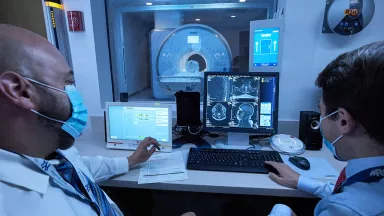
Montefiore Einstein Comprehensive Cancer Center is a leading referral center for all types of colon and rectal (colorectal) cancers. Our world-renowned surgeons and physicians collaborate to quickly and accurately screen and diagnose patients using state-of-the-art imaging technology and molecular diagnostics to stop colorectal cancer before it starts.
Our multidisciplinary team develops personalized treatment plans for complex and advanced cases, as well as for newly diagnosed and earlier-stage disease, using minimally invasive techniques to help maintain colon and rectal function wherever possible. We’re often able to preserve sexual function and urinary continence, and can eliminate the need for colostomy in most cases.
Montefiore Einstein’s NCI-designated comprehensive cancer center brings together the worlds of clinical care and academic research, enabling the translation of novel, leading-edge scientific discoveries into improved clinical outcomes and new lifesaving treatments, while keeping you at the center of everything we do.
We are among the elite 1% NCI-designated comprehensive cancer centers in the U.S. — and we are ranked in the top 1% of all U.S. hospitals for cancer care, gastroenterology and GI surgery, according to U.S. News & World Report.
Video could not be played
Colorectal Screening Options
Montefiore Einstein Comprehensive Cancer Center provides colorectal cancer screening through one of the most advanced, fully integrated programs available in the region, combining state-of-the-art imaging technology and molecular diagnostics to detect cancer at its earliest and most treatable stages.
Our world-renowned multidisciplinary team use a comprehensive suite of proven screening and detection tools, tailored to each patient's personal risk profile, family history, and lifestyle. Whether you are due for a routine preventative screening or require a more targeted diagnostic evaluations, our program provides the full range of options, all coordinated seamlessly within a patient-centered care environment designed to support you at every step of your journey.
Remains the gold standard for testing & prevention. It is recommended for those at high risk and for those who want to prevent colon cancer, as it allows doctors to find and remove precancerous polyps to stop colon cancer before it starts. It can also identify colorectal cancer at its earliest stages, when it’s most treatable. During this outpatient procedure, the gastroenterologist can visually inspect the entire colon and rectum region, identify and remove polyps, and biopsy any mass that may be present.
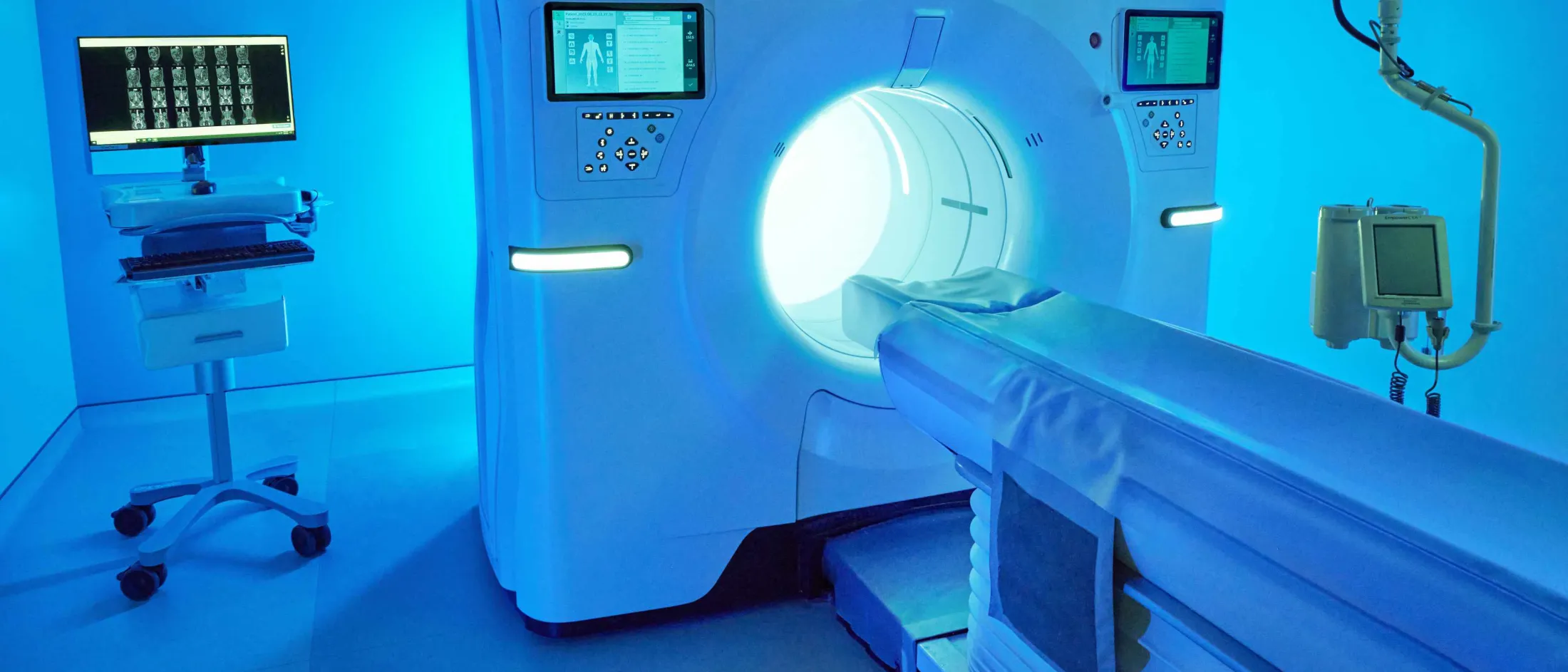
A virtual colonoscopy is a non-invasive test that does not require sedation, allowing people to drive themselves home afterwards and even go back to work. It is an effective imaging tool that uses an advanced CT (computerized tomography) scan to generate a 3D image of the colon and surrounding organs. Radiologists look for any potential abnormalities, and if polyps are found, they can be removed during a traditional colonoscopy before they become cancer. Like the traditional colonoscopy, virtual colonoscopy can detect colon cancer at its earliest stages, when it is most treatable. If a polyp or lesion is seen on the imaging scan, you will need to have a traditional colonoscopy.
Stool-based tests, available from your doctor, can be done in the comfort of your home. There are three types of stool-based tests, and each one can be a first option for individuals who are at low or average risk for colorectal cancer and have no symptoms. If a stool-based test is positive, a colonoscopy must then be performed. There are three types of stool-based tests:
- FOBT (fecal occult blood test): There are two types of FOBT that screen for colorectal cancer through the detection of blood in the stool. The gFOBT (guaiac-based fecal occult blood test) detects blood in the stool using a chemical called guaiac. The iFOBT, also known as the FIT (fecal immunochemical test), uses special antibodies to test the stool for blood. One advantage of the iFOBT/FIT is that it does not require a restriction in diet or medicines. Blood in the stool may be an early sign of colorectal cancer.
- Multi-targeted stool test: This test identifies the presence of DNA changes in the cells of a stool sample. If DNA changes are detected, this could be an early sign of colorectal cancer.
If cancer is confirmed, imaging such as CT scans, MRI, ultrasound, and sometimes PET scans are used to see how deep the tumor goes and whether it has spread to lymph nodes or organs like the liver or lungs. These tests help determine the stage, which guides treatment planning.

Video could not be played
Genetic Counseling & Testing for Colorectal Cancers
At Montefiore Einstein Comprehensive Cancer Center, our board-certified genetic counselors work alongside your oncology team to evaluate your personal and family history, recommend appropriate testing and help you understand your results. For patients who carry hereditary risk, we develop individualized surveillance and prevention plans that include more frequent screening, lifestyle guidance and, when appropriate, prophylactic interventions to protect your long-term health.
Video could not be played
Innovative Treatments for Colorectal Cancers
Montefiore Einstein Comprehensive Cancer Center offers advanced treatments for colorectal cancers, including access to many clinical trials that offer the option of receiving medicines or treatments not yet available at other cancer centers.
Treatments recommended for you in a individualized treatment plan from Montefiore Einstein Comprehensive Cancer Center may include:
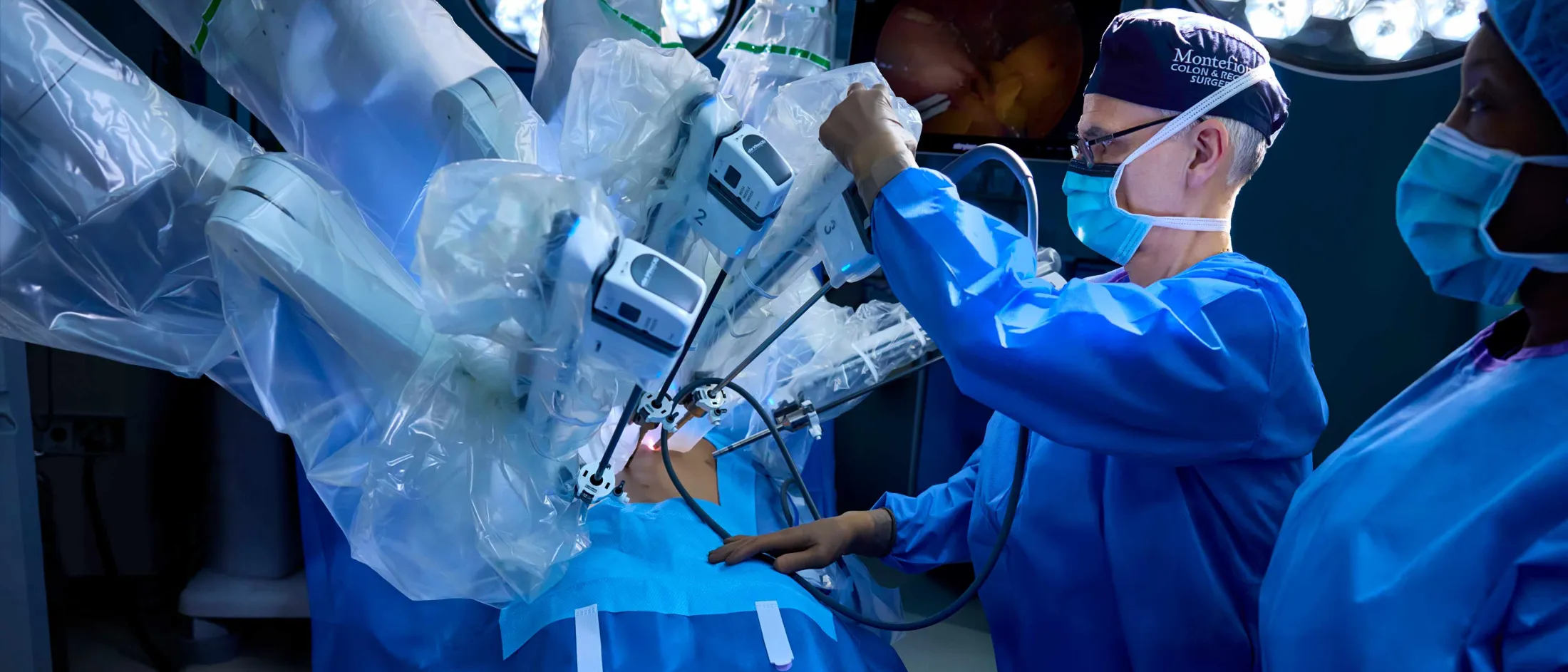
Our world-renowned surgeons specialize in conventional and minimally invasive colorectal procedures, including advanced robotic surgery designed to reduce pain, shorten hospital stays, speed recovery, and minimize scarring.
We are experts in procedures such as polypectomy, local excision, colon resection with anastomosis and, when necessary, colostomy. Our colorectal team is nationally recognized for sphincter-sparing techniques, including transanal endoscopic microsurgery (TEMS) and transanal minimally invasive surgery (TAMIS), which preserve bowel function and greatly reduce the likelihood of needing a permanent colostomy.
For select advanced or recurrent cases, our team collaborates with a multidisciplinary team to perform complex pelvic resections and other advanced local treatments when appropriate.
Chemotherapy is designed to target and eliminate dividing cancer cells and prevent cancer from spreading—making it one of the most effective treatments in cancer care today. We use the latest in chemotherapy treatments, personalizing each treatment plan to individual patient needs.
Sometimes doctors can deliver higher doses of chemotherapy directly to the area where the cancer is, which may limit side effects to the rest of the body. If colorectal cancer spreads to the liver, a tube (catheter) can send high‑dose chemotherapy straight into the liver’s main artery, called hepatic artery infusion (HAI). In selected cases where cancer has spread to the lining of the abdomen, our surgeons may remove visible tumors and then wash the abdomen with warm chemotherapy during surgery (called HIPEC).
Visit our Chemotherapy treatment page for more information.
Targeted therapy uses drugs that target specific genetic changes in individual tumors and can mean more effective results along with reduced harm to surrounding healthy tissue.
Targeted therapy for colorectal cancer uses special medicines that “zoom in” on certain weak points in cancer cells, instead of attacking all fast‑growing cells the way standard chemotherapy does. At our Cancer Center, doctors use targeted drugs, along with biomarker (molecular) testing that looks for specific changes in the tumor, such as EGFR, RAS, BRAF, VEGF, HER2, NTRK, POLE, POLD or MSI‑H/dMMR status, to decide which medicine is likely to work best for each person. Some targeted therapies block signals that tell cancer cells to grow, while others cut off the tumor’s blood supply. These targeted drugs are usually given through an IV in the vein or as pills, often combined with regular chemotherapy for advanced or metastatic colorectal cancer. Montefiore Einstein also offers access to clinical trials, where patients may receive newer targeted or “precision” medicines and regional therapies that deliver treatment directly to tumor areas.
For more information about targeted therapies, visit our Precision Medicine treatment page.
Neoadjuvant therapy is treatment given before surgery to shrink colorectal tumors, make surgery easier, and lower the chance the cancer will come back. For many people with rectal cancer, treatment may include chemotherapy combined with radiation or total neoadjuvant therapy (TNT), where most or all chemotherapy and radiation are given before surgery to treat small, hidden cancer cells early.
In some colon cancer cases, chemotherapy is used before surgery to shrink large or difficult-to-remove tumors. Your doctors will review your cancer stage, tumor location, and lab results to decide whether neoadjuvant therapy is right for you and which combination of treatments is most effective.
For more information about neoadjuvant therapy, visit our Chemotherapy treatment page.
Immunotherapies represent a dramatic breakthrough in cancer treatment. They enable the immune system to recognize and eliminate cancer cells while leaving healthy cells intact. For colorectal cancer, immunotherapy is most effective for tumors that have certain features, such as being “MSI‑high” or “dMMR,” which means the cancer cells already look very abnormal to the immune system and are more likely to respond to this kind of treatment. Not all colorectal cancers respond to immunotherapy. Your care team uses special lab tests on the tumor to see whether immunotherapy is likely to work for you.
The main type of immunotherapy used for colorectal cancer is called a checkpoint inhibitor. Transformative checkpoint inhibitors supercharge the immune system's ability to directly combat cancer, paving the way for quicker recoveries and new hope for advanced colorectal cancer patients. These therapies are typically administered through an IV every few weeks and may be used alone or in combination with other treatments, particularly for advanced or metastatic colorectal cancer or if cancer returns after standard chemotherapy.
Our Cancer Center is actively involved in the discovery and testing of new immunotherapy strategies to more precisely target and treat colon and rectal cancers. Our research breakthroughs continue to lead game-changing cancer immunotherapy treatment practices and give patients the opportunity to join upcoming clinical trials.
Visit our Immunotherapy treatment page for more information.
Radiation therapy is a common cancer treatment, using high doses of radiation to eliminate cancer cells. It is used more often for rectal cancer than for colon cancer and can be given before surgery to shrink a tumor, after surgery to destroy any cancer cells that might be left, or to ease symptoms such as pain or bleeding when the cancer is more advanced. Most patients receive external-beam radiation, in which a machine outside the body aims radiation at the tumor in the pelvis.
With image‑guided, intensity‑modulated radiation therapy, detailed scans are used to check the tumor’s exact position, and computer‑controlled beams are shaped and adjusted around it, allowing higher doses to the cancer while better protecting nearby healthy tissues. Radiation is often given together with chemotherapy (called chemoradiation), because the chemotherapy can make cancer cells more sensitive to the radiation, so treatment works more effectively.
Montefiore Einstein Comprehensive Cancer Center is a consistent leader in radiation therapy, providing the most innovative and comprehensive services utilizing the latest technology available. Through leadership in scientific discovery, diagnostic excellence and innovative new procedures, we have extended the possibilities of radiation therapies to provide our patients with the highest level of care.
Visit our Radiation Therapy treatment page for more information.
Regional therapy is treatment that delivers cancer‑fighting medicine directly to the part of the body where the colorectal cancer is, instead of sending it through the whole bloodstream like standard IV chemotherapy. The goal is to give a higher dose right to the tumor area, while lowering side effects in the rest of the body.
Montefiore Einstein uses innovative therapies to address liver tumors that have spread from the colon or rectum, and when standard chemotherapy and surgery have stopped working. We are also pioneers in combining these techniques with vaccines that boost the body’s immune system to fight the cancer and also offer the newest approach to treating cancer that has spread to the liver from the colon or rectum: the hepatic artery infusion pump (HAIP).
Hyperthermic intraperitoneal chemotherapy (HIPEC) treats advanced colorectal cancers that have spread to the lining of the abdominal cavity. First, any local tumors are removed. Then, high doses of heated chemotherapy drugs are placed into the space within the abdomen. The chemotherapy stays in place for 90 minutes and is then removed and the space rinsed with saline. The procedure occurs while you are still in the operating room after the initial tumor removal takes place.
These therapies are usually combined with regular (systemic) chemotherapy, radiation, or other medicines as part of your individualized treatment plan.
Visit our Regional Therapy treatment page for more information.

Research & Clinical Trials for Colorectal Cancers
At the Montefiore Einstein Comprehensive Cancer Center, our commitment to advancing colorectal cancer care extends well beyond the clinic. Our world-renowned research program is shaping the future of colon cancer treatment by identifying novel molecular targets and critical pathways that drive tumor growth. These insights are translated into the development of new drugs and combination therapies designed to slow progression and target cancer at its source. We also make a concerted effort to screen all new patients for potential clinical trial participation, ensuring early access to innovative treatment options whenever appropriate.
Our renowned researchers are also conducting cutting-edge genomic studies of colorectal cancer, responding to growing evidence that the molecular alterations underlying this disease differ across ethnicities. In parallel, our team is investigating the mechanisms that contribute to treatment resistance, so that patients who face recurrence or complex disease have access to next-generation options informed by the latest science. To support broader participation, we bring together resources such as transportation and meal assistance, helping ensure that patients can take part in clinical trials regardless of socioeconomic barriers.

Video could not be played
Care Navigation & Support
At Montefiore Einstein Comprehensive Cancer Center, we’re focused on the prevention, early diagnosis and treatment of cancer. You can place your trust in our multidisciplinary team of world-renowned experts. Our full-service Cancer Center offers a comprehensive range of traditional and holistic care, from screening and diagnosis, through survivorship. This includes care navigation, mental health and wellness services and other supportive programs like financial counseling and rehabilitation.
Benefit from highly specialized, coordinated and compassionate care focused on the whole person. We’re here to address your complex medical needs and improve your quality of life.
Our Colorectal Cancers Team

Video could not be played
Abier A. Abdelnaby, MD, Fellow American College of Surgeons

Video could not be played
Rafi Kabarriti, MD

Video could not be played
Chaoyuan Kuang, MD, PhD
The multidisciplinary team of colorectal cancer experts at Montefiore Einstein Comprehensive Cancer Center is at the forefront of cancer care and the development of therapies to treat colorectal cancers. From prevention to follow-up care and rehabilitation options, as well as guidance from nutritionists, psychologists and more, we will propose an individualized treatment plan that fits your needs and lifestyle.
About Colorectal Cancers
Colorectal cancer is a type of cancer that starts in the colon or rectum, which are parts of the large intestine. It happens when cells in this area grow out of control. Most colorectal cancers begin as small growths called polyps that can turn into cancer over time. The most common type is adenocarcinoma, which starts in the cells that make mucus inside the colon or rectum. Other, less common types include lymphoma, which starts in immune cells; carcinoid tumors, which begin in hormone-making cells; and gastrointestinal stromal tumors (GIST), which form in the wall of the intestine.