





Pharmacy Research

Video could not be played
Where Pharmacy Expertise Drives Discovery
Pharmacists at Montefiore Einstein are advancing research that improves patient lives. By analyzing millions of real-world medication administrations, our teams uncover insights that prevent harmful drug interactions, optimize therapies, and expand access to breakthrough treatments. Partnering with specialists across infectious disease, critical care, emergency medicine, pediatrics, and chronic disease management, pharmacist-researchers lead studies that solve urgent medication challenges. Through our Investigational Drug Service, we support more than 150 active clinical trials, ensuring investigational medications are prepared, stored, dispensed, and tracked with the highest standards of safety and compliance.
Beyond trials, our work transforms everyday care. We help patients with chronic conditions stay healthier at home, develop evidence-based tools to guide formulary decisions, and design stewardship programs that reduce risks like opioid overuse and antimicrobial resistance. Each discovery—from new treatment protocols to safer prescribing practices—becomes a real-world solution that makes medications more effective, more accessible, and more life-changing for the patients we serve.
Video could not be played
Pharmacotherapy Research Priorities
Our research program is designed around the challenges patients face most—staying well after hospitalization, avoiding preventable medication harms, and gaining timely access to breakthrough treatments. Guided by real-world data and deep clinical expertise, we concentrate on the areas where pharmacy can make the greatest impact across our health system.
These initiatives drive tangible outcomes across inpatient and outpatient settings. From pharmacist-led consultations that help patients stay healthier at home, to AI tools that identify safety risks in real time, to clinical trials that accelerate access to breakthrough therapies, our studies address the full spectrum of medication management.
-
Pharmacist Impact on Patient Outcomes
We are actively evaluating pharmacist-led medication management clinics for chronic diseases like diabetes, hypertension, and heart failure. These initiatives demonstrate how pharmacist involvement can optimize care, improve efficiency, and prevent adverse events across inpatient and outpatient settings.
-
Data-Driven Medication Formulary Management
Our team is developing innovative methodologies to assess the value of medications with unclear therapeutic roles. These tools inform evidence-based formulary decisions by the Pharmacy and Therapeutics (P&T) Committee, ensuring high-value, system-wide medication management.
-
Optimizing Medication Use in Chronic Diseases
We study second-line therapies for diabetes and their effects on cardiovascular and renal outcomes, explore strategies to improve chronic obstructive pulmonary disease (COPD) management across the care continuum, and develop interventions that enhance heart failure care while reducing unnecessary hospital visits.
-
Medication Stewardship to Minimize Adverse Effects
Our research initiatives target safer prescribing practices, including opioid-sparing protocols for perioperative pain, dashboards to track opioid use system-wide, and antimicrobial stewardship programs to reduce Clostridioides difficile infection risks.
Clinical Trials
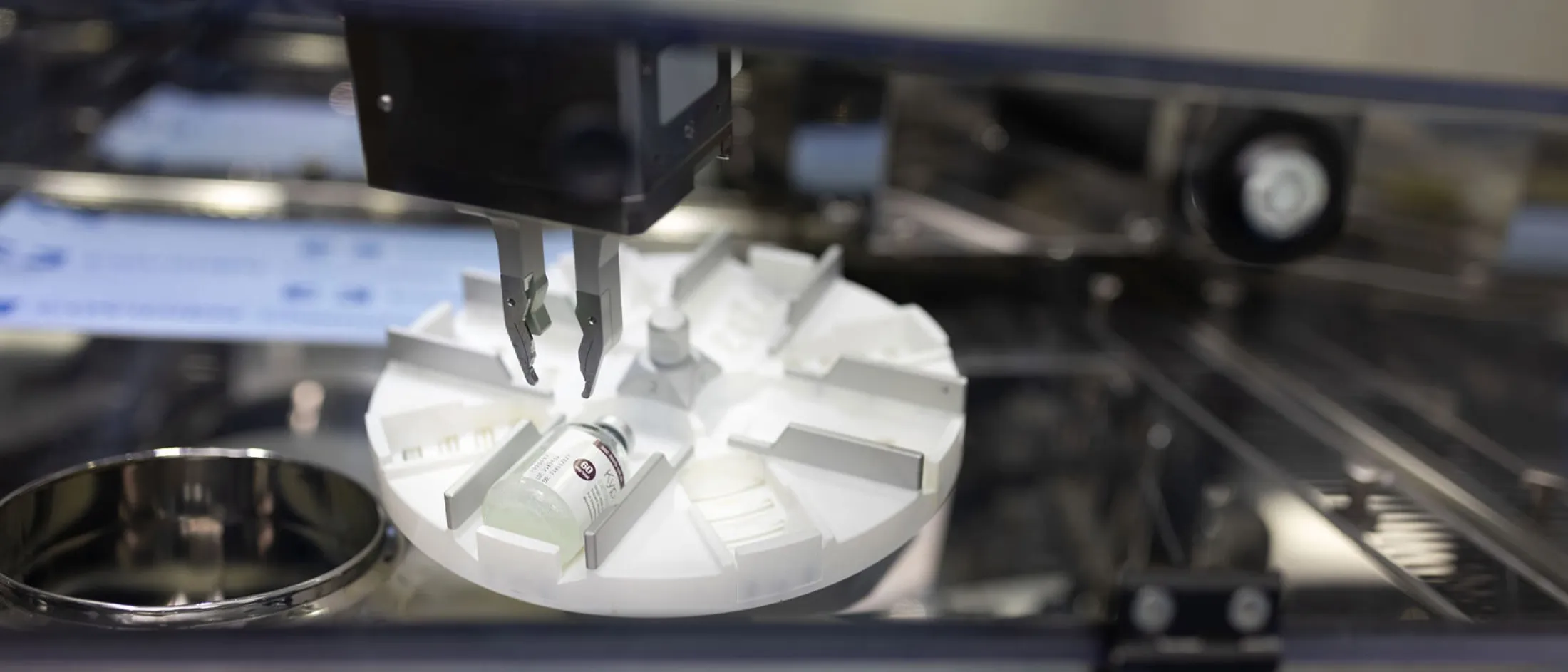
The Moses Campus and Weiler Hospital/Einstein Campus Investigational Drug Service (IDS) operate as one unified research unit, providing comprehensive investigational medication support across both campuses for all departments and clinics. Our team ensures safe, compliant, and efficient management of investigational drugs for all types of clinical trials — investigator-initiated, grant-funded, and industry-sponsored — in both inpatient and outpatient settings. We specialize in complex studies requiring 24-hour enrollment, multi-location transfers, and seamless inpatient-to-outpatient coordination. The IDS:
- Prepare and dispense study and emergency-use medications
- Procure drugs, create randomization tables, apply blinding techniques, and compound placebo-to-match formulations
- Provide guidance on investigational, nonformulary, and “off-label” medication use in research contexts
- Verify Epic orders and approve storage waivers per institutional policy
- Represent pharmacy on the Institutional Review Board (IRB)
Acting on behalf of principal investigators, the IDS translate research protocols into practical, regulatory-compliant medication workflows that support successful, high-quality clinical research.

Video could not be played
Publications
The work highlighted below represents a selection of key publications across our Pharmacy divisions.
-
Randomized Study of Metoclopramide Plus Diphenhydramine for Acute Posttraumatic Headache
Friedman BW, Irizarry E, Cain D, Caradonna A, Minen MT, Solorzano C, Zias E, Zybert D, McGregor M, Bijur PE, Gallagher EJ. Neurology. 2021 May 4;96(18):e2323-e2331.
-
Randomized, Double-Dummy, Emergency Department-Based Study of Greater Occipital Nerve Block With Bupivacaine Versus Intravenous Metoclopramide for Treatment of Migraine Headache
Friedman BW, Irizarry E, Williams A, Solorzano C, Zias E, Robbins MS, Harrilal MA, Del Valle M, Bijur PE, Gallagher EJ. Headache. 2020 Nov;60(10):2380-2388.
-
Ibuprofen Plus Acetaminophen Versus Ibuprofen Alone for Acute Low Back Pain: An Emergency Department-Based Randomized Study
Friedman BW, Irizarry E, Chertoff A, Feliciano C, Solorzano C, Zias E, Gallagher EJ. Acad Emerg Med. 2020 Mar;27(3):229-235.
-
A Randomized, Placebo-Controlled Trial of Ibuprofen Plus Metaxalone, Tizanidine or Baclofen for Acute Low Back Pain
Friedman BW, Irizarry E, Solorzano C, Zias E, Pearlman S, Wollowitz A, Jones MP, Shah PD, Gallagher EJ. Ann Emerg Med. 2019 Oct;74(4):512-520.
-
Randomized Trial of a Long-Acting Depot Corticosteroid Versus Dexamethasone to Prevent Headache Recurrence Among Patients with Acute Migraine Who Are Discharged from an Emergency Department
Latev A, Friedman BW, Irizarry E, Solorzano C, Restivo A, Chertoff A, Zias E, Gallagher EJ. Ann Emerg Med. 2019 Feb;73(2):141-149.