Video could not be played
News Brief
Study Reveals How Mutant KRAS Fuels Cancer Growth
July 2, 2026
Video could not be played
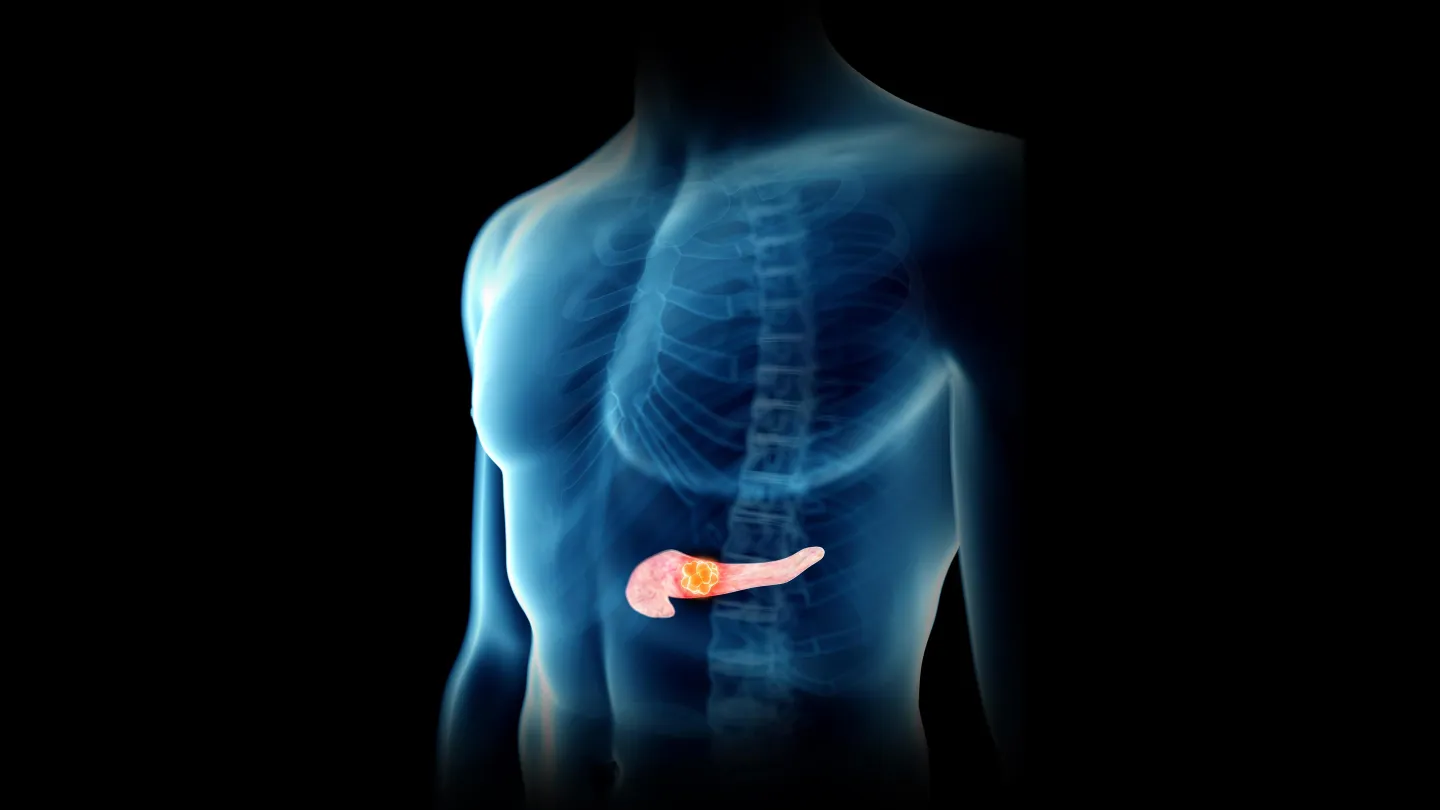
Mutations in a gene called KRAS drive many cases of pancreatic, lung, and colorectal cancer. A study led by Kamini Singh, Ph.D., and colleagues at Montefiore Einstein Comprehensive Cancer Center has uncovered a previously unknown way that mutant KRAS helps tumors grow. The findings, published in the June 23 online edition of Cell Reports, reveal a new weakness in that mechanism that could lead to more effective treatments for KRAS-driven cancers.
Cells make proteins by first copying genetic instructions from DNA into messenger RNA (mRNA). Ribosomes—tiny structures inside cells—then read those instructions to build proteins. Scientists have long known that mutant KRAS boosts protein production to help cancer cells grow, but exactly how it does this has remained unclear.
Using a technique called ribosome profiling, the researchers discovered that mutant KRAS selectively increases production of proteins that build and maintain the cell’s protein-making machinery. Rather than acting through well-known protein-production pathways, mutant KRAS uses a previously unknown mechanism to strengthen the system cancer cells depend on to survive and multiply.
The team also found that drugs that block KRAS disrupt this process. In human pancreatic cancer cells, KRAS inhibitors caused ribosomes to stall and sometimes collide, creating a form of cellular stress that interfered with efficient protein production.
The findings come as KRAS-targeted therapies are showing promise in patients. Earlier this year, a phase III clinical trial found that the KRAS inhibitor daraxonrasib significantly improved outcomes for people with pancreatic tumors carrying specific KRAS mutations. The new study helps explain how mutant KRAS supports tumor growth and suggests that combining KRAS inhibitors with drugs that target other protein-synthesis pathways could make treatments more effective and help overcome drug resistance.
Dr. Singh is an assistant professor of molecular pharmacology at Albert Einstein College of Medicine.