Video could not be played
News Brief
Possible New Treatment for Form of Acute Myeloid Leukemia
April 30, 2025
Video could not be played
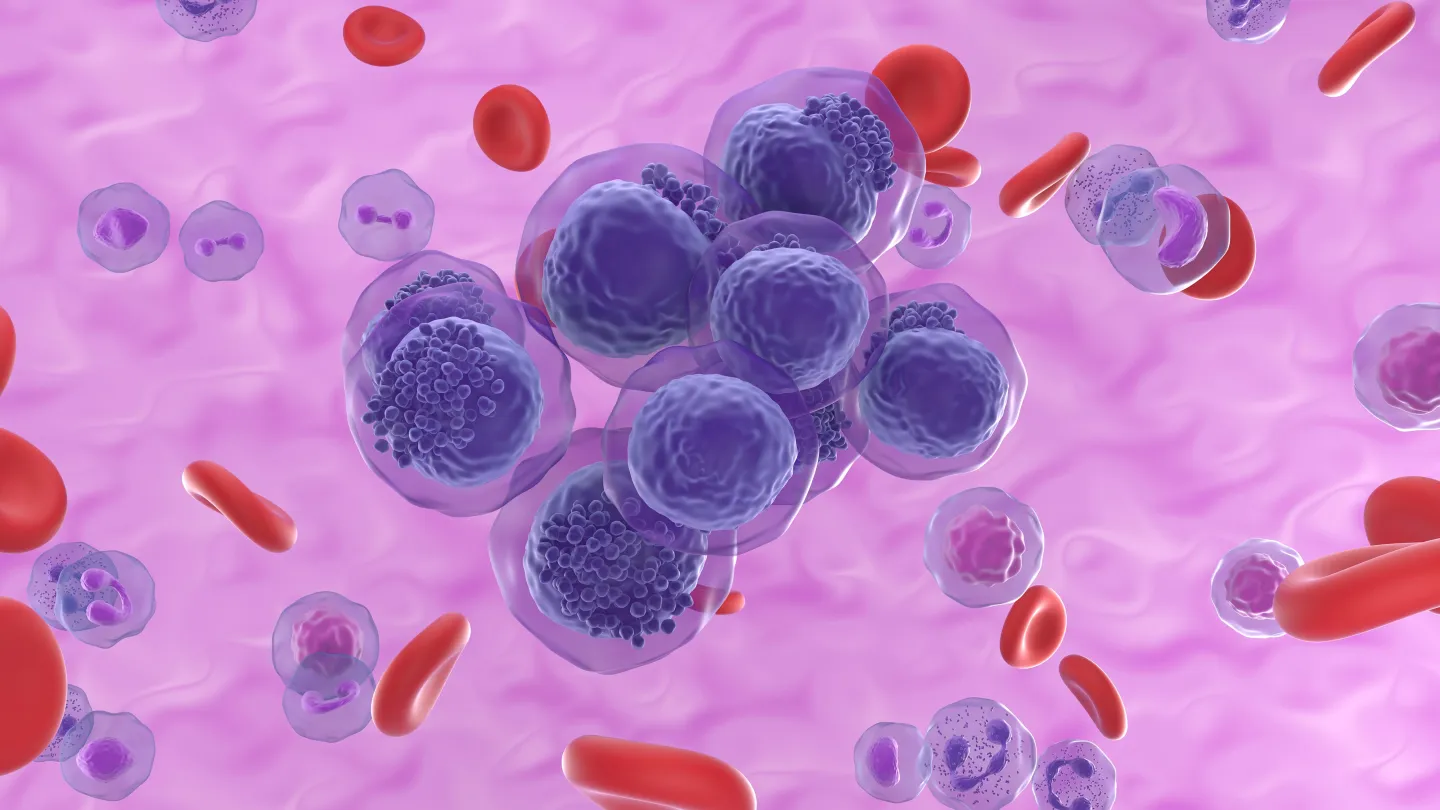
Post-MPN AMLis is a condition in which a myeloproliferative neoplasm (MPN) develops into acute myeloid leukemia (AML). Patients with post-MPN AML don’t respond to currently available therapies for either AML or MPN, and those treatment options generally don’t extend survival for more than a year.
In a study published online on March 31 in the journal Blood, Marina Konopleva, M.D., Ph.D., and colleagues identified the protein BCL-xL as a potential drug target for post-MPN AML. The researchers found that cells taken from post-MPN AML patients are highly dependent on BCL-xL to survive. They then showed that the experimental drug DT2216—designed to target and degrade BCL-xL without affecting platelets—made cancer cells more likely to die; and that combining DT2216 with azacytidine (a chemotherapy drug used to treat AML) blocked the growth of cancer cells taken from post-MPN AML patients. The findings suggest that DT2216 or a similar BCL-xL-degrading agent could be paired with other treatments to improve outcomes for people with post-MPN AML.
Dr. Konopleva is director of the leukemia program, co-director of the Translational Blood Cancer Institute at the National Cancer Institute-designated Montefiore Einstein Comprehensive Cancer Center and professor of oncology and of molecular pharmacology at Einstein.