
Característica
Equilibrar la residencia en patología y la investigación sobre enfermedades renales.
Sesión de preguntas y respuestas con la Dra. Selin Kurt, Jefa de Residentes de Patología.
3 de febrero de 2026
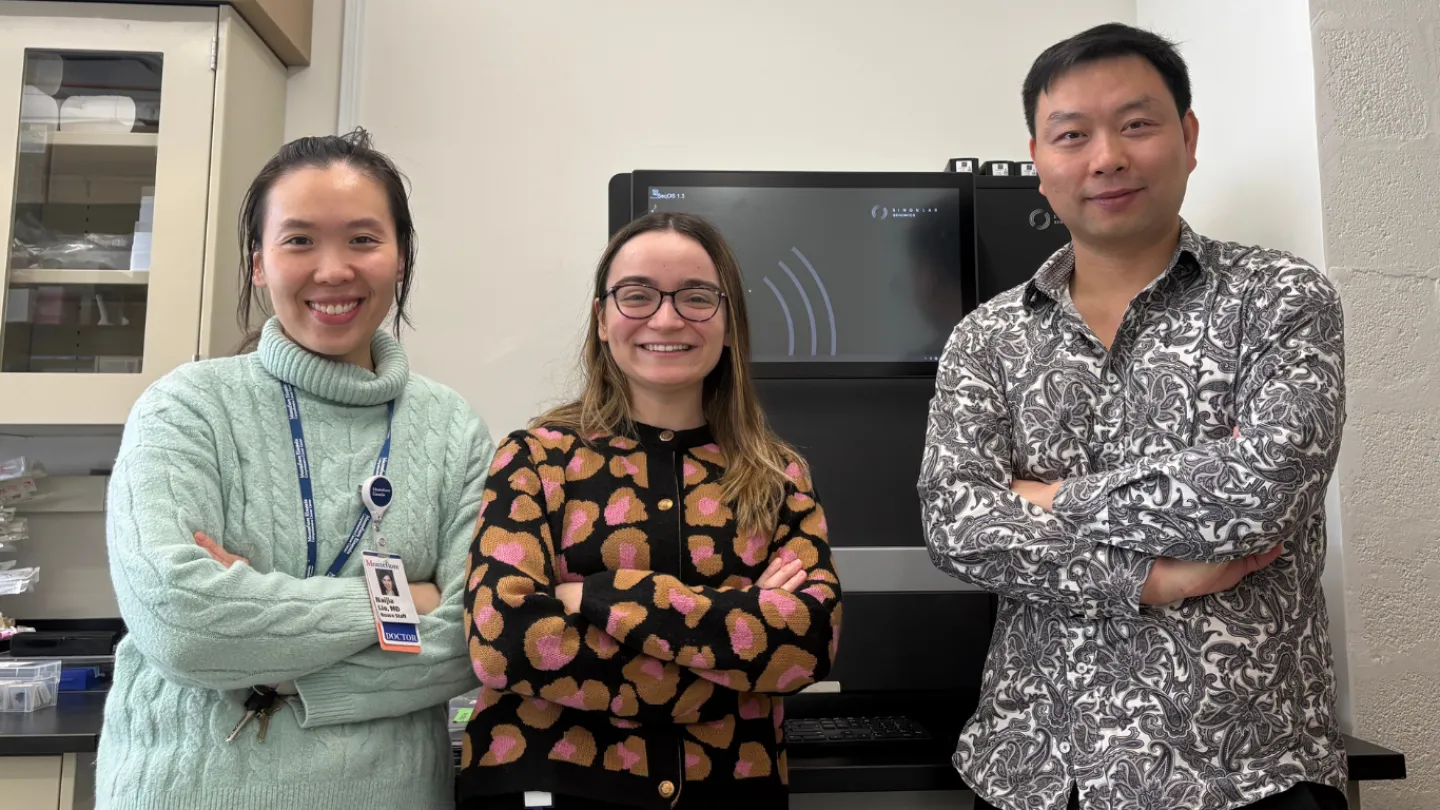
De izquierda a derecha: las residentes de patología Naijia Liu, MD (PGY2) y Selin Kurt (jefa y PGY3), y Shanye Yin, PhD, profesora asistente de patología y directora del Programa de Patología de Células Únicas y Bioinformática, en el Laboratorio Yin de Einstein.
Durante el último año, la Dra. Selin Kurt ha compaginado tres exigentes funciones en Montefiore Einstein. Es jefa de residentes de patología, gestiona tareas clínicas como residente de tercer año (PGY3) y dirige un proyecto de investigación traslacional centrado en la enfermedad renal.
Su trabajo estudia cómo se comportan las células epiteliales parietales (CEP) en las enfermedades renales. Algunas CEP ayudan a reparar el tejido, mientras que otras contribuyen a la formación de cicatrices a largo plazo. Comprender esta diferencia puede orientar futuros tratamientos que promuevan la curación y reduzcan el daño permanente.
Apoyo a la investigación en patología dirigida por estudiantes en formación.
Este proyecto cuenta con el apoyo de una beca de 2000 dólares del Programa de Becas de Investigación para Residencias y Becas de Patología. El Departamento de Patología gestiona el programa bajo la supervisión del Dr. Louis M. Weiss, profesor de patología y medicina (enfermedades infecciosas) y vicedirector de asuntos académicos e investigación (Departamento de Patología). La beca apoya a los residentes de patología que realizan investigaciones con profesores del departamento o de Einstein y proporciona los recursos necesarios para completar proyectos publicables.
El proyecto inicial del Dr. Kurt, realizado con los patólogos adjuntos de Montefiore, Garrison Pease, MD , patólogo quirúrgico genitourinario, y James Pullman, MD, PhD , patólogo quirúrgico y ex vicepresidente de Patología Anatómica que investiga enfermedades renales, y las residentes Ayesha Usman, MD (PGY2), y Emily Torres, MD (PGY1), analizó muestras de nefrectomía que contenían carcinoma de células renales. El equipo observó que los riñones con una mayor proporción de PEC con un inmunofenotipo específico presentaban un menor deterioro de la función renal, lo que sugiere que estas células desempeñan un papel protector. También identificaron células tubulares regeneradas que compartían este patrón.
Aplicación de la genómica espacial a la enfermedad renal
Para profundizar en estos hallazgos, el Dr. Kurt se unió al programa de formación de investigadores residentes en el laboratorio de Shanye Yin, PhD, profesora adjunta de patología y directora del Programa de Bioinformática y Análisis de Células Únicas en Patología de Einstein. El laboratorio de Yin utiliza la secuenciación de ARN de células individuales y la transcriptómica espacial para estudiar cómo interactúan las células dentro del tejido enfermo en diversos tipos de cáncer. Durante varios meses de trabajo práctico, el Dr. Kurt adquirió experiencia con estas tecnologías y comenzó un proyecto centrado en los mecanismos genéticos y celulares que impulsan la fibrosis renal. Los Dres. Kurt y Pullman continúan colaborando con el equipo de Yin para extender estos métodos a enfermedades renales no cancerosas, con especial atención a la atrofia tubular y la fibrosis intersticial.
Herramientas espaciales avanzadas para la investigación de enfermedades renales
El Dr. Yin afirmó que la plataforma multiómica espacial G4X, que combina la secuenciación espacial de ARN con el análisis de proteínas, permite a su equipo mapear los estados celulares, la organización espacial y los programas moleculares dentro del tejido renal intacto con alta resolución.
«Selin desempeña un papel fundamental al conectar las tecnologías espaciales avanzadas con la biología de las enfermedades renales, aplicando esta plataforma tanto al cáncer de riñón como a la fibrosis», añadió. «Su trabajo ayudará a definir cómo los ecosistemas celulares organizados espacialmente impulsan la progresión de la enfermedad en distintas patologías renales y acelerará la aplicación de los conocimientos espaciales en descubrimientos clínicamente relevantes».
El Dr. Yin da la bienvenida a los residentes de patología interesados en participar en los proyectos de investigación de su laboratorio.
Tras obtener su título de médica en la Universidad de Ankara, en Turquía, la Dra. Kurt realizó una estancia de observación en patología renal en el Departamento de Patología de la Facultad de Medicina de Harvard, perteneciente al Hospital Brigham and Women's. En 2027, tras finalizar su residencia en el Hospital Montefiore Einstein, se incorporará a la Universidad de Stanford para realizar una subespecialización en patología renal.
Hablamos con la Dra. Kurt sobre su investigación, su trayectoria formativa, cómo compagina el liderazgo, el trabajo clínico y las responsabilidades de investigación, y la comida turca que más echa de menos.
Preguntas y respuestas
P. ¿Qué le atrajo de la patología renal?
Mi primer contacto con este campo fue durante una estancia de observación en el centro de trasplantes de la Universidad de Pittsburgh. Esta especialidad combina datos clínicos con microscopía óptica, inmunofluorescencia y microscopía electrónica. La fisiología renal es compleja, y disfruté integrando estructura, función y patología.
P. ¿Por qué eligió los PEC como tema central de su investigación?
Las células epiteliales parietales ( PEC) se ubican en una unión crucial dentro de las unidades de filtración del riñón. Durante años, se creyó que solo desempeñaban una función de soporte. Nuevas investigaciones demuestran que participan en la lesión, la cicatrización y la reparación. Mi objetivo es comprender cuándo estas células favorecen la recuperación y cuándo contribuyen al daño a largo plazo. Este conocimiento puede orientar futuras terapias que potencien la reparación y limiten la cicatrización.
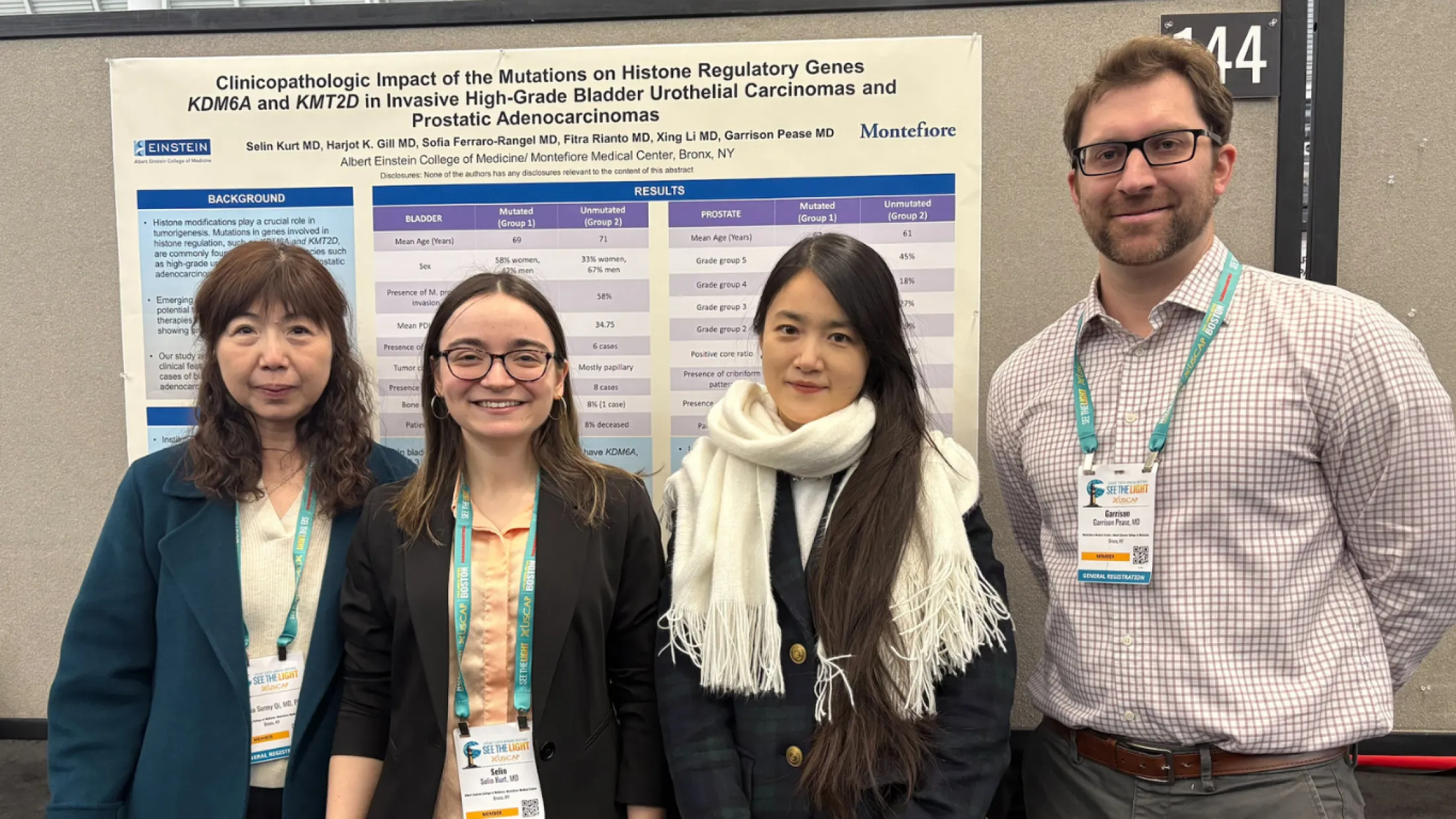
De izquierda a derecha: Xiao (Sunny) Qi, MD, PhD, ex residente de patología de Montefiore, Selin Kurt, MD, residente jefe, PGY3, Xing Li, MD, PGY3, y Garrison Pease, MD, patólogo quirúrgico genitourinario y profesor asistente de patología.
P. ¿Cómo contribuyó el Programa de Financiación para la Investigación en Patología a que su proyecto de investigación avanzara?
A. El programa me brindó la oportunidad de iniciar un proyecto que me motiva enormemente. El proceso de solicitud me ayudó a refinar y fortalecer mi hipótesis. Utilicé los fondos de la beca para realizar tinciones inmunohistoquímicas de los tejidos, y creo que los datos obtenidos aportan información fundamental que contribuirá a una comprensión más profunda del tema.
P. ¿Cuál era su experiencia previa en investigación traslacional?
A. Durante mis estudios de medicina, trabajé en proyectos de neurociencia y patología gastrointestinal. Esas experiencias me ayudaron a desarrollar habilidades de investigación y reforzaron mi interés por los mecanismos de las enfermedades.
P. ¿ Quiénes son los mentores que influyeron en su desarrollo y moldearon su forma de pensar sobre la ciencia y la medicina?
El Dr. Pullman me enseñó a abordar la patología desde una perspectiva científica. La Dra. Kritika Krishnamurthy, patóloga quirúrgica adjunta, me animó a mantener la curiosidad y a seguir aprendiendo. El Dr. Pease me demostró cómo unas sólidas habilidades en patología se relacionan directamente con la atención al paciente.
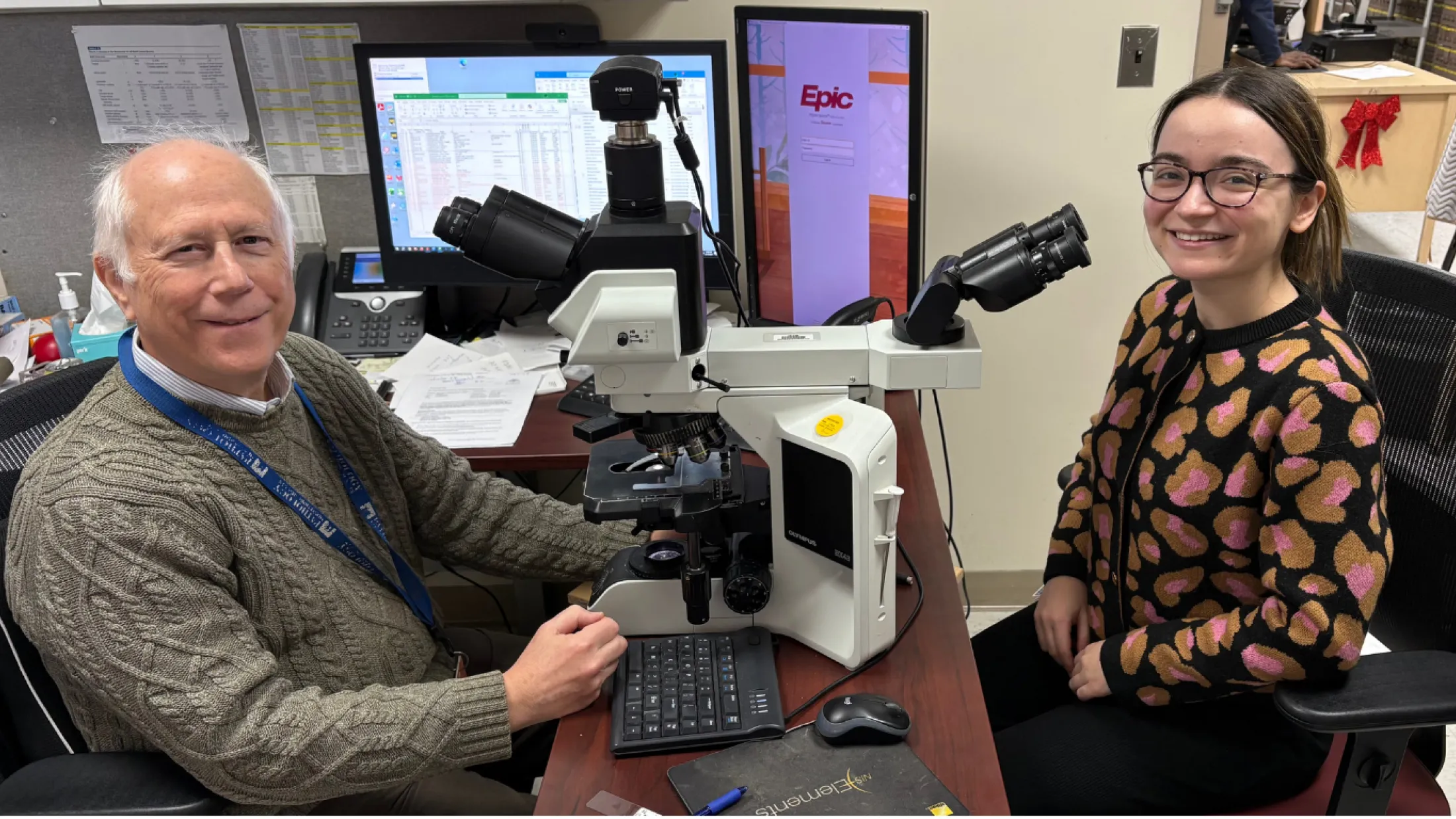
De izquierda a derecha: James Pullman, MD, PhD, patólogo quirúrgico y ex vicepresidente de Patología Anatómica, cuyo trabajo se centra en las enfermedades renales, junto con Selin Kurt, MD, residente de tercer año de patología y aprendiz de investigación.
P. ¿Cómo pueden los residentes encontrar mentores de investigación?
A. Empieza por un área que te interese. Luego, contacta con profesores que trabajen en ese campo. Ten paciencia; lleva tiempo establecer una conexión con un mentor cuyos intereses y enfoque coincidan con los tuyos, pero marca una gran diferencia.
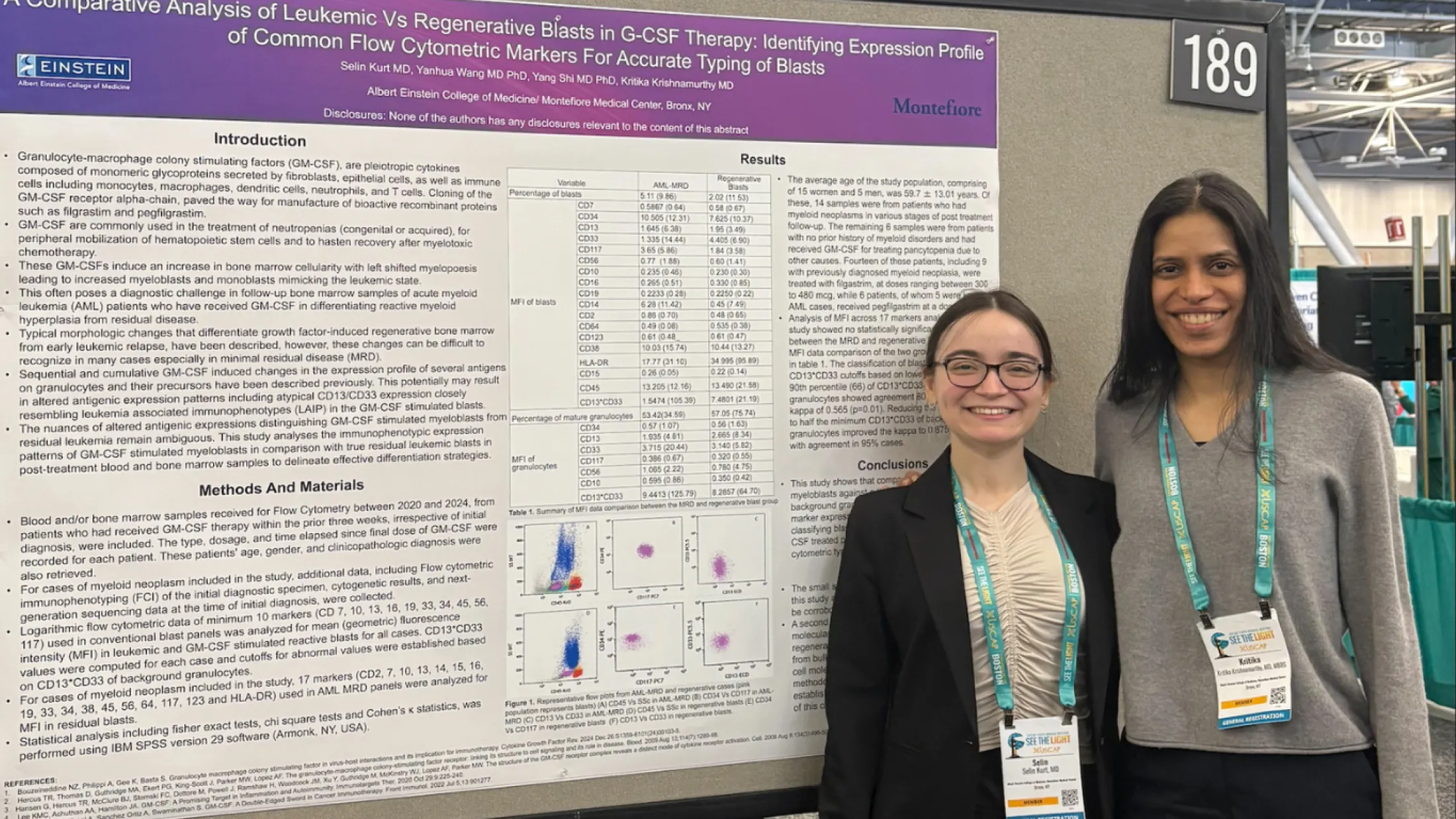
De izquierda a derecha: la Dra. Selin Kurt, jefa de residentes de patología, junto a su mentora, la Dra. Kritika Krishnamurthy, patóloga quirúrgica adjunta y profesora asistente de patología en Montefiore Einstein.
P: ¿Qué habilidades adquiriste trabajando en el laboratorio del Dr. Yin?
A. Adquirí experiencia en el análisis de datos espaciales y de células individuales, y aprendí cómo la ciencia de datos se integra con la patología. También pude observar cómo el trabajo en equipo y la comunicación impulsan el éxito de la investigación.
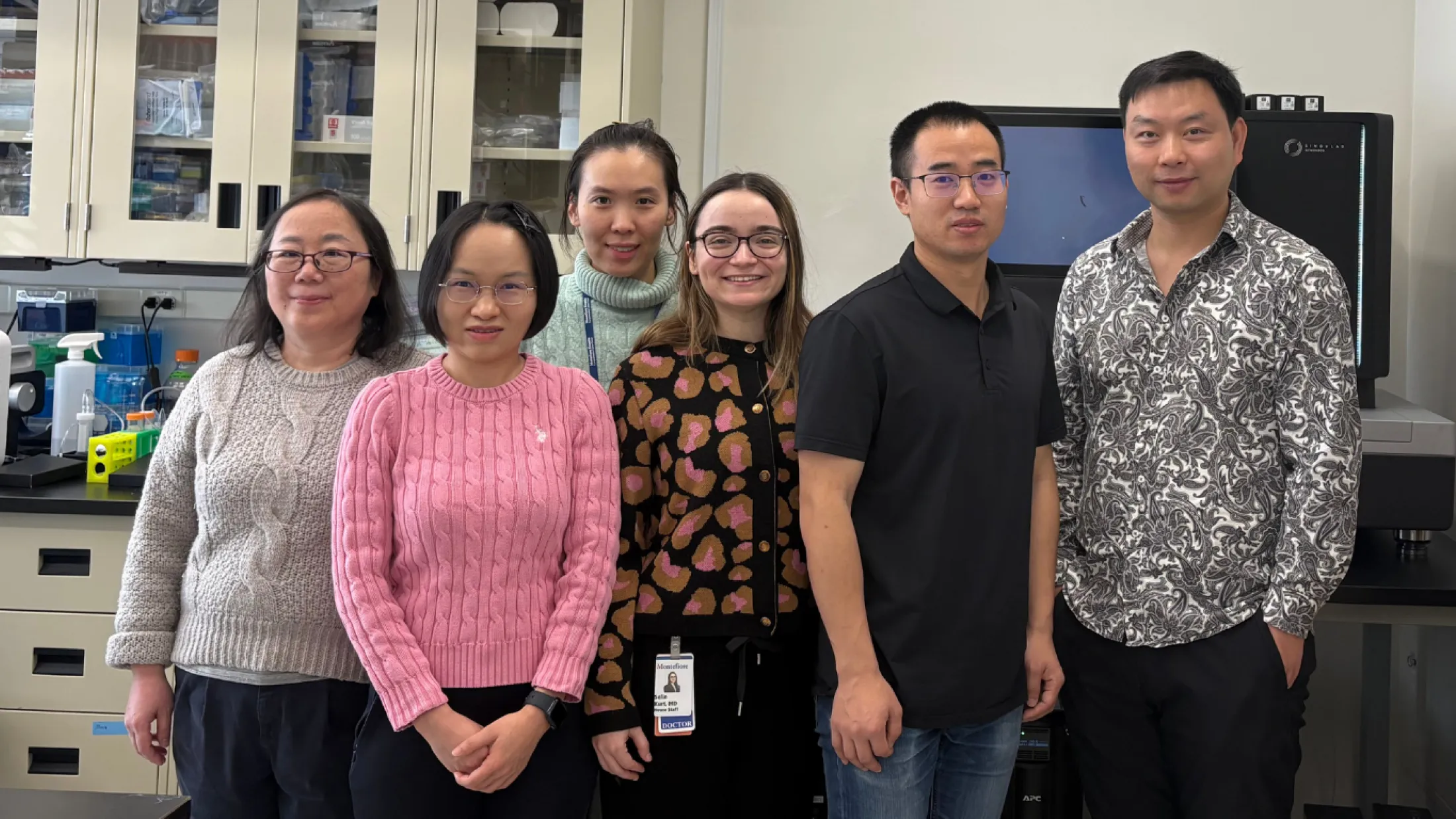
De izquierda a derecha: El equipo del Laboratorio Yin: Jing Zhu, PhD, investigadora científica; Jianhong An, PhD, becaria postdoctoral de investigación; Naijia Liu, residente de patología PGY2; Selin Kurt, residente de patología PGY3 y jefa de residentes de patología; Erqiang Hu, PhD, becaria postdoctoral de investigación, y Shanye Yin, PhD, investigadora principal.
P. Como jefe de residentes, ¿cómo compagina el trabajo clínico, la investigación y la labor administrativa?
Requiere mucho esfuerzo y sigo aprendiendo. La organización es fundamental. Planificar mi día temprano cada mañana me da una sensación de control y tranquilidad. Durante las rotaciones, me mantengo concentrado y eficiente. Como jefe, la comunicación y la disponibilidad para los residentes siguen siendo prioridades. En la investigación, priorizo la constancia reservando tiempo específico, lo que me permite avanzar de forma constante. Considero que estos roles son complementarios y se refuerzan mutuamente, en lugar de competir entre sí.
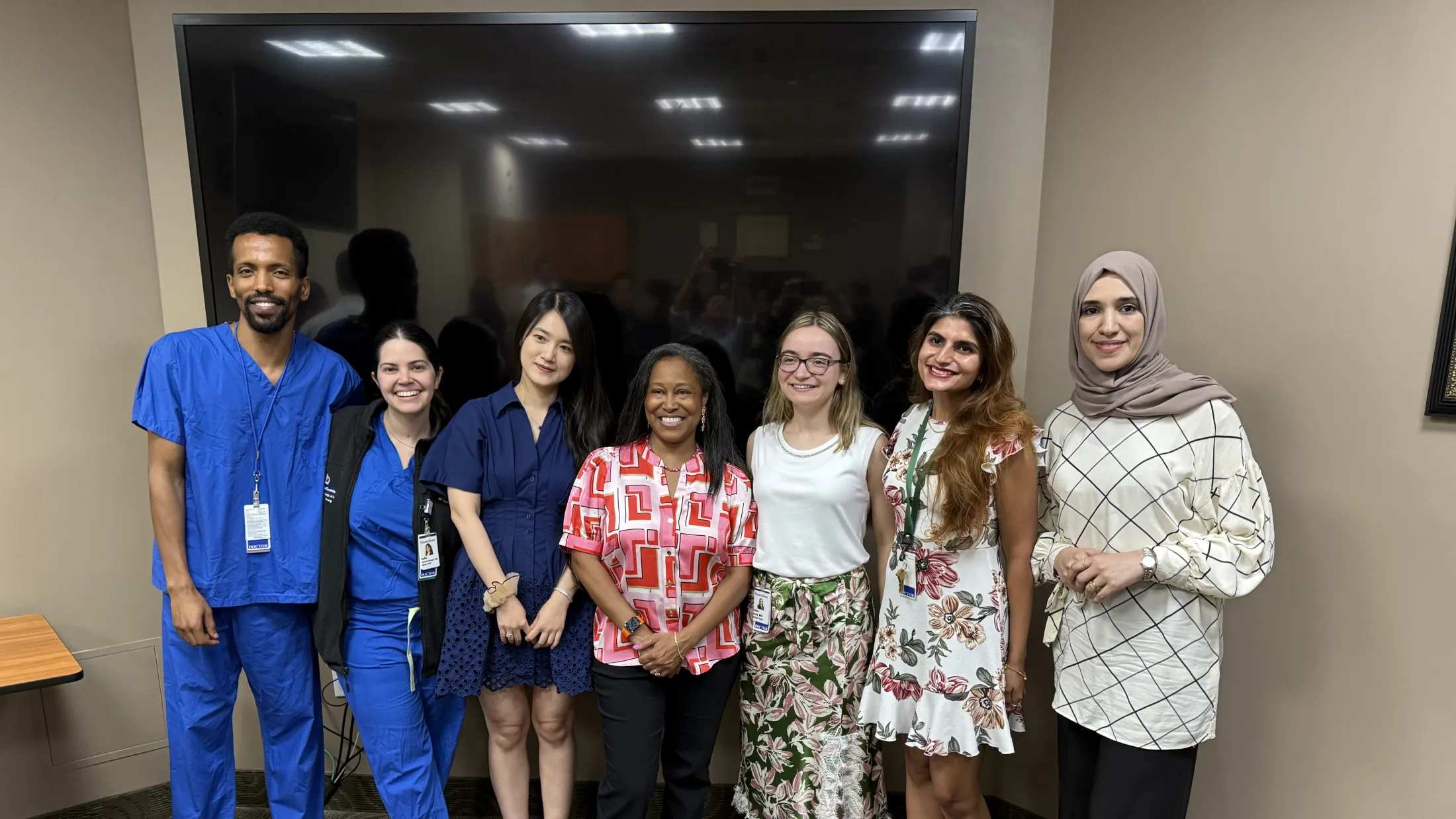
De izquierda a derecha: Residentes de patología PGY3 Tesfalem Israel Korga, MD, Sofia Ferraro Rangel, MD, (jefa), Xing Li, MD, directora de residencia de patología Tiffany Hebert, MD, residentes PGY3 Selin Kurt, (jefa) MD, Harjot Gill, MD (jefa), Ahlam Ali, MD.
P: Comenzarás una beca de especialización en patología renal en Stanford en 2027. ¿Cuáles son tus planes profesionales a largo plazo?
A. Planeo seguir centrándome en la patología renal médica y la investigación traslacional.
P. En lo personal, ¿qué comida turca echas más de menos y cuál es tu lugar favorito para encontrarla en Nueva York?
A. Lahmacun: es como una pizza turca con una masa fina y crujiente, cubierta con carne picada y tomate. Voy a Sultan o Bodrum, en Manhattan. A menudo llevo a otros residentes para que también la prueben.