
Video could not be played
Feature
Balancing Pathology Residency and Kidney Disease Research
A Q&A with Selin Kurt, MD, Chief Pathology Resident
February 3, 2026
Video could not be played
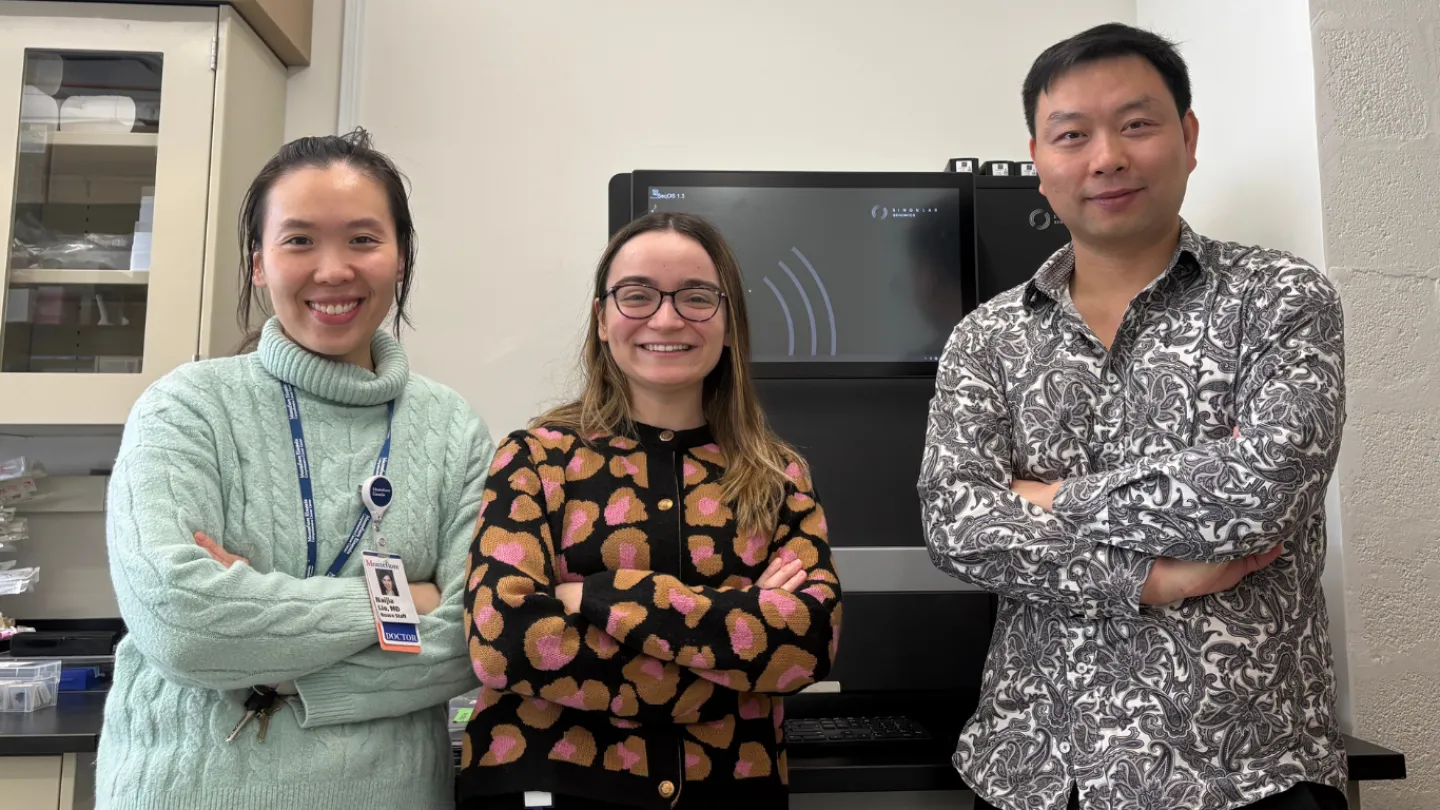
From left to right: Pathology residents Naijia Liu, MD, (PGY2) and Selin Kurt (chief and PGY3) and Shanye Yin, PhD, assistant professor of pathology and director of the Pathology Single Cell and Bioinformatics Program, in the Yin Lab at Einstein.
Over the past year, Dr. Selin Kurt, has balanced three demanding roles at Montefiore Einstein. She serves as pathology chief resident, manages clinical duties as a PGY3 resident, and drives a translational research project focused on kidney disease.
Her work studies how parietal epithelial cells, or PECs, behave across kidney diseases. Some PECs help repair tissue. Others drive long-term scarring. Understanding the difference can guide future treatments that promote healing and reduce permanent damage.
Supporting trainee-led research in pathology
This project is supported by a $2,000 award from the Pathology Residency and Fellowship Research Grant Program. The Department of Pathology runs the program under the oversight of Louis M. Weiss, MD, MPH, professor of pathology and medicine (infectious diseases), and vice chair of academic affairs and research (department of pathology). The grant supports pathology trainees conducting research with departmental or Einstein faculty and provides resources needed to complete publishable projects.
Dr. Kurt’s initial project, conducted with Montefiore attending pathologists Garrison Pease, MD, a genitourinary surgical pathologist, and James Pullman, MD, PhD, a surgical pathologist and former vice chair of Anatomic Pathology who researches kidney disease, and fellow residents Ayesha Usman, MD (PGY2), and Emily Torres, MD (PGY1), analyzed nephrectomy specimens containing renal cell carcinoma. The team observed that kidneys containing a higher proportion of PECs with a specific immunophenotype showed less decline in kidney function, suggesting these cells play a protective role. They also identified regenerated tubular cells sharing this pattern.
Applying spatial genomics to kidney disease
To expand on these findings, Dr. Kurt joined the resident research training program in the laboratory of Shanye Yin, PhD, assistant professor of pathology and director of the Pathology Single Cell and Bioinformatics Program at Einstein. The Yin lab uses single-cell RNA sequencing and spatial transcriptomics to study how cells interact within diseased tissue across multiple cancer types. During several months of hands-on work, Dr. Kurt gained experience with these technologies and began a project focused on the genetic and cellular mechanisms driving kidney fibrosis. Drs. Kurt and Dr. Pullman continue working with the Yin team to extend these methods to non-cancer kidney disease, with a focus on tubular atrophy and interstitial fibrosis.
Advanced spatial tools for kidney disease research
Dr. Yin said the G4X spatial multi-omics platform, which combines spatial RNA sequencing with protein analysis, enables his team to map cell states, spatial organization, and molecular programs within intact kidney tissue at high resolution.
“Selin is playing a key role in bridging advanced spatial technologies with kidney disease biology by applying this platform to both kidney cancer and fibrosis,” he added. “Her work will help define how spatially organized cellular ecosystems drive disease progression across distinct renal pathologies and accelerate the translation of spatial insights into clinically meaningful discoveries.”
Dr. Yin welcomes pathology residents interested in participating in his lab’s research projects.
After earning her medical degree from Ankara University, in Turkey, Dr. Kurt participated in a renal pathology observership at Brigham and Women’s Hospital, Harvard Medical School Department of Pathology. She will head to Stanford University for a renal pathology fellowship in 2027, after graduating from residency at Montefiore Einstein.
We spoke with Dr. Kurt about her research, training path, and how she manages leadership, clinical work, and research responsibilities, and the Turkish food she misses most.
Q&A
Q. What drew you to renal pathology?
A. My first exposure came during an observership at the transplant center at the University of Pittsburgh. The field combines clinical data with light microscopy, immunofluorescence, and electron microscopy. Kidney physiology is complex, and I enjoyed integrating structure, function, and pathology.
Q. Why did you choose PECs as your research focus?
A. PECs sit at an important junction inside the kidney’s filtering units. For years, they were thought to play only a support role. New research shows they participate in injury, scarring, and repair. My goal is to understand when these cells help recovery and when they contribute to long-term damage. That knowledge can guide future therapies that boost repair and limit scarring.
Video could not be played
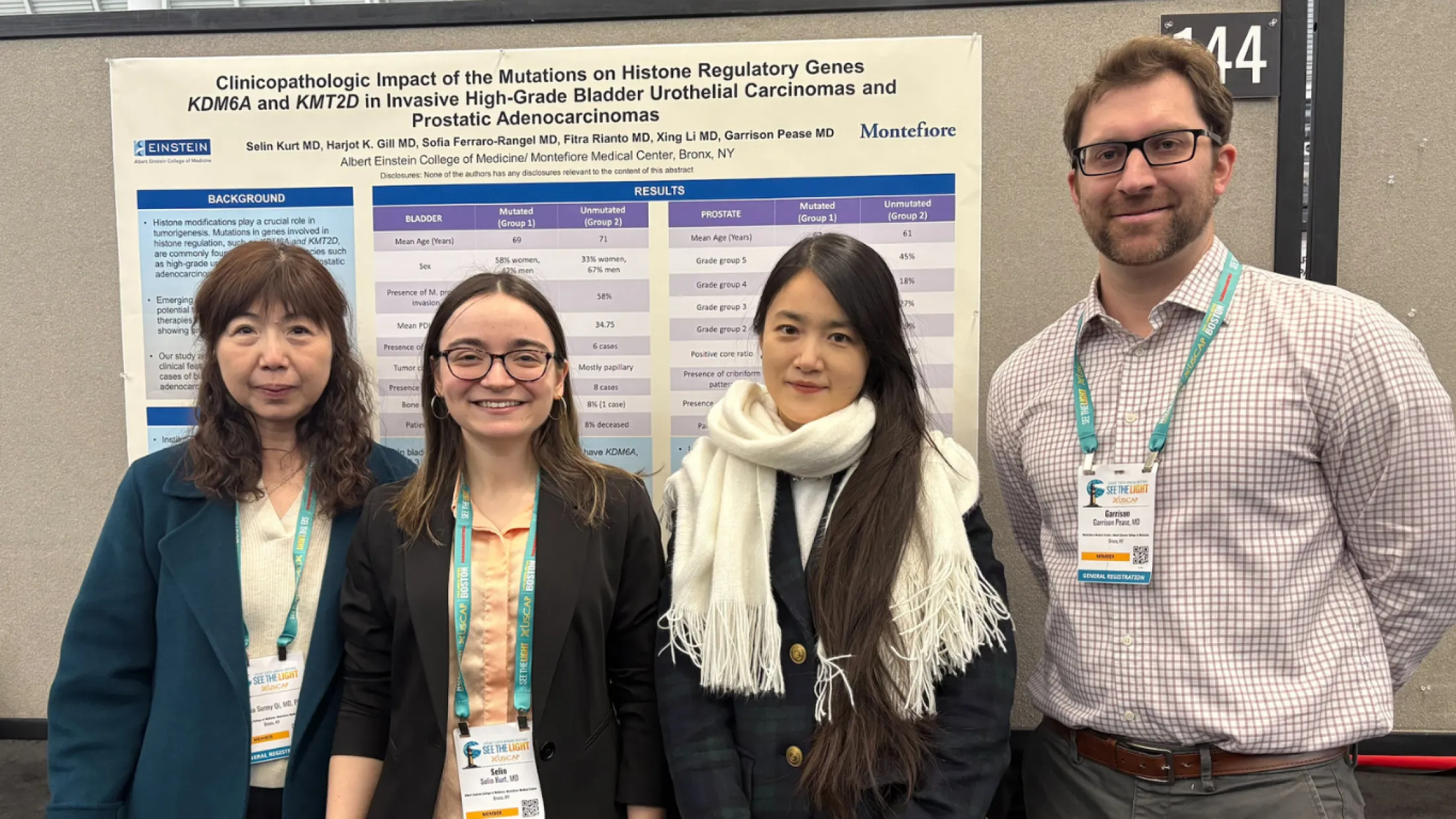
From left to right: Xiao (Sunny) Qi, MD, PhD, former Montefiore pathology resident, Selin Kurt, MD, chief resident, PGY3, Xing Li, MD, PGY3, and Garrison Pease, MD, genitourinary surgical pathologist and assistant professor of pathology.
Q. How did the Pathology Research Funding Program help move your research project forward?
A. The program provided me with the opportunity to launch a project I am highly motivated to pursue. The application process itself helped me refine and strengthen my hypothesis. I used the grant funding to perform immunohistochemical staining of the tissues, and I believe the resulting data provide important foundational insights that will contribute to a deeper understanding of the topic.
Q. What was your prior experience in translational research?
A. In medical school, I worked on neuroscience and gastrointestinal pathology projects. Those experiences helped me develop research skills and strengthened my interest in disease mechanisms.
Q. Who are mentors who influenced your development and shaped how you think about science and medicine?
A. Dr. Pullman taught me to approach pathology scientifically. Dr. Kritika Krishnamurthy, an attending surgical pathologist, encouraged me to stay curious and continue learning. Dr. Pease demonstrated how strong pathology skills connect directly to patient care.
Video could not be played
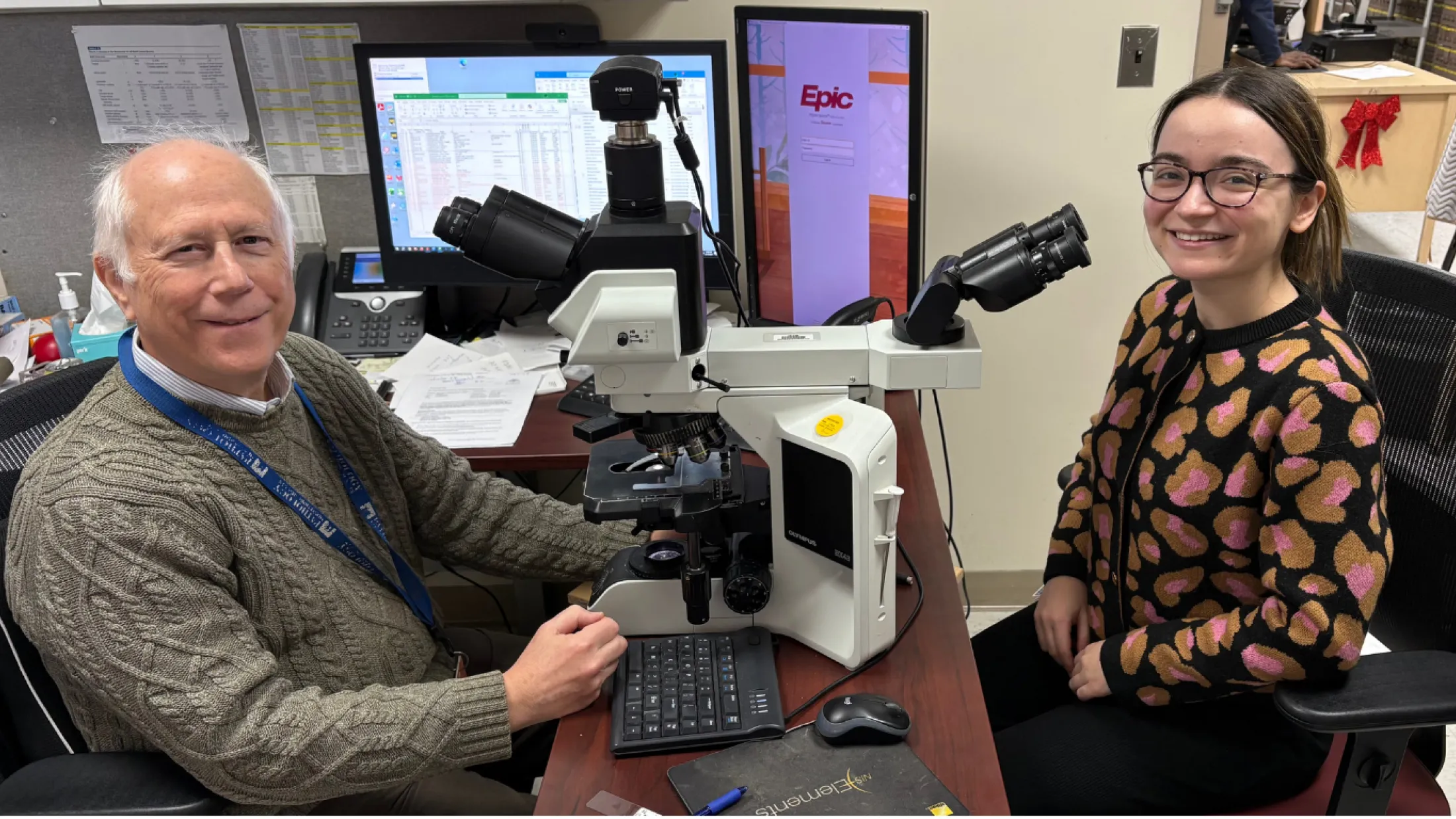
Left to right: Surgical pathologist and former Vice Chair of Anatomic Pathology James Pullman, MD, PhD, whose work focuses on kidney disease, with Selin Kurt, MD, PGY3, chief pathology resident and research mentee.
Q. How can residents find research mentors?
A. Start with an area you care about. Then contact faculty working in that field. Be patient; it takes time to build a connection with a mentor whose approach and interests align with yours but makes a big difference.
Video could not be played
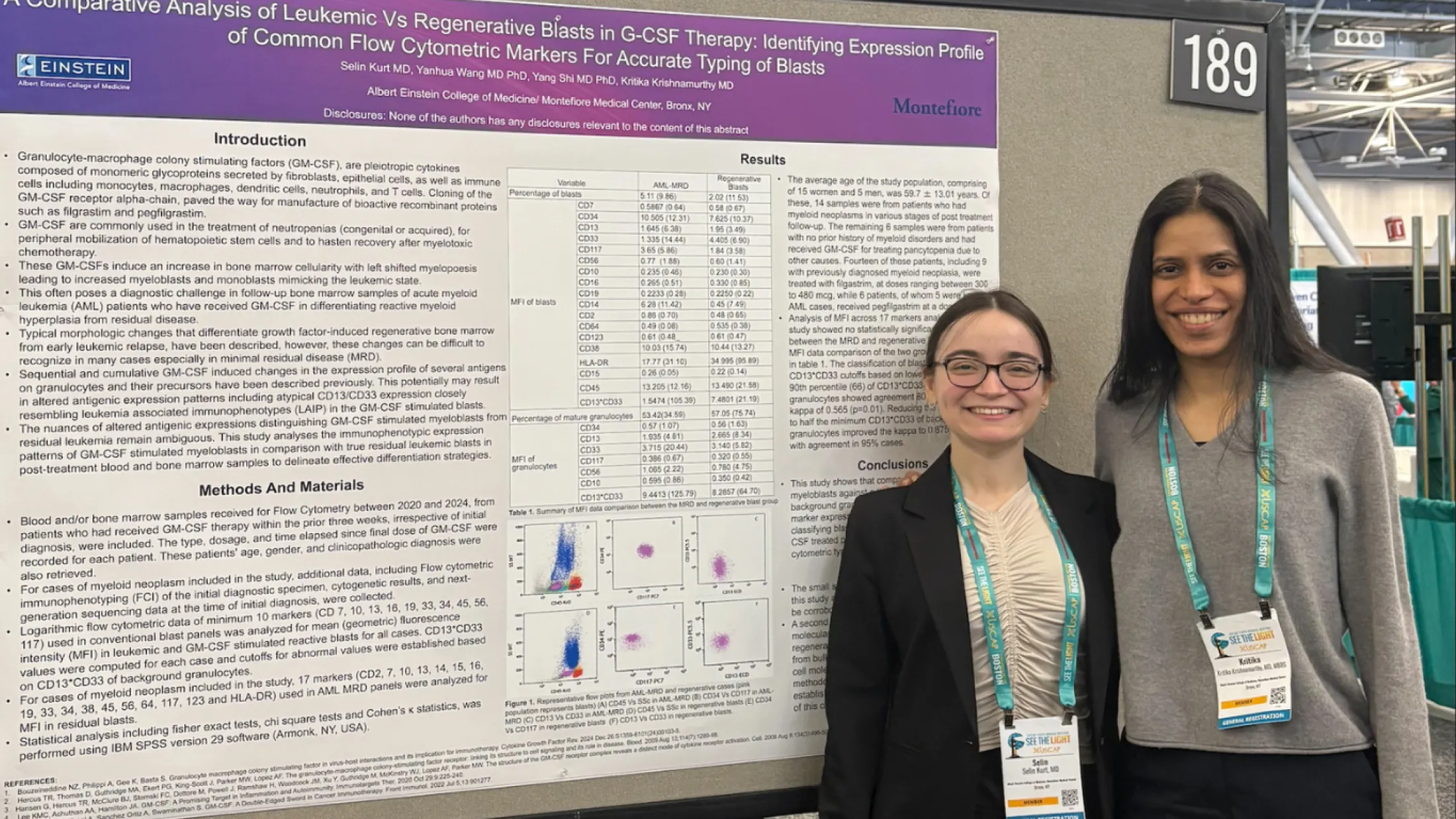
From left: Pathology chief resident Selin Kurt, MD, with mentor Kritika Krishnamurthy, MD, an attending surgical pathologist and assistant professor of pathology at Montefiore Einstein.
Q. What skills did you gain working in Dr. Yin’s lab?
A. I gained experience in single-cell and spatial data analysis and learned how data science integrates with pathology. I also saw how teamwork and communication drive successful research.
Video could not be played
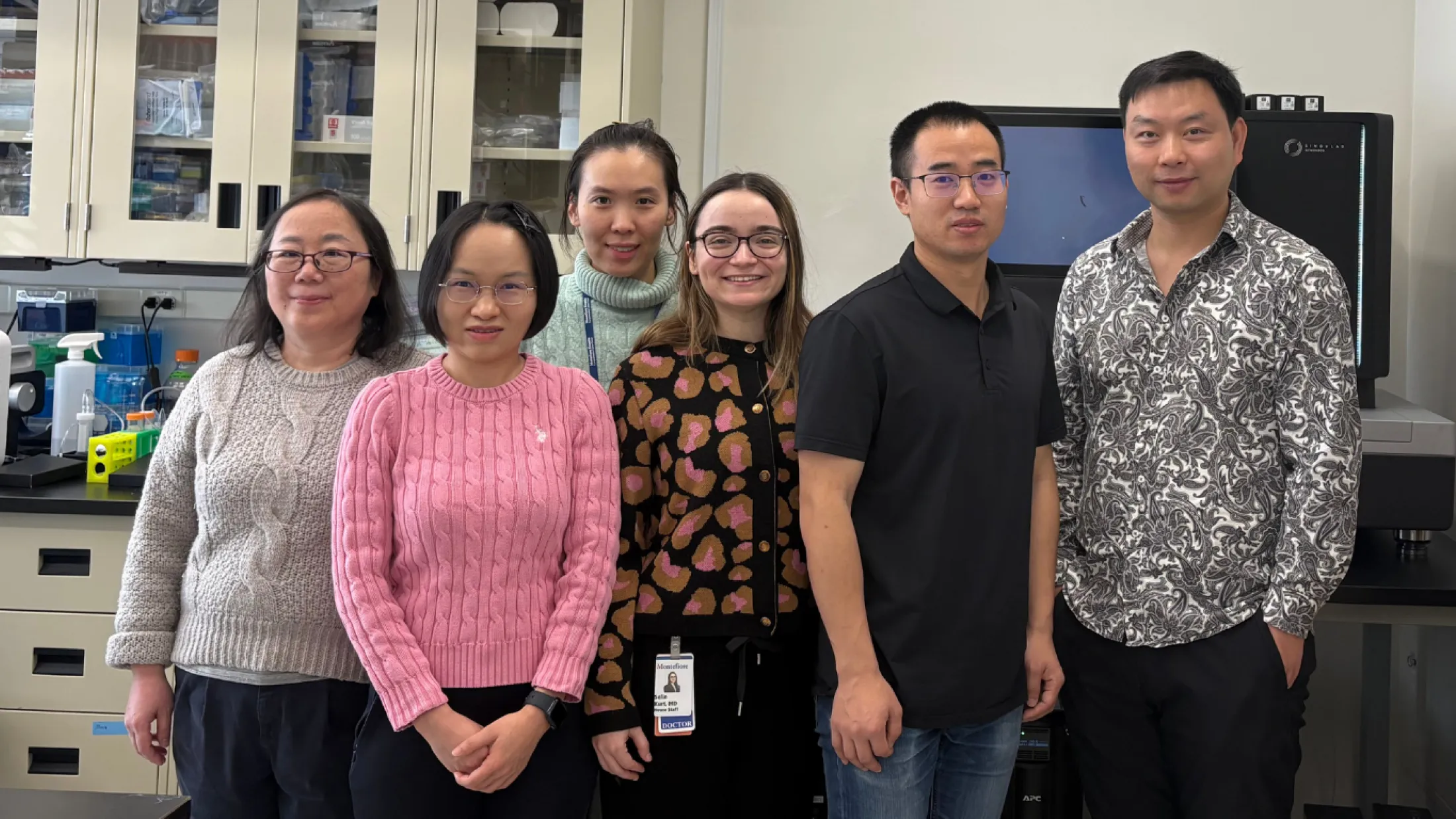
From left to right: The Yin Lab team: Jing Zhu, PhD, research scientist; Jianhong An, PhD, post-doctoral research fellow; Naijia Liu, PGY2 pathology resident; Selin Kurt, PGY3 and chief pathology resident; Erqiang Hu, PhD, post-doctoral research fellow,
Q. As chief resident, how do you balance clinical, research, and administrative work?
A. It takes a great deal of effort, and I am still learning. Organization matters. Planning my day early each morning gives me a sense of control and comfort. During rotations, I stay focused and efficient. As chief, communication and availability for residents remain priorities. In research, I prioritize consistency by protecting dedicated time, which allows me to make steady progress. I see these roles as complementary and mutually reinforcing rather than competing.
Video could not be played
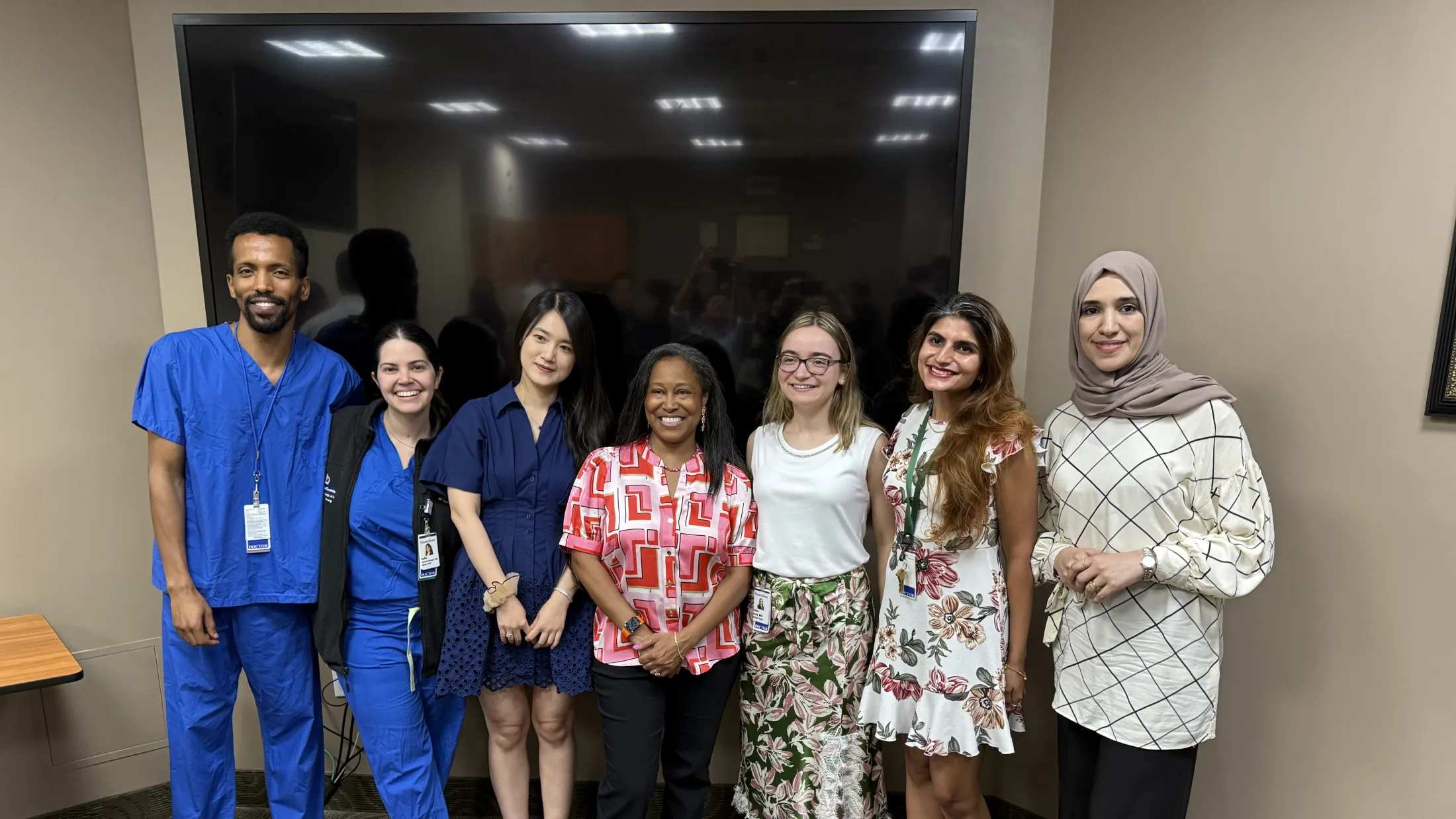
From left to right: PGY3 pathology residents Tesfalem Israel Korga, MD, Sofia Ferraro Rangel, MD, (chief), Xing Li, MD, Pathology residency director Tiffany Hebert, MD, PGY3 residents Selin Kurt, (chief) MD, Harjot Gill, MD (chief), Ahlam Ali, MD.
Q. You’ll begin a renal pathology fellowship at Stanford in 2027. What are your long-term career plans?
A. I plan to continue focusing on medical renal pathology and translational research.
Q. On a personal note, what Turkish food do you miss most and where is your go-to place to find it in NYC?
A. Lahmacun – it’s like a Turkish pizza with a thin, crispy dough topped with ground beef and tomato. I go to Sultan or Bodrum, in Manhattan. I often bring fellow residents so they can try it too.