Comunicado de prensa
El desgaste muscular relacionado con la edad se relaciona con un defecto en el reciclaje celular
3 de diciembre de 2025 (BRONX, NY)
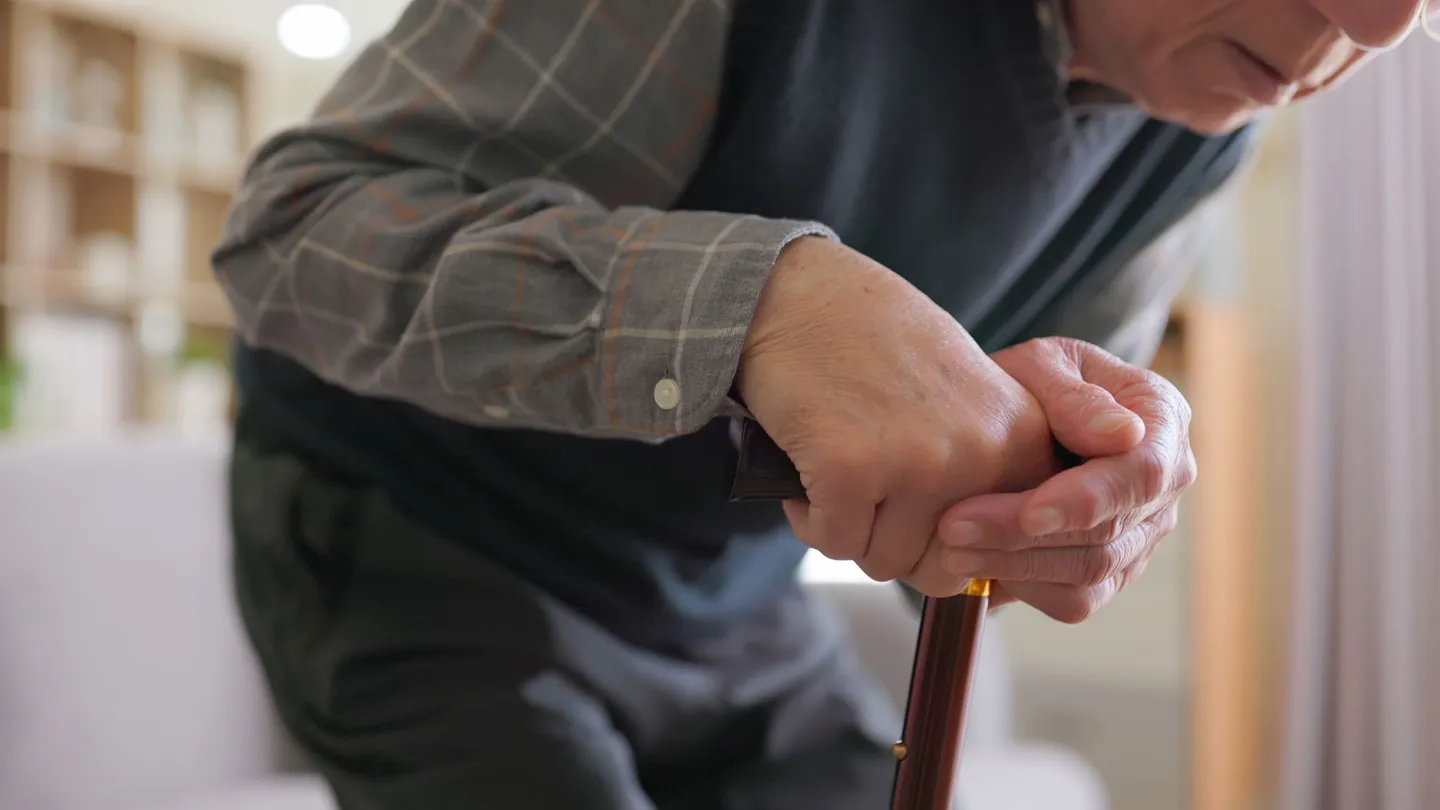
Two related studies published today in Nature Metabolism show that a specialized intracellular recycling mechanism—chaperone-mediated autophagy (CMA)—is essential for muscle health. The research, conducted in animal models and human muscle samples, found that CMA preserves muscle strength and enables muscles to repair themselves and that boosting CMA activity is a potential therapeutic strategy for preventing age-related muscle decline. Both studies were led in part by Albert Einstein College of Medicine’s Ana Maria Cuervo, M.D, Ph.D., one of the world’s leading authorities on the role of CMA in health and disease.

“Sarcopenia or muscle wasting often accompanies aging, affecting half of all people over age 80 and significantly raising their risk for falls, injuries, and hospitalizations,” said Dr. Cuervo, distinguished professor of developmental & molecular biology and of medicine, the Robert and Renée Belfer Chair for the Study of Neurodegenerative Diseases, and co-director of the Institute for Aging Research at Einstein. “One of our interesting findings is that simple lifestyle interventions, such as exercise and fasting, can boost CMA activity and help prevent age-related muscle wasting.”
The Need to ‘Gather Up the Garbage’
CMA allows cells to eliminate damaged or unnecessary proteins and reuse parts of them to build new proteins. In previous studies, Dr. Cuervo and colleagues demonstrated that reduced CMA activity allows intracellular “garbage” to build up in nerves and other cells, leading to neurodegenerative diseases, such as Alzheimer’s, as well as vascular and metabolic diseases. However, little was known about the role of CMA in skeletal muscle health.
For the current studies, the researchers developed two mouse models that, from a young age, lacked CMA activity in two key types of muscle cells: muscle fibers (cells that generate movement by contracting) and muscle stem cells, which form new muscle cells in response to injury.
In the mice lacking CMA in their muscle fibers, damaged proteins accumulated in the fibers, interfering with muscle contraction and leading to muscle weakness and changes in muscle structure. In the second mouse model, turning off CMA in muscle stem cells sharply reduced the stem cells’ ability to produce new muscle cells. The observations in these two mouse models resembled what occurs in age-related muscle loss in humans. Conversely, the researchers showed that enhancing CMA in older mice (either genetically in skeletal muscle fibers or pharmacologically in muscle stem cells) improved muscle function, strength, and their regenerative capacity.
Lifestyle Choices and Muscle Health
The studies also demonstrated that CMA in skeletal muscle is sensitive to poor nutritional choices (e.g., fat-rich diets associated with obesity) and to aging, with both leading to reduced CMA activity. Conversely, the researchers showed for the first time that exercise and fasting in mice are both effective in boosting CMA activity in muscle.
CMA decline may be one of the earliest molecular events in muscle aging, said Dr. Cuervo. “As we age, a decline in CMA activity is noticeable in multiple organs including muscle. We found this in the muscle from both our mouse models and in healthy, elderly people that we examined as part of this study—even before clear evidence that muscle function has deteriorated. We also found that the muscles of elderly patients with sarcopenia had markedly reduced CMA activity. Our findings identify CMA as a vital guardian of muscle integrity and a promising target for preventing or treating sarcopenia in aging populations.”
The first paper is titled, “Age-related decline of chaperone-mediated autophagy in skeletal muscle leads to progressive myopathy.” The senior author is Dr. Cuervo and Olaya Santiago-Fernandez, a Ph.D., led this project. The other Einstein contributors include Luisa Coletto, Ph.D., Inmaculada Tasset, Ph.D., Susmita Kaushik, Ph.D., Adrián Macho-González, Ph.D., Kristen Lindenau, M.S., Antonio Diaz, Rabia R. Khawaja, Ph.D., Bhakti Chavda, M.S., and Aiara Gazteluiturri.
The second paper is titled, “Chaperone-mediated autophagy sustains muscle stem cell regenerative functions but declines with age.” The senior authors are Dr. Cuervo and Pura Muñoz-Cánoves, Ph.D., of the Altos Labs San Diego Institute of Science, San Diego, CA. The other Einstein contributors include Mrs. Chavda, Dr. Santiago-Fernández, Mr. Diaz, and Ms. Lindenau.