Noticia breve
Generación de células inmunes para atacar selectivamente el VIH o el cáncer
8 de septiembre de 2025
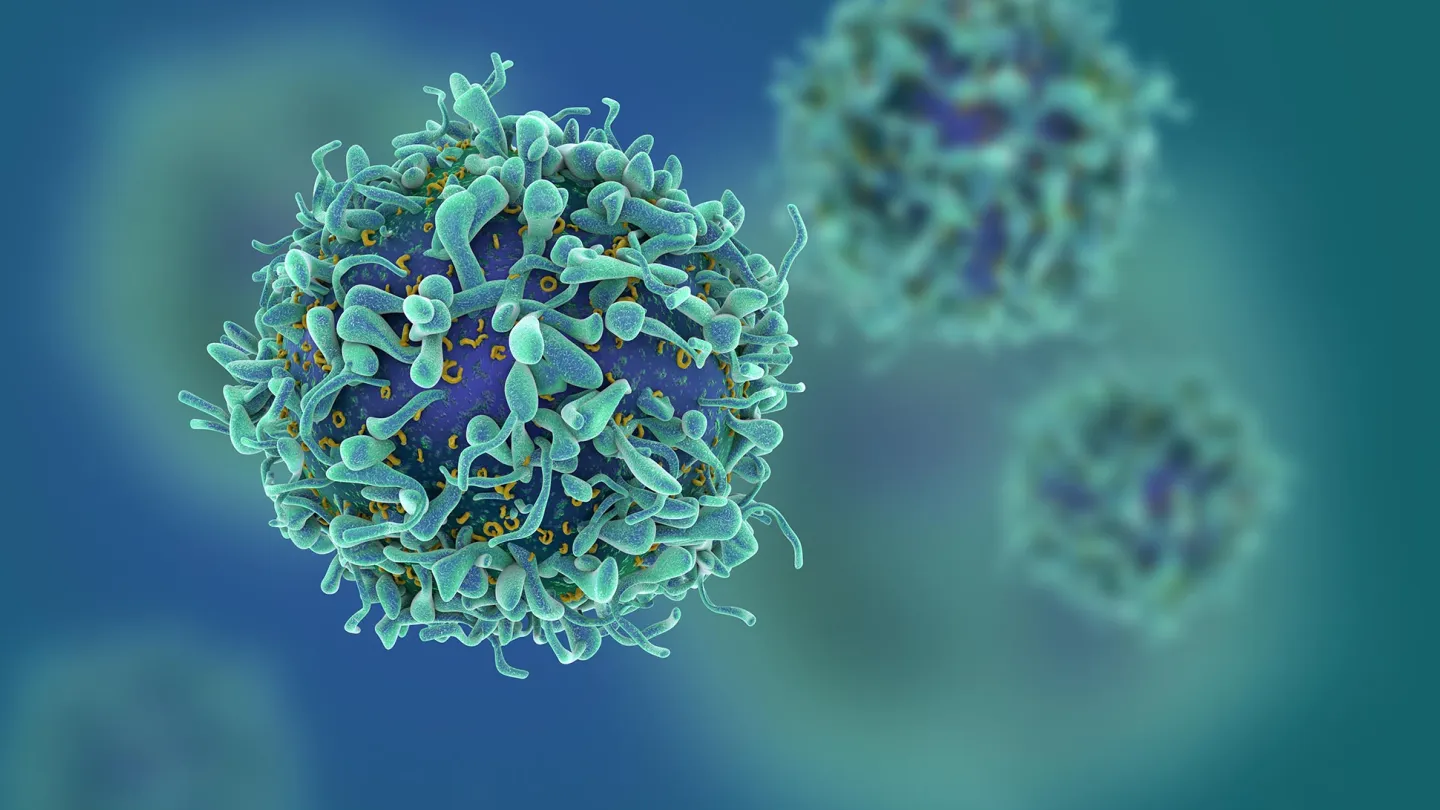
Si bien la terapia antirretroviral (TAR) de por vida suprime la replicación del VIH, no elimina la infección. Investigadores dirigidos por el Dr. Harris Goldstein y el Dr. Steven Almo demostraron que las proteínas a medida, denominadas Immuno-STAT, desarrolladas por el laboratorio de Almo, pueden inducir selectivamente una potente respuesta inmunitaria contra células infectadas por el VIH o células cancerosas, mucho más focalizada que la inducida por las vacunas. Los resultados se publicaron en línea el 5 de agosto en la revista Journal of Virology .
April Mueller, estudiante de maestría en tecnología en el laboratorio Goldstein, demostró que los inmuno-STAT pueden estimular respuestas de linfocitos T altamente focalizadas, específicas del epítopo del VIH, capaces de atacar el "talón de Aquiles" del virus. La proteína funciona enviando dos señales clave a los linfocitos T: una señal específica de péptidos a través de sus receptores y otra a través de CD28, una molécula de linfocitos T necesaria para activar los linfocitos T "vírgenes". Esta estrategia escalable generó grandes cantidades de linfocitos T específicos del VIH a partir de glóbulos blancos de personas no expuestas previamente al VIH, que resultaron altamente eficaces para eliminar las células infectadas por el VIH. La estrategia también funcionó contra células portadoras de una proteína relacionada con el melanoma, lo que demuestra su potencial uso en la inmunoterapia contra el cáncer.
El trabajo debería mejorar la eficacia terapéutica de la transferencia adoptiva de células T específicas del VIH aisladas de pacientes y reinfundidas tras la expansión selectiva de células T impulsada por Immuno-STAT, lo que proporciona la focalización óptima de las células infectadas por el VIH. Esta misma estrategia podría ser eficaz para otros virus, así como para muchos tipos de cáncer.
El Dr. Goldstein es profesor de pediatría, microbiología e inmunología, decano asociado sénior de asuntos científicos, Chair de la Cátedra Charles Michael de Enfermedades Autoinmunes y director del Centro Einstein-Rockefeller-CUNY para la Investigación del SIDA . El Dr. Almo es profesor y director de bioquímica, Chair de Esclerosis Múltiple e Inmunología de la Fundación Familiar Wollowick, director del Centro de Desarrollo de Terapéutica Macromolecular, colíder del Programa de Terapéutica del Cáncer en el Montefiore Einstein Comprehensive Cancer Center, designado por el Instituto Nacional del Cáncer, y cofundador de Cue Biopharma, una empresa de oncología en fase clínica que licenció la plataforma Immuno-STAT como su tecnología fundacional.