Noticia breve
Studying How Fat Cells Influence Metabolic Disorders
August 26, 2025
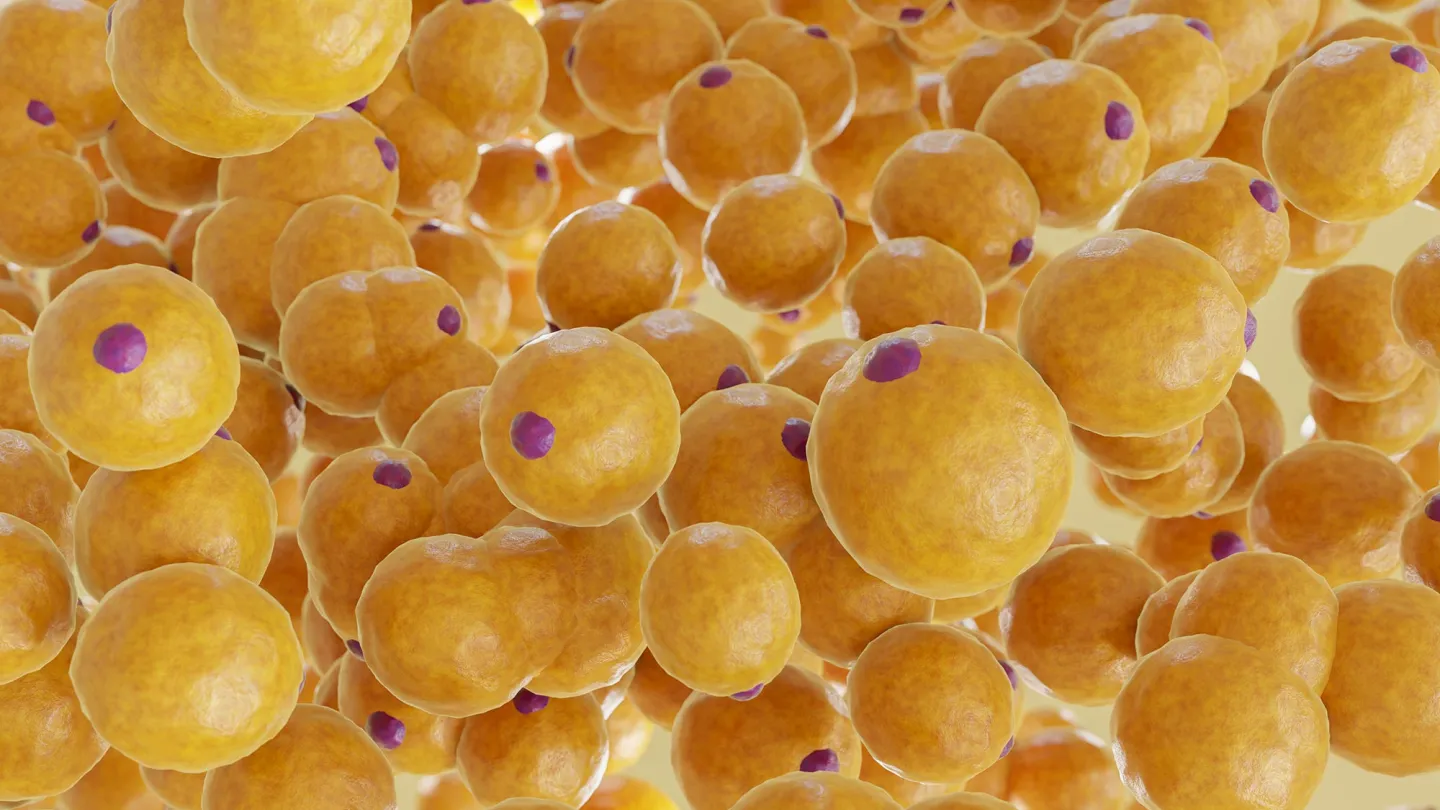
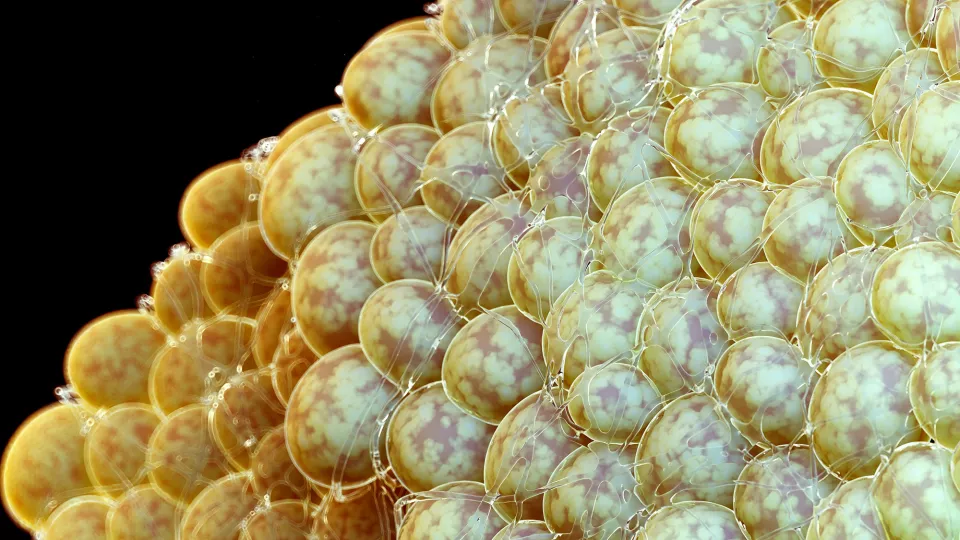
Una causa probable de las consecuencias de la obesidad para la salud es la incapacidad del cuerpo para expandir el tejido graso mediante el aumento de adipocitos (células grasas). Esta falta de nuevos adipocitos provoca que los existentes aumenten de tamaño y liberen ácidos grasos y moléculas inflamatorias al torrente sanguíneo, lo que provoca resistencia a la insulina y diabetes tipo 2. Los mecanismos reguladores que controlan el número de adipocitos siguen sin estar claros.
Fajun Yang, PhD, y sus colegas han descubierto que una proteína llamada ciclina C (CCNC) desempeña un papel importante en el desarrollo y el metabolismo de las células grasas. Utilizando modelos de ratón, los investigadores han demostrado que la reducción de la actividad de la CCNC condujo a una remodelación de grasa más saludable, células grasas más pequeñas, menor resistencia a la insulina y, en algunos casos, un estado de "obesidad metabólicamente saludable". Los Institutos Nacionales de Salud han otorgado al Dr. Yang una subvención de $3.2 millones por cinco años para explorar cómo la CCNC influye en la remodelación de grasa en diferentes condiciones, como dietas altas en grasas y exposición al frío. Su equipo estudiará cómo responde el tejido graso cuando falta la CCNC e investigará cómo el hígado se comunica con el tejido graso a través de la CCNC y la proteína hepática PDGF-AA. Al descubrir cómo la CCNC controla el crecimiento de grasa saludable frente al no saludable, esta investigación podría conducir a nuevos enfoques para prevenir o tratar la obesidad y la diabetes.
El Dr. Yang es profesor de medicina y biología molecular y del desarrollo en Einstein. (1R01DK139610-01A1)