Video could not be played
News Brief
Study Identifies Previously Unrecognized Immune Defense Against Herpes
June 18, 2026
Video could not be played
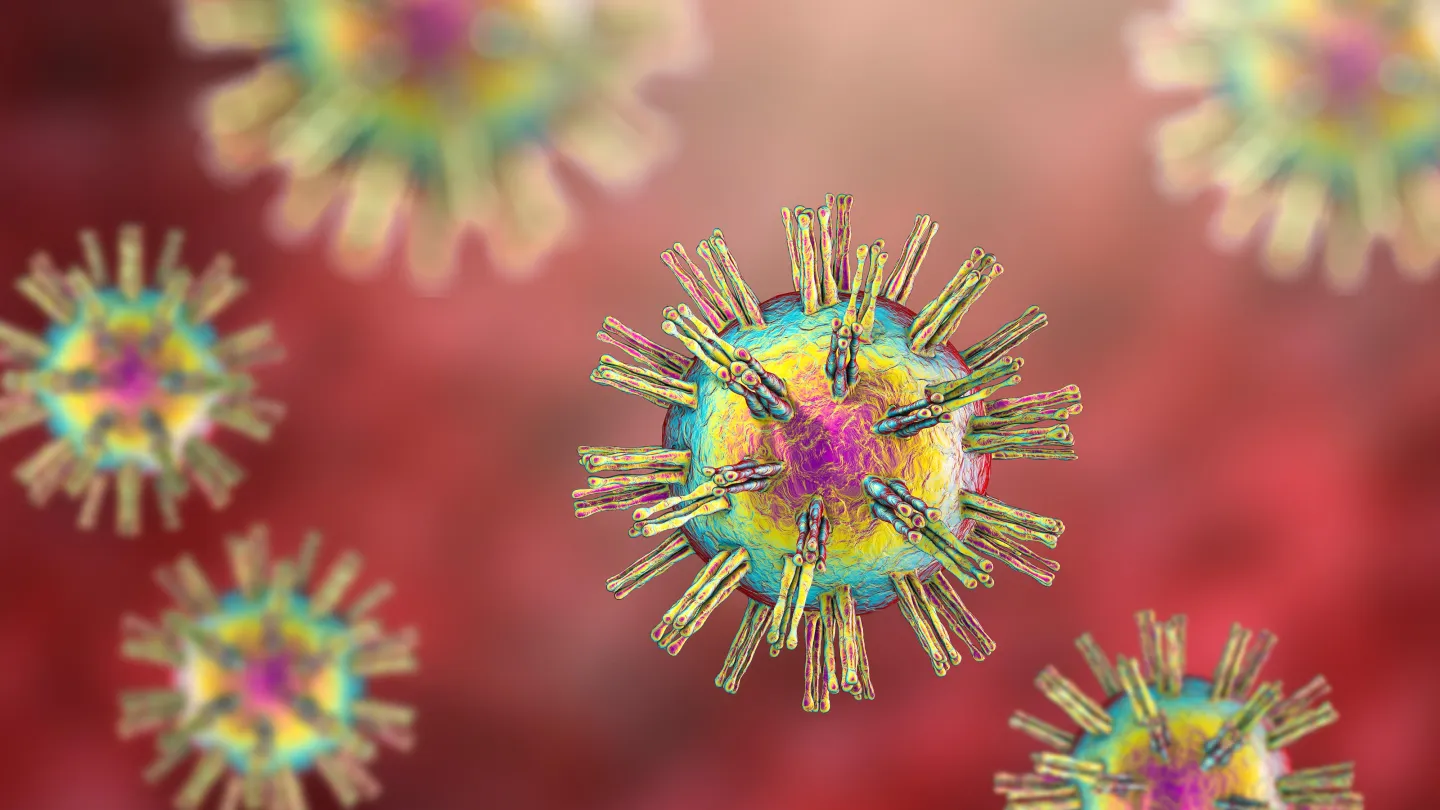
Herpes simplex virus (HSV) infections are among the most common infections worldwide. They can cause recurrent, painful oral or genital lesions and ocular disease, increase the risk of HIV transmission, and pose serious risks to newborns. Despite decades of research, no vaccine has been approved to prevent HSV infections.
In the June 4 online edition of the Journal of Clinical Investigation, Albert Einstein College of Medicine researchers led by Betsy Herold, M.D., identified a previously unrecognized immune defense against HSV that could guide the development of more effective vaccines and antibody-based therapies.
The study found that antibodies can protect against HSV infections by recruiting neutrophils—white blood cells that help fight infection. The neutrophils destroy virus-infected cells through a process called trogocytosis, in which they remove pieces of the infected cell’s outer membrane until the cell dies. While trogocytosis has been observed in immune responses involving some parasites and cancers, this is the first study to show that it plays a major role in protection against HSV. The researchers demonstrated the process in both herpes-infected mice and in human cells.
The researchers also discovered that signaling between two immune-system proteins, HVEM and LIGHT, is required for efficient trogocytosis. Blocking either protein sharply reduced the ability of neutrophils to kill HSV-infected cells.
The findings may help explain why previous herpes vaccine candidates did not provide sufficient protection. Future vaccines and antibody-based therapies may need to generate antibodies that not only recognize the virus but also recruit neutrophils to eliminate infected cells.
Dr. Herold is professor of pediatrics, of microbiology & immunology, and of obstetrics & gynecology and women’s health; holds the Harold and Muriel Block Chair in Pediatrics at Einstein; and serves as vice chair for research and chief of infectious diseases at Einstein and the Children’s Hospital at Montefiore. Matthew Gromisch, M.S., a Ph.D. candidate in the microbiology & immunology program in Dr. Herold’s laboratory, is the study’s first author.
Albert Einstein College of Medicine has intellectual property related to this research and is seeking licensing partners able to further develop and commercialize this technology. Interested parties can contact the office of biotechnology and business development.