Video could not be played
Feature
Graduate Student Researchers Honored at 2026 Marmur Symposium
April 29, 2026
Video could not be played
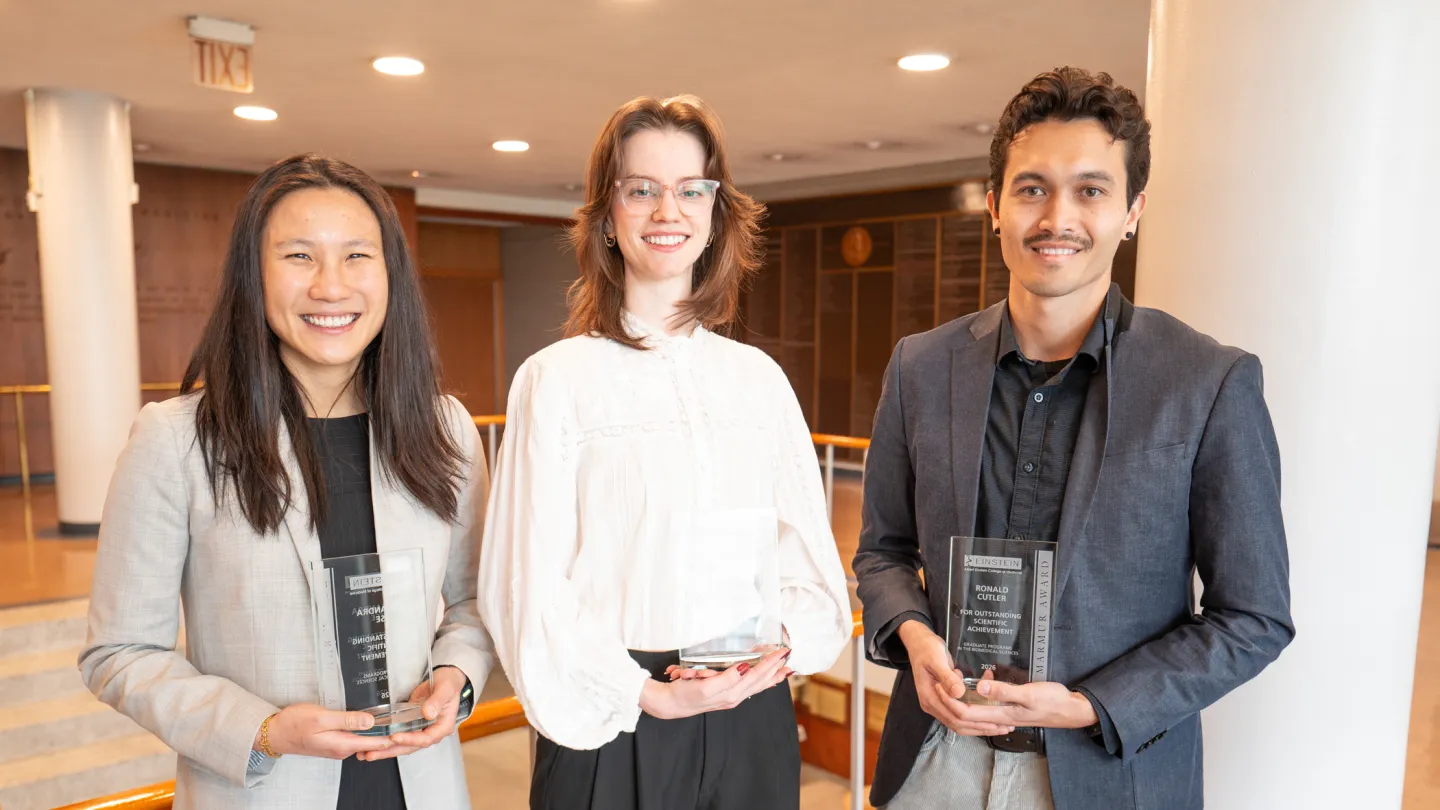
From left, 2026 Marmur award winners Alexandra Tse, April Lynn Mueller, and Ronald Cutler.
Three Einstein graduate students were recognized for their outstanding contributions to scientific research on March 23 at the 30th Julius Marmur Award Symposium, held in Robbins Auditorium. Organized by Einstein’s Graduate Program in the Biomedical Sciences, the annual event celebrates the excellence and achievements of the institution’s Ph.D. students.
“This symposium remains one of the defining moments of our academic year,” said Yaron Tomer, M.D., the Marilyn and Stanley M. Katz Dean at Einstein and chief academic officer at Montefiore Einstein. “It shines a spotlight on the creativity, rigor, and determination of our graduate students, whose work continues to push the boundaries of discovery and strengthen Einstein’s scientific community.”
The Julius Marmur Award was established in memory of pioneering molecular biologist Julius Marmur, Ph.D., who developed the first method to isolate highly purified, high-quality DNA. A dedicated faculty member at Einstein for more than three decades until his passing in 1996, Dr. Marmur was also deeply committed to mentorship and education, helping shape generations of scientists.
In addition to recognizing outstanding research, the symposium underscores the importance of mentorship and career development for graduate trainees.
2026 Marmur Awardees
A major consideration in selecting awardees is the potential for their work to make a significant impact in their respective fields. Applicants submit formal materials, including letters of support from their mentors, and are evaluated by a faculty panel representing multiple basic science departments.
This year’s awardees are:
Ronald Cutler, Ph.D. candidate; mentor: Jan Vijg, Ph.D., chair of genetics, and Simone Sidoli, Ph.D., associate professor of biochemistry and of genetics.
April Lynn Mueller, M.D.-Ph.D. candidate; mentor: Harris Goldstein, M.D., professor of pediatrics and of microbiology & immunology, Charles Michael Chair in Autoimmune Diseases, and director of the Einstein-Rockefeller-CUNY-Mount Sinai Center for AIDS Research.
Alexandra Tse, M.D.-Ph.D. candidate; mentor: Kartik Chandran, Ph.D., professor of microbiology & immunology and the Gertrude and David Feinson Chair in Medicine.
The three awardees presented their research during the symposium’s afternoon ceremony and reception. In addition, past recipients participated in a virtual career panel the next day to offer advice and answer questions.
“To reach this 30th anniversary is a testament to the enduring strength of our graduate training programs and the legacy of excellence established by Dr. Marmur,” said Victoria Freedman, Ph.D., associate dean for graduate programs in biomedical sciences at Einstein. “Each year, we are inspired by the depth and originality of our students’ work.”
A Range of Basic Science Research
This year’s awardees join more than 90 past recipients whose work spans a wide range of scientific fields. Their research addresses topics including aging, immune therapies, and viral disease.
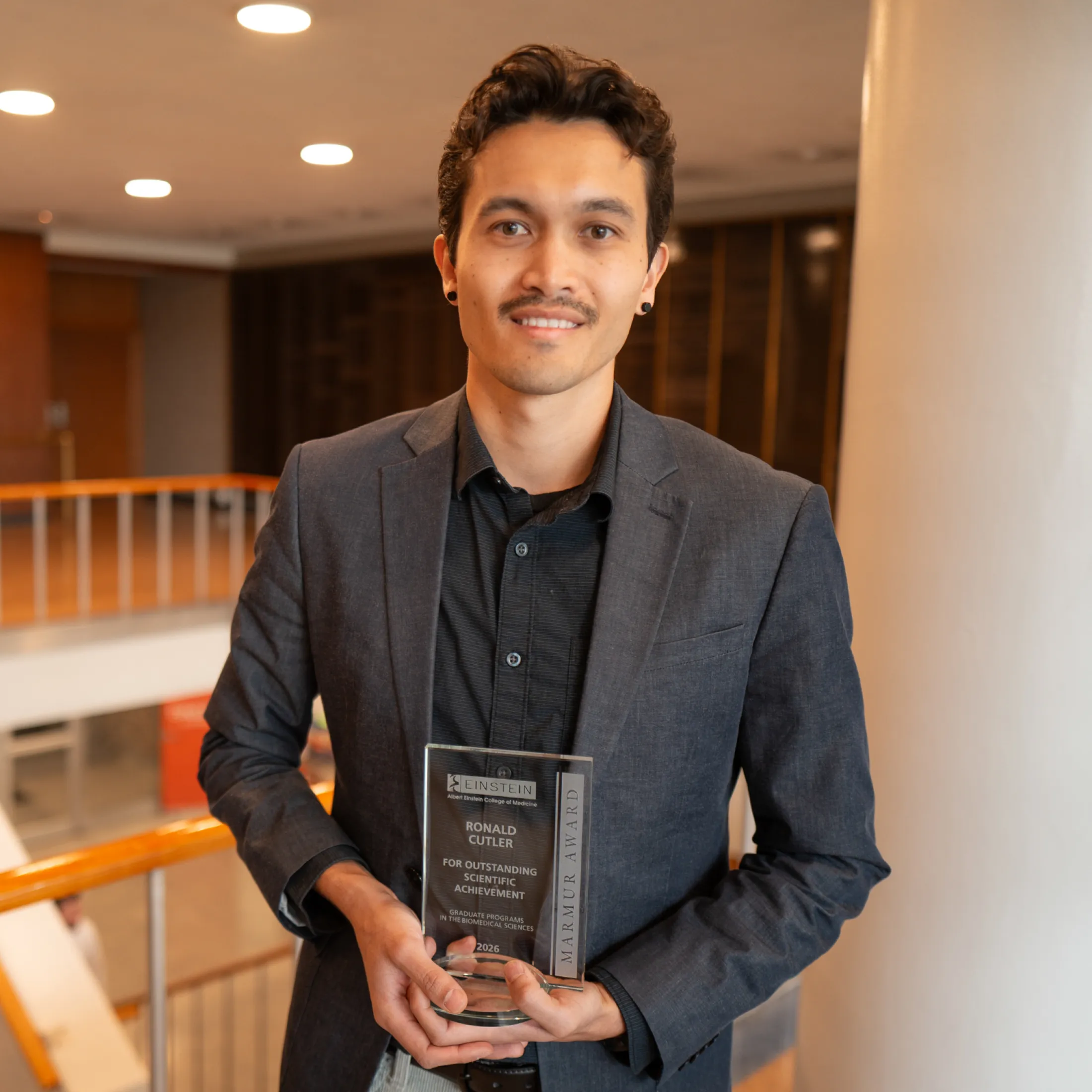
Ronald Cutler, Ph.D. candidate
Video could not be played
Mr. Cutler was recognized for his research on somatic mutations—random DNA changes long proposed as a driver of aging. To test this idea, he introduced tens of thousands of mutations into normal cells and analyzed them using single-cell whole-genome sequencing. He found that cells selectively depleted harmful mutations in genes needed for survival, providing evidence that random somatic mutations can impair cellular function and may help explain how mutations that accumulate over time contribute to aging.
His work has been accepted for publication in Genome Research.
“I recall attending the Marmur Symposium as an accepted student and being struck by the caliber and dedication of the trainees. It is an honor to now be on the other side and to have the opportunity to inspire future scientists to pursue their passions and strive for excellence.”
Mr. Cutler has worked as a teacher in the Bronx public school system with the New York Academy of Sciences Afterschool STEM Mentoring Program.
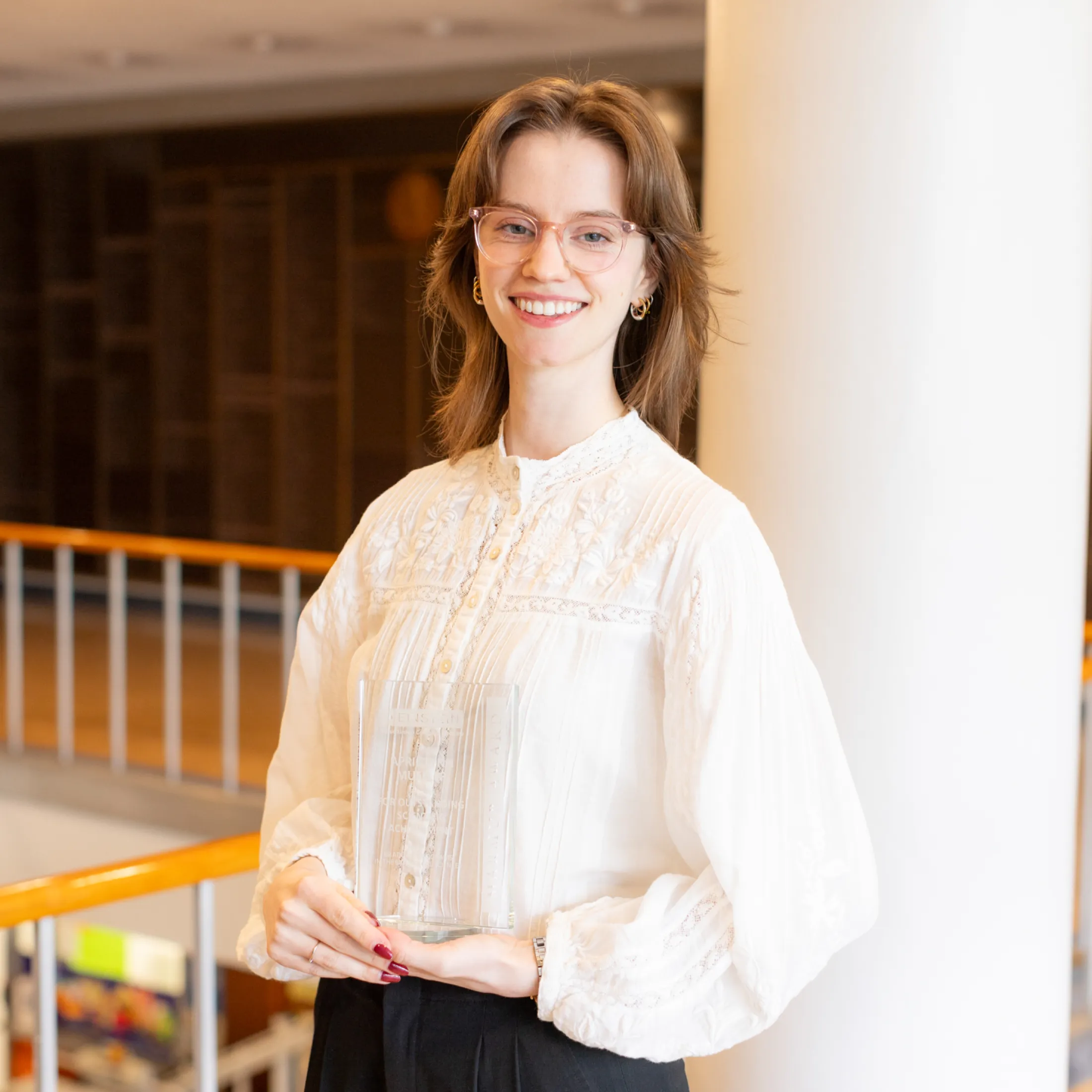
April Lynn Mueller, M.D.-Ph.D. candidate
Video could not be played
Ms. Mueller was recognized for developing new immune-based approaches to help the body fight infections and cancer. Her work focuses on a platform called Immuno-STAT, designed to activate and expand specific immune cells that recognize and kill diseased cells. Using human cell models, her research shows how these methods generate powerful HIV-targeting immune cells, offering insight into potential new treatments and strategies toward controlling or curing HIV.
Her research was published in the Journal of Virology on August 5, 2025.
“It is truly an honor to receive this award among such talented peers," she said. "I’m incredibly grateful for the mentorship that guided me and for the support of such an exceptional scientific community. This recognition reflects the people and environment that made this work possible.”
Ms. Mueller has served as a teaching assistant for the medical school immunology course and contributed as an illustrator, translating complex immunologic concepts into clear visual formats. She also served as president of the Einstein’s Women’s Networking Group, where she co-coordinated Women in Science Day 2023 and 2024 and promoted mentorship, professional development, and community building across the medical and graduate schools.
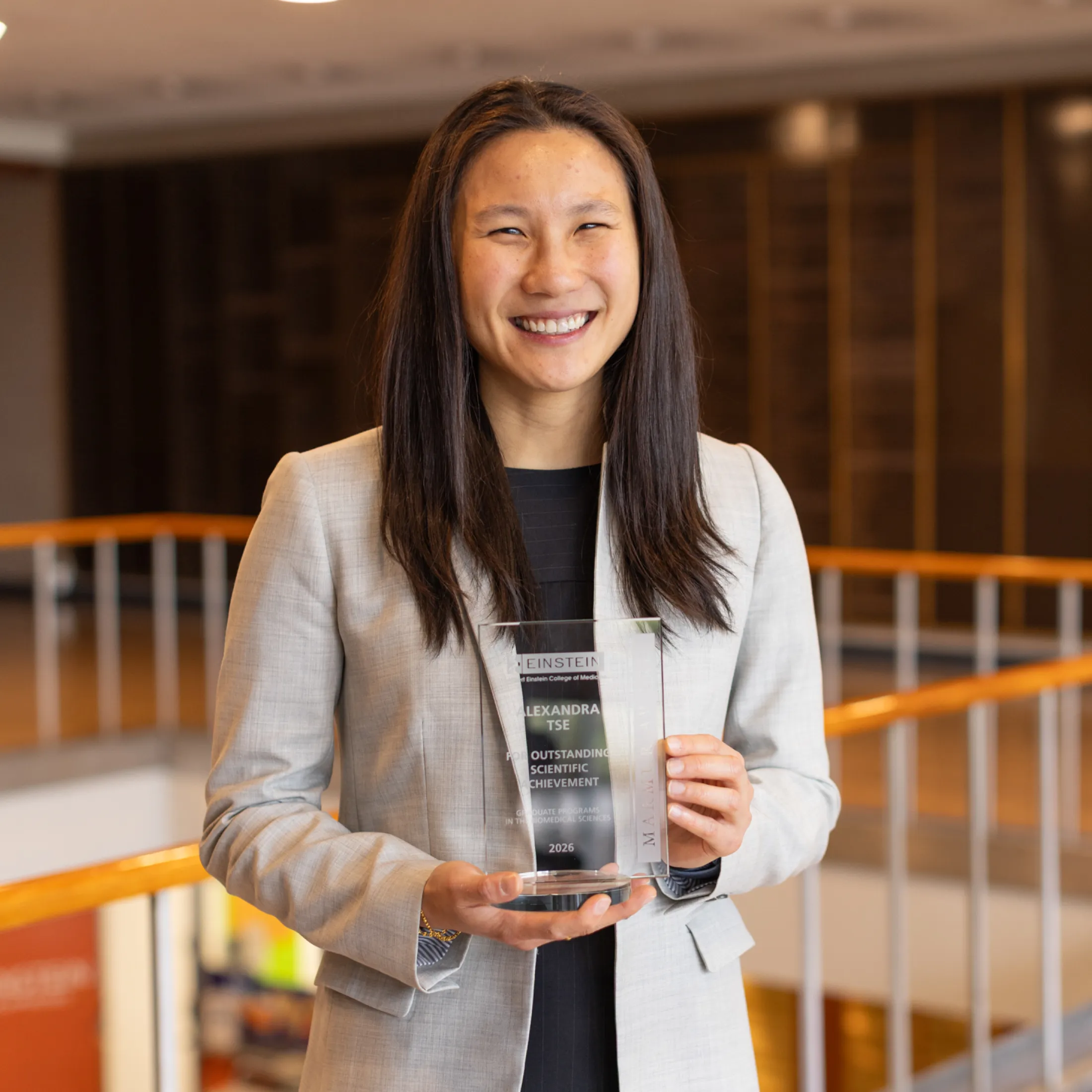
Alexandra Tse
Video could not be played
Ms. Tse was recognized for her research on emerging zoonotic viruses, with a focus on how these pathogens enter host cells and adapt to new hosts. Her work investigates viral entry mechanisms and host factors that facilitate infection, with an emphasis on bat coronaviruses and tick-borne flaviviruses.
Through molecular and cellular approaches, her research identifies key receptor interactions and viral determinants that influence infectivity and disease, contributing to a better understanding of zoonotic spillover and providing new therapeutic targets.
Her work has resulted in one first-author publication in Nature and two first-author publications in PLoS Pathogens, available here and here.
“I’m grateful to receive the Marmur Award and to be part of such a collaborative and supportive community at Einstein. The mentorship and guidance I’ve received have been invaluable, and this award reflects that collective effort.”
Ms. Tse has served as a teaching assistant for the graduate molecular genetics course and the medical school anatomy course and has been actively involved in mentorship and leadership initiatives, including co-organizing Einstein’s Women in Science Day and serving on Einstein’s Housing and Quality of Life Committees.
Past Marmur Awardees Offer Career Insights
As part of this year’s programming, past Marmur Award recipients participated in a virtual career panel on March 24, offering guidance and insights to current trainees.
The panel featured Adina Buxbaum, Ph.D. (Marmur 2014), principal scientist at Regeneron; Ashish Massey, M.D., Ph.D. (Marmur 2007), senior executive director of clinical development at Eli Lilly and pediatric hematologist-oncologist at Memorial Sloan Kettering Cancer Center; and Emilio Merheb, Ph.D. (Marmur 2023), assistant professor of biochemistry and medical education at the Dr. Kiran C. Patel College of Allopathic Medicine at Nova Southeastern University. The discussion was moderated by Elizabeth Wood, a current Ph.D. student and 2025 Marmur awardee.
Panelists shared perspectives on navigating diverse career paths in academia, industry, and clinical research, and reflected on how their time at Einstein helped shape their professional journeys.