Video could not be played
News Release
New Study Identifies Signature in Blood to Better Predict Type 2 Diabetes Risk
January 14, 2026 (BRONX, NY)
Video could not be played
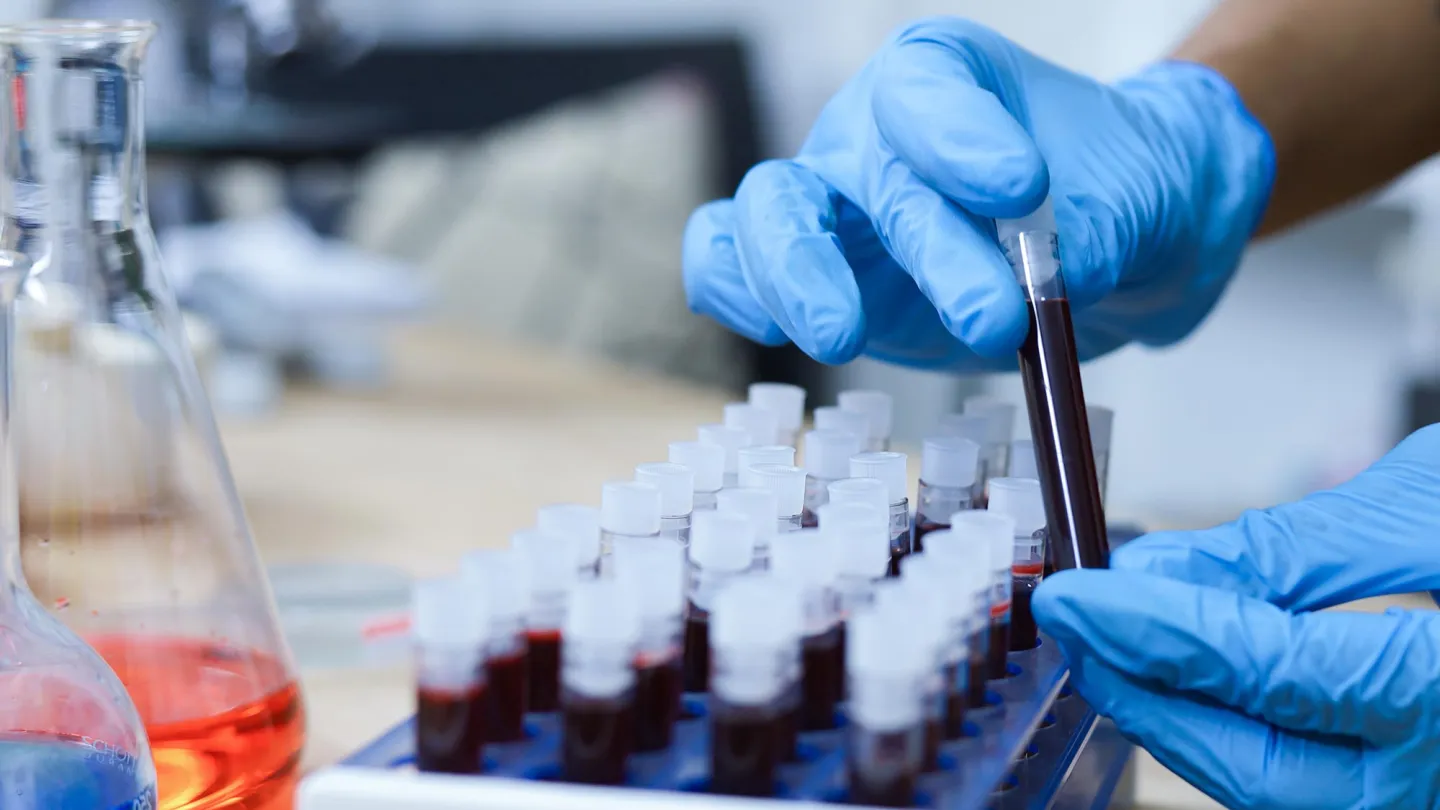
Researchers from Albert Einstein College of Medicine and Mass General Brigham have identified molecular changes associated with type 2 diabetes risk, reflecting contributions from genetics, diet, and lifestyle factors, which could pave the way for more effective prevention and intervention strategies. Their results, developed through blood samples from more than 20,000 people, are published today in Nature Medicine.

Video could not be played
“Our study is the largest and most comprehensive investigation of blood metabolites, small molecules found in the blood, associated with the risk of type 2 diabetes that integrates genomic and diet and lifestyle data from a wide range of people,” said Qibin Qi, Ph.D., senior and co-corresponding author, professor of epidemiology & population health and associate director of the Center for Population Cohorts in the department of epidemiology & population health at Einstein. “A better understanding of the biological pathways behind this disease can help drive the development of new treatments.”
The researchers tracked 23,634 individuals in 10 cohorts who were initially free of type 2 diabetes, some with up to 26 years of follow-up. The team analyzed 469 metabolites in blood samples, as well as genetic, diet, and lifestyle data, to see how they relate to risk of developing type 2 diabetes. Of the metabolites examined, 235 were found to be associated with a higher or lower risk of developing type 2 diabetes, 67 of which were new discoveries.
“Interestingly, we found that diet and lifestyle factors may have a stronger influence on metabolites linked to type 2 diabetes than on metabolites not associated with the disease,” said first and co-corresponding author Jun Li, M.D., Ph.D., assistant professor of medicine and associate epidemiologist in the Mass General Brigham Department of Medicine. Li is also an assistant professor in the Department of Nutrition at Harvard T.H. Chan School of Public Health. “This is especially true for obesity, physical activity, and intake of certain foods and beverages such as red meat, vegetables, sugary drinks, and coffee or tea. Increasing evidence suggests that these dietary and lifestyle factors are associated with greater or lower risk of type 2 diabetes. Our study revealed that specific metabolites may act as potential mediators, linking these factors with type 2 diabetes risk.”
The metabolites associated with type 2 diabetes were also found to be genetically linked to clinical traits and tissue types that are relevant to the disease. Furthermore, the team developed a unique signature of 44 metabolites that improved prediction of future risk of type 2 diabetes.
“While these new findings offer important insights, additional experimental studies and clinical trials are needed to confirm the causality of these associations and clarify how these metabolic pathways contribute to the development of type 2 diabetes,” said Dr. Qi.
The collaborative research team plans to continue investigating why people develop diabetes through different biological pathways, with the goal of helping develop more targeted prevention strategies for individuals at high risk.
“Our findings lay the groundwork for a deeper understanding of type 2 diabetes and may help inform the development of precision preventive strategies targeting specific metabolic pathways,” said Dr. Li.
In addition to Dr. Qi, Einstein authors include Kai Luo, Chengyong Jia, and Robert C. Kaplan. In addition to Dr. Li, Mass General Brigham authors include Jie Hu, Zhendong Mei, Shilpa N. Bhupathiraju, A. Heather Eliassen, JoAnn E. Manson, Jose C. Florez, Miguel Angel Martínez-González, Kathryn M. Rexrode, James B. Meigs, and Frank B. Hu. Additional authors include Huan Yun, Xingyan Wang, Marta Guasch-Ferré, Xikun Han, Buu Truong, Jordi Merino, Miguel Ruiz-Canela, Casey M. Rebholz, Eun Hye Moon, Taryn Alkis, Guning Liu, Jie Yao, Xiyuan Zhang, Bianca C. Porneala, Jordi Salas-Salvadó, Thomas J. Wang, Josée Dupuis, Elizabeth Selvin, Xiuqing Guo, Jennifer A. Brody, Yongmei Liu, Alexis C. Wood, Kari E. North, Su Yon Jung, Ching-Ti Liu, Nona Sotoodehnia, Simin Liu, Lesley F. Tinker, Robert E. Gerszten, Clary B. Clish, Liming Liang, Rozenn N. Lemaitre, Katherine L. Tucker, Stephen S. Rich, Jerome I. Rotter, Eric Boerwinkle, and Bing Yu.
The current study is supported by grants from the National Institute of Diabetes and Digestive and Kidney Diseases (NIDDK) including R01DK119268 and R00DK122128. Other funding sources for this study include R01HL060712, R01HL170904, R01HL136266, and HHSN268201600034I (contract to the Broad Institute) from the National Heart, Lung and Blood Institute (NHLBI); R01DK126698, R01DK081572, U01DK140761, R01DK134672, R01DK120870, and the New York Regional Center for Diabetes Translation Research (P30DK111022) from NIDDK; R01AG085320 from National Institute on Aging; and a cooperative agreement UM1HG008898 from the National Human Genome Research Institute (NHGRI).