
Video could not be played
Feature
Building the Future of Medicine, One App at a Time
Homegrown patient care apps for asthma, diabetes, and eczema are improving patients’ lives and reducing trips to the emergency room
January 8, 2026
Video could not be played
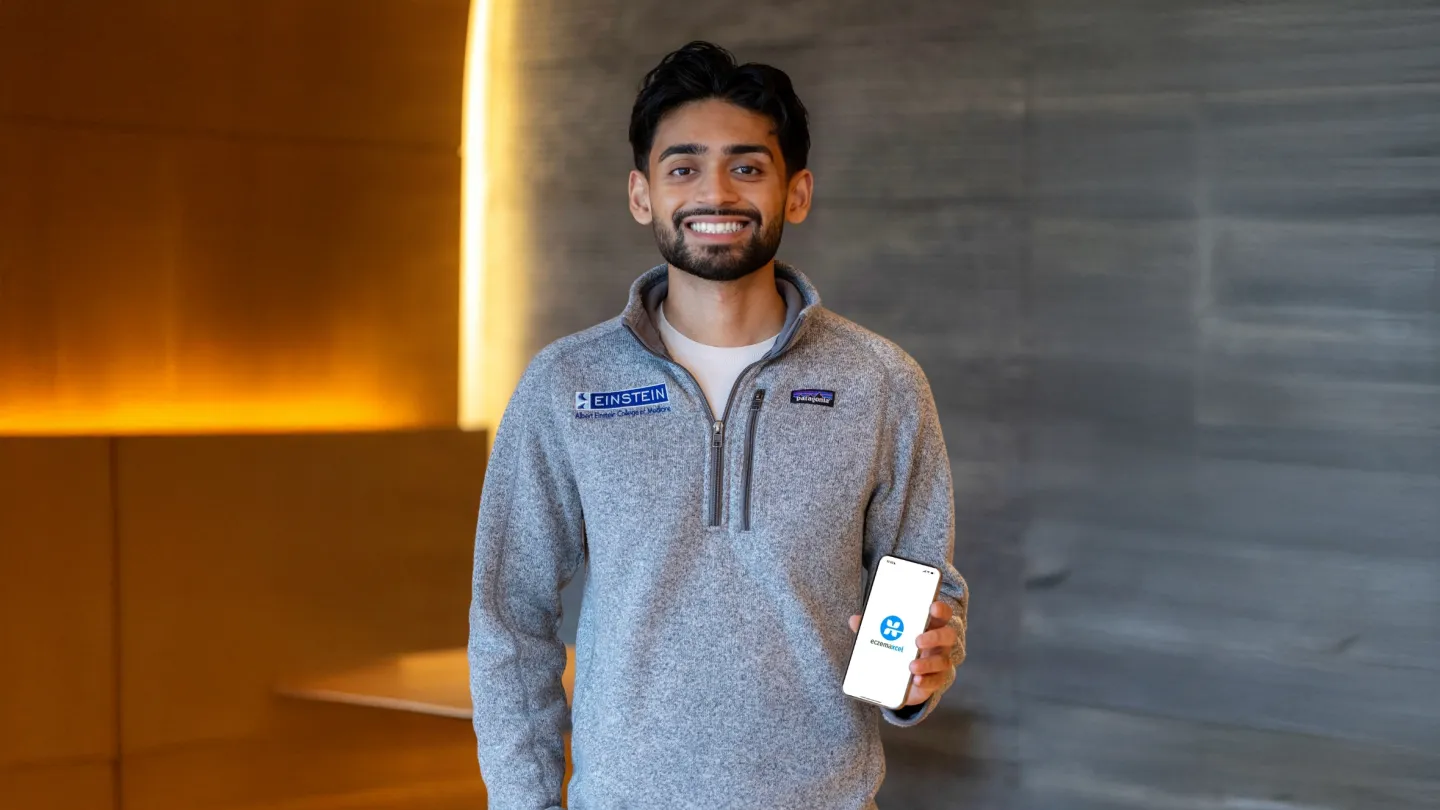
Bijoy Shah, a fourth-year student at Albert Einstein College of Medicine, with EczemaXcel, the app he created in collaboration with Dr. Sunit Jariwala.
Like many technological advances, AsthmaXcel, the first of a number of apps developed by Sunit Jariwala, MD, and his collaborators, was born out of an unmet need. As an allergist who specializes in asthma, Dr. Jariwala was all too familiar with poorly controlled asthma landing patients in the emergency department. In addition to the grave danger asthma attacks can pose, an ED visit is a huge disruption to the lives of patients and their families.
Video could not be played
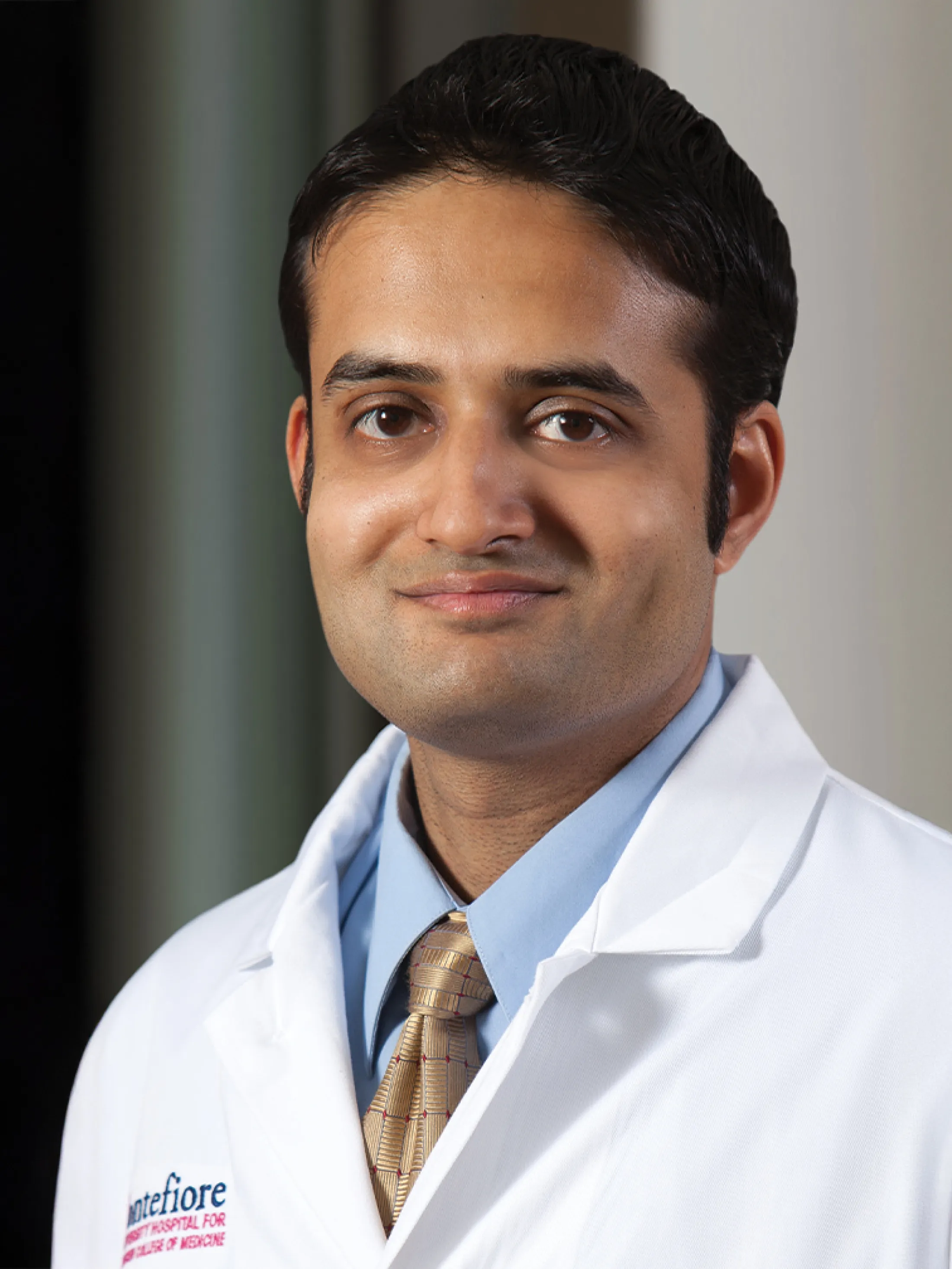
Sunit Jariwala, MD, professor of medicine and medical director of digital transformation for Montefiore Health System
Dr. Jariwala, professor of medicine, practices together with pulmonologist Krystal Cleven, MD, at Montefiore Einstein’s Asthma Center. As the medical director of digital transformation for Montefiore Health System, he is also an expert on technology in medicine. Back in 2017, he came up with the idea of creating an app that could help keep patients with asthma out of the emergency department.
“At the Asthma Center, we saw how effective the health educator model was,” says Dr. Jariwala. “Our first person in this role was Damaris Collado, PA, and she would teach patients about the importance of the different medicines, when and how to use them, how to control the environment. She almost single-handedly kept patients out of the emergency room. We're very fortunate now to have Patricia Davis, NP, on our team in the same role.”
However not every doctor’s office that sees asthma patients can be staffed with a dedicated patient educator. And what about when patients head home?
Working with a team of technical experts who did the coding and user experience design, AsthmaXcel was first conceived as a digital enhancement to patient education—a tool patients could use anytime and anywhere. As the development team, led by Dr. Jariwala, tested the app with real life patients and sought out feedback, it “gradually evolved from education to self-management,” explains Dr. Jariwala. “How do we help patients remember to take medications, and provide real-time tips for asthma control?”
He continues, “The app is very user centered, so we've done a lot of focus groups to hone in on people’s preferences. We also asked doctors, what's the most effective way to receive this information?” While the AsthmaXcel app is patient-facing, it is also an important tool for physicians. “Once patients track their symptoms, they can share this information and any trends over time more accurately with their doctor during a visit, and the physician can update the treatment plan accordingly,” says Dr. Jariwala.
Video could not be played
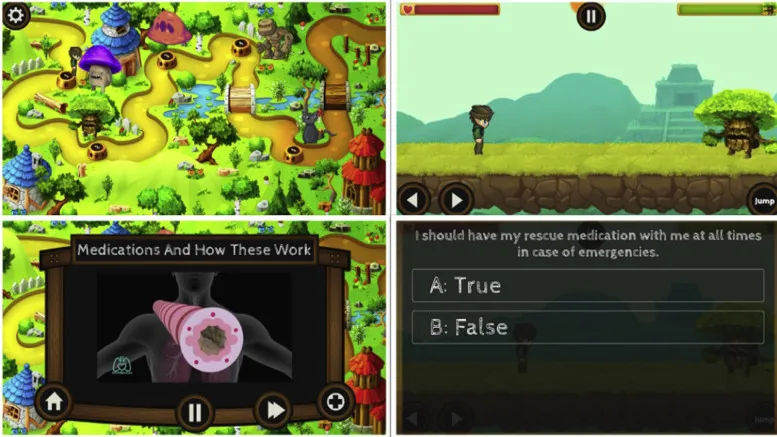
A screenshot from AsthmaXcel Adventures, which uses gamification to educate pediatric patients about asthma.
The app, which is available for free via the Apple and Google app stores, has been a resounding success. In several federally-funded follow-up studies, it has been shown to improve quality of life and symptom control, and reduce emergency room visits and hospitalizations due to asthma. By keeping patients out of the hospital and helping them control their asthma, the apps have also been shown to significantly reduce healthcare utilization and costs. The pediatric version, AsthmaXcel Adventures, which uses educational games, launched the following year, has shown similar positive results in follow-up studies.
The latest version of the app for adults goes even further. Patients provide a six-second voice sample, recording it on the app, when they are not symptomatic. Using this as a baseline, patients can then speak into the app, which measures their asthma control, helps predict exacerbations early, and recommends appropriate steps to keep symptoms in check.
A blueprint for improving patients’ lives
Based on the success of this model, the team collaborated with Montefiore Einstein’s Division of Endocrinology and Center for Diabetes Translational Research to launch DiabetesXcel in 2020. From baseline to four months and from baseline to six months, the app significantly improved patients’ quality of life, self-management, knowledge, self-efficacy, reduced self-reported depression, and improved A1C and LDL cholesterol. There was also a significant decrease in diabetes-related emergency department visits and hospital admissions from baseline to six months.
The latest spinoff, EczemaXcel, was created by Bijoy Shah, a fourth-year medical student at Albert Einstein College of Medicine. “These days people learn more through technology, including TikTok, Instagram, and apps,” says Shah. “I wanted to build something that is similar, but with content approved by board-certified allergists and dermatologists.”
Shah started college as a computer science major, but quickly pivoted to medicine after working in a medical technology lab, coding augmented reality software to aid in the operating room. “We were mainly working on inner ear surgeries,” he recalls now. “I got to collaborate with surgeons and learn about the patients and the procedures. I fell in love with the human side of medicine.”
Meeting patients in the Bronx as a medical student at Einstein only confirmed for him the need to merge his two interests. “Our healthcare system wasn’t built for many of our patients here,” he says. “Appointments are short, many of our patients first language isn’t English, and so many people in the Bronx and everywhere have limited health literacy.”
He noticed that patients who were hospitalized for other reasons were asking about their more routine, chronic health issues, including eczema. “They so clearly were not getting enough information in their regular outpatient care,” Shah says.
He would often print out information for them, on how to moisturize skin immediately after bathing, for instance. But he suspected this form of education wasn’t that effective. “Patients would get these handouts and lose them on the subway before they even made it home,” he says. “At the same time, no matter their socioeconomic status, they all had smartphones. What if there was a way we could put all the patient education on their smartphone instead?”
Shah had also seen firsthand the impact that eczema can have on patients lives. He had relatives growing up with severe forms of the condition that were hard to manage.
The right mentor and collaborator
Shah was so impressed by Dr. Jariwala’s reputation in the medical technology space that initially he felt intimidated about reaching out. He mentioned his ideas to Shitij Arora, MBBS, a hospitalist involved in medical student education, as well as an expert on technology in his own right. “Dr. Arora really gave me confidence in this idea and encouraged me to pursue this project with Dr. Jariwala,” says Shah.
In retrospect, he needn’t have hesitated. “Dr. Jariwala has been the best mentor ever,” says Shah. “Once I contacted him, in May 2024, I've been talking to him weekly about the app, and he has been supportive in every direction.” As Shah pointed out in that initial email, Dr. Jariwala was also the perfect collaborator to help Shah see this idea through to the finish line. In addition to his strong track record in app development, as an allergist he frequently treats eczema.
Video could not be played
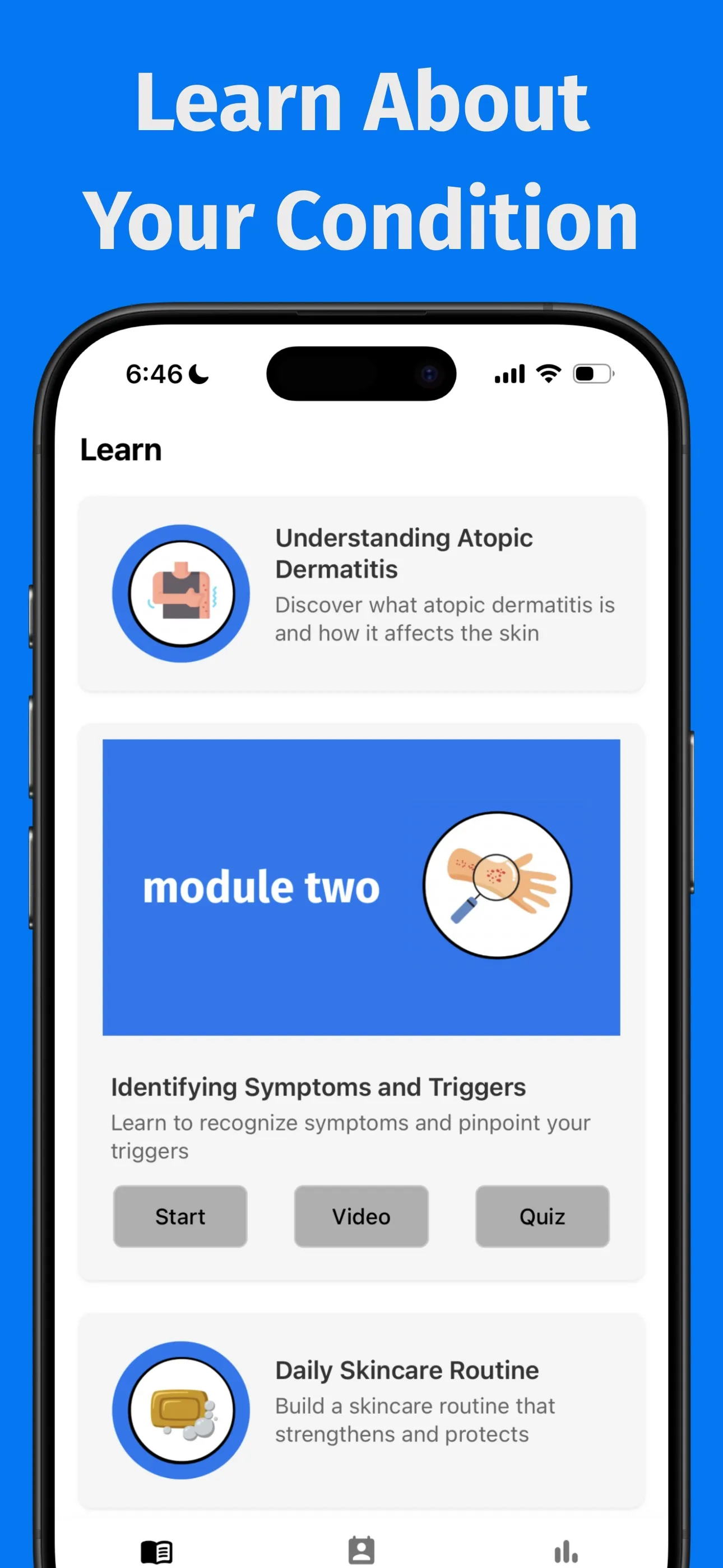
A screenshot from EczemaXcel.
Some of the most important input Dr. Jariwala provided was on process. “I really wanted to jump in and just start coding,” says Shah. “Dr. Jariwala, through his prior experience, emphasized the need to make it very patient centered. We needed to talk to patients about what they feel like they're missing during their appointments, in handouts, in their aftercare summaries, and what they feel they could benefit from.”
They started by talking with patients in the outpatient dermatology and allergy clinics at Montefiore. “We asked them, ‘What kind of material do you like engaging with? Do you prefer a video of a person talking, or an animated video?’" recalls Shah. “I would show an example of an animated video from one of the previous apps. It was very informal research, but it helped us begin answering our key questions: how can we come up with better long-term solutions for patients to understand this condition and successfully treat it? Because eczema can be very complex and it can take months to learn about the different treatment options.”
As Shah began to create mock-ups of screens and tabs on the app, he would share them with patients for their feedback. The team made sure to include a range of patients from different backgrounds and levels of health literacy, including patients who could speak English, but not read it. “As providers, we think we know what's going to help patients, but they're the people who know best,” Shah says. “They're the ones who know what is lacking in a traditional clinic visit. And so that's the approach we took.”
He added, “I am so grateful to Dr. Jariwala for guiding me through this because my impulse was just to dive in.” In at least one case, patient input really shifted the direction of the project. The initial vision was to have the app be purely educational, but patients wanted to be able to track their symptoms as well, to see links between flareups and other factors like how well they slept the previous night, for example.
“‘We want to be able to see those patterns in the app,’ they told us. That was something we hadn’t envisioned in the initial version,” says Shah. “We found patients really like the visual aspect of being able to see their own symptoms over time in the same place where they're learning about their condition.”
Right now, the app is available for download as the team continues to validate and refine it, getting feedback from patients who are using it. “If it was up to me, we would be in beta testing forever because I want it to be the best we can possibly make it,” says Shah. But he and the team are happy with the initial version.
“It's exciting that anyone is able to download this app,” says Shah. Thanks to being able to build on Dr. Jariwala’s experience, the process took about six months, Shah says, from the idea to the point where it was available on the app store.
Dr. Jariwala is always excited to welcome new collaborators. “Our team is happy to help faculty, trainees, and staff interested in developing and implementing mobile technologies to address clinical pain points and improve healthcare access,” he says. “We offer mentorship on this approach through the Montefiore Einstein Innovation Training Program.” He envisions that someday there might be a broader app where patients could enter their condition and physician’s name and get tailored education, reminders, and recommendations, in addition to tools to track their symptoms.
Shah has been thrilled to gradually discover that his initial love of technology and his calling of medicine in fact go hand-in-hand. “I don't think I saw medicine as such an innovative field until I got to the hospital floors and learned that we’re not relying on what we're learning in textbooks,” he says. “In addition to developing new technological solutions, doctors are innovating in real time based on the most up-to-date literature and science, what was in the most recent issue of the New England Journal of Medicine, what worked for a recent patient. I’ve learned this from all my attendings, and Dr. Arora and others have really pushed me towards working on innovative projects.
“It's really cool that we're working on building the future of medicine.”