Video could not be played
News Release
Night Waking Impacts Cognitive Performance Regardless of Sleep Duration
Older Adults Who Were Awake More During the Night Performed Worse on Cognitive Tests the Next Day, No Matter How Long They Slept
December 18, 2025 (BRONX, NY)
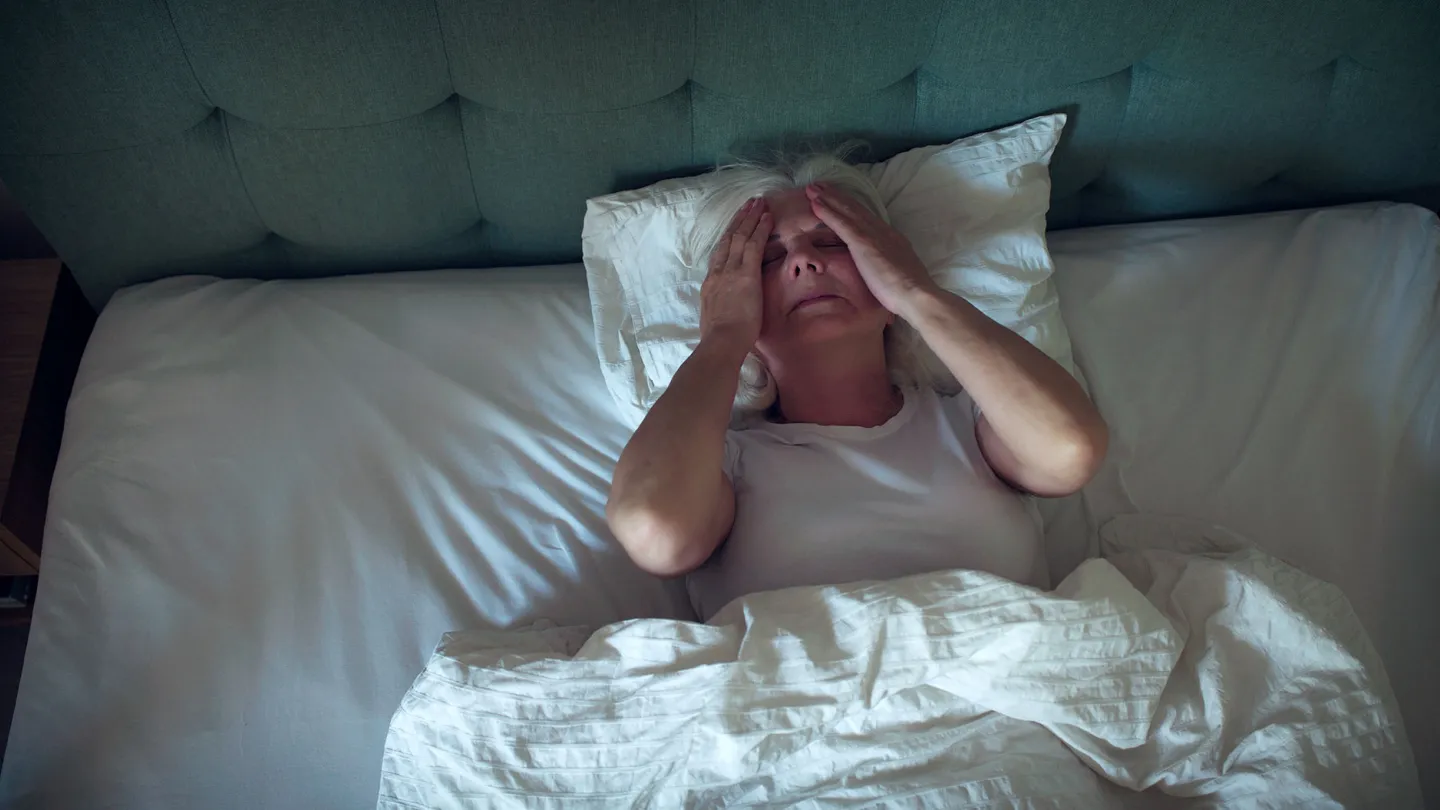
Video could not be played
When it comes to sleep, traditional advice has focused on the number of hours a person sleeps. But for older adults, the quality of sleep may affect cognitive performance the following day, regardless of the quantity of sleep according to a new study by researchers from Albert Einstein College of Medicine and the Penn State College of Health and Human Development.

Video could not be played
In a study published today in Sleep Health, the researchers found that the quality of a night of sleep—rather than the length of the night of sleep—predicted how quickly older adults processed information the next day. The researchers evaluated sleep quality based on how much time someone was awake between when they first went to sleep and when they rose in the morning.
“Anyone who has stayed up too late knows that sleep can affect your cognition the next day,” said Orfeu Buxton, Ph.D., professor of biobehavioral health at Penn State and lead author of the study. “In this study, we wanted to identify which aspects of sleep health impact daily cognitive functioning so that people know how to improve their sleep. When it comes to ‘getting a good night’s sleep,’ it would appear that quality matters in the short term for older adults.”
Few studies have examined how poor sleep impacts cognitive functioning the following day, according to Carol Derby, Ph.D., professor in the Saul R. Korey Department of Neurology and the Louis and Gertrude Feil Faculty Scholar in Neurology at Einstein, and senior author of the study.
“Understanding the nuances of how sleep impacts older adults’ cognition and their ability to perform daily activities may indicate which individuals are at risk for later cognitive impairment, such as Alzheimer’s disease,” said Dr. Derby, who is also professor of epidemiology & population health.
Measuring Sleep and Cognitive Performance
The study analyzed data from 261 participants who were part of the Einstein Aging Study, a multiyear study of aging and cognitive health. Participants — all over the age of 70 — lived in the community in Bronx County, New York.
For 16 days, participants wore devices similar to Fitbits or smart watches that tracked their sleep. They also completed cognitive assessment “games” six times a day on a smart phone —when they woke up, before they went to bed and four randomly selected times throughout the day. The games, which took roughly four minutes to complete each time, measured different aspects of cognitive performance, including visual working memory, visuospatial memory and processing speed. At the study’s conclusion, the researchers had collected a total of 20,532 cognitive assessments from the participants.
On average, participants slept 7.2 hours each night and spent just over one hour awake during a given night of sleep. Additionally, participants took an average of 0.4 naps each day, which is two naps every five days.
When the researchers analyzed each participant’s day-to-day cognitive performance, they found that when an individual was awake for 30 minutes longer during the night than their average amount, their processing speed was slower than usual the next day. Napping the previous day, bedtime and quantity of sleep showed no effect on processing speed or any other aspects of cognitive performance.
When the researchers compared performance on cognitive tests not just to participants’ own performance but across participants in the entire study sample, they found that older adults who, on average, spent more time awake during their night’s sleep performed worse on three of the four cognitive tests. In addition to slower processing speed, participants with more wake time after falling asleep performed worse on two tests of visual working memory.
“Repeatedly waking after you've fallen asleep for the night diminishes the overall quality of your sleep,” said Dr. Buxton, associate director of both the Penn State Clinical and Translational Science Institute and the Penn State Social Science Research Institute and an investigator in the Penn State Center for Healthy Aging. “We examined multiple aspects of sleep, and quality is the only one that made a day-to-day difference in cognitive performance.”
What Should Older People Do If They Have Sleep Problems?
Nearly half of older adults report some type of sleep disruption. Over time, sleep problems are associated with higher rates of cognitive decline and Alzheimer's disease, according to the researchers.
To promote healthy sleep, people should go to bed at a consistent time each night, aiming for a similar length of sleep in restful circumstances, Buxton continued.
“When it comes to sleep, no single night matters, just like no single day is critical to your exercise or diet,” Dr. Buxton said. “What matters is good habits and establishing restful sleep over time.”
For older adults who have sleep problems, the researchers recommended evaluating their sleep environment — including avoiding screens before bed and sleeping in dark, quiet conditions at a consistent time.
If problems persist, the researchers encouraged people to talk to their medical providers about cognitive behavioral therapy, which has been proven to be a safe and effective way to address sleep-related issues. In contrast, the researchers said that medication is not a good solution for many older adults because sleep medication can increase the risk of falling.
Sleep Health and Alzheimer's Disease
Ultimately, the goal of this research is to support healthy cognitive aging, the researchers said, particularly factors that could prevent or delay the onset of Alzheimer's disease and related dementias. While there is extensive research evidence linking sleep and dementia, it is not yet clear whether poor sleep is a risk factor or a consequence of Alzheimer’s disease.
“The work demonstrating the day-to-day impact of sleep quality on cognition among individuals who do not have dementia suggests that disrupted sleep may have an early impact on cognitive health as we age,” said Dr. Derby. “This finding suggests that improving sleep quality may help delay later onset of dementia.”
Other contributors to this research include Qi Gao and Cuiling Wang at Einstein; Jonathan Hakun and Martin J. Sliwinski at Penn State; Linying Ji of the Montana State University; Alyssa Gamaldo of the Clemson University; Suzanne Bertisch at Brigham and Women’s Hospital and Harvard Medical School.