
Video could not be played
Feature
For Chronic Sinusitis, the Best Path to Treatment Success
November 20, 2025
Video could not be played
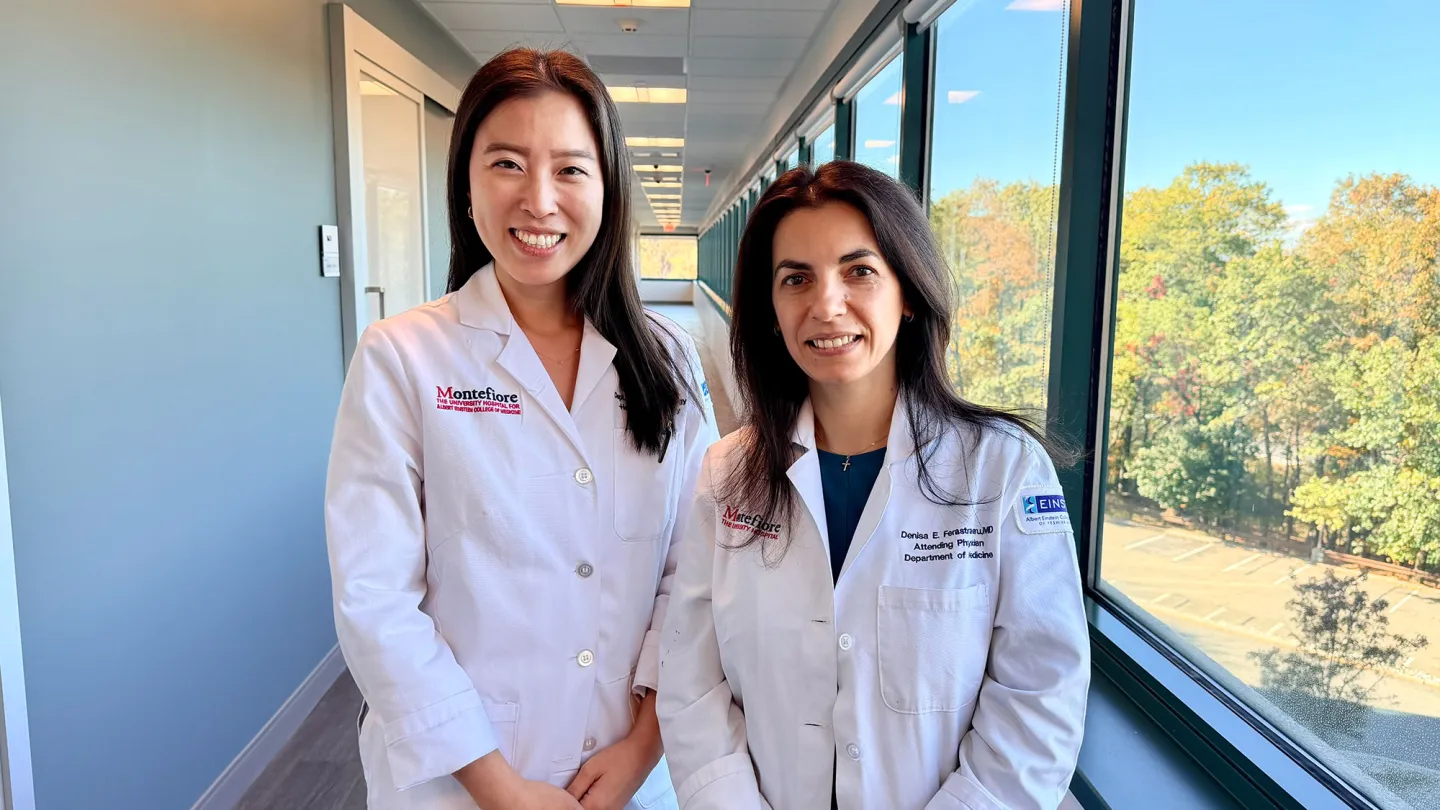
Montefiore Einstein’s multidisciplinary Sinusitis Clinic has recently expanded to Westchester, where rhinologist Dr. Christina Fang and allergy and immunology specialist Dr. Denisa Ferastraoaru see patients together.
An estimated five to twelve percent of people suffer from chronic sinusitis. It’s defined as having two of the four following symptoms—runny nose or postnasal drip, a sensation of pressure in the face, nasal congestion, and reduction or loss of sense of smell—for at least 12 weeks. One study of the effect on patients suggests that chronic sinusitis has a greater negative impact on quality of life than having had a heart attack.
“If you imagine having a constant cold, it's pretty miserable,” says Nadeem Akbar, MD, one of two otolaryngologists, or ear, nose and throat (ENT) specialists, who practices together with allergist Denisa Ferastraoaru, MD, at Montefiore Einstein’s multidisciplinary Sinusitis Clinic. “Imagine having that feeling year-round,” Dr. Akbar continues. “It’s no wonder that it’s such a significant quality of life issue for patients.”
The underlying causes of chronic sinusitis symptoms are not easy to diagnose without the expertise of both an allergist and an ENT physician. In nearly all cases, patients who see one of these specialists need to consult with the other before a treatment plan can be developed, and patients can begin getting relief. Waiting to book a follow-up appointment with a separate specialist can cause substantial delays in getting the right care.
That’s why in 2017, Montefiore Einstein opened its multidisciplinary Sinusitis Clinic at the Hutchinson campus at Waters Place. At their first visit, patients see both Dr. Akbar and Dr. Ferastraoaru. Montefiore is one of few academic medical centers nationwide to offer this collaborative model of care for sinusitis sufferers.
It has been such a success that it’s now being expanded to a second location, Montefiore Einstein Advanced Care, in Westchester. Patients there will see Dr. Ferastraoaru and otolaryngologist Christina Fang, MD, who like Dr. Akbar sub-specializes in treating the nose and sinuses specifically.
“I completed my residency training at Montefiore and saw firsthand the benefits for patients of the joint allergy and ENT Sinusitis Clinic,” says Dr. Fang. “A large proportion of my patients need to see an allergist before we can get them optimal care. This clinic offers a unique opportunity to get people on a fast track to feeling better. Patients walk away with a better understanding of their diagnosis after a single visit where they see both an ENT and allergist.”
Because patients meet with both doctors, the initial appointment can last around two hours. If allergy testing is needed, it’s typically done in that same visit. “We each do our own evaluation and then we are able to discuss our findings about the individual patient together,” says Dr. Ferastraoaru. “Both physicians are in the room to discuss treatment options with the patient. Our patients love this collaboration. They also like the fact that during one visit they see both of us, and this team approach continues throughout their care.”
She continues, “By the end of the visit, we have a treatment plan for that patient and their particular condition.”
Adds Dr. Akbar, “It's a one-stop shop.”
Taking on hard-to-treat cases
Some of the clinic’s patients have seen other providers in the past but failed to get relief from their symptoms. “We have to pay extra attention to those cases and get a very good history,” says Dr. Ferastraoaru. “What has been tried, how has it worked, what is their allergy profile, what is the inflammatory profile in the nose? Sometimes these patients can be complicated, and as with all our patients, we want to get them feeling better quickly.”
The clinic uses certain advanced diagnostic techniques that not all providers offer. One example is nasal challenges. Sometimes patients experience symptoms that appear to be stemming from allergies. But when they undergo allergy testing, their skin tests and bloodwork come back negative.
“These are patients who have chronic nasal symptoms like runny nose, sneezing, watery eyes, nasal congestion, which are typical for patients who have allergic rhinitis,” says Dr. Ferastraoaru. “But the frontline tests don't identify positive results for any allergens.”
She continues, “If based on the patient’s history, we feel they might actually have some allergies, we do a nasal challenge, administering allergens directly to the nose to see whether there is a local allergic reaction. Basically, you expose them to common allergens, and by gauging their reaction, even if they're not reacting on the skin test, you can tell that they could benefit from treatment for allergies.”
“This would be what we call local allergic rhinitis, allergies that cause symptoms in the nose but don’t show up on skin patch testing or blood tests,” she explains. “We are among just a handful of clinics throughout the U.S. where we offer this type of testing.”
For these hard-to-diagnose patients, this can mean the difference between a highly successful treatment and one that leaves them with lingering symptoms and only partial relief. “Without this, we would treat the patient for what we call non-allergic rhinitis,” says Dr. Ferastraoaru. “But if they actually do have allergies and we are not addressing that, then we’re not treating them in the most effective way.”
The right expertise
Having expert care from not just an ENT physician but a subspecialist in rhinology, or nose and sinus conditions, also makes an important difference in coming up with the right treatment plan. “Being able to provide a detailed examination of the inside of the nose, to evaluate for evidence of chronic sinusitis, inflammation, or nasal polyps, changes how we’re able to manage that patient,” says Dr. Fang.
Video could not be played
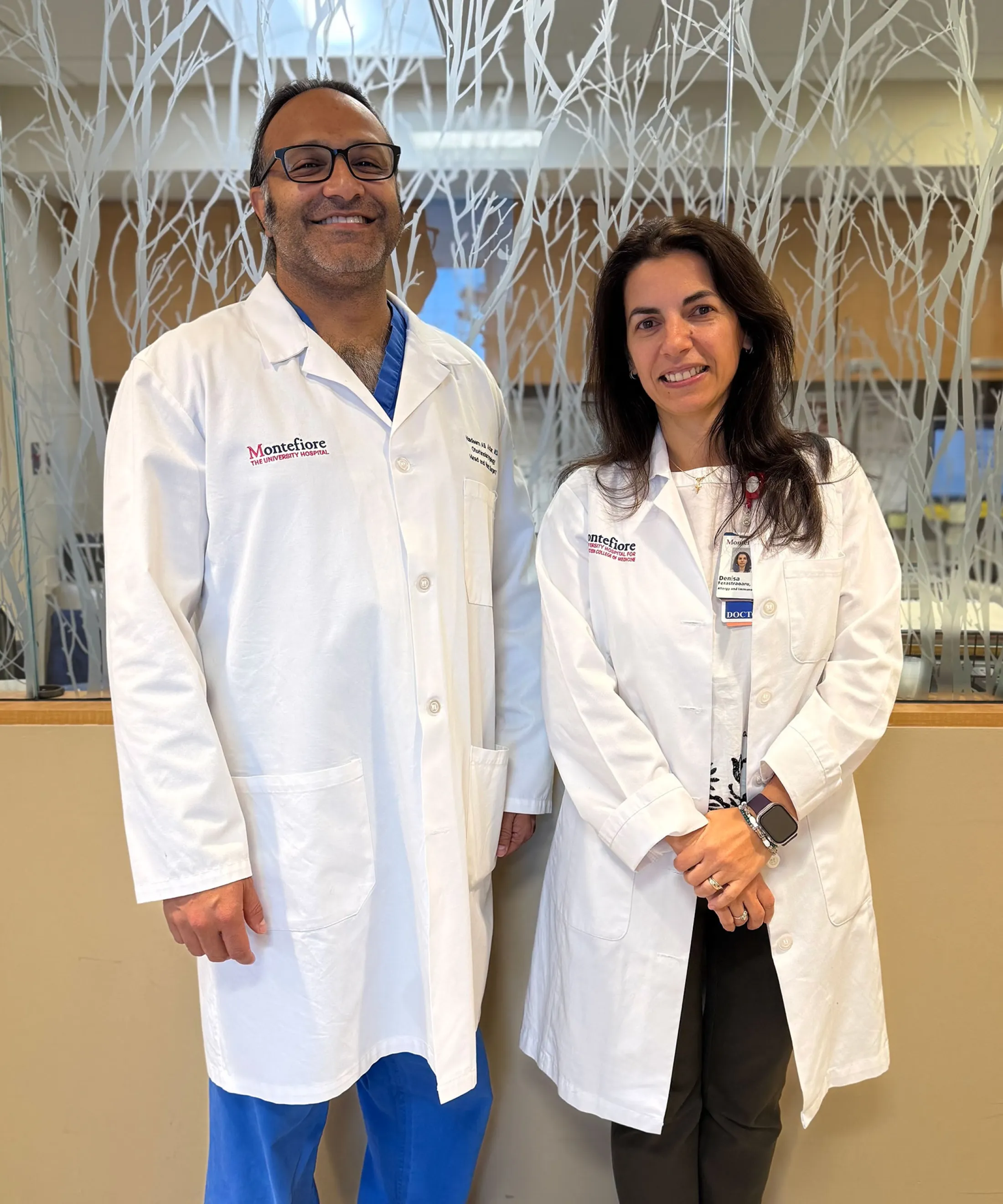
Rhinologist Dr. Nadeem Akbar and Dr. Denisa Ferastraoaru see patients at the Sinusitis Clinic on the Hutchinson campus, at Waters Place.
Otolaryngology is a surgical specialty, and both Dr. Fang and Dr. Akbar perform procedures and surgeries when patients require it. One of the more typical conditions that can benefit from surgery is a deviated septum. “The bone in the center of their nose has shifted so that the patient can't breathe well through one side,” says Dr. Akbar. “This is a very easy problem to fix surgically, and in my experience, these are some of the happiest patients. ‘I've never been able to breathe like this,’ they tell me. They are overjoyed with something as simple as just moving air in and out of their nose, that they weren't able to do well before. Those kinds of life-changing experiences, that's very satisfying as a clinician.”
He gives another example of a patient who came in for an evaluation. On further questioning Dr. Akbar found he had clear fluid that dripped from only one side of his nose. After getting a sample and sending it to the lab, Dr. Akbar’s suspicion was confirmed—it was not a typical runny nose but rather cerebrospinal fluid leaking from a hole in the patient’s skull, which Dr. Akbar was able to repair surgically in collaboration with a neurosurgeon. “This is an example where a doctor who doesn’t specialize in rhinology might not catch this as quickly,” he says.
In addition to the impact they are able to make on patients’ quality of life, both Dr. Akbar and Dr. Fang were drawn to the field by the chance to do these more intricate procedures. “The anatomy is quite complex, and the technology that we use to operate inside the head minimally invasively is advancing every day,” says Dr. Fang. “It’s incredible to be able to do these surgeries and patients walk out afterward and no one can ever tell they underwent surgery.”
Dr. Fang describes a typical procedure to address chronic sinusitis. “We go inside the nose with tiny cameras and instruments. Looking at the images on a large screen, we identify where the sinus drainage pathways are, and then we physically remove bone and mucosa or lining in that area to open up the drainage pathways and help improve aeration of the sinuses after surgery. This also improves the effectiveness of topical medications such as nasal sprays after surgery, since they can get to the affected tissue more easily.”
The team also offers the newest and advanced treatment options, including biologics to treat nasal polyps and prevent them from recurring even after surgery. “Treatment is very personalized,” says Dr. Ferastraoaru. “It is really a matter of looking at the patient as a whole, where exactly the problem is, and which combination of therapies works best for each individual. That's again why it's so important to have the ENT be part of the initial evaluation. It gives us a more complete picture.”
Patients follow up regularly with the team to optimize their treatment plan, and for allergy sufferers, to monitor their symptoms as the seasons change. They generally won’t meet with both doctors at the same appointment again, which also makes follow-ups easier to schedule. But they continue to work together and manage each patient collaboratively.
“The discussions between the two of us, taking into consideration feedback from the patient, this is the important triangle that drives care,” says Dr. Ferastraoaru. “Having this from the start is really the best path to treatment success.”