
Video could not be played
Feature
Caring for Liver Transplant Patients, and Treating their Alcohol Use, at METRIC
October 16, 2025
Video could not be played
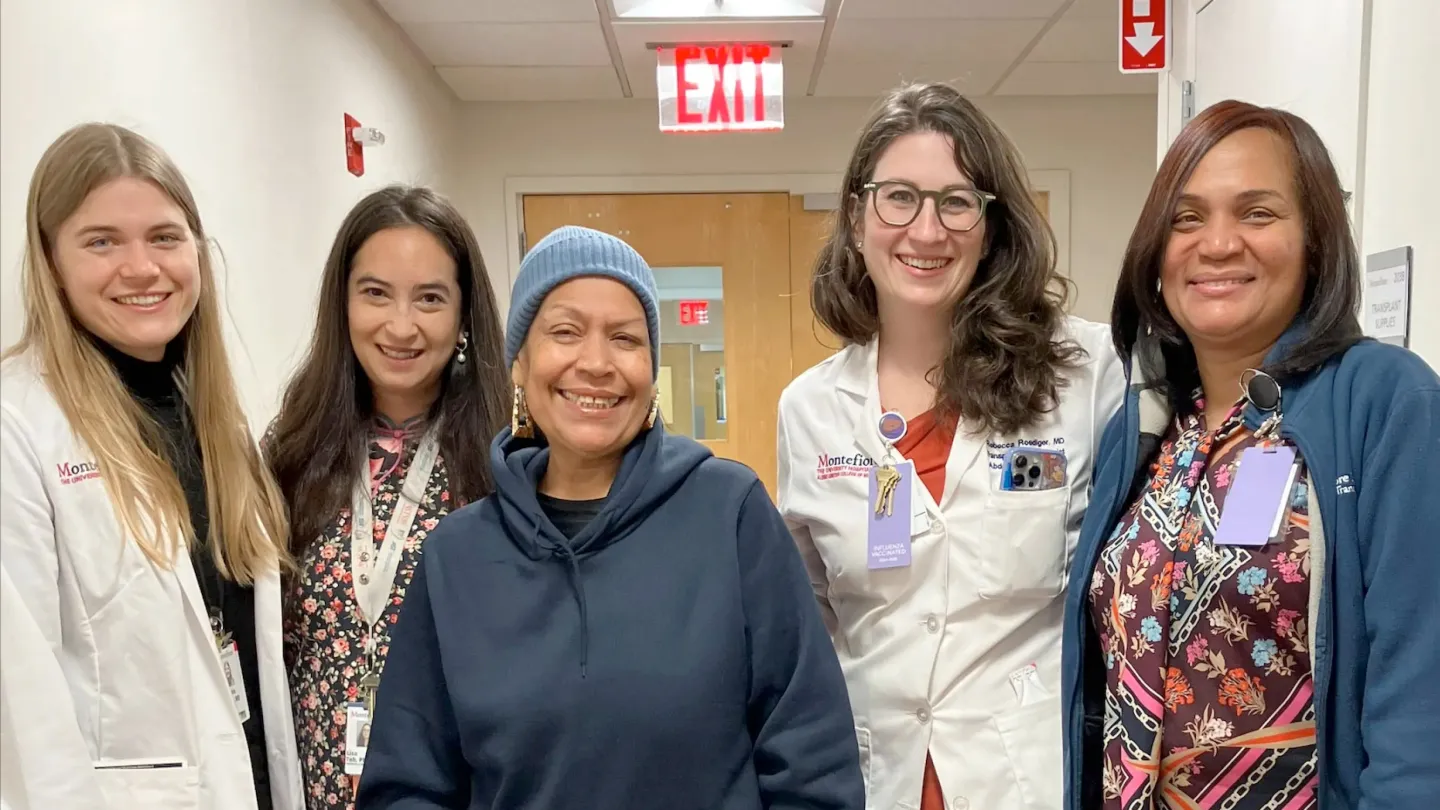
From left: Dr. Melanie Hundt, Dr. Lisa Teh, METRIC patient Omayra Cruz, Dr. Rebecca Roediger, and clinical coordinator Maria Hamilton, at the METRIC Clinic at Montefiore’s Moses Hospital.
Omayra Cruz had always enjoyed drinking alcohol, but after she was let go from her job as a dental hygienist, in the fall of 2023, things started to unravel. She drank constantly and lost interest in food. A native New Yorker who lives in Harlem, Cruz had always done a lot of walking and was in good shape. “I live on the fifth floor. My friend is on the second floor. It got to the point where I couldn't even walk up the stairs to his apartment,” she recalls now.
In February 2024, on her 55th birthday, she felt she had to make a change. She quit drinking cold turkey. But by that point, the damage had been done. “I didn’t know how common it is to get liver problems, how important your liver is,” she says now. “Everything inside me just started deteriorating. I lost so much muscle. I went down to a hundred pounds.”
In late May 2024, she wound up unconscious for several days in Harlem Hospital before being transferred to Montefiore Einstein, where she received a liver transplant. The same hepatologist who saw her in the hospital, Rebecca Roediger, MD, is still part of her care team at METRIC, the Montefiore Einstein Transplant Recovery and Integrated Care Center. The multidisciplinary clinic, the first of its kind in the New York City area when it was founded in December 2023, is helping improve outcomes for patients like Cruz who have liver failure related to alcohol-use disorder, which accounts for about 40 percent of liver transplant patients nationwide.
“My whole life changed because of this transplant,” Cruz says. “Food is my friend now. Water is my best friend. I go to the gym. They always tell me at the clinic, you’re looking great, Ms. Cruz. I say, thanks to you guys.”
She continues, “I love the clinic. I see a therapist, I see a psychiatrist. The medical doctors make sure I’m staying on track with my bloodwork after the transplant, keeping everything in balance. Some patients deal with homelessness, not having enough money or support. I have grown kids who have professional jobs, so it’s easier for me, but the clinic helps people with all that.”
Video could not be played
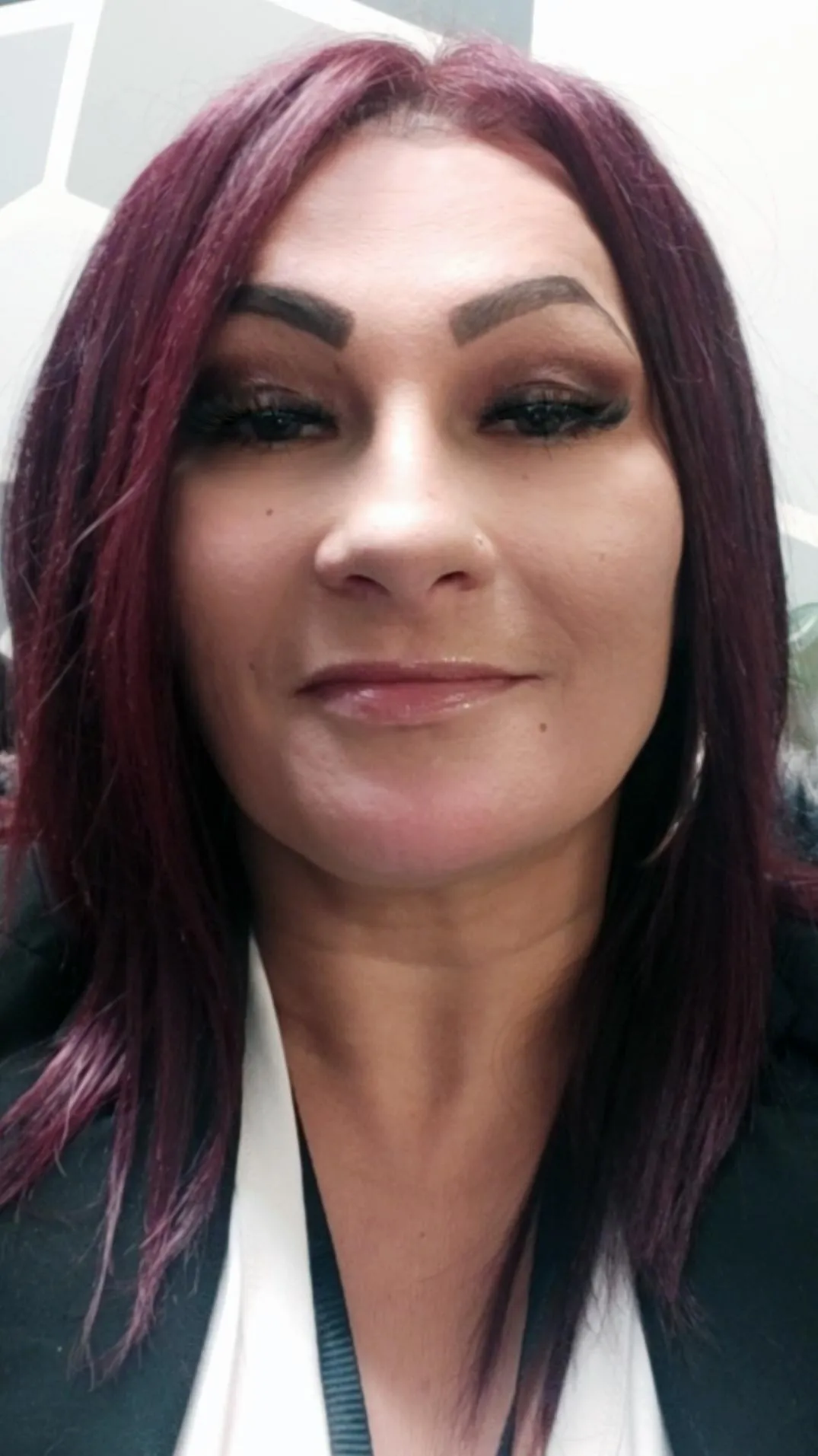
Anna Russo, a peer counselor who works onsite at METRIC.
After graduating from the Wakefield Recovery Center, a Montefiore Einstein outpatient program for alcohol-use disorder and a key partner for METRIC, Cruz attends Alcoholics Anonymous meetings most days. “Alcohol is legal, it's everywhere,” she says. One of her five children recently performed at a bar, and she was proud to be able attend and not feel any desire to drink. “You can do anything you put your mind to,” she says.
Cruz’s story is one of many successes at METRIC. The clinic is held every Monday at Montefiore’s Moses Hospital. Patients see a hepatologist and the clinic’s psychologist, Lisa Teh, PhD, at every visit. Depending on their needs, they can also see Anna Russo, a peer counselor; transplant psychiatrist Peter Spyrou, MD; social workers Michael Malave, CCTSW, and Jessica Bonds, LCSW; and dietician Elizabeth Kestenbaum, RD, CDN. The team also includes Katie Myers, PharmD, and clinical coordinator Maria Hamilton. Once a month, visits are conducted entirely in Spanish, by hepatologist Melanie Hundt, MD, and bilingual providers. All the staff are intimately familiar with the challenges of recovering from alcohol use disorder, and patients’ needs before and after a liver transplant.
A New Paradigm
Up until fairly recently, patients who use alcohol had to remain sober for six months before they could be listed for a liver transplant. As Dr. Roediger, medical director of METRIC explains, the rule was widely misunderstood. “Sometimes when people are very sick with liver disease from alcohol, once they stop alcohol, the liver starts to improve,” she says. The six-month rule was put in place in the hope that some patients’ livers would recover and they would never need a transplant. “It was never meant to be a hurdle patients had to jump through, but in our culture, that’s how it came to be interpreted,” Dr. Roediger says.
Video could not be played
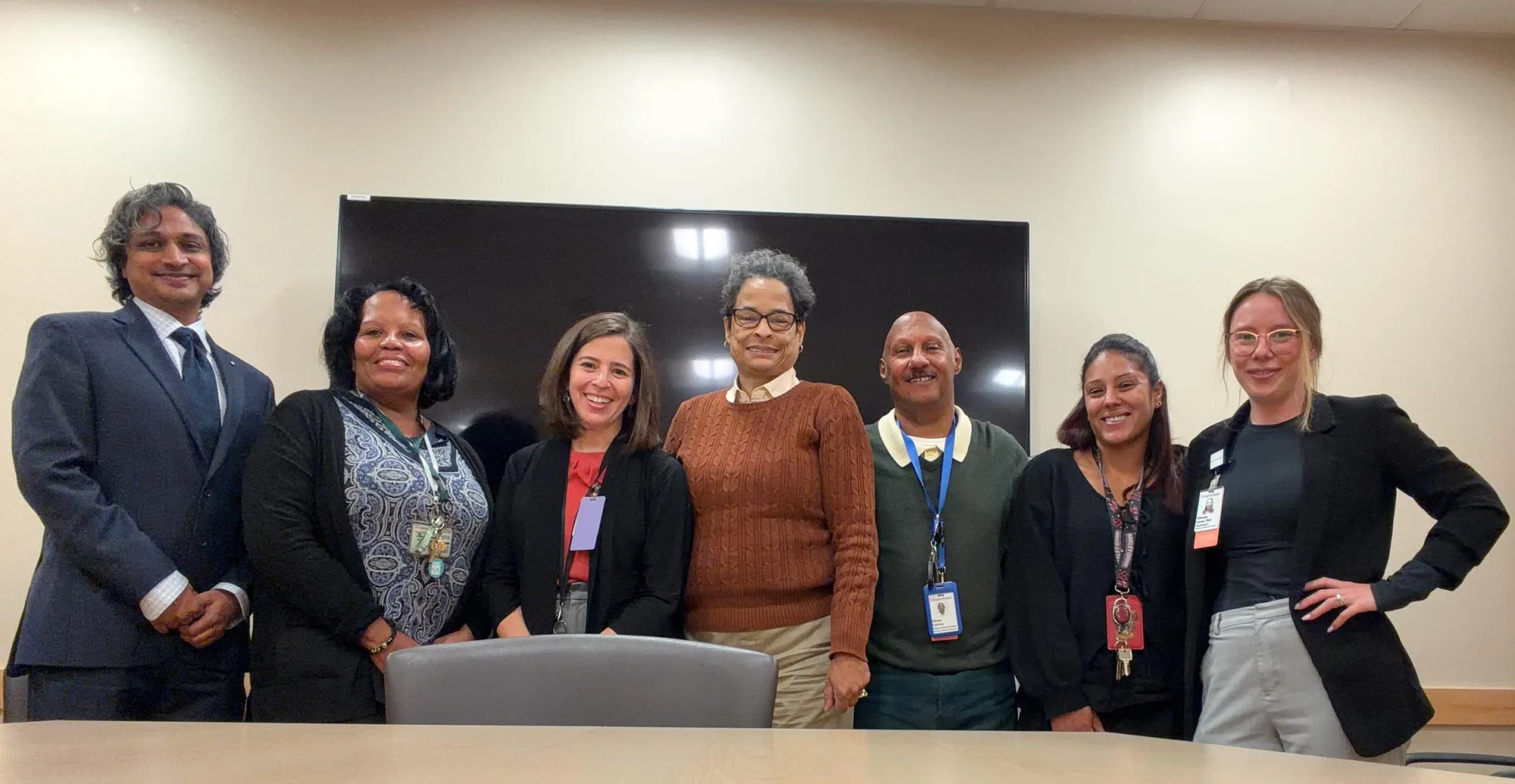
From left, team members at Wakefield Recovery Center: Dr. Suneel Agerwala; Felicia Artis, LMSW; Dr. Yael Belinkie; Susan Mason, LMSW; Victor Correa, CASAC; Ariana Vazquez, administrative assistant; and Dr. Silvana Jones.
Around 2011, a key study showed that carefully selected patients who did not have a sustained period of sobriety were still able to have excellent transplant outcomes. This is when the model began to change, starting with a landmark clinic in Michigan that treated both alcohol use disorder and alcohol-related liver disease. Based on its success, other centers adopted the model for liver transplant patients, including METRIC.
Dr. Roediger joined Montefiore Einstein in October 2023. She was recruited here to lead METRIC and was drawn by the opportunity to provide this type of multidisciplinary care. “Prior to this model, you would see a patient with alcohol-related liver disease as a hepatologist, and there's not much you can do,” she says. “The treatment is stopping alcohol. I can say, please stop drinking. But if you don't give patients any tools with which to do that, most of them are not going to be able to.”
Patients are referred to METRIC by Montefiore Einstein’s general outpatient hepatology practice. The first person new patients encounter is Anna Russo, a peer counselor who works at Wakefield Recovery Center.
“I share what helped me get better after my active using, and how I was able to change my life,” Russo says. “They can tell by certain lingo I use and my experiences that I'm the real deal, that I was out there, and I do get where they're coming from.”
She continues, “Once I tell them that I myself am in recovery, most people will soften up and speak to me. I let them know they can talk to me about anything, no judgment, they don't have to hold anything back. Just listening creates trust, and a bond. It’s important to feel heard when you’re going through this.”
Russo has been sober for eight years. Inspired by a peer counselor who helped her during her recovery, she found her calling and became certified. Her example, and the lived experiences she shares, are a powerful part of METRIC. “Sometimes it's just giving people hope, giving them inspiration, letting them know that someone's in their corner,” says Russo. “Some people don't have anyone in their corner.”
Russo and the other peer counselors at Wakefield Recovery Center are a key to METRIC’s success, says Dr. Teh. “There's still so much stigma around substance use. Especially when people are coming in through a liver clinic and they have this huge impairment that has come about from drinking, being open and honest with their medical providers is very challenging.” With peer counselors, says Dr. Teh, “Patients are more open. And they find it very comforting to know that the peer has been through it, and they've gotten to the other side.”
While Russo never pushes, her hope is that patients will opt in to treatment at Wakefield Recovery Center. The partnership between it and METRIC makes it seamless for patients to begin. “It makes a big difference that METRIC patients are not just given a phone number and told, call this treatment facility when you leave,” says Yael Belinkie, PhD, a clinical psychologist who oversees a number of services at Montefiore Einstein, including Wakefield Recovery Center. “At METRIC patients are really guided smoothly into our center, and that makes a huge difference for their outcomes.”
At Wakefield, patients have access to one-on-one and group counseling sessions, in person or via telehealth, in English and Spanish, as well as psychologists and psychiatrists, social workers, and Russo and other peer counselors. Both at METRIC and Wakefield, patients can get access to medications to treat alcohol use disorder, as well as mental health concerns like anxiety and depression.
As part of the partnership with METRIC, its staff have presented at Wakefield about the unique concerns and challenges for liver transplant patients, as well as the basics of transplant medicine. Dr. Belinkie says, “What do the different terminologies mean that patients may be using? What are the different lab results they're talking about and how do we help patients make sense of those numbers? What is the impact of using alcohol post-transplant? The METRIC team were able to train our medical providers, but also our counselors and our social workers so that they're able to communicate with patients and collaborate with the medical team much more effectively.”
She says of the team at Wakefield, “They're proud when folks are able to have good outcomes, medically and with their substance use. They really take a lot of joy in seeing people make those changes. And they support them when they struggle.”
Helping those who might be turned away elsewhere
After meeting with Russo, METRIC patients always meet with Dr. Roediger or one of the clinic’s other transplant hepatologists, and with Dr. Teh. During their first visit, they also meet with a nutritionist, to help manage needs related to their dietary health, which can include malnourishment and frailty, cravings for sugar that sometimes accompany abstaining from alcohol, and other nutritional concerns. One of the clinic’s social worker helps patients with insurance issues, and addresses food insecurity and needs related to stable housing and transportation.
“We set it up to make patients feel that we're taking really good care of them and giving them everything they need,” says Dr. Teh. “That is the model for our clinic. And that includes an emotional piece, the addiction piece, the medical piece, dietary—all of these different things so that patients can have a good experience before and after transplant. And patients love it. We have an extraordinarily low no-show rate.”
“We feel like we're a very robust program and we're providing a lot of support for our patients,” says Dr. Roediger. “This also allows us to transplant patients considered high risk, who other transplant centers would probably turn away.”
Transplant candidates go through an initial evaluation that includes their overall health and ability to undergo a major surgery, as well as their social support system, psychological health, openness to treatment for alcohol use, and more. A number of patients who the evaluation committee initially felt could not be listed for transplant have gone on to great outcomes thanks to METRIC, says Dr. Roediger.
“To date, 10 of these patients, every one we’ve seen, have gone on to become transplant candidates because we were able to get them the resources and support they needed,” she says. “They did all the hard work and were able to stay abstinent leading up to their transplant. And these were patients that were so high risk that we couldn't even list them initially.”
The best-case scenario, she adds, is those patients who no longer need a new liver. “They were so sick,” says Dr. Roediger, “and then they came to METRIC and became abstinent, and their livers improved to the point that they no longer needed a transplant.”
Some patients, like Omayra Cruz, only become patients at METRIC after acute liver failure necessitates a lifesaving emergency transplant. It’s now been 20 months since she got her new liver, and she follows up at METRIC every other month.
She is looking forward to celebrating her daughter’s 40th birthday in December, in Thailand. “I have more time with family,” she says. “I want to see my five grandkids walk down that aisle, graduate high school and college, whatever they decide to do. It's an honor to be in their lives.”
She adds, “Now they get a better version of grandma, and I feel so much better inside.”