
Video could not be played
Feature
Making the Hospital Work Better: An Interview with Dr. William Southern
June 26, 2025
Video could not be played
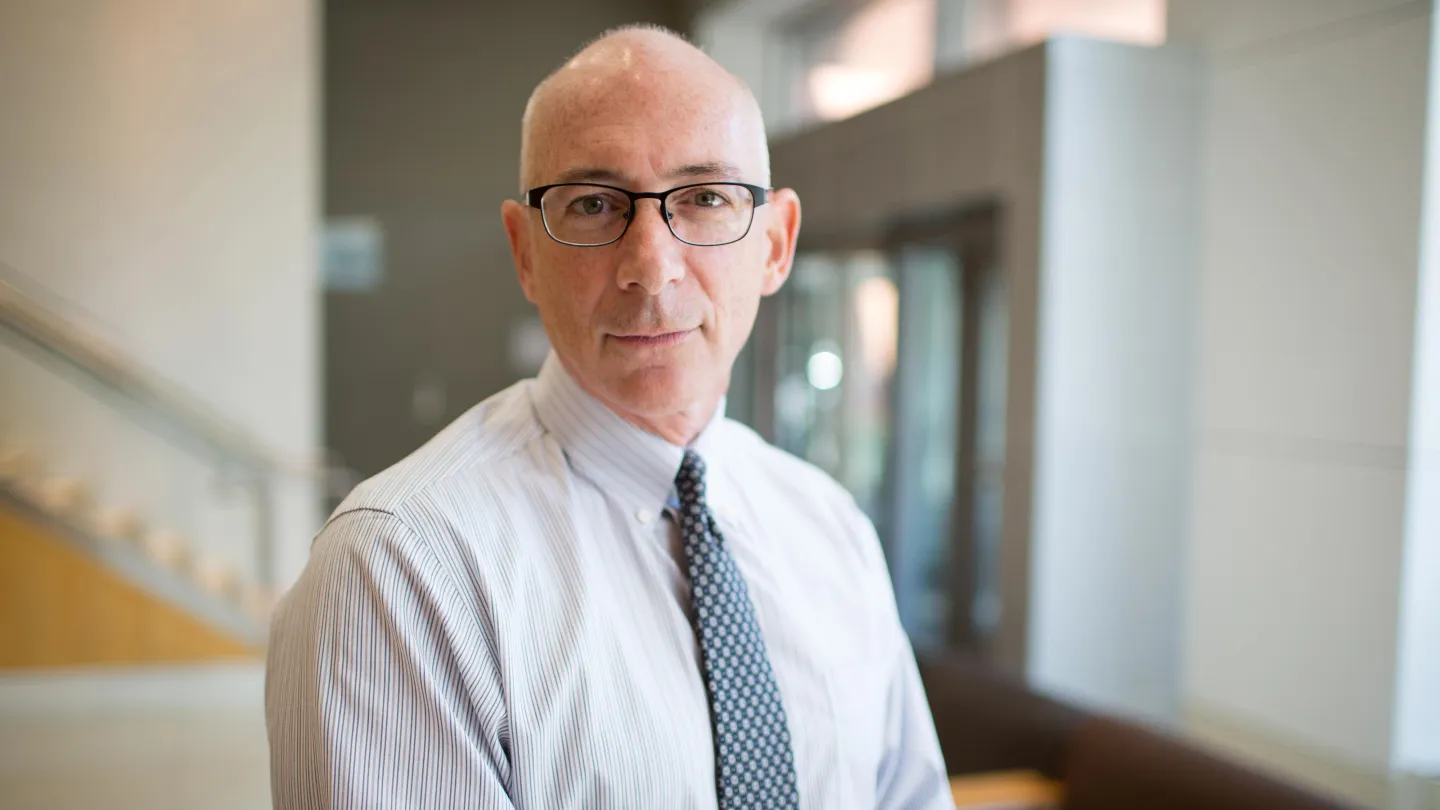
Dr. William Southern is the founding chief of Montefiore Einstein’s Division of Hospital Medicine and led it for 14 years.
In April of 2025, William Southern, MD, MS, founding chief of the Division of Hospital Medicine at Montefiore Einstein, transitioned away from that role after 14 years. During that time he transformed the way not only his team, but the entire hospital worked. He developed a new leadership structure for the division that was in the right place, at the right time during the COVID-19 pandemic, and was instrumental in Montefiore Einstein’s care for patients at that challenging time.
Here, he talks about the evolution of his field, his approach to leading through change, and how he chooses what book to read next.
Q: Tell us about your life growing up.
A: I was raised on the Upper East side of Manhattan, on 108th Street. My mother was a school principal and my father was an arts administrator who ran the Theater Development Fund, including TKTS, which offers discount tickets to Broadway shows. Our neighborhood was predominantly Black and Latino. That had a profound effect on me wanting to stay in New York and work at a place where the community is a focus.
Q: How did you become interested in medicine?
Video could not be played
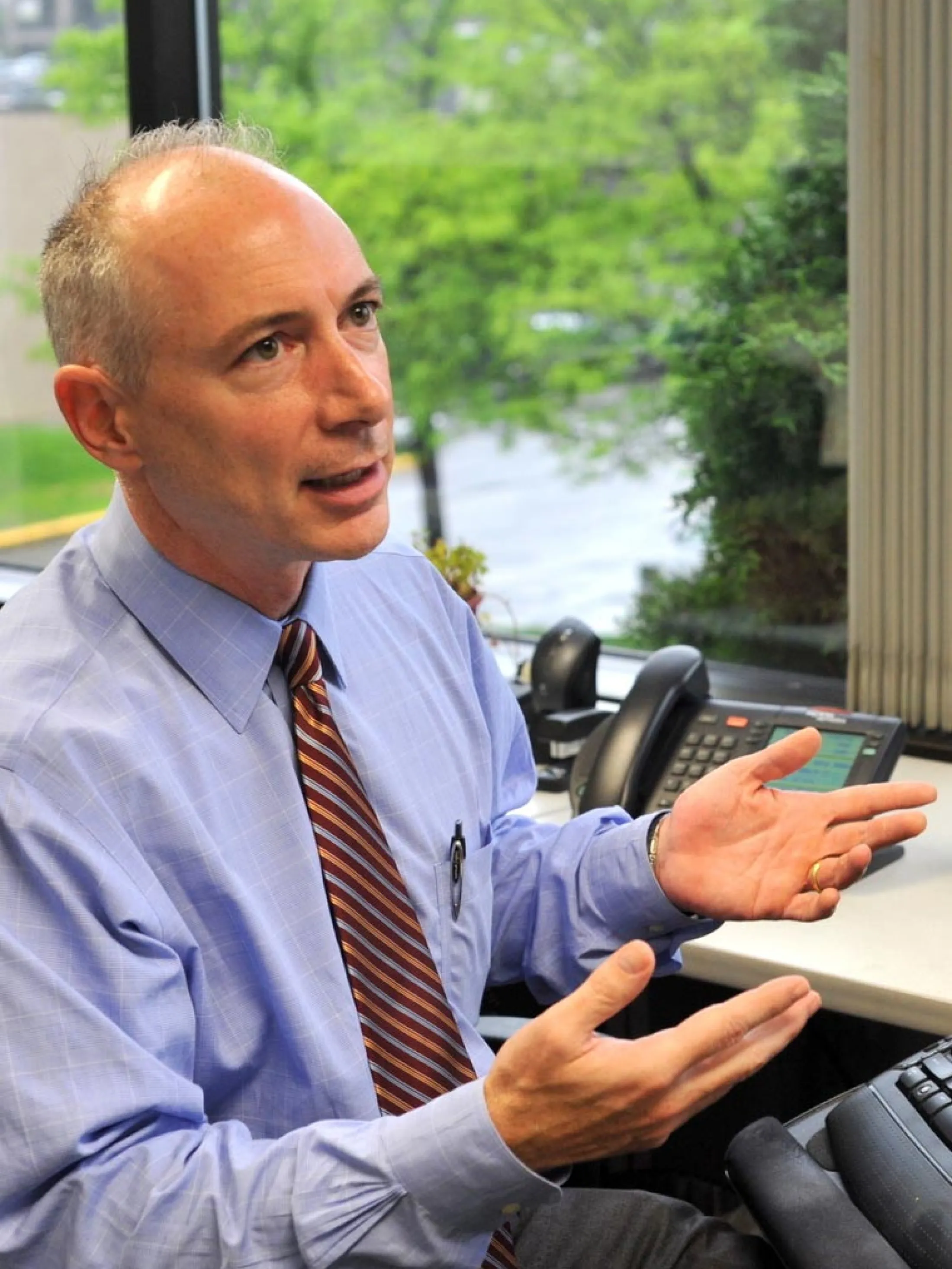
Dr. William Southern earlier in his career. He began working as a hospitalist in the early days of the field, before the term had been coined.
A: My pediatrician was my first role model. He seemed so smart and impressive, and yet was also so kind and thoughtful to me as a kid. I don’t remember thinking “I want to be a doctor like him,” but I had a fundamental sense that he was a great human being, and what a great way to spend your life.
Q: When did you figure out this was your path?
A: I studied physics in college but while I loved science, I realized I wanted to work with people. The way you think as a doctor is very different than physics, where everything is precise and mathematical, and there's always an exact answer. Medicine is more of an art form, because you can't control for all the variables and of course there is a person sitting in front of you.
Q: The field of hospital medicine was still nascent during your training. How did you become interested in it?
A: As a medical student I was immediately enthralled with the experience of going into the hospital. It felt like this incredibly complicated organism where so many people are playing so many different roles, each of which requires expertise and is completely essential. Somehow all these disparate pieces fit together in the creation of patient care. Trying to get your mind around the whole thing felt impossible.
When I finished my training, before anyone had said the word “hospitalist,” I took a job that was essentially that, working in a holding area in the Emergency Department for patients being admitted at Mount Sinai. I never thought of it as going into a brand new field. I was just doing what I liked, and it felt completely natural.
About a year later, in 1996, some now famous hospitalists coined the term and wrote the first research articles about this model of care. And I thought, oh, that's me.
Q: How did your career evolve from there?
A: The field of hospital medicine was defining itself over that period of time. Einstein, where I had attended medical school, was starting its own hospitalist program. They were interested in figuring out how hospitalists fit on the teaching service, which was of great interest to me. In 2002 I took a job at Weiler Hospital, essentially teaching full-time. I worked for Matt Berger, the best ward attending I'd ever seen.
It was joyful. I would describe to people what I did for a living, and they would say, oh, you're one of those people who really loves their job. It felt meaningful. Montefiore and Einstein have a shared mission of serving the community. It’s why many amazing people come to work here, or if they don't know it before they come, it's why they stay.
Q: How did you become the inaugural division chief?
A: The Division of General Internal Medicine was huge. There were 40 hospitalists, and Dr. Julia Arnsten, who still leads the division, knew she wasn’t knowledgeable about their needs or how to help them build their careers. She created a section within the division, and I was section chief. Ultimately this led to the formation of the Division of Hospital Medicine, in 2011.
Video could not be played
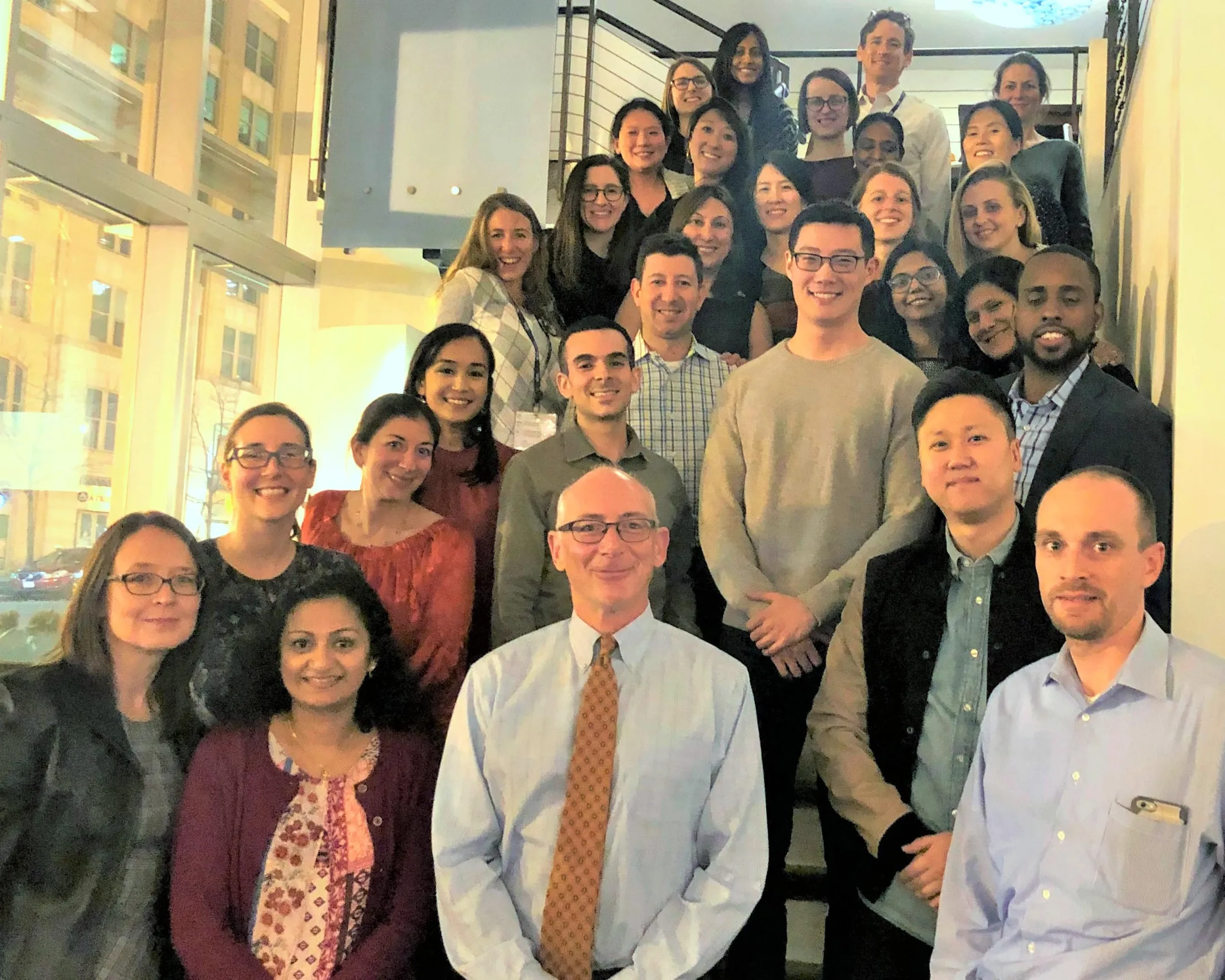
With members of his team at a Society of Hospital Medicine conference. He counts developing his leadership team as his proudest achievement.
We grew dramatically. We added physicians at Moses and Weiler Hospitals, and took responsibility for staffing what was then Montefiore North and is now called Wakefield. Currently there are over 100 physicians in the division.
Q: What drew you to leadership?
A: It was that initial fascination with how hospitals work. What people refer to as “silos” are really experts working in their arena, but who can see the big picture?
With my deepening understanding of how the system functions came this belief that I could help it work better. If we just changed this little thing, everything might be easier.
Q: Tell us about one of those changes.
A: This was not a small change but a monumental shift. When I started as chief, all the doctors had patients on many different floors, which was common then. In 2010, I attended a conference where I learned about geographic staffing. It was a new care model at the time, and it meant that every doctor had all of his or her patients on one floor.
Can you imagine the efficiency? If I have all my patients on one floor, then there's one social worker I can talk to about all my patients, not six different social workers, each about one or two patients. That’s just one example.
I became committed to adopting that model. But it was not easy.
I discovered this wasn't something we could do just for the hospitalists. We had to also do it for the teaching service, for cardiology. The entire hospital had to change its model. And there was no easing into it, it had to be a big bang, all at once.
It required solving a bunch of math problems—do we know how many cardiology patients there are at any given time, and how much does it fluctuate? If we give them 70 beds on these two floors, are they going to fill them?
When you looked underneath the hood and could see how all the pieces worked, it became very complicated.
Q: How did you bring everyone along?
A: My 30-second sales pitch was, this is going to be really hard. But at the end of the day, this is so obviously a better model that we're going to look back five years from now and not understand how we could ever have done it any other way. Almost anything is worth it to get us there.
Q: Besides increased efficiency, what were some of the payoffs?
A: We had whole systems of communication between doctors and nurses predicated on an assumption that nurses are physically present on the floor and the doctor is someplace else. Now these critical conversations could happen organically because they're going to run into each other in the hallway all day long. Nurses were completely onboard in the first five minutes.
Q: Were there other downstream effects?
A: This was the beginning of inpatient units, rather than a bed or even a medical service, as the unit of care. Social workers, nurses, physical therapists are all floor based. The missing piece was the physician, and we brought them into the team. The next stage was floor-based team building.
It also changed our approach to quality improvement. It became the unit's responsibility to prevent infections on their floor, and to refine safety processes. There was no reason to assign blame to an individual.
Floor-based team building and monitoring data at the unit level continue today. We made this change in 2012, and 13 years later, we're still tweaking it.
Q: What are you most proud of?
A: The creation of a leadership team within our division. This didn't exist at all before. Now each hospital has a service director and an associate service director. They are responsible not just for the hospitalists, but the entire medical service.
I was lucky to identify really smart, dedicated people who shared that vision of understanding how the hospital works and making it better. Priorities become apparent, we are nimble, we can make stuff happen, we know where the levers are. That team is extraordinary.
When COVID hit, we had the right people, at the right place, at the right time. When we needed to quickly build a new unit out of a radiology suite, the people in my division knew exactly what to do. When we had a pool of 100 specialty physicians who weren’t seeing patients in the office, we knew exactly how to deploy them. It was an incredibly stressful and scary time, but my team was amazing.
Q: What’s one thing you’ve learned about leadership?
A: When you're making decisions, your initial reaction doesn't have to be right. But you have to get it right after you've talked to everyone around you who's smart. You have to remember to listen and process it, and you don't have to be right until the end.
Q: How do you unwind in your free time?
A: I've always been a runner, and in 2025 my goal is to run a thousand miles. That’s about 3 miles a day, but I take days off. During the week I run on a treadmill and I save outdoor runs for the weekend, often on the bike path in Westchester.
I used to rock climb and now I climb at the gym. I also care about reading, and I have a system, which is that I start with the prize lists. I know that over the summer the long list for the Booker Prize will come out, and I try and read everything on it. Those lists are my starting points, but I'm also ready to go down rabbit holes, like discovering a new author and then reading everything they've written.
I also have two sons and my youngest is going to college in August.
Q: What is next?
A: I’m excited for the next chapter. To be continued…