
Video could not be played
Feature
Type 5 Diabetes: A Long-Awaited Designation for a Deadly Illness
A Q & A with Meredith Hawkins, MD, MS
April 24, 2025
Video could not be played
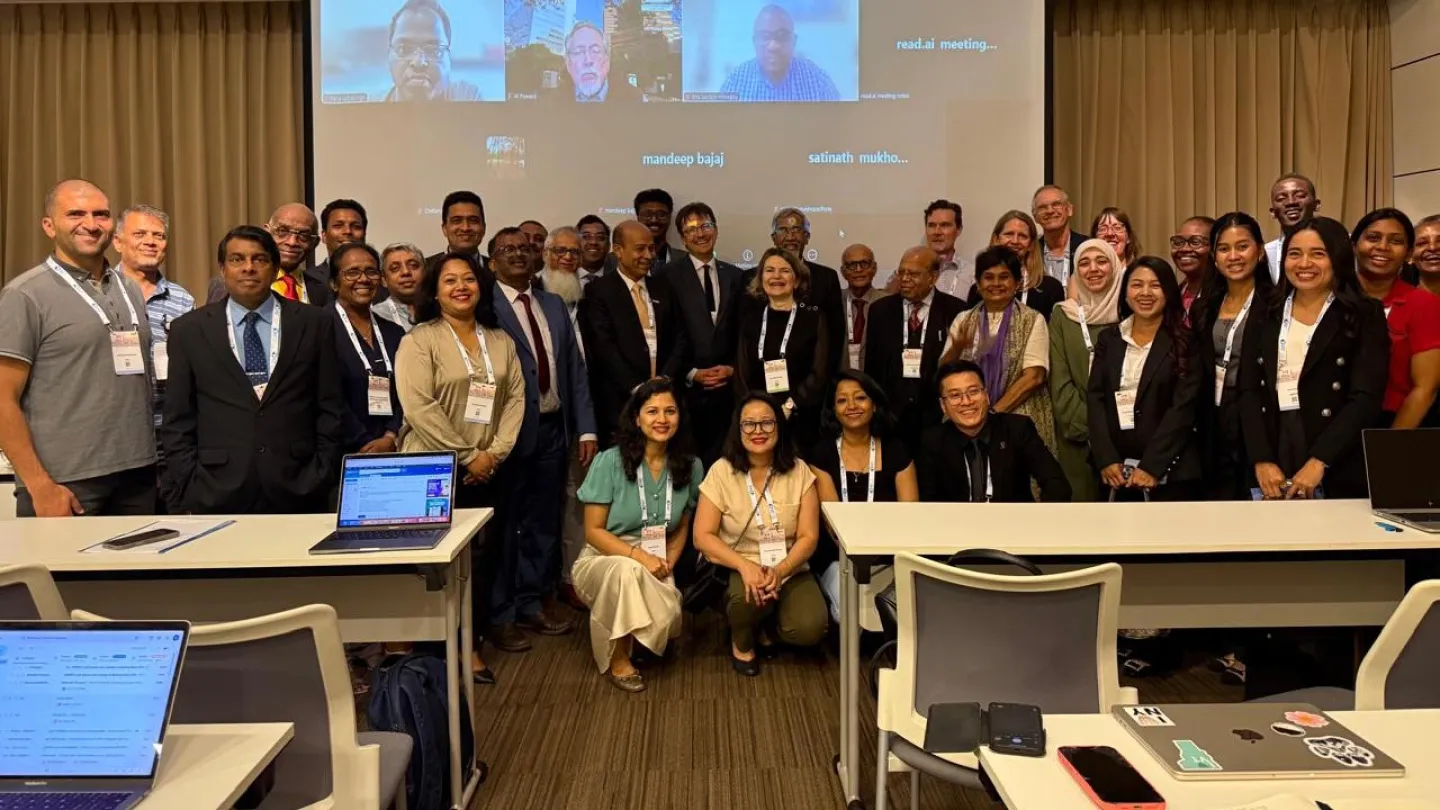
Dr. Meredith Hawkins (center, front row standing) at the meeting of the International Diabetes Federation in Bangkok, Thailand, in April 2025, where a form of diabetes she has studied for the past 20 years was officially classified as type 5.
Two decades of research by Meredith Hawkins, MD, MS, and collaborators recently led the International Diabetes Federation to officially designate a new type of diabetes, known as type 5. It is related to malnutrition and occurs most commonly in young people in Africa and Asia, and it is more common than tuberculosis and nearly as prevalent as HIV/AIDS. The disease is often fatal and doctors are still investigating effective treatments.
Video could not be played
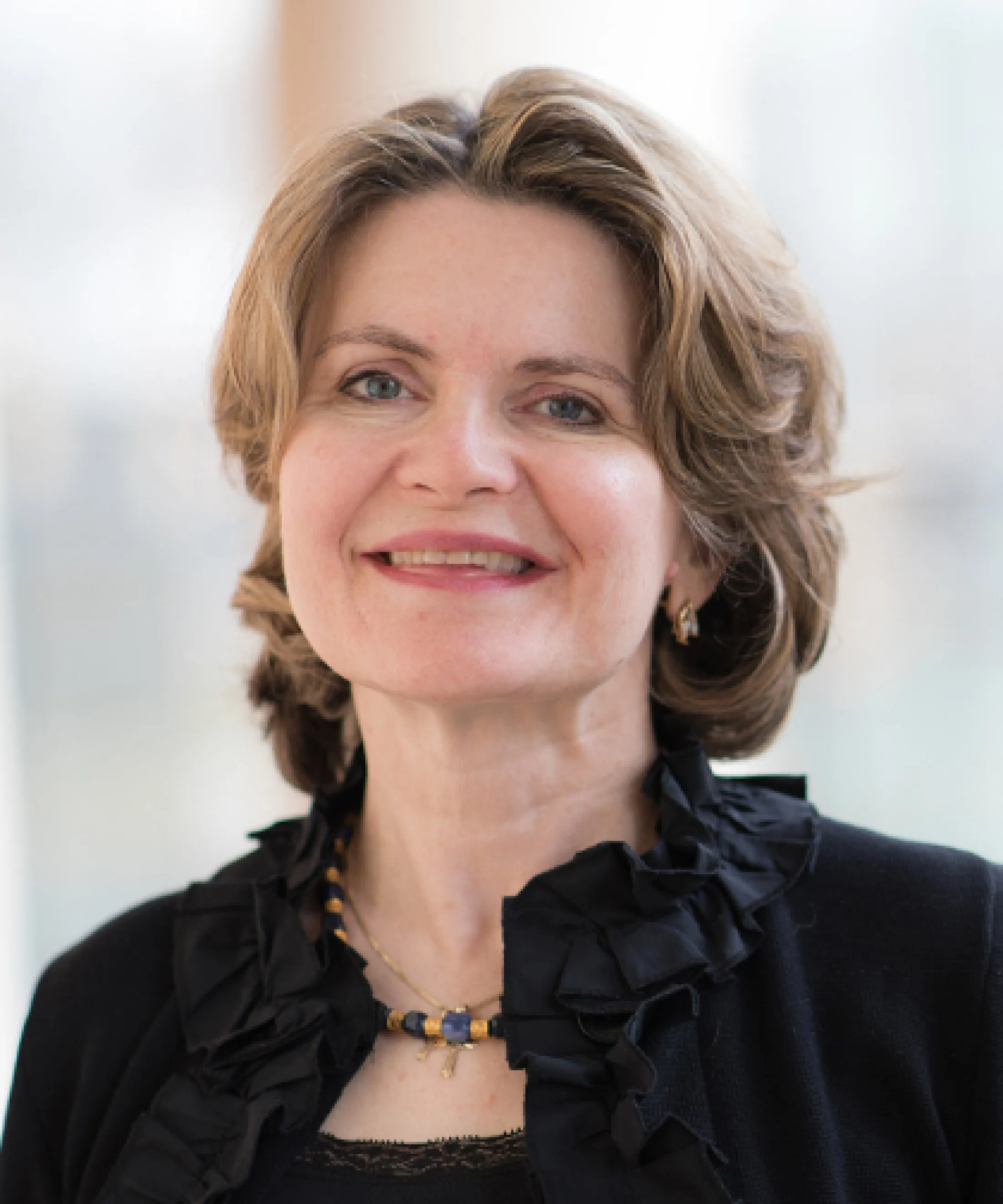
Meredith Hawkins, MD, MS, professor in the Division of Endocrinology, Harold and Muriel Block Chair in Medicine, and director of Albert Einstein College of Medicine’s Global Diabetes Institute.
Dr. Hawkins talks here about this milestone, what we know about the illness, and what’s next.
Were you expecting this work would result in the official designation of a new type of diabetes?
MH: For many years I have advocated that this neglected form of diabetes be recognized. To now have global leaders calling this a new type of diabetes is a big deal. It makes a huge impact in terms of recognition and awareness, which hopefully will translate into funding for further research. It gives us terrific momentum to keep working toward appropriate treatments.
As you’ve noted, there was briefly official recognition of this disease much earlier. What happened?
MH: Yes, this is actually the 70th anniversary of this condition being first described. It started with 13 patients and a very astute diabetes specialist in Jamaica, at the University of the West Indies. These patients were young and lean, unlike typical patients with type 2 diabetes. But they could survive without insulin—they definitely didn’t have type 1. It was totally perplexing.
These findings were published in The Lancet. It got quite a bit of attention and immediately became known as Jamaica-type diabetes. The patients were young, thin, poor, malnourished, with very low BMIs, and had diabetes that didn't require insulin for survival, but was definitely not type 2. Reports of similar patients started coming out of many other low- and middle-income countries, including Indonesia, India, Brazil, and countries in Sub-Saharan Africa. Back in 1985 the World Health Organization (WHO) classified it as malnutrition-related diabetes, which was later changed to malnutrition-modulated diabetes.
Why was it then rolled back?
MH: In 1999, the next time the WHO convened to discuss classifications of diabetes, concerns were raised about whether there was evidence that malnutrition causes diabetes. This kind of scientific research would be challenging in the settings where these patients were being encountered. Unfortunately this led to removal of this form of diabetes from the WHO classification.
How did you learn about this form of diabetes?
MH: I first heard about it in 2005 when I was teaching at a global health meeting with people from about 40 different low-income countries. They were seeing many thin people with a type of diabetes that was not type 1. This was completely new to me because the disease had been declassified. I started reading the literature and discovered this whole history that had receded and was quickly being forgotten.
That same year, I started teaching at a big medical school in Uganda and had the opportunity to care for these patients. Local physicians would give them doses of insulin appropriate for type 1 diabetes. Patients would go back to their villages, where they didn't have much food and couldn’t monitor their glucose. Every one of those young people ultimately died within a few months from low blood sugar. Receiving insulin without proper care and monitoring, and without enough food, was frequently lethal.
How did you make the leap to doing your own research on the illness?
MH: What I witnessed in Uganda made me determined to look for answers. Many reports of these patients were coming out of India. In 2008, I went Christian Medical College (CMC) Vellore, in southern India, which is an excellent school, expecting that they might understand this condition. They didn’t have previous experience studying this type of diabetes, but they invited me to partner with them to do research. That was the beginning of my longstanding collaboration with Dr. Nihal Thomas, an esteemed professor at CMC Vellore, without whom this work wouldn’t have been possible.
What were your findings?
MH: We screened several hundreds of patients with diabetes and ultimately found 20 that we were absolutely certain met all the clinical criteria. We also studied patients with type 1 and type 2 diabetes, as well as two non-diabetic control groups, one who were very thin, and another group whose body composition matched the type 2 patients. The study took us 10 years to complete with an additional two years to finalize the paper, publishing the results in Diabetes Care in 2022.
Video could not be played
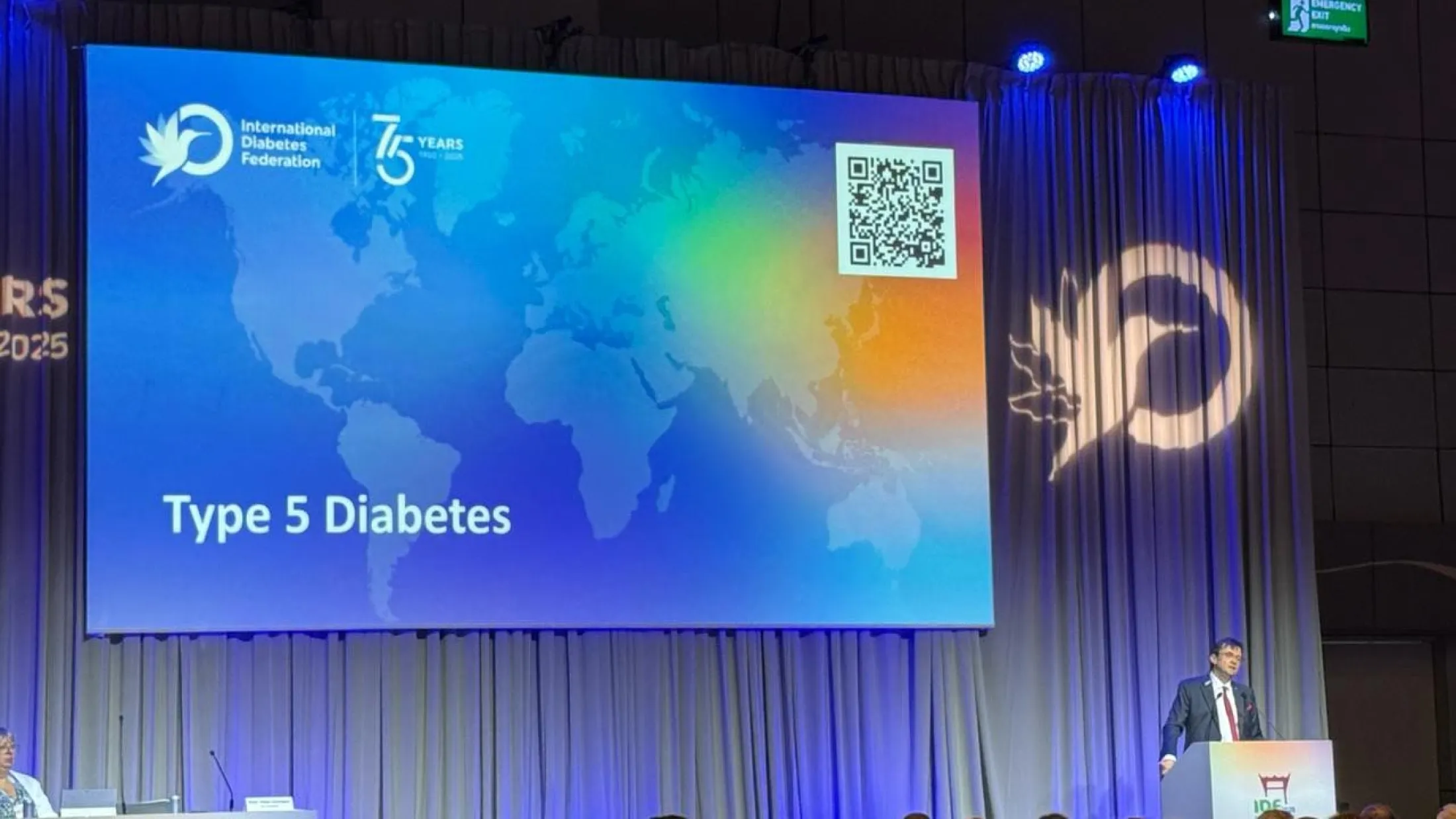
At the podium, Dr. Peter Schwarz, president of the International Diabetes Foundation at its April 2025 meeting in Bangkok, Thailand, announces the official designation of type 5 diabetes.
We were able to show definitively that this is a distinct form of diabetes, and ultimately the medical community took notice. Over 14,000 people from around the world have now viewed the paper. Getting this designation from the International Diabetes Federation could not have happened without this stepwise progression.
What is your working theory on the cause?
MH: There's data from both animal and human studies to suggest that malnutrition is harmful to the development of the pancreas. This was consistent with our findings, which were that the defect is actually at the level of the pancreas. These individuals have a very severe problem of insulin secretion. And that's not what we were initially expecting, because when the patients came to rural clinics with sugar levels that were really high, they were being prescribed large amounts of insulin. This was problematic for our patients in Africa, who frequently died of hypoglycemia. Our important finding was that the problem is with insulin secretion, not insulin resistance.
Insulin is secreted in the pancreas by beta cells, which develop in utero and during the first two years of life. After that, researchers believe the number is more or less stable for the rest of your life.
All this occurs very early in life and it's dependent on optimal nutrition. Proteins and micronutrients are very important for beta cells’ development. We believe patients with type 5 diabetes were likely low birth weight and malnourished in utero. They reach adulthood with a lower amount of beta cells. And then it’s a double hit, because as adults malnutrition is likely impacting how well the beta cells they do have are able to function.
Adding further support for this, there is a decline in type 5 diabetes in regions where food access has improved for long enough that babies are no longer being born to malnourished mothers. The less fortunate news is that there are still a billion undernourished people in the world, and we expect increasing food insecurity globally. So malnutrition and type 5 diabetes are not going away soon. But we do believe this form of diabetes could be prevented by better nutrition for women of childbearing age and their young children.
What about potential treatments for these young adults who already have type 5 diabetes?
MH: During the recent IDF meeting, we convened a working group to address this question. A distinguished physician colleague from Uganda has had experience treating these patients with very small amounts of insulin. My suspicion is that diet is also going to be really important. Optimal diets likely would include much more protein, which would help optimize the function of what beta cells are present. But this would require agricultural and public health actions in the countries affected and a substantial shift in availability and preferences, since plant-based proteins tend to be more expensive.
This will all have to be properly studied. Some of it may be observational to begin with, getting as much data as we can on patients in different countries. How are they being managed, and what is working?
There is no quick fix and so we expect the fight against this disease to require substantial further research and advocacy. Once you have seen young patients dying from inappropriate treatment of a neglected form of diabetes, there's no turning back.
How did you first become interested in diabetes?
MH: When I was 12, I read about how in 1921 Frederick Banting and Charles Best discovered insulin in Toronto, Canada, the city where I grew up. I remember thinking that diabetes was the most fascinating disease I'd ever heard of—how all the different organs work together to produce insulin and regulate glucose and how all this is exquisitely calibrated, and yet how it can go wrong and affect so many tissues. I thought, this is it, I'm going to grow up and study diabetes . . . and I actually did!
What brought you to Einstein?
MH: I wanted to find a place to train that was very strong in diabetes research. I did my fellowship here at Einstein and stayed. Starting back in the 1990s, friends who were doing global health work began inviting me to accompany them. I saw a surprising amount of diabetes in low-income settings, which sparked my own interest in global health. Eighty percent of new cases of diabetes are now in low- and middle-income countries, including type 5 diabetes. This is no longer predominantly a disease of the West.
What has kept you here?
MH: Einstein’s generosity of spirit has allowed me to pursue global health research. It’s a tribute to the vision of the school itself that I was able to pursue this work. Ultimately, this story belongs to all of us.