
Video could not be played
Feature
How Montefiore Einstein Is Meeting the Need for More Addiction Medicine Specialists
Our Division of General Internal Medicine is expanding access for patients in need of substance use services and leading the way in training new addiction specialists, with the largest fellowship program on the East Coast.
February 27, 2025
Video could not be played
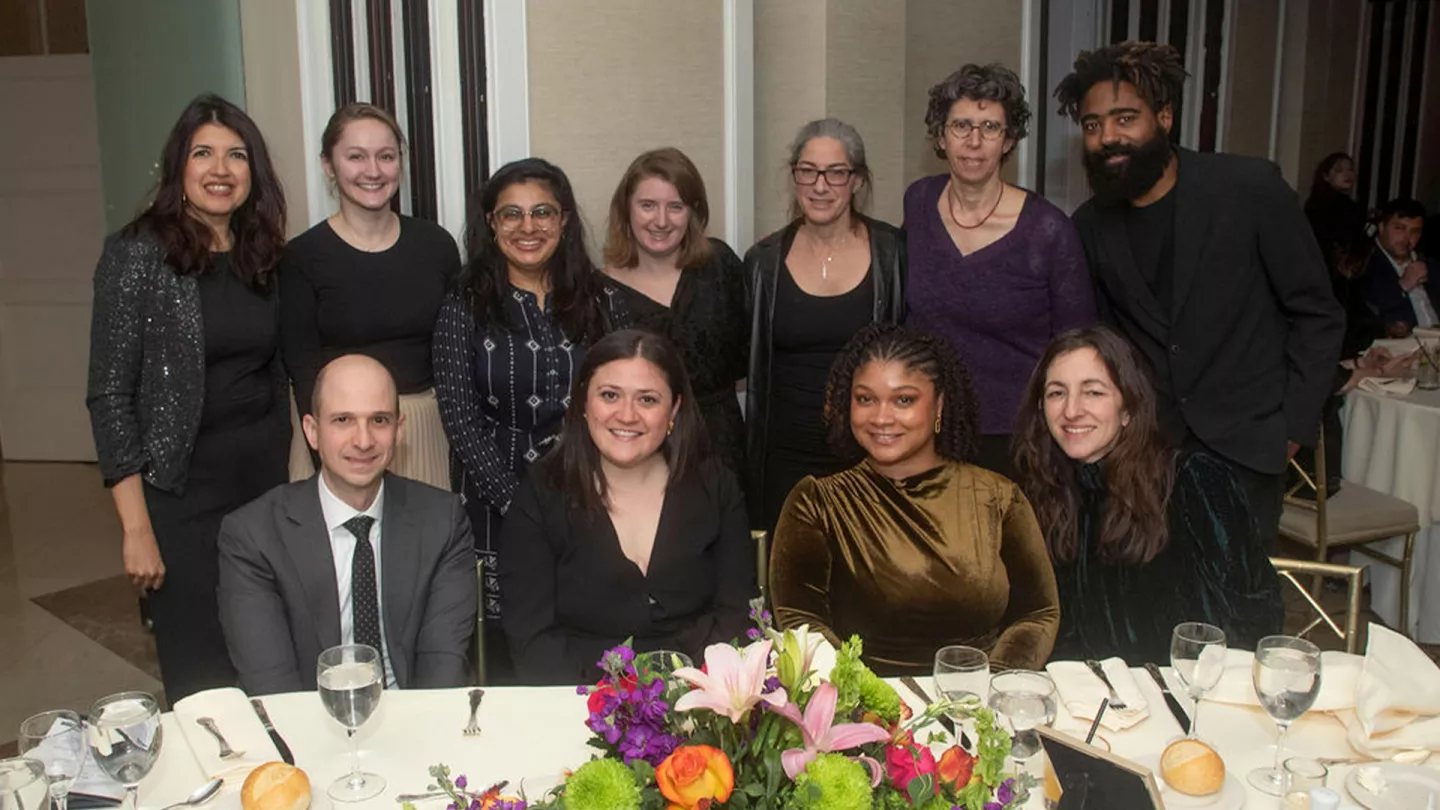
Top (left): Laila Khalid, MD, MPH; Natalie Buslach, MD; Ruchi Shah, DO; Clarissa O'Conor, MD; Andrea Kondracke, MD; Melissa Stein, MD; Derick Jones. Bottom (left): Aaron Fox, MD; Kristine Torres-Lockhart, MD; Kiara Lora, BS; Andrea Jakubowski, MD, MS
At hospitals nationwide, patients with varying forms of substance use disorder (SUD) often make repeated trips to the emergency department. “They're caught in this cycle of coming to the ED and being discharged, because there isn’t always a good system for connecting them with other resources for care,” explains Ruchi Shah, DO, medical director of the addiction medicine consult service that opened at Montefiore’s Wakefield Hospital on January 7.
The new service works with patients hospital-wide who have a SUD, whether their admission is directly caused by substance use or not. One frequent patient in the Wakefield ED was having hallucinations related to his use of cocaine and alcohol. Once the new consult service launched, emergency medicine physician Pooja Sheth, MD, asked Dr. Shah to speak with him.
Dr. Shah joined the faculty at Montefiore Einstein in October 2024. She trained in family medicine and addiction medicine and is board certified in both specialties. In addition to seeing inpatients, she also sees patients for office visits at the Wakefield Ambulatory Care Clinic, two blocks from the hospital.
“I told this patient, ‘When you get out of the ED, you should come see me across the street.’ But of course we didn’t know if he would,” she says. Because substance use is still highly stigmatized, many people have had bad experiences in healthcare settings and as a result, don’t seek out routine care.
Dr. Shah prescribed medication to reduce the patient’s cravings for alcohol and cocaine, and was excited to see him at her clinic following his discharge. “He hadn't been to the ED in two weeks, which was a record,” she says.
Nationally, about 25 percent or more of patients admitted to hospitals have a substance use disorder, so there was a clear need to expand Montefiore Einstein’s existing addiction medicine consult service, located at Weiler Hospital. Opening the new service required concerted effort from the Division of General Internal Medicine leadership and faculty, including Kristine Torres-Lockhart, MD, medical director of the Weiler addiction medicine consult service and program director for the Addiction Medicine Fellowship Program. It is part of a broader expansion of addiction medicine at Montefiore Einstein, necessitating new faculty positions, including Dr. Shah’s, and paving the way for the growth of our fellowship training program.
An urgent need helps spur expansion
Dr. Torres-Lockhart was the first addiction medicine fellow here, in 2019. Next year, the program will train six fellows, making it one of the largest such programs in the country. The fellowship program’s success is especially notable given that interest in the field has yet to meet the need for specialists nationally. Last year, between 30 and 40 percent of spots in addiction medicine fellowship programs nationwide were not filled, Dr. Torres-Lockhart says, a testament to the need to further expand the addiction medicine workforce.
To help meet the need for physicians with this expertise, Montefiore Einstein is also taking the lead in exposing more medical students, residents, and faculty to addiction medicine to help build the pipeline of talented clinicians. Out of 19 people who took part in our Addiction Medicine Mentor Training Fellowship Program, several expressed interest in pursuing the field. The New York State OASAS grant that funds the program is currently up for renewal, setting the stage for a possible expansion.
The rapid growth in fellowship spots at Montefiore Einstein was made possible in part by a five-year grant from the federal Health Resources and Services Administration (HRSA) that Montefiore-Einstein was awarded in 2020. “The point of the grant was to pay for trainees’ stipends and help with recruitment. But it was also to build the infrastructure for really robust clinical sites where fellows can train,” Dr. Torres-Lockhart explains. “You can't train a specialist if there aren't spaces for that specialist to work.”
She continues, “It's fortuitous that we’ve been able to add new clinical sites, recruit new faculty, and attract highly qualified fellows. The stars have been aligning.” In addition to Dr. Shah, this year the program hired Natalie Buslach, MD, buprenorphine champion at the Montefiore Comprehensive Family Care Center (CFCC), near Weiler Hospital, and Matthew Holm, MD, who trained in pediatrics and provides care for young people and families with substance use disorder as buprenorphine champion at the Montefiore Comprehensive Health Care Center (CHCC), close to the Moses Hospital campus.
The team has also launched e-consults for addiction medicine, allowing other providers to get expert guidance from an addiction medicine specialist. “These have all been part of our efforts to improve access to addiction medicine across Montefiore Einstein,” says Dr. Torres-Lockhart. “We are making it easier for patients to receive care, and for providers to find that expert opinion or guidance.”
Victoria Vapnyar, MD, a hospitalist at Wakefield, has frequently called on the new service. “They're always accessible,” she says. “They are comfortable with methadone titration and other special medications generalists are not as familiar with, which can really help manage patients’ withdrawal symptoms. They are great advocates for patients, and a great support for their fellow physicians as well.”
Meeting the Needs of Our Community
In its first month, the addiction medicine consult service at Wakefield had 154 patient encounters. The team at Wakefield has received consult requests from geriatrics, orthopedics, the intensive care unit, obstetrics and gynecology, surgery, and more. Jessica Dekhtyar, MD, medical director at Wakefield, worked to ensure faculty and staff hospital-wide were aware the new service was available. “She has done a wonderful job facilitating introductions with the different specialties,” says Dr. Shah. “I was worried we’d have to go knocking on doors at first to let people know we’re here to help, but that hasn’t been the case.”
In addition to Dr. Torres-Lockhart, Laila Khalid, MD, MPH, associate program director of the fellowship program; Julia Arnsten, MD, chief of the Division of General Internal Medicine; Joseph DeLuca, MD, director of clinical services for the division; Joanna Starrels, MD, associate chief of research for the division, and so many others have been instrumental in laying the groundwork and helping both the inpatient and outpatient services grow seamlessly. The social work team, who lead the complex discharge planning, and pharmacy, who have procured medications, some of which are hard to source or require special storage, have also been keys to the service’s success. Dr. Shah gives special credit to the administrative and nursing team at Wakefield Ambulatory Care Center. “Our patients sometimes don’t have a phone. They come early, or late, or on the wrong day,” she says. “The team at the clinic has been extraordinary at accommodating them and making them feel welcome, chatting with them, and offering them coffee and even food if they are hungry.”
When patients come for follow-up at the office, Dr. Shah becomes their primary care doctor if they need one. In addition to treating their substance use, if that is their goal, she takes the opportunity to screen them for diabetes and high blood pressure, and connect them with routine preventive screenings for breast or colon cancer, for example.
“You get this really special opportunity in the hospital to build rapport and engagement and trust, because you’re seeing patients consistently every single day,” she says. “Once they come for a follow-up office visit, I think of myself as a one-stop-shop to help address all their outstanding healthcare needs.” The goal is to eliminate barriers that often occur when you send people to another place to get care.
“It’s incredibly joyful,” she adds. “I honestly didn’t think it was possible to love a job so much.”