Noticia breve
Stitching Proteins with Light
September 26, 2025
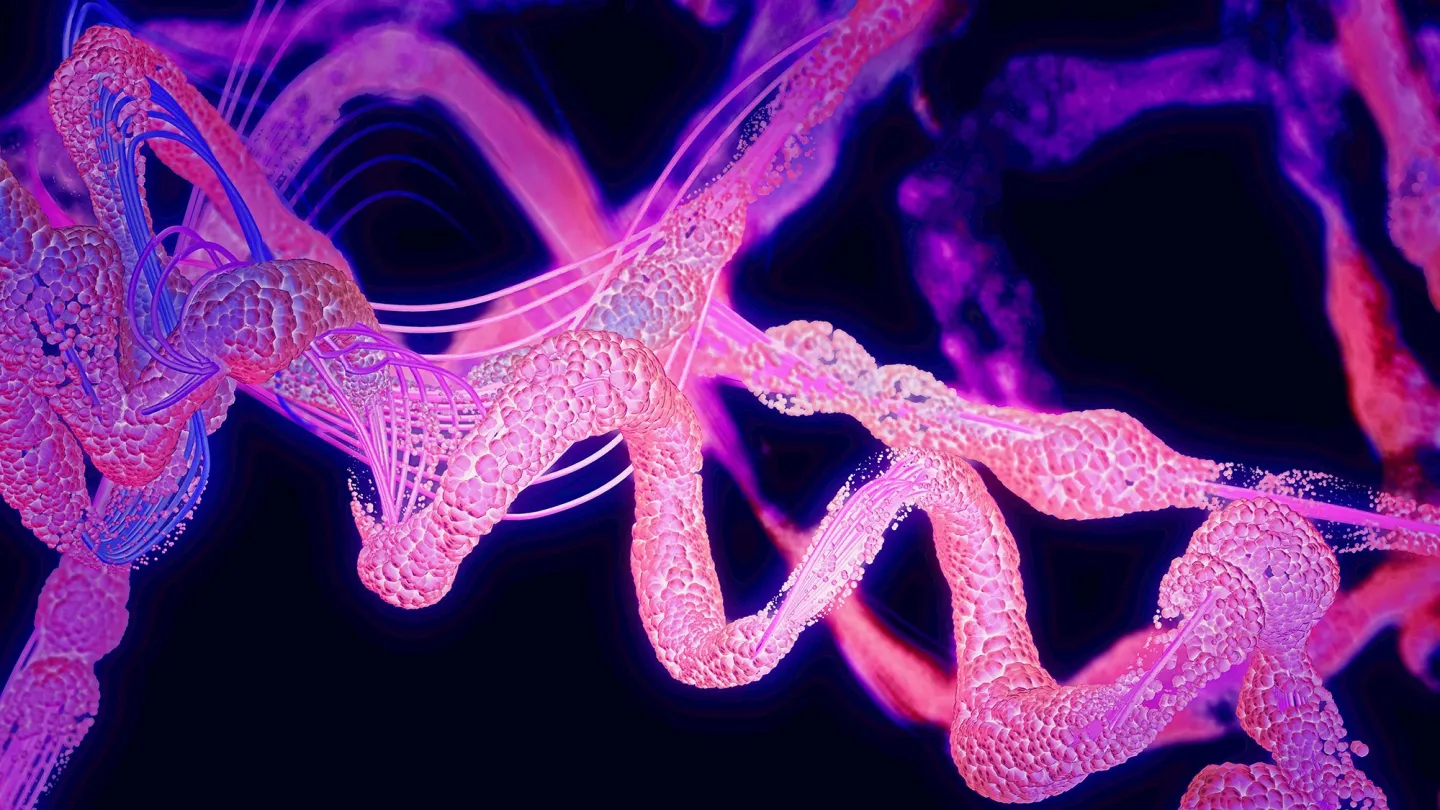
Los científicos pueden controlar cuándo y dónde se activan proteínas celulares específicas mediante herramientas optogenéticas: moléculas genéticamente codificadas y diseñadas que se integran en las células y pueden controlarse remotamente mediante luz externa. Sin embargo, las herramientas optogenéticas existentes para regular la formación de enlaces covalentes entre proteínas y la escisión de la cadena polipeptídica suelen ser inestables, presentan actividad de fondo en la oscuridad y pueden funcionar deficientemente en entornos celulares complejos.
In research published online on September 11 in Comunicaciones de la naturaleza, Vladislav Verkhusha, Ph.D., Daria Shcherbakova, Ph.D., Mikhail Baloban, Ph.D., and colleagues have developed a next-generation optogenetic system that directly addresses the limitations of existing tools. Their innovation, called a photoswitchable intein (PS Intein), integrates inteins – protein segments found in bacteria, fungi, and some plants – with a light-sensitive switch. When exposed to light, the PS Intein can trigger proteins to join together, separate, or be released, allowing scientists to control protein activity with pinpoint accuracy. Importantly, the system functions across many different proteins and cellular contexts. The team further demonstrated that PS Intein activity can also be guided by cell-specific signals, such as promoters active only in cancer or tumor-related cells, ensuring that only diseased cells are targeted while sparing healthy tissue. Moreover, the PS Intein-based light-controlled gene expression platform enables signal amplification, producing one of the highest light-inducible responses yet observed among similar optogenetic tools. This new technology has the potential to clarify how protein interaction networks orchestrate cell behavior and to enable safer, more precise therapies – for example, activating cancer-fighting proteins only within diseased tissues and only at the intended time.
La Dra. Verkhusha es profesora de genética, directora del Centro de Recursos de Proteínas Fluorescentes, codirectora del Centro de Biofotónica Gruss Lipper en Einstein y miembro del Montefiore Einstein Comprehensive Cancer Center, designado por el Instituto Nacional del Cáncer. Las Dras. Baloban y Shcherbakova son profesoras adjuntas de investigación de genética en Einstein.