Noticia breve
Un descubrimiento revolucionario desmiente una creencia arraigada sobre las células madre sanguíneas.
3 de septiembre de 2025
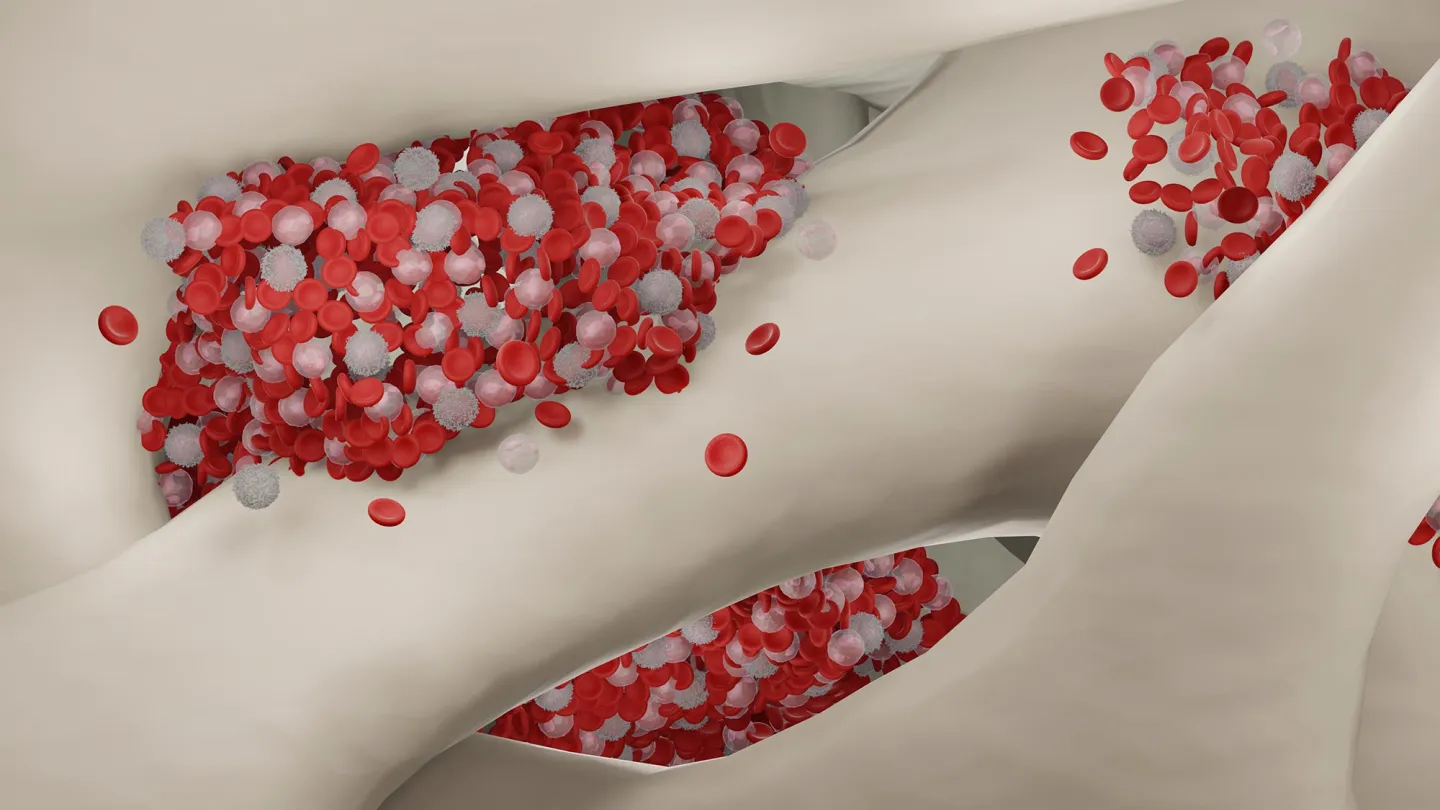
Hematopoietic stem cells (HSCs) are vitally important—responsible for producing all the body’s blood cells throughout a person’s lifespan. They reside in bone marrow within specialized microenvironments known as HSC niches. For the past 50 years, scientists have believed that HSC numbers are determined mainly by the availability of these niches, with more available niches meaning more stem cells. But that assumption turns out to be wrong. In a paper published online on August 27 in the journal Nature, researchers led by Einstein’s Ulrich Steidl, M.D., Ph.D., and Kira Gritsman, M.D., Ph.D., have shown that HSC numbers are controlled entirely differently.
The discovery resulted from an innovative experiment which began in the late Paul Frenette's lab to test the prevailing concept of niche-driven control of HSC numbers. The scientists transplanted whole femoral bones from one adult mouse to another, increasing the number of available HSC niches. Surprisingly, despite this increase in HSC niches, the total number of HSCs remained the same. Further experiments revealed that HSC numbers are controlled by two separate mechanisms: one mechanism acts systemically to limit HSC numbers and includes the protein thrombopoietin—previously known for regulating platelet production and now found to play a pivotal role in determining the body’s total number of HSCs; the other mechanism acts locally to restrict HSC numbers within the bone marrow.
The findings have potentially profound implications for improving therapies. Awareness of these local and systemic constraints on HSC numbers could lead to more effective methods for expanding the number of HSCs available for bone-marrow transplantation. In addition, leukemias, lymphomas, and other blood cancers often involve dysregulated HSC proliferation; knowing which factors help to control total HSC numbers could lead to new strategies for limiting cancer stem-cell populations.
Dr. Steidl is the Edward P. Evans Endowed Professor for Myelodysplastic Syndromes and professor and chair of cell biology at Einstein, and deputy director at the National Cancer Institute-designated Montefiore Einstein Comprehensive Cancer Center (MECCC), and co-director of MECCC’s Blood Cancer Institute. Dr. Gritsman is associate professor of oncology, and of cell biology, the Betty and Sheldon Feinberg Senior Faculty Scholar in Cancer Research at Einstein, and is co-leader of the Stem Cell & Cancer Biology Program of MECCC. The paper’s lead author is Shoichiro Takeishi, M.D., Ph.D., a staff scientist in the department of cell biology at Einstein.