
Feature
Expansion at Montefiore Einstein’s Asthma Center Helps Bronx Patients Breathe Easier
April 10, 2025
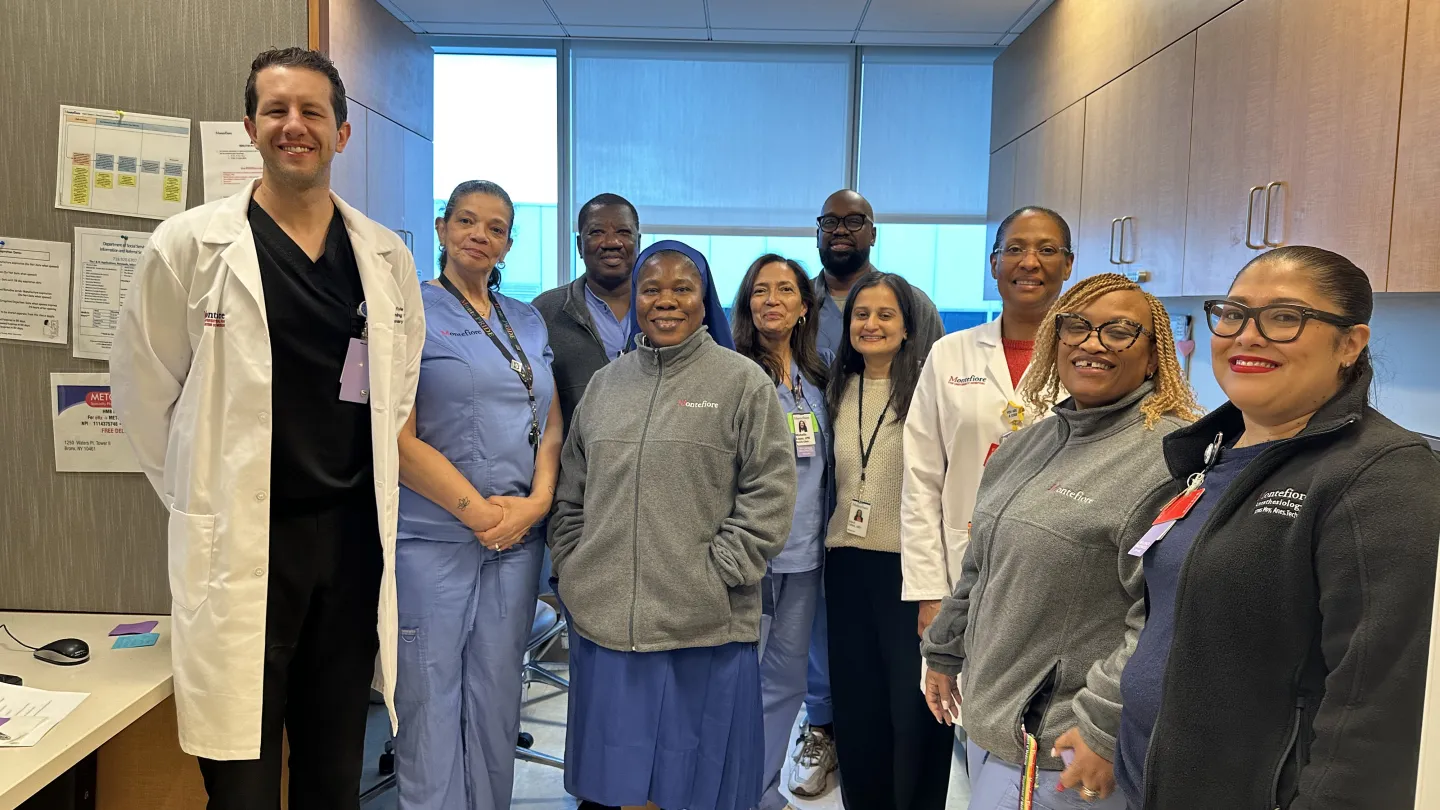
The Montefiore Einstein Asthma Center team at the Hutchinson campus includes Dr. Kyle Swartz (far left) and Dr. Mauli Desai (fourth from right).
By the time the patient found her way to pulmonologist Krystal Cleven, MD, MSc, at Montefiore Einstein’s Asthma Center, she had seen a number of doctors. She was in her early 30s, a recent new mom. She’d had a difficult pregnancy, largely because her asthma wasn’t well controlled. She had decided at that point not to have more children—her asthma, she felt, was just too bad. “She was very skeptical when she came in,” Dr. Cleven recalls. “Her attitude was, ‘I’ve tried so many things already. What are you possibly going to do for me?’”
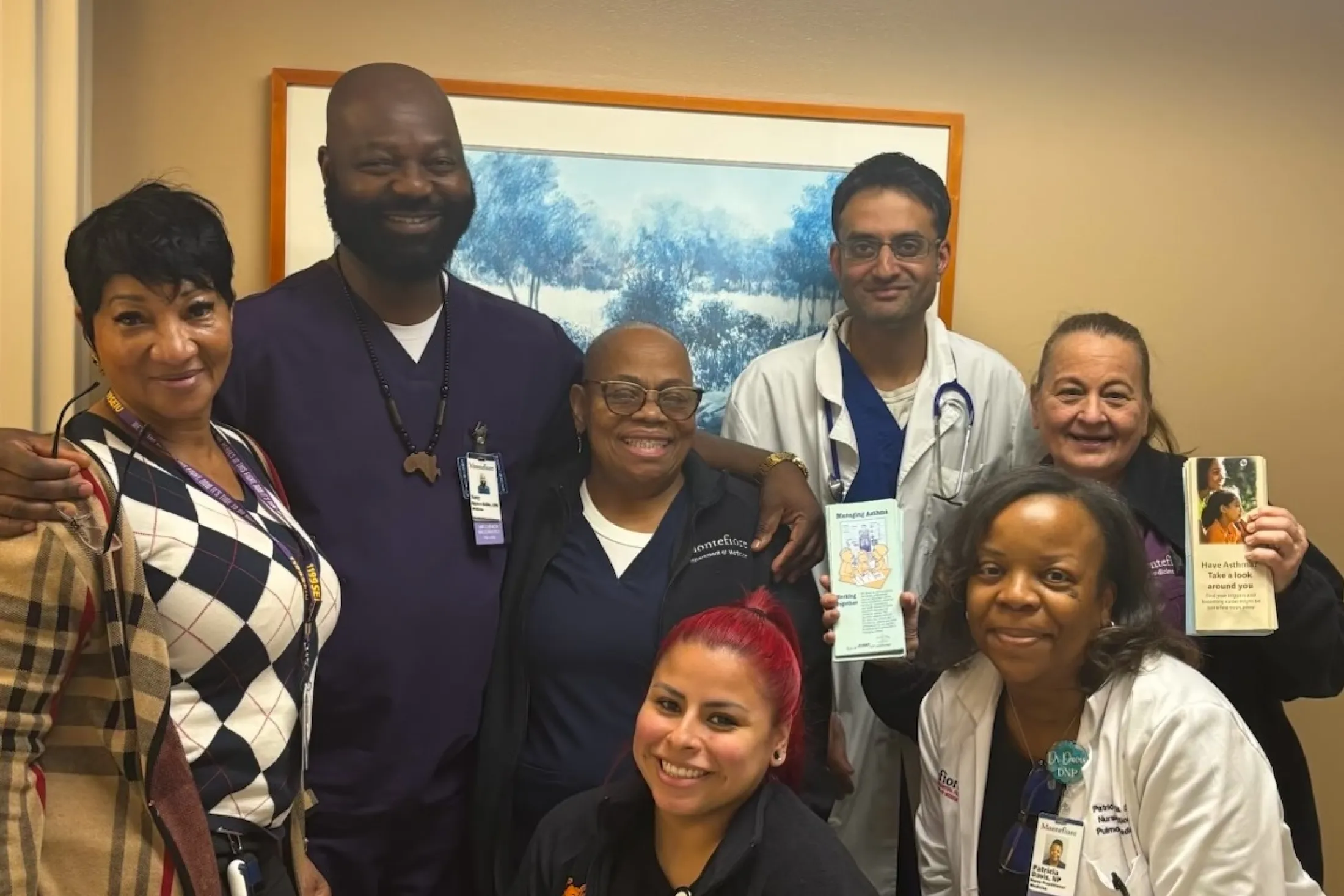
Members of the Asthma Center team at the Greene Medical Arts Pavilion, including Dr. Sunit Jariwala (back row, second from right) and Patricia Davis, DNP (front row, far right).
She had a thorough evaluation from Dr. Cleven and the allergy specialist she partners with, Sunit Jariwala, MD, as part of the Asthma Center’s unique collaborative approach. One thing the patient had not yet tried were biologics, a relatively new way to treat difficult cases of asthma. Biologics, which patients receive via injection, are a form of precision medicine that targets the body’s mechanisms that produce asthma symptoms, including certain antibodies, inflammatory molecules, or cell receptors. “She was not going to be well controlled on an inhaler,” says Dr. Cleven. “She was going to the emergency department once a month and needed steroids almost continuously.” Taking into account the patient’s allergy testing results and immunologic profile, Dr. Cleven and Dr. Jariwala recommended a biologic for her.
The patient’s response was striking. “We started her on the therapy and it dramatically changed her life,” Dr. Cleven says. “She no longer needed frequent visits to the emergency room. She was able to start her own business. She had another child last year. We managed her asthma care with maternal fetal medicine so that she was able to keep getting her injections during pregnancy, which was safer for her and the baby.”
Dr. Cleven continued, “It’s been such a beautiful outcome. If we didn't have all the support and expertise that we have at the Asthma Center, things might have been very different.”
Getting the whole picture
Patients at Montefiore Einstein’s Asthma Center see both a pulmonologist and an allergist, since allergies can be a significant contributor to asthma symptoms. The center has recently expanded to improve access to specialized care for severe and hard-to-treat cases. Its original location is at the Greene Medical Arts Pavilion on Bainbridge Avenue, near the Moses Hospital campus, where patients are seen by Dr. Cleven, Dr. Jariwala and Patricia Davis, DNP, an expert on patient education, including proper inhaler use.
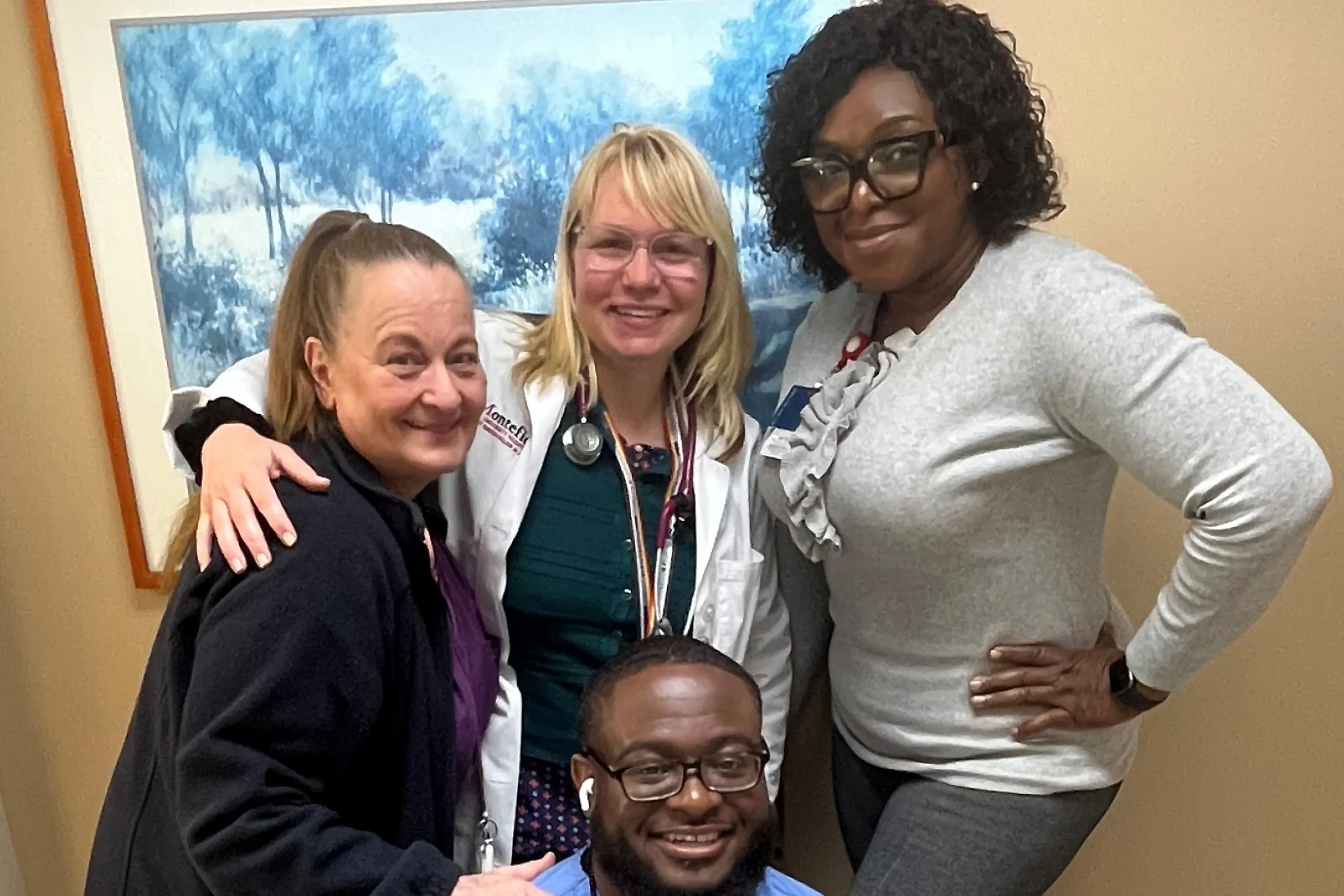
Dr. Krystal Cleven (back row, center) with members of the team at the Medical Arts Pavilion.
In late 2024, the Asthma Center expanded to Montefiore Einstein’s Hutchinson campus, where patients are treated by allergist Mauli Desai, MD, and pulmonologist Kyle Swartz, DO. That team has recently started offering services at Montefiore Medical Specialists in Scarsdale as well.
The expansion helps meet the significant need for asthma care in the Bronx. “The mortality rate for asthma, which you should not die from, is four times higher in the Bronx than in the rest of rest of the U.S., and twice as high as in the rest of New York City,” says Dr. Cleven. “Few people die from asthma, but many more die in the Bronx.”
This is in part because of the nature of asthma, which has different triggers for different people. It’s a chronic condition causing inflammation and narrowing of the airways, which can lead to coughing, wheezing, chest tightness, and shortness of breath. In extreme cases, a patient with asthma who needs emergency care may have to stay in the ICU and even be intubated. In other rare cases, it can lead to cardiac arrest and death.
Environmental factors in the Bronx including poor housing conditions and pollution, as well as lack of access to care, contribute to the borough’s poor outcomes. All of this underscores the need for the type of comprehensive care offered at the Asthma Center. “There's an extraordinary need here for people who care deeply about asthma patients, getting them better and keeping them out of the hospital,” says Dr. Desai.
Two specialties, one goal
“Some of these patients are extremely complex,” Dr. Desai continues. “Having expertise from both an allergist and a pulmonologist is invaluable, and we’re able to see patients together and collaborate face-to-face in real time. We literally work alongside each other and can simply walk into each other's offices and say, ‘Hey, what do you think about this or that approach?’”
At the Hutch, Dr. Desai and Dr. Swartz see new patients on the same day. “During one visit, they undergo lung function testing, allergy testing, and any additional tests we need,” says Dr. Desai. “We each see and talk to the patient separately. Then once all the evaluation is done, we talk all together about our recommendations and next steps.”
Adds Dr. Swartz, “It’s a very patient-centric model. We want patients to be part of the conversation and involved in management decisions. We get a better understanding of their goals for their asthma management.”
While the process is slightly different at the Medical Arts Pavilion, where Dr. Cleven and Dr. Jariwala see patients over more than one appointment, the collaboration and overall approach is the same. There, a patient referred to the center will see either Dr. Cleven or Dr. Jariwala first and then have a follow-up appointment with the other. Patients receive the same comprehensive testing but over the course of two visits or more, based on the patient’s preferences. “Studies show that one third of what may initially be treated as asthma is actually another condition,” explains Dr. Jariwala. Thorough testing, evaluation, and input from both specialists helps rule out other conditions that may be masquerading as asthma, and ensures every patient gets the right treatment.
Dr. Jariwala and collaborators are also conducting research to improve outcomes for asthma patients. Montefiore Einstein is a site for a multicenter study looking at which patients benefit the most from biologics. “We do mutational analysis and really try to customize the therapy even further,” he explains. He and collaborators have also received major grants to evaluate the effectiveness of an app they have developed that can identify the severity of an asthma flare-up based on a patient’s voice sample, and provide management strategies in real time. Dr. Desai and collaborators are working on quality improvement projects in the realm of severe asthma, specifically using QI methodology to improve referral pathways and expedite specialist evaluation for patients with severe asthma at Montefiore.
Also crucial to patients’ success is having the right team. Dr. Davis at the Medical Arts Pavilion educates patients on how to use different types of inhalers and spacers to make sure they are optimally effective. Nurses at the Hutch provide similar support and education. Thanks to collaboration with Montefiore Specialty Pharmacy, approvals for biologics and other specialty medications are expedited so that patients can quickly access the treatments they need.
While many primary care providers manage their patients’ mild asthma with great success, clinicians should refer patients to the Asthma Center if they are having severe exacerbations that require an emergency room visit, or frequent treatment with steroids such as prednisone. The Asthma Center physicians are also available to consult with colleagues.
The clinical teams at both locations all meet regularly and learn from each other. Dr. Swartz, the newest member, who joined the faculty at Montefiore Einstein in August, trained here for his residency and fellowship. Dr. Cleven was one of his mentors. “Training in the Bronx I was highly aware of the high amount of asthma here,” he says. “It's amazing to see with the biologics and other treatment options just how much better patients do, not having their lives constantly interrupted. They're so happy afterwards. It's such a rewarding aspect of our specialty.”