
Característica
Equipo de genes de IDD: Rompiendo barreras, empoderando a los padres, inspirando a los becarios, impulsando la comprensión
7 de febrero de 2025
En 2017, el Centro de Investigación de Discapacidades Intelectuales y del Desarrollo Rose F. Kennedy (RFK IDDRC) creó el programa Equipo de Genes para la Discapacidad Intelectual y del Desarrollo (IDD Gene Team). Su objetivo era reunir a familias afectadas por enfermedades genéticas raras con médicos, científicos básicos y sus recién graduado, para que las familias pudieran comprender mejor el trastorno de sus hijos. En estas reuniones del equipo, los familiares comparten el historial médico y personal de sus hijos, los médicos describen las consecuencias clínicas más amplias de la afección y los científicos ofrecen tutoriales accesibles centrados en la biología fundamental de los genes relevantes. Cada año se celebran dos o más de estas reuniones, que abarcan una amplia gama de variantes genéticas que causan trastornos del neurodesarrollo.
Los resultados de las reuniones del equipo han sido sumamente positivos. Las familias no solo han expresado su profundo agradecimiento, sino que muchas se han sentido lo suficientemente empoderadas como para crear fundaciones dedicadas a la condición específica de sus hijos. Los médicos, y en particular los científicos y sus recién graduado, han comprendido mejor los desafíos que enfrentan las familias afectadas, ampliando su perspectiva sobre cómo su investigación puede extenderse más allá del laboratorio. Cabe destacar que los científicos que asisten a estas reuniones suelen incorporar las variantes genéticas específicas de cada paciente en sus investigaciones. A medida que estos estudios avanzan y las organizaciones fundadas por las familias amplían sus esfuerzos, surgen colaboraciones nacionales e internacionales. En definitiva, el programa IDD Gene Team promueve la comprensión y el tratamiento de las enfermedades raras y ultrarraras, beneficiando a las familias, los médicos, los científicos y la comunidad médica en general.
Equipo genético SIN3A
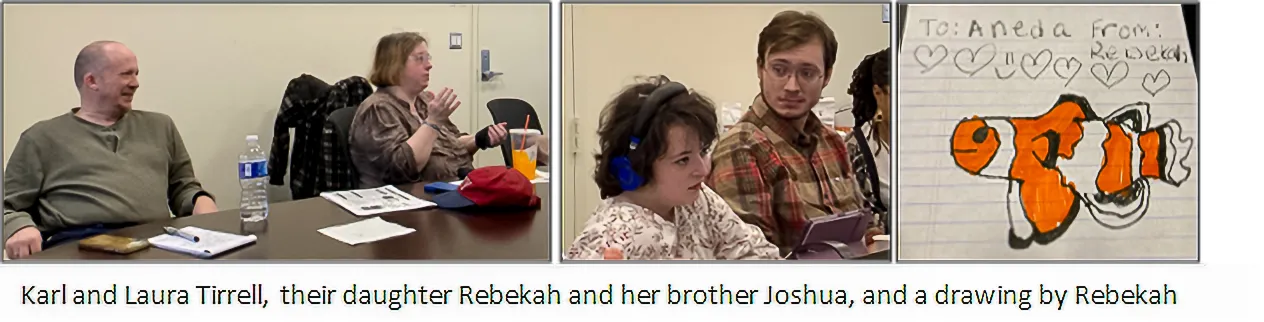
La dirección del IDDRC patrocinó dos reuniones del Equipo de Genes de IDD en 2024. La primera, organizada por el Dr. Steven Walkley, se celebró el 1 de febrero en el Centro Kennedy. Entre los participantes se encontraba la familia Tirrell, compuesta por los padres Laura y Karl, su hija Rebekah, de 18 años, diagnosticada recientemente con el síndrome de Witteveen-Kolk debido a una variante del gen SIN3A, y su hermano mayor Joshua. El Dr. Robert Marion, MD, PhD, fue el médico anfitrión, y la Dra. Anita Autry, PhD, la científica ponente. También asistieron siete recién graduado en formación de los laboratorios Einstein, entre ellos tres PhD posdoctorales ( los PhD . Carlos Rivero- PhD, Annie Maguire y Tushar Arora), tres estudiantes de egresado (Sarah Goebel, Dylann Cordova Martinez y Victoria Sedwick) y una estudiante de medicina (Madeline Klein).
La reunión comenzó con las presentaciones de las familias. Laura y Karl compartieron la historia clínica de Rebekah, incluyendo retrasos en el desarrollo, convulsiones, problemas inmunológicos y escoliosis. Rebekah describió sus experiencias durante su infancia, incluyendo una reciente y compleja cirugía de escoliosis, y Joshua aportó perspectivas adicionales. Los estudiantes y postdoctorados interactuaron con la familia mediante preguntas reflexivas. La Dra. Marion proporcionó información clínica adicional sobre los primeros años de Rebekah y el síndrome de Witteveen-Kolk. A continuación, la Dra. Autry describió cómo el gen SIN3A codifica una proteína multifuncional que regula la expresión génica durante el desarrollo fetal, lo que explica las diversas características de este complejo síndrome. Señaló que, si bien se están desarrollando sistemas modelo, aún queda mucho por aprender sobre este complejo gen. Curiosamente, mientras Rebekah escuchaba atentamente, también dibujaba un dibujo que le regaló a la Dra. Aneda, un gesto conmovedor que concluyó la reunión con un tono afectuoso.
Equipo de genes IRF2BPL
La segunda reunión, celebrada en 2024, se centró en las variantes del gen IRF2BPL, causantes de una afección conocida como NEDAMSS (Trastorno del Neurodesarrollo con Regresión, Movimientos Anormales, Pérdida del Habla y Convulsiones). De manera singular, reunió a dos familias —Chris y Angela Papazoglou con su hijo Yiannis, de 4 años, y Maria y Sandy Rodriguez con su hijo Berny, de 16 años— que no se conocían previamente. La reunión fue organizada por el Dr. Steven Walkley, y PhD con la asistencia de otros miembros del profesorado, como la Dra. Sophie Molholm y el PhD Bryen Jordan. El Dr. Jordan hizo de intérprete para el Sr. Rodriguez, cuyo inglés era limitado. También asistieron la médica de Berny, la MD. Melissa Wasserstein, la asesora genética Monisha Sebastian y los científicos del Instituto Einstein, el PhD Richard Stanley y la PhD Violeta Chitu. Entre los becarios presentes se encontraban el investigador postdoctoral Carlos Rivero-Quiles, los estudiantes de egresado Sarah Goebel y Dylann Cordova Martinez, y la estudiante de medicina Madeline Klein. La sesión fue filmada por la directora de comunicaciones multimedia de Einstein, Sunita Reed, y miembros de su equipo de filmación.
La reunión comenzó con presentaciones antes de que María Rodríguez compartiera la conmovedora historia de su hijo Berny. Desde pequeño, Berny presentó retrasos en el habla y la marcha, y a los 11 años sufrió su primera convulsión. Al entrar en la adolescencia, su lenguaje y sus habilidades motoras comenzaron a retroceder. A los veinte años, Berny ya dependía de una silla de ruedas y no hablaba. Las pruebas genéticas revelaron una variante genética espontánea en el gen IRF2BPL, lo que proporcionó algunas respuestas sobre su condición. Luego, Ángela Papazoglou compartió la historia de su hijo de cuatro años, Yiannis, a quien le diagnosticaron una variante en el mismo gen. Para ambas familias, esta reunión representó la primera vez que conectaban con otras personas que enfrentaban el mismo diagnóstico de una enfermedad rara. El emotivo intercambio entre ellas puso de manifiesto el aislamiento que suele acompañar a las enfermedades ultrarraras.
La Dra. Wasserstein proporcionó entonces información clínica adicional. Explicó que las personas con variantes patogénicas en IRFBPL2 suelen experimentar retrasos tempranos en el neurodesarrollo, convulsiones y un deterioro progresivo de la función durante las dos primeras décadas de vida. La Dra. Chitu continuó con un resumen simplificado del papel de este gen en la función celular. Señaló que, si bien el gen se expresa ampliamente en todo el cuerpo, el cerebro es especialmente vulnerable a su pérdida. Como dato alentador, explicó que parte de la disfunción neuronal está relacionada con la hiperactividad mitocondrial en los astrocitos y que estudios recientes han identificado un medicina potencial que podría ayudar a aliviar este aspecto de la enfermedad. Los Dres. Chitu y Stanley destacaron la urgente necesidad de desarrollar un modelo de ratón para estudiar esta enfermedad y probar esta terapia, un paso fundamental hacia un posible tratamiento.
De esta reunión surgieron dos resultados significativos: el primero es que los esfuerzos de Sunita Reed y del departamento de comunicaciones de Einstein dieron como resultado un video disponible para su visualización.
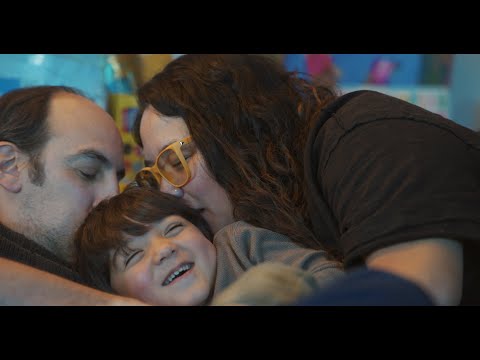
La segunda es que el proyecto de investigación para desarrollar un modelo de ratón para investigar esta enfermedad ha sido financiado por una beca piloto de investigación RFK IDDRC.