

What is Diabetes?

US News & World Report Best Hopitals Badge for 2025-2026 for Diabetes and Endocrinology

Your body needs to convert the food you eat into energy. Diabetes is a chronic disease that affects this process. Most of the food we eat is broken down into glucose (sugar) and released into the bloodstream for the body to use as energy. When you have diabetes, your pancreas doesn’t release enough insulin, or the insulin is not used efficiently, which allows too much blood sugar to stay in your bloodstream. This could eventually cause serious health problems such as heart disease, vision loss and kidney disease.

37.3 Million US Adults have diabetes

Types of Diabetes

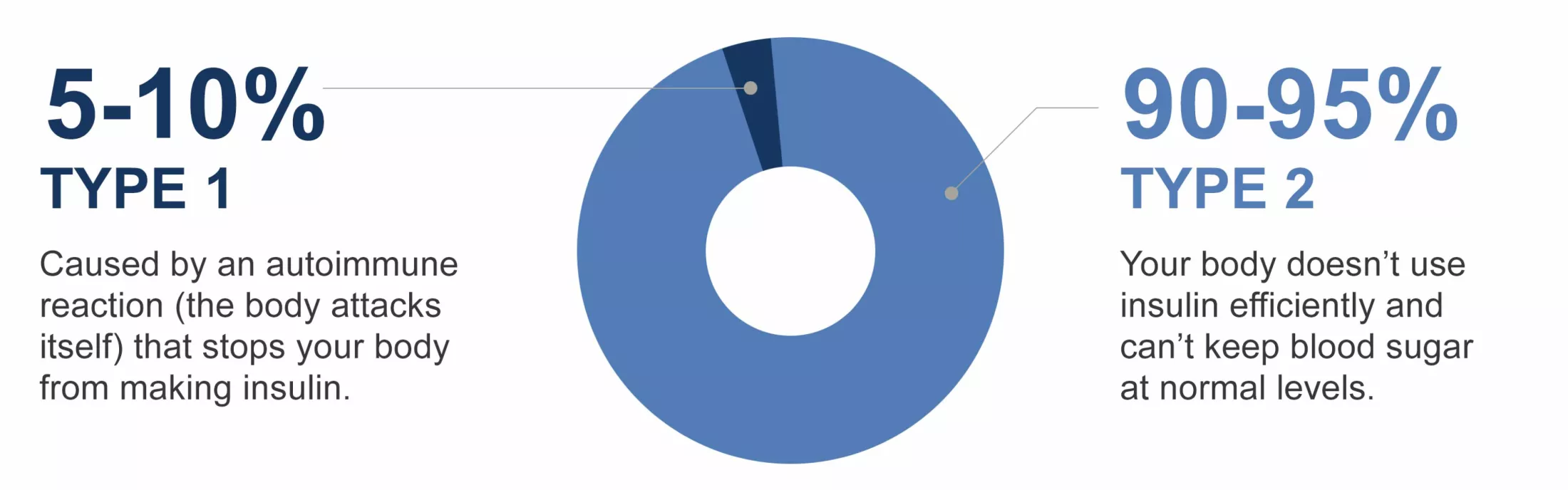
Infographic showing the distribution of diabetes types. A donut chart illustrates that 5–10% of cases are Type 1 diabetes, caused by an autoimmune reaction that stops the body from producing insulin. The remaining 90–95% are Type 2 diabetes, where the body does not use insulin efficiently and cannot maintain normal blood sugar levels.

Prediabetes

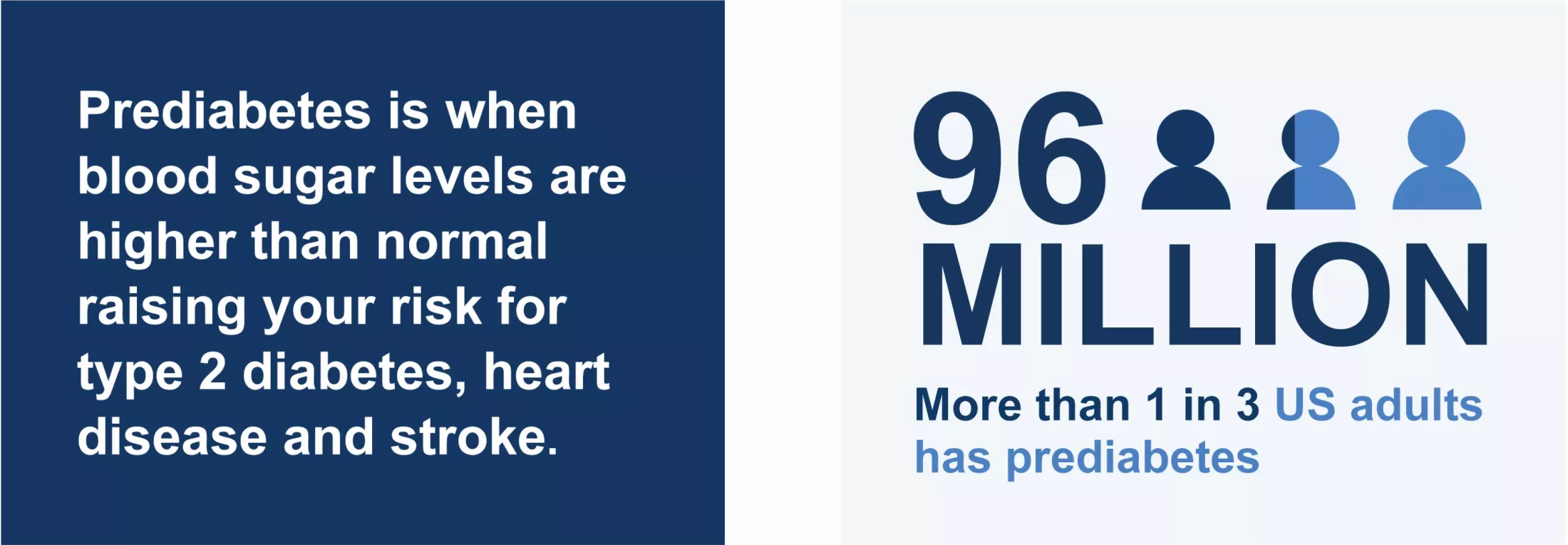
Infographic stating that prediabetes is when blood sugar levels are higher than normal, raising your risk for type 2 diabetes, heart disease, and stroke. A bold statistic reads “96 MILLION” followed by “More than 1 in 3 US adults has prediabetes.”

By the Numbers

Who

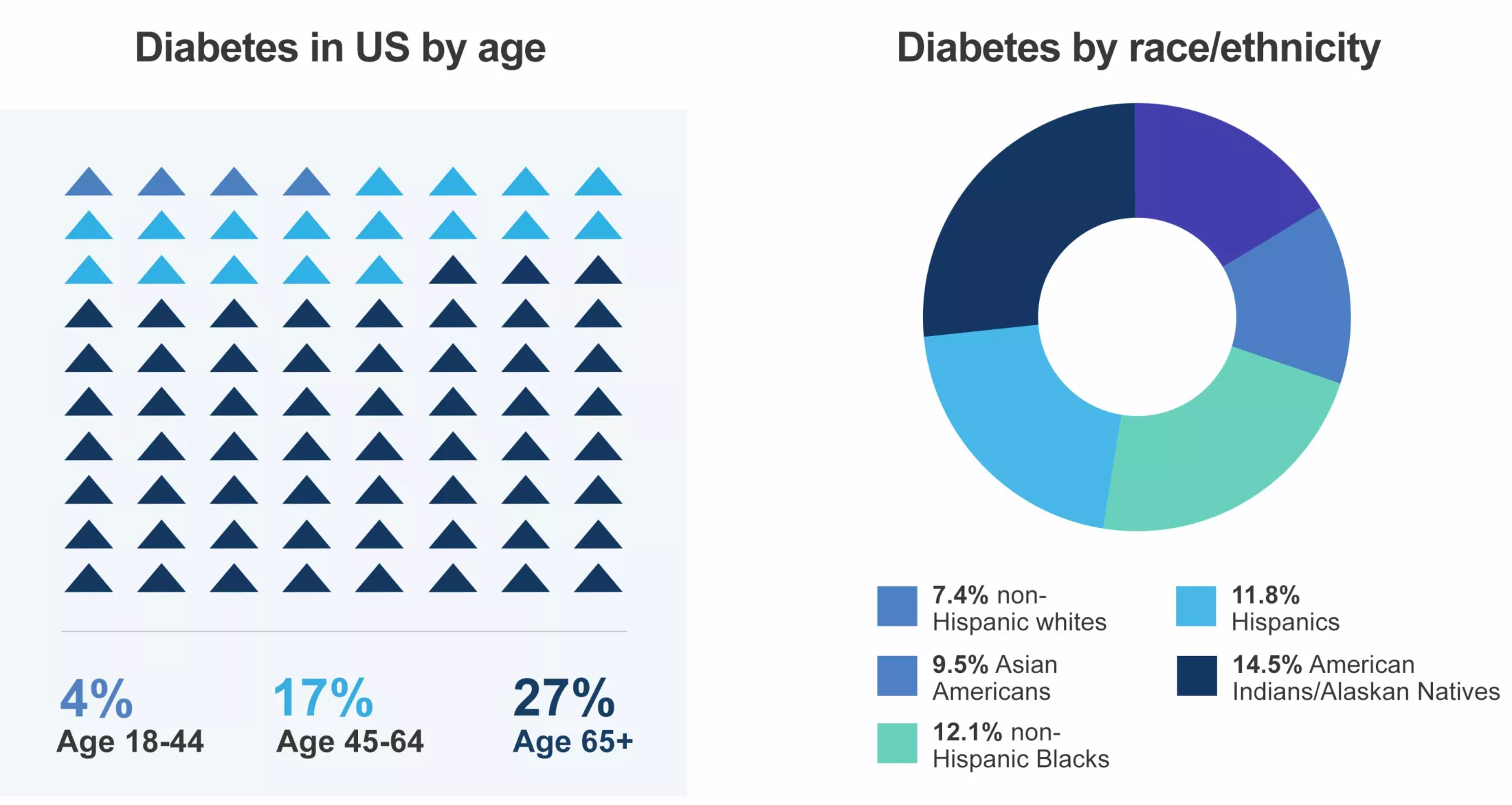
Two charts comparing diabetes prevalence in the US. The first chart shows diabetes by age: 4% for ages 18–44, 17% for ages 45–64, and 27% for ages 65 and older. The second chart shows diabetes by race/ethnicity: 7.4% for non-Hispanic whites, 11.8% for Hispanics, 9.5% for Asian Americans, 14.5% for American Indians/Alaskan Natives, and 12.1% for non-Hispanic Blacks.

Cost

 Infographic showing the total annual cost of diabetes at 327billion,brokendowninto327billion,brokendowninto237 billion in direct medical costs and $90 billion from reduced workforce productivity.

Schedule an Appointment